Vermont’s ATV Statute in Plain English
Navigating the labyrinthine world of legal statutes can feel like trudging through thick Vermont mud without four-wheel drive. For ATV and UTV enthusiasts, understanding exactly what Vermont's laws say about your machine and where you can ride it often means wrestling with dense legalese that seems intentionally obscure. This guide is here to cut through the jargon, translate the official "Vermont ATV Statute" into plain English, and empower you to ride responsibly and legally across our beautiful Green Mountain State.
Demystifying Vermont's ATV Definition
One of the first and most critical hurdles for any ATV or UTV owner in Vermont is understanding what the state actually considers an "all-terrain vehicle." It might seem straightforward, but the legal definition is precise and has significant implications for registration, where you can ride, and what equipment you need. Ignore these details at your peril, as getting it wrong can lead to fines, frustrating conversations with wardens, or worse.
The Core Characteristics of an ATV
Vermont's law defines an ATV primarily by a few key physical attributes. Think of these as the fundamental specs that separate your machine from a dirt bike, a snowmobile, or even a small car. The statute often refers to these characteristics to determine classification, which then dictates registration fees and operational rules.
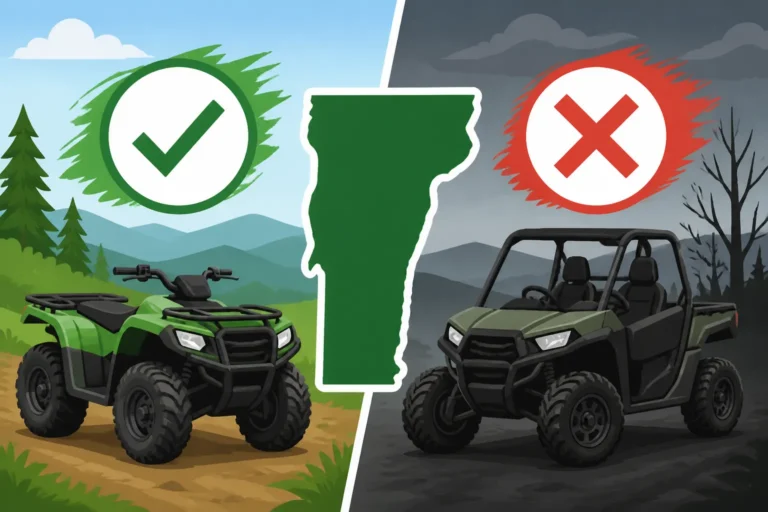
First, let's talk about width and weight. Vermont has specific limits: an ATV is generally defined as a motorized recreational vehicle that is 72 inches or less in width and weighs 2,500 pounds or less. This is a crucial distinction, especially as modern side-by-sides grow larger and more powerful. If your machine creeps over that 72-inch mark or tips the scales beyond 2,500 pounds, it might fall into a different classification, specifically an ASV (All-Surface Vehicle), or might not be registerable at all for typical ATV use. This difference isn't just academic; it directly affects your registration costs and where you're permitted to ride. For a deeper dive into these specifics, check out [Vermont's 72-Inch, 2,500-Pound ATV Definition].
Second, the type and number of tires are integral to the definition. An ATV, by Vermont law, must have at least two low-pressure tires. While most ATVs and UTVs have four, the "at least two" part is designed to be inclusive. The "low-pressure" aspect is key; it speaks to the design intent of the vehicle for off-road use, allowing for better traction and flotation over varied terrain. These tires are part of what distinguishes an ATV from a conventional road vehicle and are essential for meeting the statutory definition.
Finally, seating capacity plays a role. Most ATVs are designed for one or two riders, seated astride or side-by-side. The law doesn't typically get into granular detail about how seats are configured beyond general recreational use, but it's understood that these are not passenger cars. If your machine is modified to carry more people than its manufacturer intended or designed for, you could be entering a gray area that a warden might question, especially regarding safety and the original intent of the vehicle's classification.
What Isn't an ATV Under Vermont Law?
Just as important as knowing what is an ATV, is understanding what isn't. Vermont law carves out specific exclusions for various types of vehicles that might, to the untrained eye, look similar or serve a similar purpose but are treated differently under the statute. These distinctions are critical because they mean entirely different sets of rules, registration processes, and operating guidelines.
One of the most common confusions arises with electric bicycles, or e-bikes. Despite having motors and sometimes resembling smaller recreational vehicles, e-bikes are explicitly excluded from Vermont's ATV definition. This means they are subject to bicycle laws, not ATV laws. You won't need to register your e-bike as an ATV, nor will you be expected to follow ATV trail access rules or insurance requirements. It’s a common misconception, but the legal lines are drawn quite clearly here. For more information, refer to [Vermont E-Bikes Excluded From the Definition].
Snowmobiles are another distinct category. While they are also recreational vehicles designed for off-road terrain, their mode of propulsion (tracks and skis) and seasonal use mean they have their own set of statutes and regulations entirely separate from ATVs. You register a snowmobile differently, you ride it on different trail networks, and its operational rules reflect its unique nature. Never assume that ATV rules apply directly to snowmobiles or vice-versa.
Agricultural or farming equipment also generally falls outside the ATV definition, even if it might resemble a UTV or side-by-side in certain aspects. Machines used primarily for bona fide agricultural purposes, such as hauling feed, plowing fields, or performing other farm tasks, often have specific exemptions or different classifications altogether. The key here is the primary use of the vehicle. If it's truly a working farm machine, it's typically not subjected to the same recreational ATV rules. This acknowledges the practical needs of Vermont's agricultural community.
Registration and Ownership Essentials
Once you understand what an ATV is in Vermont, the next step is getting it properly registered. This isn't just a bureaucratic hurdle; it's a fundamental legal requirement that ensures your machine is recognized by the state and allows you access to designated trails and roads where permitted. Without proper registration, you're looking at potential penalties and an inability to legally enjoy your machine on public corridors.
The Must-Have Paperwork
Registering your ATV in Vermont requires a specific set of documents to prove ownership and ensure all legal bases are covered. Think of it like a checklist you absolutely need to complete before heading to the DMV or sending off your application. Missing even one piece can cause significant delays and frustration, sending you back to square one.
Firstly, you'll need proof of ownership. For a brand-new machine, this is typically the Manufacturer's Certificate of Origin (MCO). This document is like the birth certificate for your ATV, tracing its origin from the factory. If you've purchased a used machine, a properly executed bill of sale is crucial. This isn't just a scribble on a napkin; it needs to include specific information about the buyer, seller, machine (VIN, make, model), and purchase price, and often be notarized or witnessed depending on the value and specific circumstances. Sometimes, if a machine is older and a title was never issued or is lost, an ownership affidavit might be required, which is a sworn statement affirming your ownership. To ensure you have all your ducks in a row, consult [Vermont Registration Paperwork Checklist] for a detailed guide.
In addition to ownership proof, you'll need a completed Vermont DMV registration form (often form VD-119). This form collects all the necessary information about you, your machine, and the type of registration you're seeking (one-year or two-year, ATV or ASV). Accuracy is paramount here; any discrepancies can lead to your application being rejected. You'll also need to provide proof of Vermont residency if registering as a resident, though non-residents can also register machines in Vermont, often paying the same fees as residents.
Finally, payment for the registration fees is necessary. Vermont typically offers one-year and two-year registration options, with different fee structures for ATVs versus ASVs. These fees contribute to the maintenance and administration of the state's ATV programs, including trail support and enforcement. Be prepared with the correct payment method, whether it's a check, money order, or card if applying in person at a DMV office.
Understanding Purchase and Use Tax
Beyond the registration fee, a significant financial consideration when acquiring an ATV in Vermont is the Purchase and Use Tax. This tax is applied to the sale price of the machine, much like a sales tax, but it's specifically for items purchased for use in Vermont, regardless of where they were originally bought. Many riders are surprised by this, especially if they bought their machine out of state or in a private sale.
The Vermont Purchase and Use Tax applies to most ATV transactions, whether you buy from a dealer, a private seller, or even if you bring a machine into Vermont that you purchased in another state. The tax rate is a percentage of the purchase price or, in some cases, the fair market value of the machine. It's collected at the time of your initial registration. If you're registering a machine that's new to you, the DMV clerk will calculate and collect this tax when you submit your registration paperwork. For a comprehensive overview, read [Vermont Purchase and Use Tax on an ATV].
There are, however, specific exemptions to this tax. Gifts between immediate family members might be exempt, provided certain conditions are met and the proper affidavit is filed. Machines bought and taxed in another state might receive a credit against Vermont's tax, preventing you from being double-taxed. Understanding these exemptions can save you a substantial amount of money, so it's worth investigating if your situation qualifies. Be sure to have all documentation ready to support any claim for exemption.
For private sales, the declared purchase price on the bill of sale is generally what the tax will be based upon. It's vital that this price accurately reflects the transaction, as under-reporting can lead to legal issues down the line. If the DMV suspects the declared price is significantly below market value, they may ask for additional documentation or use their own valuation to assess the tax. Always be transparent and accurate when dealing with tax matters.
Navigating Vermont Roads: The "Street Legal" Conundrum
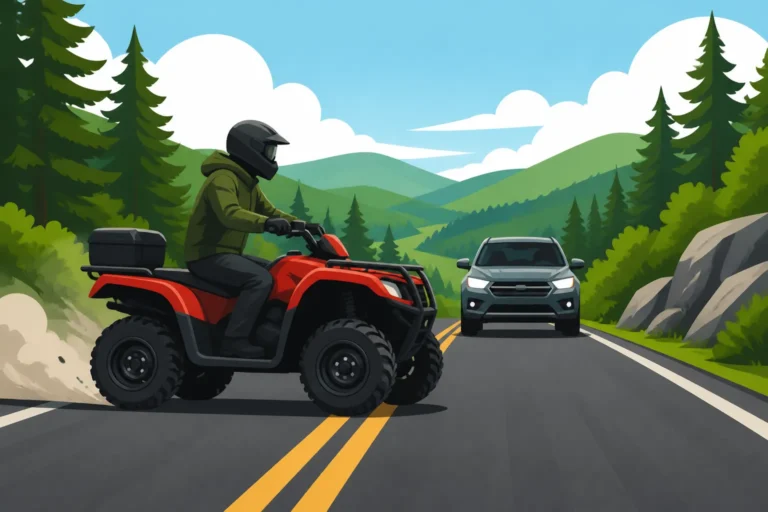
This is where the rubber meets the road—literally. Many ATV and UTV owners dream of being able to ride directly from their driveway to the trail, or even use their machine for quick errands around town. However, the concept of a "street legal" ATV in Vermont is far more nuanced than in many other states. There's no blanket "street legal" designation that applies statewide. Instead, it's a patchwork of local decisions, making careful planning and local knowledge absolutely essential.
Town by Town: Local Ordinances Rule the Roost
The single most important fact to grasp about riding an ATV on Vermont roads is this: the decision to open public roads to ATVs rests entirely with individual towns and their selectboards. There is no statewide permission. This means that what's legal in one town might be strictly prohibited in the next. It’s a classic Vermont approach to local control, and it creates a highly localized riding experience.
A town's selectboard must actively vote to designate specific roads or routes for ATV use each year. This isn't a one-and-done deal; these designations often need to be renewed annually. If a selectboard takes no action, those roads remain closed to ATVs by default. This process involves public hearings, community input, and careful consideration of local concerns like noise, dust, safety, and road damage. So, while you might see an ATV legally riding down Main Street in one village, it doesn't mean you can do the same in the neighboring community. For a deeper understanding of this process, see [How a Vermont Selectboard Opens a Road to ATVs].
These local ordinances often come with specific rules, too. They might designate certain hours for ATV travel, impose speed limits lower than the posted car speed, or restrict riding to specific times of the year (e.g., prohibiting use during mud season or after October 31st). Some towns may even require a front plate in addition to the mandatory rear plate, despite the state only requiring the latter. Examples like Brighton and Newport City have specific ordinances detailing their open routes and restrictions. Riders absolutely must check the local town ordinances for the areas they plan to ride in, or risk significant fines and community backlash. Websites for town clerks or local ATV clubs are usually the best sources for this hyper-local information. A great resource for understanding this concept is [Vermont ATV Road Rules: Towns Decide].
Equipment Requirements for Road Use
If you're lucky enough to be in a town that does open its roads to ATVs, your machine will need to meet specific equipment requirements to be legally operated on those public ways. This isn't just about registration; it's about making your ATV safe and visible to other road users, much like a conventional vehicle. Ignoring these requirements, even on an open road, can lead to tickets and invalidate your ability to ride legally.
First and foremost, your ATV needs proper lighting. This means at least one working headlight and one working tail light. These lights must be visible from specific distances and function reliably, especially if you plan to ride during dawn, dusk, or nighttime hours, which many town ordinances restrict or prohibit anyway. Beyond the basics, many riders opt for additional lighting, or are required by local ordinances to have turn signals, just like a car. While not always state-mandated for ATVs, turn signals significantly improve safety and communication with other drivers.
Mirrors are another critical piece of equipment. Your ATV must be equipped with at least one rearview mirror, properly mounted to allow the operator to see to the rear of the machine. This is non-negotiable for road use. Some riders prefer two mirrors for better situational awareness. A horn is also a mandatory safety feature for any vehicle sharing the road; your ATV will need an audible warning device. Many riders turn to aftermarket accessory providers like SuperATV for these specific components, ensuring their machines meet local requirements while providing robust, trail-ready performance.
Finally, your muffler and exhaust system must be in good working order and meet Vermont's noise regulations. Loud, modified exhausts are a common source of complaints from residents and can lead to immediate citations. The goal is to keep noise levels to a minimum, preserving the peace and quiet of the communities you ride through. Ensuring your machine adheres strictly to these equipment standards, perhaps by upgrading key components with reliable parts from companies like SuperATV, is not just about avoiding a ticket; it's about being a respectful and safe member of the road-sharing community. For a more detailed list, explore [Vermont ATV Equipment Requirements].
Rider Responsibilities and Safety Laws
Operating an ATV or UTV in Vermont isn't just about the machine; it's profoundly about the rider. The state places significant responsibility on individuals to ensure their own safety, the safety of their passengers, and the well-being of others sharing trails and roads. These laws are in place to prevent serious injury and to maintain a positive relationship between riders and the communities they travel through. Understanding and adhering to these rules is a critical part of being a responsible ATV enthusiast.
Helmet and Passenger Rules
Vermont's helmet law for ATV operation is straightforward and uncompromising: every single rider, regardless of age, must wear a helmet. There are no exceptions for adults, no age limits; if you're on an ATV in Vermont, your head needs to be protected. This law is fundamental to preventing severe head injuries, which are tragically common in ATV accidents.
The helmet itself isn't just any old piece of headgear. It must meet specific safety standards, typically those set by the U.S. Department of Transportation (DOT) or the American Society for Testing and Materials (ASTM). Look for the appropriate certification stickers on the helmet. Wearing a bicycle helmet or a construction hard hat simply won't cut it. It must be designed for motorized vehicle use and securely fastened. This absolute requirement is designed to keep everyone safe, from seasoned riders to first-timers. For all the details, make sure to read [Vermont ATV Helmet Law for Every Rider].
When it comes to passengers, Vermont law specifies that an ATV can only carry the number of passengers for which it was specifically designed by the manufacturer. If your ATV is a single-rider model, you cannot legally carry a passenger. If it's a two-up model with a designated passenger seat, then one passenger is permitted. All passengers, just like the operator, must wear an approved helmet. Carrying more passengers than the machine is designed for creates an unstable and dangerous situation, impacting the ATV's handling and increasing the risk of rollover or ejection. It's a risk not worth taking, and one that enforcement officers take very seriously.
Insurance is Non-Negotiable
Another critical responsibility for any ATV owner in Vermont is carrying proper liability insurance. This isn't an option; it's a legal requirement for operating any ATV or UTV on designated trails, roads, or any public land. Just like with cars, ATV insurance provides a financial safety net in case of an accident where you are at fault, protecting both you and any parties you might injure or whose property you might damage.
Vermont law mandates specific minimum liability coverage amounts for ATVs. These typically include coverage for bodily injury per person, bodily injury per accident, and property damage. These minimums are designed to ensure that victims of an accident caused by an ATV operator have some recourse for medical expenses or property repairs. Failing to carry the required insurance can result in significant fines, suspension of your registration, and even impoundment of your machine. It's a costly oversight that's easily avoided. For current requirements, see [Vermont ATV Insurance Requirements].
It’s crucial to understand that your regular auto insurance policy often does not cover ATV operation, especially off-road or on trails. You typically need a separate, dedicated ATV insurance policy. When purchasing or reviewing your policy, ensure it explicitly covers your specific machine and the type of riding you intend to do in Vermont. Always carry proof of insurance with you when you ride, as wardens and law enforcement officers are authorized to ask for it. Many trail networks or clubs also require proof of insurance before granting access. Having your policy details, perhaps stored digitally on your phone or a physical card in a waterproof pouch, is just as important as carrying your registration and a valid [Vermont TAD: The Trail Access Decal Explained].
Enforcement, Penalties, and What to Expect
Even the most careful riders can occasionally find themselves face-to-face with an enforcement officer. Understanding who enforces ATV laws in Vermont, what they're looking for, and the potential consequences of violations is crucial for any rider. It helps you stay compliant, avoid common pitfalls, and ensures that you can handle an interaction with law enforcement smoothly and respectfully. Knowing the rules of engagement can make a world of difference.
Who Enforces and What They Look For
In Vermont, ATV laws are primarily enforced by two main groups: state game wardens and local law enforcement (such as municipal police or county sheriffs). Game wardens, employed by the Vermont Fish & Wildlife Department, have broad authority to enforce all outdoor recreation laws, including those pertaining to ATVs, especially on trails and in more remote areas. Local police will typically enforce ATV ordinances and state traffic laws on town roads and within their municipal jurisdictions.
When an officer stops you, whether on a designated trail or a town road, they'll be looking for several key pieces of documentation and compliance indicators. First and foremost, they'll want to see your current ATV registration. This includes checking your plate to ensure it's properly mounted and visible, as outlined in [Vermont ATV Plates and Where They Go]. They'll also typically ask for your proof of insurance, ensuring you meet the state's minimum liability requirements. If you're under 18, they might ask for your ATV safety course certificate, which is mandatory for younger riders.
Beyond paperwork, officers will visually inspect your machine for compliance with equipment requirements, especially if you're on a town road. They'll check for working headlights, tail lights, mirrors, and a horn. They'll also listen for excessive noise, looking for non-compliant exhaust systems. Your helmet will be checked to ensure it meets safety standards and is properly fastened. Officers might also observe your riding behavior, looking for signs of reckless operation, speeding, or riding under the influence. It’s always best to be polite, cooperative, and have your documents readily accessible. For a practical guide on interactions, remember [What a Warden Can Ask to See].
Common Violations and Their Consequences
Falling afoul of Vermont's ATV laws can lead to a range of penalties, from warnings and fines to more severe consequences like impoundment or suspension of riding privileges. The type and severity of the penalty often depend on the specific violation, whether it's a first offense, and the discretion of the enforcing officer and the courts.
One of the most common violations is operating an unregistered ATV. This carries fines and can result in your machine being towed and impounded. Riding on undesignated or private land without permission (trespassing) is another serious offense, leading to fines and potential legal action from landowners. Similarly, riding on public roads that haven't been opened by local ordinance will result in tickets, often with escalating fines for repeat offenses, as town ordinances often detail. For general penalty information, check [Vermont Penalties for Riding Unregistered].
Operating an ATV without the required liability insurance is also a significant violation, leading to fines and potential suspension of your operator's license or registration. If you're involved in an accident without insurance, the financial and legal ramifications can be devastating. Non-compliance with helmet laws, especially for minors, will also result in citations. Local ordinances often impose their own specific fines for violations like exceeding speed limits on town roads, operating during restricted hours, or excessive noise.
It’s important to remember that ignorance of the law is generally not considered an excuse. The responsibility falls on the rider to know and adhere to all applicable state statutes and local ordinances. Staying informed, riding responsibly, and always having your required documents and safety gear in order are the best ways to ensure a safe and enjoyable ATV experience in Vermont without unwelcome legal surprises.
Vermont ATV and ASV Classes: A Quick Comparison
Understanding the difference between an ATV and an ASV in Vermont is crucial, as it impacts registration fees and where you can legally ride. Here's a simplified breakdown:
| Feature | All-Terrain Vehicle (ATV) | All-Surface Vehicle (ASV) |
|---|---|---|
| Width Limit | Up to 72 inches wide | Over 72 inches wide |
| Weight Limit | Up to 2,500 pounds (dry weight) | Over 2,500 pounds (dry weight) |
| Tires | At least two low-pressure tires | At least two low-pressure tires |
| Seating | Generally 1-2 riders, manufacturer-designed | Often multi-passenger (side-by-side style) |
| Primary Use | Recreational off-road, often trail-focused | Wider range of uses, including some utility/work |
| Registration | Lower annual fee (e.g., $45/year) | Higher annual fee (e.g., $108/year) |
| Road Access | Permitted on town-designated roads via ordinance | Permitted on town-designated roads via ordinance |
| Trail Access | Access to VASA trails with TAD (if registered) | Access to VASA trails with TAD (if registered) |
This table provides a basic overview; always consult the official Vermont statutes and DMV for the most current and detailed definitions and fee structures. The distinctions directly influence the cost of your [Vermont ATV Registration Cost] versus [Vermont ASV Registration Cost Compared].
Disclaimer
This article is for general informational purposes only and does not constitute professional advice. Laws, prices and regulations vary by location and change over time. Consult a qualified professional for guidance on your specific situation.