What a 12-Year-Old May Do at a Crossing
For parents of eager young riders, figuring out the specific rules for ATVs can feel like deciphering a cryptic code, especially when it comes to road crossings. It's frustrating to want to share the joy of the trails with your 12-year-old, only to be unsure about what they can legally and safely do. This comprehensive guide aims to cut through the confusion, detailing exactly what a 12-year-old is permitted to do when encountering a road crossing in Vermont.
Understanding Vermont's Age Restrictions for ATV Operation
Vermont has established clear guidelines to ensure the safety of all riders, especially those who are still developing their judgment and skills. These rules aren't meant to spoil the fun, but rather to protect young operators and others sharing the roads and trails. Many parents feel caught between wanting their child to experience the outdoors and needing to navigate a maze of regulations. Rest assured, with the right information, you can empower your 12-year-old to ride responsibly.
The General Rule for Young Riders
In Vermont, the general rule is that riders under the age of 16 are typically required to have direct adult supervision when operating an ATV. A 12-year-old falls squarely into this category, meaning they can't just hop on their machine and head out alone, even on private land unless it's their family's own property and they meet specific exceptions. This rule reflects a recognition that younger riders, while often enthusiastic and capable, may lack the experience to make split-second decisions in unpredictable situations.
The rationale behind this age restriction is multi-faceted. It accounts for varying levels of physical strength, coordination, and cognitive development. A 12-year-old might be strong enough to handle a machine, but might they react appropriately if a deer suddenly jumps out, or if they encounter an unexpected obstacle on a blind corner? The supervision requirement is designed to have a more experienced individual present to guide them, intervene if necessary, and help them develop safe riding habits. It's about building a foundation of responsible riding, not just getting from point A to point B.
Safety Certificates and What They Mean for a 12-Year-Old
One of the cornerstones of responsible ATV operation for young riders in Vermont is the mandatory safety certificate. Any rider under the age of 18, including your 12-year-old, is required to possess a valid ATV safety certificate to operate an ATV on VASA trails or designated town roads. This isn't just a formality; it’s a critical educational step that equips young riders with essential knowledge. For instance, you can find more detailed information on this requirement in [Vermont ATV Safety Course Required Under 18].
The safety course covers crucial topics such as proper riding techniques, understanding trail etiquette, environmental considerations, and, importantly, specific laws related to ATV operation, including how to safely navigate road crossings. Many parents appreciate that this course provides a structured learning environment, teaching things that might not be intuitively obvious. It reinforces the seriousness of operating such a machine and helps instill a sense of responsibility. Think of it as getting their "license" to learn and ride safely under supervision. Without this certificate, even with adult supervision, they'd be riding outside the legal framework on public access points.
Direct Adult Supervision: The Key for Under-16 Riders
For a 12-year-old, direct adult supervision is not just a recommendation; it's a legal requirement for riding on public trails or roads. But what exactly does "direct supervision" entail? It means the supervising adult, who must be at least 18 years old and legally permitted to operate an ATV themselves, must be in a position to constantly monitor and immediately respond to the actions of the young rider. This isn't about riding far ahead or lagging far behind; it means riding close enough to intervene physically or verbally if the situation demands it. More on this crucial aspect can be found in [Vermont Supervision Rules Under 16].
In practical terms, this often means the supervising adult rides on their own ATV either directly behind or directly in front of the 12-year-old. They need to be able to see the young rider and the immediate terrain around them at all times. This setup allows for real-time coaching, warning of potential hazards, or even helping in case of a mishap. It's not just about compliance; it's about active mentorship. Parents often find this a valuable way to bond with their child while teaching them critical life skills and responsibility. It ensures that any potential error by the young rider can be quickly addressed by an experienced eye, making the ride safer for everyone involved.
Navigating Road Crossings: Specific Rules for Young ATV Operators
Road crossings are arguably the most critical points of interaction between ATVs and public infrastructure. For a 12-year-old, these moments require heightened awareness, strict adherence to rules, and unwavering supervision. It's a point of anxiety for many parents: how can their child safely cross a paved road where cars are traveling at much higher speeds? Vermont's regulations are designed to minimize risk at these junctions.
Crossing Designated Public Roads
When a VASA trail or an approved town route intersects with a public road, 12-year-olds operating an ATV are permitted to cross that road, provided all other conditions (like supervision and safety certificate) are met. However, they are generally not permitted to ride on the road itself for any extended distance. The goal is to move from one side of the trail to the other side of the trail as directly and safely as possible. This is a quick maneuver, not a scenic detour on asphalt. Details on the broader rules for young riders can be found in [Vermont ATV Rules for a 12-Year-Old].
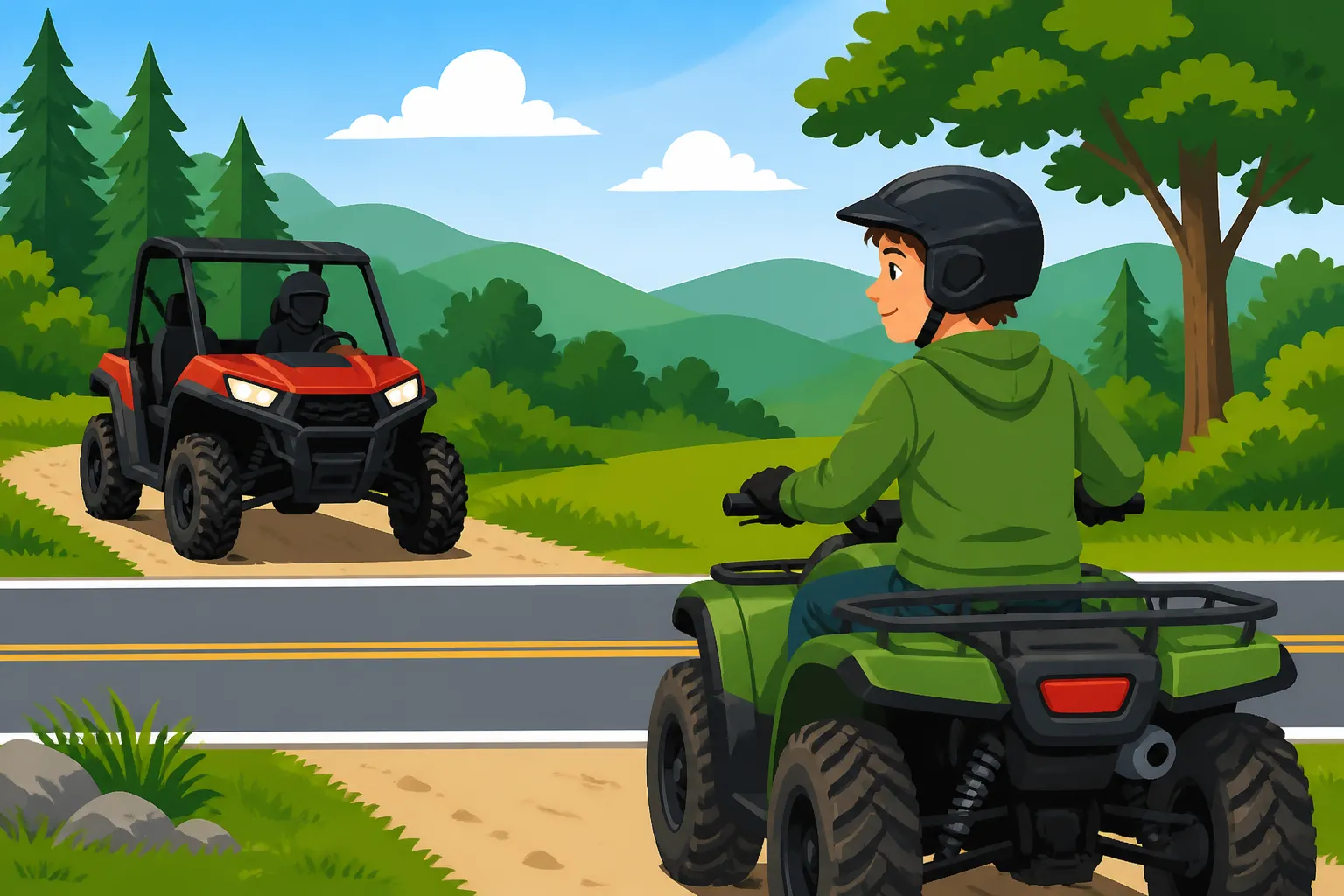
Consider a scenario where the VASA trail ducks out of the woods, crosses a paved town highway, and re-enters the woods on the opposite side. At this specific point, the 12-year-old, under direct adult supervision, must bring their ATV to a complete stop, assess the traffic, and then proceed across with caution. The emphasis is always on minimal time spent on the public road surface. This strict protocol is in place because the speeds and types of vehicles encountered on public roads are vastly different from what's typically found on trails, demanding a higher level of caution and quick decision-making.
Stopping, Looking, and Yielding: Mandatory Practices
Every road crossing, regardless of the rider's age, demands a disciplined approach. For a 12-year-old, these steps are even more crucial and must be actively reinforced by the supervising adult.
- Stop Completely: The ATV must come to a full, complete stop before entering the paved or public road surface. No rolling stops.
- Look Both Ways (and then some!): The rider must check for oncoming traffic from all directions, including looking over their shoulder for vehicles approaching from behind if the crossing requires a slight turn. This isn't just a quick glance; it's a thorough visual sweep.
- Yield to All Traffic: Any vehicle on the public road has the right of way. The ATV rider, and their supervisor, must wait until it is absolutely safe to proceed, with no vehicles in dangerously close proximity.
- Cross Directly: Once clear, the 12-year-old should cross the road at a right angle, as directly and efficiently as possible, staying alert for any changes in traffic. They should not ride parallel to the road for any distance.
This structured approach is designed to instill a habit of extreme caution. Parents often practice these scenarios with their children in safe, controlled environments before venturing out to actual road crossings. It's about building muscle memory and a deep understanding of the potential risks. Equipping the ATV with quality mirrors, perhaps from a brand like SuperATV, can also aid in visibility when looking for traffic, providing an additional layer of awareness for both the young rider and the supervisor.
The Role of the Supervising Adult at a Crossing
While the 12-year-old is operating the machine, the ultimate responsibility for a safe crossing lies with the supervising adult. They are the primary decision-makers and must ensure every step of the safety protocol is followed. This isn't merely about being present; it's about active guidance and intervention.
The supervising adult should lead by example, performing their own crossing with the same meticulous caution. As the 12-year-old approaches the crossing, the adult should verbally guide them through each step: "Stop here," "Look left, look right, really see if anything is coming," "Wait for that car to pass." In some cases, the adult might even need to physically position themselves or their machine to provide an extra visual barrier or to signal to approaching traffic. It’s a dynamic, hands-on role. The adult should also confirm that the young rider's helmet is properly fastened, as outlined in [Vermont ATV Helmet Law for Every Rider], and that all other safety gear is in place before initiating the crossing. Their judgment is paramount in determining if a crossing is safe to attempt, particularly if visibility is poor or traffic is heavy.
| Action Point | 12-Year-Old Rider's Responsibility | Supervising Adult's Responsibility |
|---|---|---|
| Safety Course | Must complete and carry certificate. | Ensure child has certificate; review content together. |
| Supervision | Ride within adult's line of sight and guidance. | Maintain direct, constant supervision; be ready to intervene. |
| Stopping | Come to a complete stop at road edge. | Verbally instruct and confirm full stop. |
| Looking | Actively scan for traffic in all directions. | Guide child's scanning, confirm all clear. |
| Yielding | Wait for all vehicles to pass safely. | Make final "all clear" call; be prepared to block/protect. |
| Crossing | Cross directly at a right angle. | Observe crossing, ensure quick and safe execution. |
| Equipment Check | Ensure helmet and gear are properly worn. | Perform pre-ride gear check, ensure machine readiness. |
Equipment, Safety Gear, and Compliance for Young Riders
Beyond the rules of the road and supervision, the physical aspects of the machine and the rider's personal protective equipment are non-negotiable for safety, especially for a 12-year-old. Riding an ATV, even for a short road crossing, carries inherent risks that can be significantly mitigated with the right gear and a well-maintained machine.
Essential Safety Equipment for a 12-Year-Old Rider
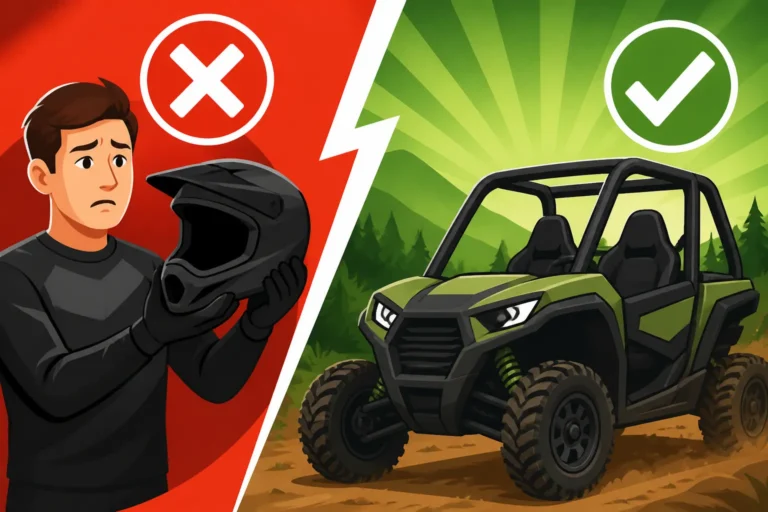
For any ATV ride in Vermont, a properly fitted, DOT-approved helmet is mandatory for all riders, regardless of age. For a 12-year-old, this is particularly vital. Helmets should fit snugly, be securely fastened, and meet recognized safety standards. Beyond the helmet, eye protection (goggles or a face shield), long sleeves, long pants, gloves, and sturdy over-the-ankle boots are strongly recommended. This protective ensemble guards against debris, branches, and provides crucial abrasion protection in the event of a fall.
It’s often a challenge to convince kids to wear all the gear, especially on a hot day, but emphasizing the "why" behind it helps. "This gear keeps you safe so you can keep riding" is a good mantra. Many specialty brands offer youth-sized gear that is comfortable and provides excellent protection. Components like durable skid plates and brush guards, which you might find from a manufacturer like SuperATV, can also protect the machine itself from trail hazards, reducing the chance of a mechanical issue causing an accident during a critical moment like a crossing. Never compromise on safety gear; it’s the first line of defense.
Machine Requirements for Road Crossings
While a 12-year-old is crossing a road, even briefly, the ATV they are operating must still meet basic equipment requirements that apply to all machines traversing public access points. This includes functional headlights and taillights, especially if conditions are dim or visibility is reduced, and working brakes. These aren't just for night riding; a crossing could happen in an area of deep shadow, or the weather could turn unexpectedly. You can learn more about lighting rules in [Vermont Headlight and Tail Light Rules].
A well-maintained machine is a safer machine. Before any ride, and particularly if a road crossing is anticipated, the supervising adult should perform a quick check: are the tires properly inflated? Do the brakes respond firmly? Are the lights working? Is the exhaust system intact and quiet enough to avoid disturbing residents near crossing points? These checks ensure that the machine itself isn't contributing to the risk during a road crossing. A breakdown mid-crossing could put the young rider in a very dangerous position, so proactive maintenance is a must.
Penalties for Non-Compliance and Why They Matter
Ignoring Vermont's ATV regulations, especially those pertaining to young riders and road crossings, can lead to significant penalties. These can range from fines for the supervising adult for allowing an unsupervised or improperly equipped minor to ride, to impoundment of the machine in severe cases. However, the true "penalty" isn't just financial; it's the potential for serious injury or even worse. Violations can be reported by wardens or local law enforcement, who are often present on popular trails and near crossing points. Understanding what they might look for is key, and [What a Warden Can Ask to See] provides helpful insight.
These regulations are not arbitrary; they are put in place to prevent accidents. Imagine the heartbreak of an accident that could have been avoided by simply ensuring a helmet was worn or that proper supervision was in place. The legal consequences serve as a deterrent, but the safety consequences are far more profound. Educating your 12-year-old about these rules and the importance of compliance instills a deep respect for the sport and for the safety of themselves and others. It teaches them that riding an ATV is a privilege that comes with significant responsibility.
Practical Tips for Parents and Guardians of 12-Year-Old Riders
Empowering your 12-year-old to ride safely and confidently, especially around road crossings, involves more than just knowing the rules. It requires active coaching, consistent practice, and leading by example. Many parents feel overwhelmed by the responsibility, but by breaking it down into manageable steps, you can create a positive and safe riding experience for your child.
Pre-Ride Briefings and Practice Sessions
Before hitting the trails with actual road crossings, dedicate time to pre-ride briefings and practice sessions in a controlled environment, such as a large field or an unused parking lot. Walk through the scenario of a road crossing step-by-step, even acting it out. Emphasize the "stop, look, and yield" mantra until it becomes second nature. Practice braking, steering, and accelerating smoothly. These sessions build confidence and muscle memory, which are crucial when the real situation arises.
During these practice runs, you can simulate different scenarios. What if a "car" (you, walking) suddenly appears? How quickly can they react? The goal is not just compliance, but instinctive safety. By making it a regular part of your riding routine, these briefings become less of a lecture and more of a collaborative planning session, fostering a sense of shared responsibility. This is also an excellent time to ensure they understand the importance of respecting [Vermont Landowner Permission Rules] and staying on designated trails.
Choosing Appropriate Trails and Crossing Points
Not all trails or road crossings are created equal, especially for a 12-year-old. When planning your route, choose trails that feature well-marked, low-traffic road crossings first. Avoid crossings on blind curves, steep hills, or busy highways if possible, especially during initial rides. Look for crossings that offer good visibility for both the rider and approaching motorists.
The VASA trail system offers a range of terrain, and some sections are more beginner-friendly than others. Consult local club maps and resources, or even ask experienced riders, for recommendations on suitable routes. As your 12-year-old gains experience and confidence, you can gradually introduce them to more challenging crossings. Remember, the journey is about building skills progressively. A good starting point might be a simple dirt road crossing, as discussed in [Vermont ATV Rules on a Dirt Road], before moving to paved roads.
Leading by Example and Fostering Responsibility
Children, especially 12-year-olds, are highly observant. Your actions as a supervising adult speak louder than any words or rules. Always wear your own safety gear, follow all trail and road crossing rules meticulously, and demonstrate respectful riding behavior. If you cut corners, they will too. Show them what it means to be a responsible steward of the trails and a courteous operator around public roads.
Beyond demonstrating proper technique, foster a sense of responsibility in your child. Involve them in pre-ride checks, talk about the importance of respecting landowners and other trail users, and discuss why the rules are in place. Encourage them to ask questions and express any concerns they might have. This open communication builds trust and empowers them to make safer choices, even when you're not directly supervising every single action. Ultimately, the goal is to equip them with the knowledge and judgment to be safe, independent riders as they grow older.
Disclaimer
This article is for general informational purposes only and does not constitute professional advice. Laws, prices and regulations vary by location and change over time. Consult a qualified professional for guidance on your specific situation.