Franklin’s ATV Ordinance in Vermont
Navigating the labyrinth of ATV and UTV regulations across Vermont can feel like solving a complex puzzle, especially when each town seems to have its own rulebook. Many riders experience the frustration of not knowing where they can legally put rubber to dirt or pavement, and the Town of Franklin is a perfect example of why understanding local ordinances is absolutely essential. This guide will walk you through the specifics of Franklin's ATV ordinance, helping you ride confidently and respectfully within its borders.
Understanding Vermont's Local Control Over ATV Roads
One of the biggest hurdles for ATV and UTV riders in Vermont is the decentralized nature of road access. Unlike some states where a blanket law covers most riding, Vermont places a significant amount of control into the hands of individual towns. This means that your ability to ride on a public road often changes the moment you cross a town line, and Franklin is no exception to this rule.
The Statewide Framework vs. Local Decisions
Vermont's legislative framework grants towns the authority to decide which of their roads, if any, are open to ATVs and UTVs. It’s not a matter of whether a state-level law opens all roads; rather, it’s about towns opting in to designate specific routes. This system was designed with good intentions, allowing local communities to manage potential concerns such as noise, traffic, safety, and the wear and tear on their infrastructure. A small, quiet town might choose to keep all its roads closed, while a community looking to boost tourism might open several key routes to connect to trail systems.
This local control means that riders can't just assume. You might be riding legally on a town road in Fairfield, cross into Franklin, and suddenly be in violation of the law if Franklin hasn't opened that particular road. It’s a reality that can be incredibly frustrating for those who just want to enjoy the beautiful Vermont landscape on their machine. Furthermore, these designations aren't set in stone forever; town selectboards typically review and re-designate these roads annually. This means riders need to stay vigilant and informed, because what was open last year might be closed this year. Understanding this annual process is key to legal riding; you can learn more about it in [Vermont Selectboards Open Roads Each Year].
Why Town Ordinances Are So Important for Riders
Ignoring local town ordinances isn't just a minor oversight; it can have significant consequences. For starters, riding on a road that hasn't been designated for ATV use can lead to fines and legal trouble. More broadly, it can strain the relationship between the riding community and local residents. When riders don't respect local rules, it often leads to complaints, which in turn can lead to towns closing off access that was previously available, or refusing to open new routes. It's a delicate balance, and responsible riding is crucial for maintaining access for everyone.
Even if you're primarily interested in riding on organized trail systems, understanding town ordinances is critical. Many VASA (Vermont All-Terrain Vehicle Sportsmen's Association) trails utilize short sections of town roads to connect different trail segments. Without these road connectors, the larger trail network would be fragmented and far less enjoyable. Imagine planning a long loop ride only to find a critical road link is closed or never was open to ATVs—it can quickly derail your entire day. Therefore, riders must take the time to research the specific rules of every town they plan to ride through, even if it’s just for a quarter-mile connector. This proactive approach not only keeps you on the right side of the law but also helps ensure the longevity of riding opportunities in Vermont.
What Franklin's ATV Ordinance Covers
Like many towns, Franklin has established specific rules governing ATV and UTV use within its municipal boundaries. These rules are designed to integrate ATV access into the community while addressing local concerns about safety, noise, and infrastructure. Knowing these specifics is non-negotiable for anyone planning to ride in the area.
Designated Roads and Their Specifics
Franklin's ordinance typically specifies which roads are open to ATVs and UTVs. These are often certain Class 3 or Class 4 roads – the less-traveled, usually unpaved roads that crisscross the Vermont countryside. Sometimes, a short segment of a village street might be included to provide access to a trailhead or link different parts of a trail system. It's rare to find heavily trafficked state highways or major paved village roads open to ATVs in any Vermont town, and Franklin generally follows this pattern. The ordinance will clearly list these roads, sometimes by name or by specific geographic points, so a detailed map or a copy of the ordinance itself is your best friend.
Beyond just which roads are open, Franklin’s ordinance will also outline when they are open. This includes establishing an ATV riding season, which often aligns with the general VASA trail season, typically running from May to October. There might also be specific operating hours, such as daylight hours or ending by a certain time in the evening, to minimize noise disturbance to residents. These timeframes are crucial; riding outside the designated season or after curfew is a direct violation, regardless of whether you're on an otherwise approved road. Riders should also be aware of common restrictions that may be in place, such as maximum speed limits which are often lower than typical vehicle speed limits on town roads, and strict prohibitions against modifying machines for excessive noise. These provisions are in place to ensure that ATV use remains compatible with the quiet, rural character of the town.
Curfews, Speed Limits, and Safety Requirements
Most town ordinances, including Franklin's, will detail specific operating conditions to ensure public safety and minimize disruption. These conditions are not just suggestions; they are enforceable laws within the town limits. A common feature in many Vermont town ordinances is a curfew, specifying hours during which ATV operation on designated roads is prohibited. For instance, many towns enforce a 9 PM cutoff for ATV use, recognizing that late-night riding can be a significant source of noise complaints. Riders should consult the official Franklin ordinance for its exact curfew hours to avoid an unexpected ticket. [Vermont ATV Curfew Hours by Town] can give you a general idea of what to expect from towns across the state.
Speed limits are another crucial aspect. While state law may have general speed limits for specific road classes, towns often impose lower, more conservative limits for ATVs on their designated routes, especially on gravel roads or within village areas where residents are nearby. It's not uncommon to see limits of 25 mph or even lower on these designated ATV roads. Riders need to pay close attention to posted signs and always err on the side of caution. Furthermore, all Vermont towns will adhere to statewide safety requirements, which mandate helmet use for all riders, regardless of age, and require adequate insurance coverage. [Vermont ATV Helmet Law for Every Rider] and [Vermont ATV Insurance Requirements] are state laws that apply universally, but towns will certainly reinforce their importance. While meeting these basic requirements is necessary, being a responsible rider means going above and beyond—ensuring your machine is in top mechanical condition, riding sober, and always respecting other road users and private property.
Navigating Franklin's Rules: Practical Steps for Riders
With so many localized rules, successfully riding in Franklin—or any Vermont town—requires a proactive approach. It's not enough to simply hope you're in compliance; you need to know for sure. This involves understanding where to find the official information and how to apply it to your riding habits.
Finding the Official Ordinance Information
The absolute best way to understand Franklin's ATV ordinance is to go straight to the source. Do not rely on hearsay, outdated social media posts, or even a friend's recollection. The official source for Franklin's regulations will be the Town of Franklin itself. Your first stop should always be the town's official website. Many Vermont towns now publish their ordinances, selectboard meeting minutes, and relevant maps online, making them accessible to the public. Look for sections related to "ordinances," "town clerk," "selectboard," or "recreation." If you can't find it online, don't hesitate to call or visit the Town Clerk's office during business hours. They are the official custodians of municipal records and can provide you with a copy of the current ordinance or direct you to where it's posted.
It's also important to remember that town ordinances, particularly those concerning ATV road access, can change. Town selectboards regularly review these designations, often annually. What was true last year may not be true this year. Therefore, it's wise to check for updated information each riding season, especially if you plan to visit at the beginning of the season. Knowing the official process for how these decisions are made can be empowering for riders; for instance, [Why Vermont Road Designations Must Be Renewed Yearly] explains the cycle towns go through. Some towns also post physical notices at town offices, general stores, or at popular trailheads. Always cross-reference information to ensure you're looking at the most current version.
Adhering to Franklin's Requirements (and Avoiding Common Mistakes)
Once you've got a handle on Franklin's specific rules, the next step is to ensure your riding strictly adheres to them. A common mistake riders make is assuming that because a road looks like a trail, or connects to one, it's fair game. This is where the specific road designations in the ordinance become critical. Only ride on roads explicitly opened to ATVs by Franklin's selectboard. Veering off onto an undesignated road, even briefly, can land you a ticket. Equally important is distinguishing between public roads opened by ordinance and private land. Just because you have permission to ride on one landowner's property doesn't mean you can ride on their neighbor's or on an adjacent road not covered by the town ordinance.
Furthermore, make sure your machine meets all state and local requirements. This includes having proper registration through the Vermont DMV and displaying your VASA Trail Access Decal (TAD) if you intend to connect to the VASA trail system via town roads. Remember, [Vermont Requires Registration Plus a TAD] for most trail riding. Ensure your machine is equipped with working headlights, taillights, and a muffler that meets noise standards. Aftermarket parts can be fantastic for enhancing your machine's performance and durability, but always consider their legality on public roads and trails. For instance, products from a company like SuperATV, known for its heavy-duty axles, lift kits, or protective gear, can significantly improve your machine’s capability off-road. While these components enhance your machine, they don't exempt you from complying with town rules regarding road use, vehicle dimensions, or noise levels. It's your responsibility to ensure any modifications still meet the town's specific requirements, and that your machine's plate is clearly visible, as discussed in [Vermont Plate Visibility on the Road]. Don't push the boundaries on hours or designated routes, as doing so jeopardizes access for everyone and tarnishes the reputation of the riding community.
Consequences of Non-Compliance and Community Relations
Riding an ATV or UTV in Vermont is a privilege that comes with significant responsibilities. Failing to follow town ordinances, like Franklin’s, can have direct legal and financial repercussions for the individual rider, and broader negative impacts on the entire ATV community. Understanding these consequences is a powerful motivator for compliance.
Fines, Penalties, and Enforcement in Franklin
Violating Franklin's ATV ordinance is not merely a slap on the wrist. Depending on the specific infraction, you could face fines, which can quickly add up. Common violations include riding on undesignated roads, operating outside of permitted hours, exceeding speed limits, or failing to meet equipment requirements (like having a loud exhaust). These fines are designed to deter non-compliance and can be a costly lesson for an uninformed rider. [Vermont ATV Fines for Road Violations] highlights the various penalties one might incur throughout the state.
Enforcement of these local rules typically falls to a combination of authorities. Local constables or town police departments are often the primary enforcers within their town limits. However, Vermont State Police troopers and Vermont Fish & Wildlife wardens also have the authority to enforce ATV regulations, particularly if your riding extends onto state land or involves connections to trail systems. [Who Enforces ATV Rules: Warden or Town Officer?] explains this jurisdictional overlap. It's crucial to remember that these officers are simply doing their job to uphold local laws and ensure public safety. Repeated violations, or particularly egregious ones, could lead to more severe penalties, including impoundment of your machine or the loss of riding privileges. Furthermore, a pattern of non-compliance from riders in a specific area can lead the town selectboard to reconsider their decision to open roads to ATVs, potentially closing off access for all riders.
Being a Good Steward of the Trails and Roads
Beyond the legal ramifications, adhering to town ordinances is fundamentally about being a good steward of the trails and roads we're permitted to use. The future of ATV access in Vermont hinges on the positive relationship between riders, landowners, and local communities. When riders are respectful, quiet, and stay on designated routes, it builds trust and encourages continued access. Conversely, a few irresponsible riders can quickly erode that trust and lead to widespread restrictions. This often boils down to common courtesy: slow down when passing homes, keep noise to a minimum, avoid kicking up excessive dust, and never, ever trespass on private property.
Consider joining a local VASA club. These clubs are the backbone of the trail system, working tirelessly with landowners and town officials to maintain and expand riding opportunities. By becoming a member, volunteering for trail workdays, or simply supporting their efforts, you're directly contributing to the sustainability of the sport. Choosing equipment that supports responsible riding is also part of this stewardship. For example, while SuperATV offers many performance-enhancing parts, considering components that also minimize impact, such as durable suspension parts that help maintain control and reduce rutting, can contribute to preserving the trails. While they don't typically sell exhaust systems directly designed for quiet operation, the overall build quality and reliability of performance parts can prevent breakdowns that might leave you stranded or create environmental issues. Ultimately, every rider’s actions reflect on the entire community, and being a responsible, considerate rider is the most effective way to ensure continued access for generations to come.
The Broader Context: Connecting Franklin to the VASA Trail System
Franklin's ATV ordinance isn't an isolated set of rules; it's a piece of a much larger puzzle that makes up Vermont's riding landscape. For many riders, the primary reason to use town roads in Franklin is to connect to the extensive VASA trail system. Understanding this broader context helps riders plan their adventures more effectively and appreciate the interconnectedness of local and statewide efforts.
How Town Roads Link the VASA Network
The VASA trail system is a remarkable network of multi-use trails that crisscross Vermont, largely reliant on the generosity of private landowners and the cooperation of towns. However, these trails rarely form a continuous, unbroken path. Instead, they often rely on short segments of town roads—like those designated in Franklin—to link one section of private trail to another, or to connect riders to services like gas stations, restaurants, or lodging. These "road connectors" are absolutely vital for creating the long, enjoyable loops and point-to-point rides that make Vermont riding so popular. Without them, the VASA system would be far less functional. [Vermont Trails Connected by Town Roads] provides more insight into this crucial aspect of the state's trail network.
Therefore, when you're looking at a VASA trail map, it's essential to overlay that information with the specific town ordinances for Franklin and any adjacent towns you plan to traverse. A trail might flow smoothly for miles, but if it hits a town line where the connecting road is not open to ATVs, your ride comes to an abrupt halt. This is why VASA clubs work closely with town selectboards to advocate for the opening of these critical road links. Riders who understand this interconnectedness are better equipped to plan their routes, avoid illegal riding, and appreciate the delicate balance that keeps the entire system operational. Always verify the legality of riding on any road section shown on a map, even if it looks like a natural extension of a trail.
What Franklin's Rules Mean for Visitors and Trail Riders
For those visiting Franklin from other parts of Vermont or out of state, the town's ordinance holds particular significance. Unlike a resident who might be intimately familiar with local roads, a visitor needs to be extra diligent. It's tempting to assume that if you're riding legally in a neighboring town, those rules will carry over. This is a dangerous assumption in Vermont. Each town is its own jurisdiction, and its ordinance is gospel within its borders. What's perfectly fine in Fairfield might lead to a fine the moment you cross into Franklin without checking the specific local rules. [Vermont Rules for a Visiting Quebec Rider] and similar articles underscore the importance for all visitors to verify local regulations.
For trail riders specifically, Franklin's ordinance determines how you access, traverse, and exit various trail segments. If Franklin has opened roads that link to the VASA network, it means you have legitimate ways to extend your ride, get fuel, or find a bite to eat without breaking the law. Conversely, if critical links are closed, you'll need to re-route or adjust your plans entirely. To help manage this complex information, many riders utilize GPS devices or smartphone apps for navigation. Products from a company like SuperATV, which makes robust GPS mounts and storage solutions for ATVs and UTVs, can be incredibly useful here. These accessories allow you to securely carry your device, load official town maps or digital versions of ordinances, and consult them on the go, ensuring you stay on approved routes and within designated operating times. Ultimately, whether you're a local or a visitor, Franklin's ordinance is a key piece of the puzzle for a legal and enjoyable ATV adventure in this beautiful part of Vermont.
Common Town Ordinance Rules and Their Implications
Understanding the general categories of rules found in town ordinances, like Franklin's, can help you quickly grasp the expectations and avoid common pitfalls. While specific details vary, the themes remain largely consistent across Vermont.
| Rule Category | Common Town Ordinance Feature | Impact on Riders |
|---|---|---|
| Designated Roads | Specific Class 3/4 roads, certain village streets | You must ride only on roads explicitly opened by the town. Riding elsewhere is trespassing or illegal road use. |
| Operating Hours | E.g., 7 AM to 9 PM daily, no night riding | Plan your start and end times carefully. Riding after curfew can result in immediate fines and noise complaints. |
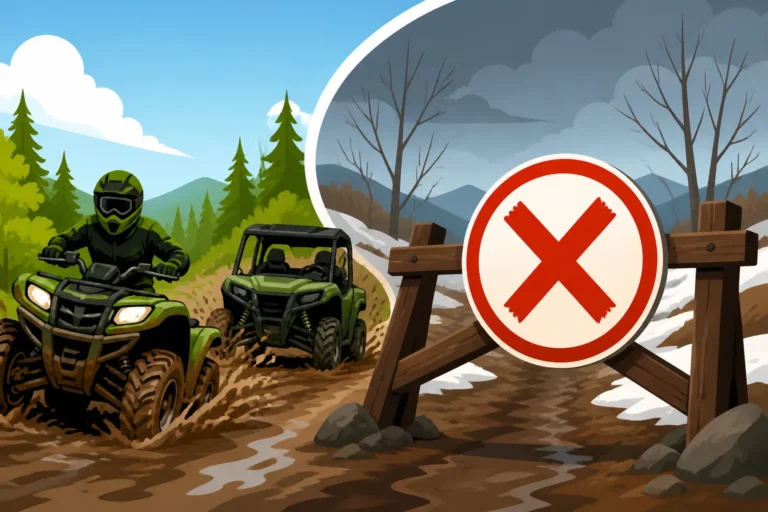
| Seasonal Dates | May 15 to October 15, or specific dates | Respect mud season closures and off-season restrictions. Riding out of season damages roads/trails and can lead to fines. |
| Speed Limits | Often 25 mph or less on town roads | Adjust your speed. Town limits are typically lower than state speed limits and strictly enforced for ATVs. |
| Equipment | Helmet, lights, muffler, insurance, registration, TAD | Ensure your machine meets all state and local requirements. This is non-negotiable for safety and legality. |
| Noise Levels | Restriction on excessive muffler noise | Maintain stock or compliant aftermarket exhaust systems. Excessive noise is a major source of resident complaints. |
| Private Property | Strict prohibition on leaving designated routes | Stay on marked paths. Trespassing damages landowner relations and can lead to permanent trail closures. |
Disclaimer
This article is for general informational purposes only and does not constitute professional advice. Laws, prices and regulations vary by location and change over time. Consult a qualified professional for guidance on your specific situation.