Vermont Safety Course Cost
Vermont ATV safety course cost depends on the course format and provider, so the amount you see may not be the amount charged later. The key is to check what the fee covers, whether the rider needs a certificate, and how to keep proof of completion. That helps you avoid paying for the wrong course or confusing training with trail-access costs.
What the Vermont ATV safety course costs
There is not one amount that applies to every course option. An online course may have a fee set by its provider, while an in-person class may have different arrangements. Fees and included services can change, so confirm the current price with the official course provider before enrolling.
A course listing may show a single total, but check what that total includes. Depending on the provider, you may want to confirm whether the fee covers the lessons, the final test, and access to a certificate or record of completion. Also check whether you can retake the test if needed and whether any extra charge applies for a printed document or replacement proof.
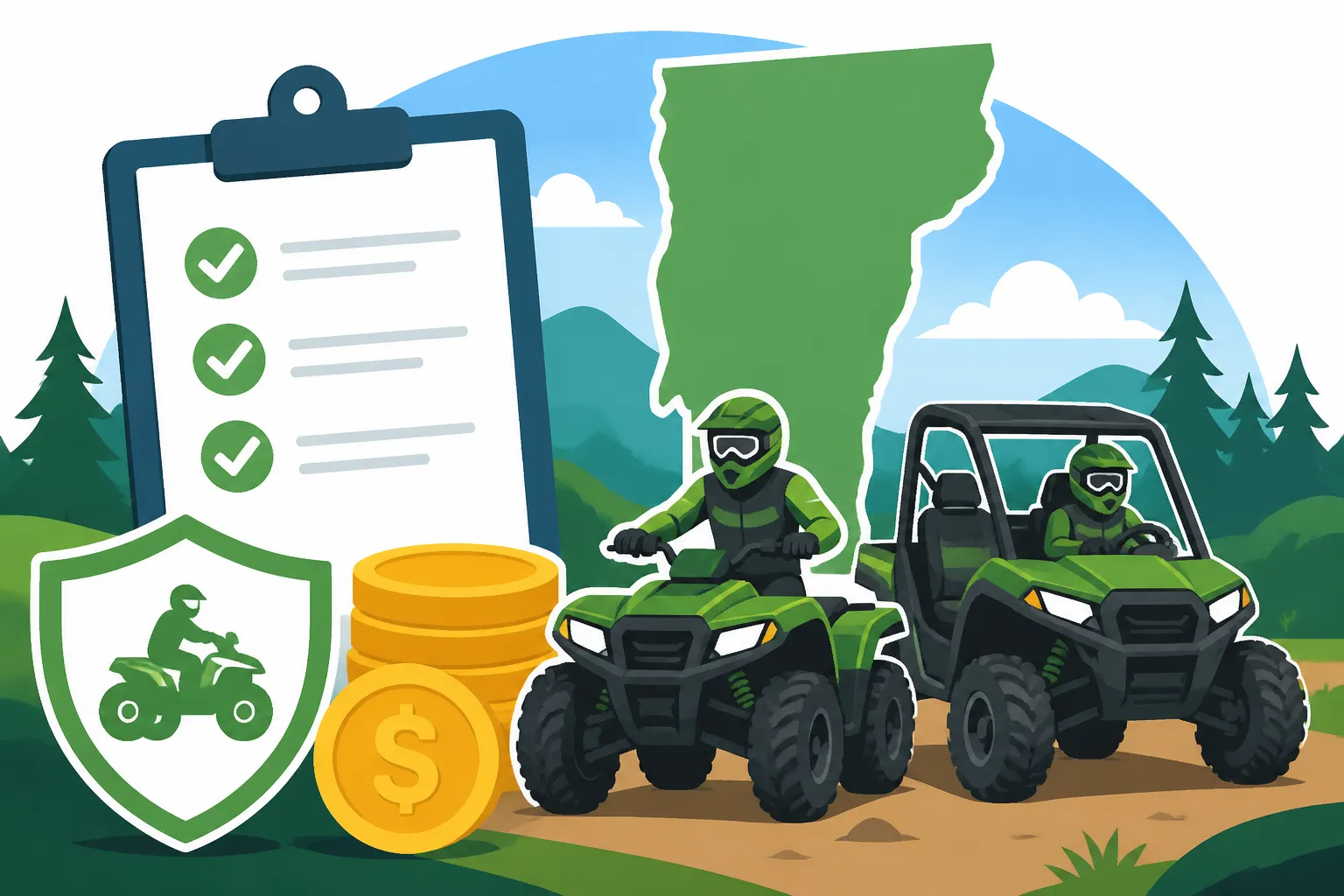
The course’s advertised cost is only one part of what a family might spend to get ready to ride. It is separate from machine registration, insurance, and Vermont’s Trail Access Decal, which is required for access to the VASA trail system. Taking the safety course does not replace those requirements. For the separate decal rules, see Vermont Requires Registration Plus a TAD.
| Cost or requirement | What it covers | What to check |
|---|---|---|
| Safety course fee | Training and, depending on the provider, testing or a completion record | Current fee, included materials, retakes, and certificate access |
| ATV registration | Registering a machine with the state when required | The machine’s classification and current registration requirements |
| Trail Access Decal | Access to trails in the VASA system | Eligibility, current cost, and where the decal is required |
| Optional gear or equipment | Items such as a properly fitted helmet and other riding gear | Fit, condition, and applicable safety requirements |
Do not assume the lowest listed amount is the final cost. A course may be free or paid, and providers can change their terms. Review the checkout page and course information before paying. If a young rider is taking the course, have an adult check that the selected option is accepted for Vermont ATV safety certification.
The Vermont-specific topic Vermont Online Safety Course at $34.95 may help you compare information about an online option, but treat any listed amount as something to verify before enrollment. For a current decision, use the provider’s latest course details rather than relying on an old price shown in a search result, saved link, or printed material.
Budget for the full riding setup
The course itself is not a permit to ride everywhere. A certificate confirms training; it does not automatically provide access to a trail, register a machine, or satisfy every local rule. Before budgeting, separate the expenses into three groups:
- Training: the course fee, if the selected course charges one, and any related testing or certificate service.
- Machine requirements: registration and any other paperwork the machine needs.
- Access and riding: a required Trail Access Decal for VASA trails, insurance where required, and suitable protective equipment.
These costs can apply at different stages. For example, a family might complete training before buying a machine, while registration and trail-access costs come later. Check each requirement independently so you do not treat a course payment as covering registration or trail access.
Who needs a safety course in Vermont
Vermont’s ATV safety-certificate requirement is especially important for riders under 18. In general, a rider under 18 needs the required safety training and certificate to operate an ATV where the state requirement applies. Riders who are approaching a birthday should not assume that turning 16 removes the certificate requirement; the relevant age cutoff is 18. See Vermont Safety Certificates That Never Expire for more on the certificate itself and Vermont Safety Course Minimum Age for age-related details.
Training and supervision are separate rules. A certificate does not necessarily mean a young rider can ride without an adult. Riders under 16 may be subject to a direct-supervision requirement, even if they have completed the course. Before setting out, confirm the rules for the rider’s age and the place where the machine will be used. Vermont Riders Under 16 Need an Adult explains the supervision question separately.
Exceptions may apply in limited settings, such as riding on land owned by a rider’s family or operating under an instructor’s supervision. Do not assume an exception applies just because a ride takes place on private property. The ownership, setting, and activity can matter. Check the specific conditions in Vermont Course Exception on Family Land or Riding Under an Instructor’s Eye before relying on an exception.
Adults may choose to take a course even when they do not need a certificate for their own riding. Training can be useful for someone new to ATVs, unfamiliar with trail etiquette, or responsible for supervising a young rider. It can also help a family establish shared habits around speed, protective gear, machine limits, and what to do if a ride goes wrong.
The course requirement and trail-system requirements are not the same thing. A trained rider may still need to meet registration and decal rules before using a VASA corridor. Conversely, having a decal does not mean a young rider has satisfied the training requirement. If you are riding with children, review both the training rules and the access conditions before travel.
How to choose a course without paying for the wrong one
Before paying, identify the rider who needs training and what the rider plans to operate. The goal is not simply to complete any ATV-related class; it is to take a course that meets Vermont’s requirements and results in usable proof of completion.
Use this checklist:
- Confirm the rider’s age and situation. Check whether the certificate requirement applies and whether supervision rules also apply.
- Select a Vermont-accepted course. Verify that the course is recognized for the purpose you need, rather than assuming an unrelated safety class will count.
- Review the current fee and terms. Check whether the displayed amount includes the course, test, certificate access, and any retake or replacement service.
- Check the format and timing. Online and in-person options may differ in pace, scheduling, and how the rider completes the material. Details are covered in Vermont Safety Course Length.
- Save proof as soon as the course is complete. Keep a digital copy and, if available, a printed copy in a place you can find later.
If a course is offered online, make sure the rider can work through the material and complete the test independently as required by the provider. A parent or guardian can help with enrollment and make sure the correct information is entered, but should not assume that doing the work for the rider will produce a valid certificate.
For a classroom course, confirm the location, schedule, age eligibility, and what the rider should bring. Ask whether the provider issues proof immediately or whether it must be accessed later. These practical details can matter if the family plans a ride soon after the course.
Be cautious with old screenshots and informal recommendations about price or acceptance. A friend may have taken a course under different terms or used a provider that has since changed its process. Current enrollment information and Vermont’s official guidance are better references for deciding whether a course qualifies and what it costs.
After the course: certificate, proof, and other expenses
Once the rider completes the course, keep a record of the certificate. Save a digital copy somewhere accessible and consider printing one for the family’s riding documents. If the proof is lost or difficult to access, use the provider’s process or the state’s lookup instructions. Vermont Safety Certificate Lookup and Printing Your Vermont Safety Certificate cover those follow-up tasks.
A safety certificate is not the same as a license, registration, or trail pass. It documents training; it does not authorize a rider to ignore age limits, supervision requirements, access restrictions, or machine rules. Keep the certificate alongside other riding records, but check each requirement separately before a trip.
For a VASA trail ride, confirm that the machine has the required registration and decal, and that the rider meets the safety requirements that apply to their age. The decal is a separate trail-access requirement, not a course fee or certificate. If you are visiting from outside Vermont, check the separate rules for out-of-state machines rather than assuming your home registration settles every Vermont requirement.
It is also sensible to review insurance and equipment before the first ride. A course teaches safe operating practices, but it does not insure the machine or supply protective gear. Requirements can depend on where and how you ride. Vermont ATV Insurance Requirements and Vermont ATV Equipment Requirements explain those separate considerations.
The most reliable way to estimate the course expense is to check the current provider listing, confirm exactly what is included, and then budget separately for machine registration and trail access. For a young rider, verify the age and supervision rules as well as the course. That small check before enrollment can prevent paying for a class that does not meet the family’s actual need.
Disclaimer
This article is for general informational purposes only and does not constitute professional advice. Laws, prices and regulations vary by location and change over time. Consult a qualified professional for guidance on your specific situation.