Riding Beside Your Own Property Line
You've got your ATV, your land, and you figure riding along your property line is a no-brainer, right? It feels like an extension of your own backyard. But in Vermont, the rules about where you can ride your ATV or UTV can get surprisingly complex, even when you're right next to your own property. This guide will unravel the nuances of Vermont's ATV laws when it comes to riding right next to your own land, ensuring you stay compliant and avoid unwelcome surprises from neighbors or law enforcement.
Understanding What "Your Own Property Line" Really Means in Vermont
It might seem obvious, but your property line isn't just an invisible boundary; it's a legal demarcation that often dictates entirely different rules for ATV operation. What's allowed on your land might be strictly forbidden the moment you cross into an adjacent area, even by a tire's width. This often boils down to whether your property line abuts another private landowner's property, a public road, or even designated state or federal land. Knowing this distinction is your first step to riding responsibly.
The Clear Line of Private Land
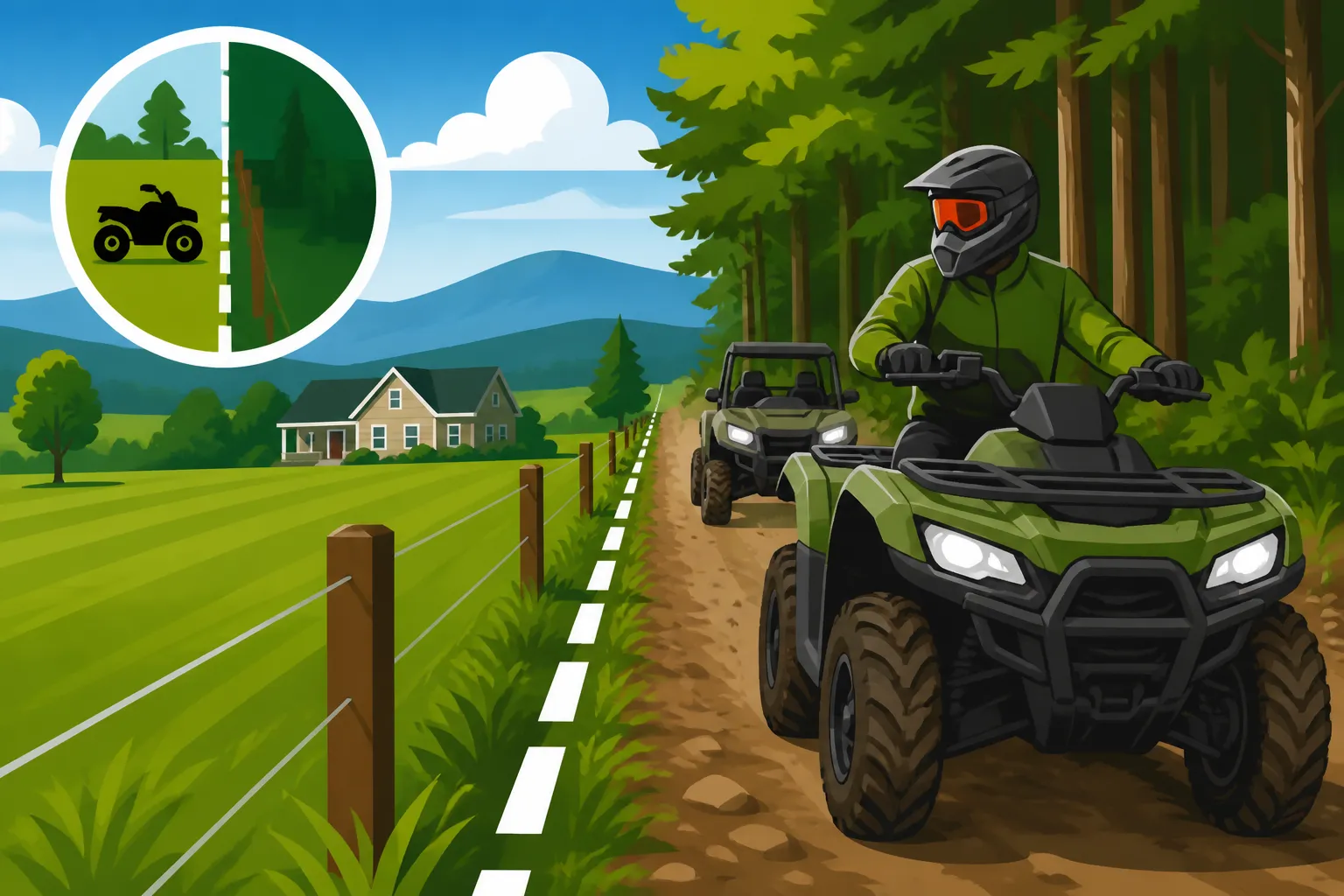
When your property line borders another private parcel, the rule is pretty straightforward: you can ride on your own land, but you cannot cross onto your neighbor's land without explicit permission. This isn't just common courtesy; it's the [Vermont Trespass Law for Riders]. Even if it's just a few feet onto their field to turn around, or if you think "no one will notice," you're technically trespassing. This can lead to fines, strained neighborly relations, and even legal action. Imagine you're out cutting firewood on your back lot, using your utility vehicle to haul logs. If your cutting takes you close to the boundary, it's easy to accidentally veer onto a neighbor's overgrown field for a shortcut. That brief excursion, even if unintentional, can open a can of worms. It’s always best to have a clear understanding of your property boundaries, perhaps even walking them before you ride, especially in areas where landmarks might be obscured by vegetation.
When Your Property Borders a Public Road
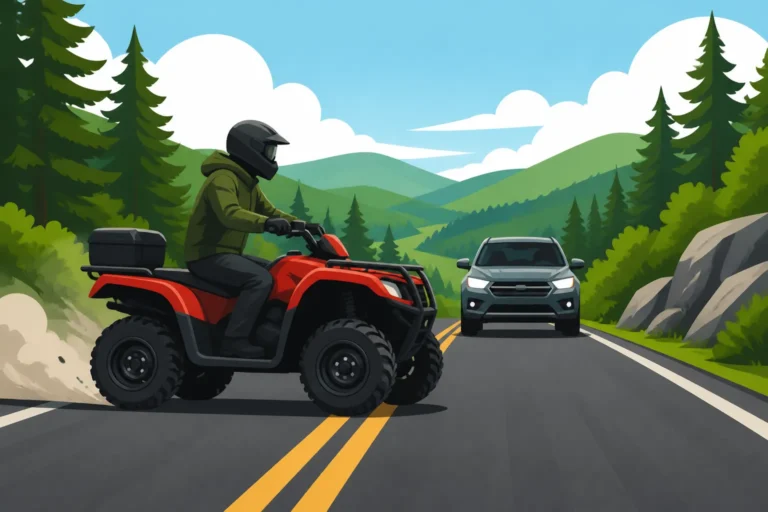
This is where things get particularly tricky in Vermont. Many properties, especially in rural areas, have boundaries that run directly alongside town roads, Class 3, or even Class 4 roads. While it might feel like an extension of your driveway, these are public ways, and different rules apply. You can't just ride down the shoulder or even parallel to the road on the grassy verge simply because it's adjacent to your land. In Vermont, riding an ATV on a public road, even briefly, is generally prohibited unless that specific road has been officially designated as an ATV route by the local selectboard. Even then, there are often specific conditions and restrictions. For example, some towns allow ATVs on certain roads only to access a trail system, not for general recreation. Understanding [Vermont ATV Road Rules: Towns Decide] is absolutely critical here.
Navigating Public Roads That Adjoin Your Property
Let's dive deeper into the complexities of riding where your private land meets a public thoroughfare in Vermont. Many Vermonters live on roads that are gravel or dirt, and it's easy to assume these are less "public" than paved routes. However, a road's surface doesn't change its legal designation. If it's maintained by the town or state, it's a public road.
Designated ATV Routes and Your Driveway Access
So, your property line runs along a town road. Can you use your ATV to access that road briefly to get to a trail system, or to cross to another part of your property? The answer is "it depends entirely on the town." Some towns in Vermont have embraced ATVs and have officially designated certain roads as ATV routes. If your property is on one of these rare designated roads, you might be able to use your ATV to directly access that route from your driveway. However, even on designated routes, there are often strict rules regarding speed, time of day, and the purpose of the ride. You might be allowed to travel from your driveway to the nearest trail access point, but not to simply joyride up and down the road. These routes are usually marked, and it's your responsibility to know the local ordinances. You'll often find specific ordinances for towns like Brighton or Newport City that detail allowed roads, curfews, and speed limits. Always check with your local town clerk or selectboard to understand current designations.
The Grey Area of Class 4 Roads and Unmaintained Sections
Vermont has a unique system of roads, including "Class 4" roads which are public but often unmaintained. Some property lines abut these. While Class 4 roads are legally public, they are not automatically open to ATVs. The same rule applies: a town selectboard must officially open them for ATV use. If a Class 4 road runs through or alongside your property and it hasn't been designated, riding on it is still unlawful. It's easy to mistakenly believe that because a road is rugged or looks like a trail, it's fair game. This isn't the case. You need to verify its status. If you're using your ATV for property maintenance, say, hauling building materials down an unmaintained Class 4 section that borders your land, you could still be in violation if that section isn't designated. It’s important to distinguish between using an ATV for farm or forestry work strictly on your own land and operating it on what is technically a public right-of-way, even if that right-of-way is in rough shape. Always ensure your machine is properly registered and insured, as required by [Vermont ATV Insurance Requirements], even if only riding on private land that occasionally touches public ways.
The Absolute Necessity of Landowner Permission
Beyond your own property line, whether it's adjacent to a neighbor's woods or a farmer's field, permission is not just a polite request – it's a legal imperative in Vermont. This principle underpins the entire [Vermont ATV Trails: The VASA System] and the ability of clubs to maintain their extensive network. Without landowner consent, there are no trails.
Respecting Adjacent Private Property
Even if you have permission to ride on your own property, you can't assume that extends to your neighbor's. This includes taking shortcuts across corners, driving along their field edges, or using their access roads. Verbal permission is a good start, but written permission is always better, especially for long-term arrangements or if there's any ambiguity. A simple signed note can prevent misunderstandings. Imagine your property ends at a dense stand of trees, and beyond that is your neighbor's hayfield. You might be tempted to cut through the edge of their field to reach another section of your own property, or just for a smoother ride. Without their explicit permission, you're trespassing. This isn't just about avoiding a ticket; it's about maintaining good neighborly relationships, which are invaluable in rural Vermont. When riding, remember that noise can carry, and even if you’re technically on your own land, operating a loud machine right on the property line can be disruptive. Consider quieter exhaust options or general maintenance for your muffler, ensuring it meets [Vermont Muffler and Noise Rules], if your riding frequently brings you close to inhabited areas.
Public Lands and Rights-of-Way
While your property might border state forests or other public lands, this does not automatically grant you ATV access. Most state forests and parks in Vermont are actually closed to ATVs, with very few exceptions for designated corridors. These exceptions are often limited to specific, marked crossings or trails managed by VASA clubs, requiring a [Vermont TAD: The Trail Access Decal Explained]. Assuming public land is open just because it's nearby is a common mistake that can lead to fines and the closure of access points for everyone. It's crucial to consult official maps and regulations from the Vermont Department of Forests, Parks and Recreation. If your ATV is primarily for property maintenance or farm use, you might be wondering about [Does a Farm-Only ATV Need Vermont Registration?]. The answer is nuanced, but even farm vehicles need to respect public land rules and private property boundaries when not strictly on private agricultural land.
Practical Tips for Riding Responsibly Near Property Lines
Navigating the rules for riding near your property line in Vermont requires diligence and respect. Here are some actionable tips to ensure you're riding legally and considerately.
Know Your Boundaries and Your Town's Rules
First and foremost, literally know your property boundaries. If there's any doubt, consider walking your property line or consulting your deed and property survey. Don't rely on assumptions. Second, become intimately familiar with your town's specific ATV ordinances. Towns have the authority to open or close roads to ATVs, and these decisions are made by [Vermont Selectboards Open Roads Each Year]. Your town clerk's office is the best resource for current maps and regulations. These rules can change annually, so what was allowed last year might not be this year. If your machine is older or has seen a lot of use, consider checking it over before the season starts. For sturdy replacement parts or upgrades like enhanced suspension that can handle varied terrain, brands like SuperATV offer a wide array of options that can improve your machine's reliability when you're out on your property.
| Scenario | Legal Requirement | Best Practice |
|---|---|---|
| Riding on your own land, bordering neighbor | No trespass onto neighbor's land. | Clearly know your boundary. Get written permission if you need to briefly cross. Keep noise respectful. |
| Riding on your own land, bordering public road | Cannot ride on road unless designated. | Verify town ordinances. Only use designated routes. Ensure proper registration and insurance. |
| Riding near public state/federal land | Most public lands closed to ATVs. | Check official state maps for designated crossings/trails. Purchase a VASA TAD if riding on VASA trails. |
| Using ATV for property maintenance | Allowed on your own land. | Ensure machine meets [Vermont ATV Equipment Requirements] (lights, brakes). Be aware of noise if near neighbors. |
Gear Up for Visibility and Compliance
If there’s any chance your riding will bring you even momentarily onto a public right-of-way (like crossing a town road to access another part of your property, if permitted), make sure your machine meets all road-legal requirements, even if it's not a truly "street legal" ATV. This includes having functioning headlights and taillights, as detailed in [Vermont Headlight and Tail Light Rules]. Good mirrors and turn signals can also be smart additions for safety, even if not strictly required for brief road crossings. Retailers like SuperATV offer robust lighting kits and mirrors designed for ATVs and UTVs, which can greatly enhance your visibility and safety when operating near roads or other vehicles. And, of course, always wear a helmet – it's the law in Vermont for every rider.
Communicate with Your Neighbors and VASA
Good communication can prevent many issues. If your riding habits might impact neighbors (e.g., noise, dust), talk to them proactively. Let them know what you’re doing. If you plan to ride any VASA-approved trails that might be accessed from near your property, support the system by joining a local club and getting your [Vermont TAD Cost]. This funding helps maintain the trails and ensures landowners continue to grant permission. Remember, the entire trail system relies on the goodwill of private landowners. Riding responsibly, staying on marked trails, and respecting the land are paramount to keeping access open for everyone. If you have concerns about the enforceability of rules or questions about your specific situation, don't hesitate to consult with a local game warden or town official; they can offer clarification on [What a Warden Can Ask to See] and local regulations.
Remember, responsible riding means being informed, respectful, and prepared. Enjoy the beauty of Vermont, but do so within the bounds of the law and with consideration for those around you.
Disclaimer
This article is for general informational purposes only and does not constitute professional advice. Laws, prices and regulations vary by location and change over time. Consult a qualified professional for guidance on your specific situation.