Rain Gear in Late Summer
Late-summer ATV rides in Vermont can start under warm sunshine and turn wet when a shower rolls over the hills. The result is familiar: soaked sleeves, fogged glasses, muddy gloves, and a rider who gets cold once the machine stops. This guide explains what rain gear to bring, how to layer it, and how to adjust your ride when the weather changes.
Build a rain-ready clothing system
Start with a waterproof outer layer
For ATV and UTV riding, rain gear has to do more than keep you dry while standing still. You sit, bend, reach for controls, and brush against branches. A jacket that works for walking around town may pull up at the back or leave your wrists exposed when you ride.
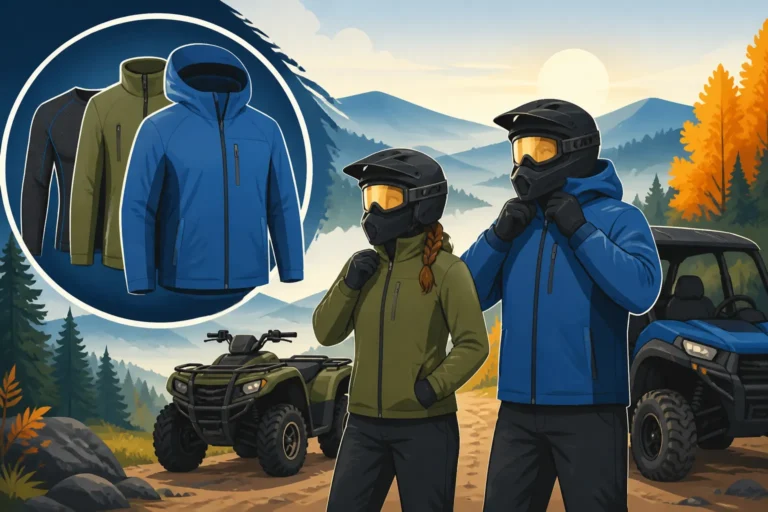
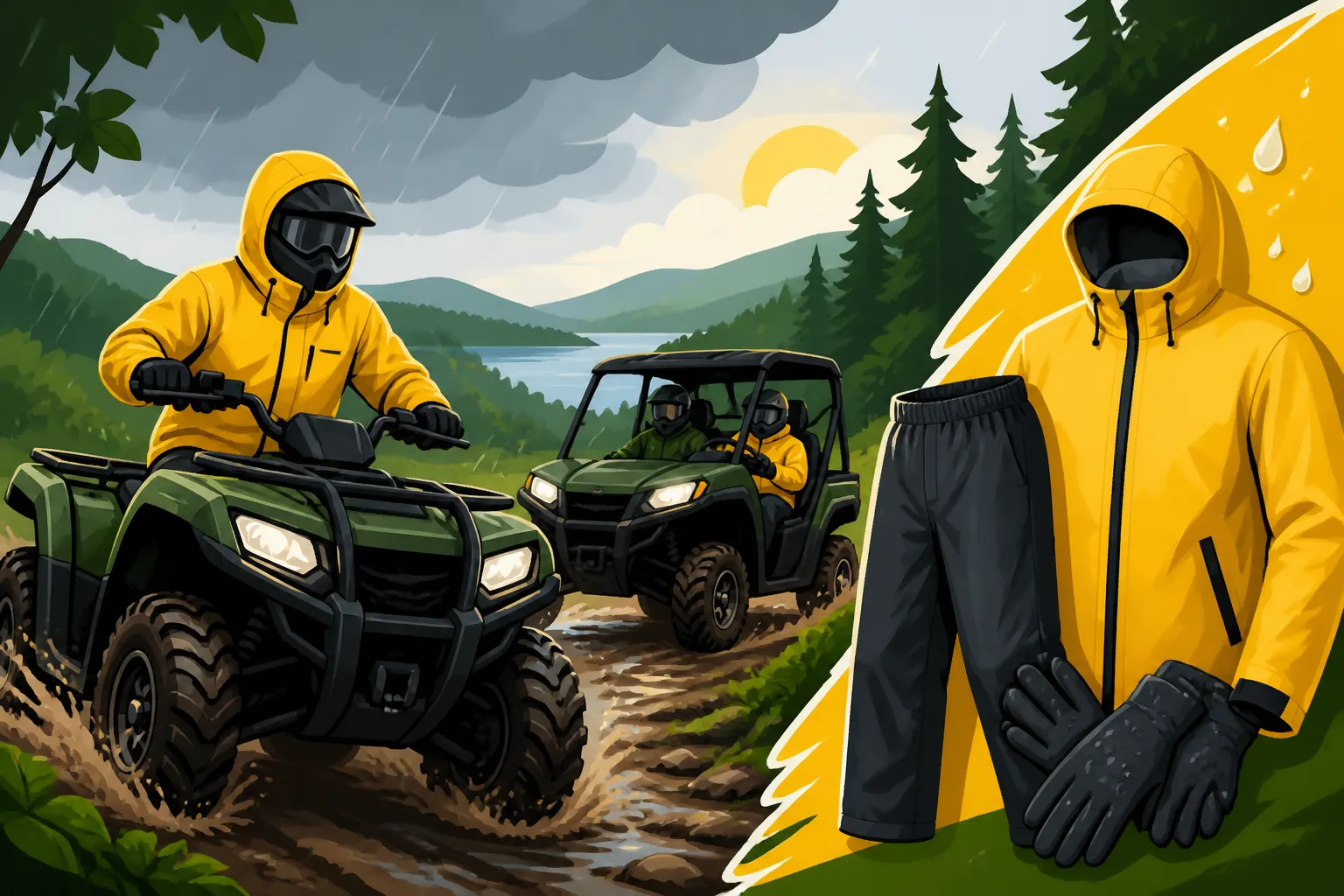
Choose a waterproof jacket with a hood that can be secured out of the way, cuffs that close over or under your gloves, and enough room for a warm midlayer. A longer back can help cover you when seated. For pants, look for a comfortable fit over your riding clothes and enough movement to swing a leg over the machine without splitting a seam or restricting your knees.
The outer layer should shed rain and block wind, but it does not need to be bulky. Late summer can be warm and humid, so heavy insulated rainwear may leave you clammy during active riding. A lighter waterproof shell is often easier to manage, with warmth added underneath when the temperature or wind calls for it.
Think about how rain will find its way in. Water can run down your sleeves if the cuff sits incorrectly, spray up from the trail around your boots, and soak the seat of your pants during a long ride. Before leaving, put on the gear and sit on your machine. Reach for the handlebars, turn your head, and check whether your wrists, waist, and lower back remain covered.
Layer for changing temperatures
A useful late-summer outfit has three jobs: move sweat away from your skin, add warmth when needed, and keep rain and wind outside. A breathable base layer is more comfortable than cotton, which can stay damp after you sweat or get wet. Add a light insulating layer that you can remove if the day turns warm, then finish with your rain shell.
This flexibility matters on Vermont rides because the weather and exposure can vary along a route. A sheltered stretch may feel warm, while an open ridge or a damp stop beside a trail can feel much cooler. If you’re riding near Island Pond, Newport, or through higher, more exposed terrain, bring a layer you can add without having to improvise with a wet sweatshirt.
Keep spare dry layers in a sealed bag or waterproof compartment. The spare set is not just for emergencies: changing into dry socks or a dry base layer can make the trip home far more comfortable. For more ideas on clothing for shifting temperatures, see Layers for a Cool Morning. If your ride will last much of the day, Packing for a Full Day Out can help you think beyond clothing alone.
| Riding condition | Useful clothing choice | Why it helps |
|---|---|---|
| Warm, humid weather with showers | Lightweight waterproof shell and breathable base layer | Sheds rain without trapping as much heat |
| Cool rain or steady wind | Waterproof shell with a removable insulating layer | Adds warmth while letting you adjust during the ride |
| Wet, muddy trail | Rain pants, tall waterproof boots, and gloves with a secure cuff | Reduces splash and runoff reaching your skin |
| Long ride with uncertain weather | Spare socks and a dry base layer in a sealed bag | Gives you a dry option if your first layer gets soaked |
Protect your hands, feet, and visibility
Keep gloves and boots functional
Wet hands can become uncomfortable quickly, and bulky gloves can make it harder to operate controls. Bring gloves that give you a reliable grip and enough dexterity to use the machine safely. A waterproof pair can help in steady rain, while a dry backup pair is useful if your first set becomes saturated. Avoid choosing gloves only for warmth: if you cannot comfortably handle the controls, they are the wrong pair for the ride.
Boots need to protect your feet from rain, mud, and splashes without making your footing awkward. Check that your pants overlap your boots in a way that limits water running inside. If your gear allows it, test that arrangement while seated; cuffs can shift when you bend your knees or move around on the machine. Pack spare socks in a sealed bag, and change them if they become wet rather than hoping they will dry while you ride.
Glasses and goggles also need attention. Rain drops, mud, and fog can all affect visibility. A microfiber cloth kept in a protected pocket is more useful than wiping lenses with a wet glove, which can spread grit and scratch them. If you wear glasses, try your rain hood or helmet setup at home first to see whether it pushes the frames into an uncomfortable position or blocks your peripheral view.
Plan for mud, spray, and cooling breaks
Rain gear helps, but it does not make a machine or trail dry. Tires can throw water and mud toward your legs, and a long stop can leave you feeling colder than when you were moving. Bring a small towel, a dry top layer, and a bag for wet clothing. If you’re riding with a group, agree that everyone will speak up if they are getting cold, losing visibility, or having trouble with wet gloves.
Pack gear so you can reach it without unloading everything. A dry layer buried under snacks, tools, and other equipment is not much help when the rain starts. Keep essentials together: gloves, spare socks, a shell, and a way to store wet clothing afterward. A small headlamp can also be handy if a weather delay makes the return later than expected.
Rain can make lenses and lights harder to see, so give your machine a quick check before setting out. Clean the windscreen, mirrors, and lights if equipped, and make sure your plate and required equipment are visible. During the ride, stop somewhere safe to clear mud or debris rather than trying to wipe it away while moving. See Vermont Headlight and Tail Light Rules for the lighting rules relevant to riding on roads, and Vermont Plate Visibility on the Road for plate visibility considerations.
Adjust your route and timing when rain is possible
Check local conditions before towing
A general forecast can tell you rain is possible, but it cannot tell you whether a particular trail is open, whether a storm has affected a corridor, or whether conditions have changed since your last visit. Check the trail information for the area you plan to ride and confirm that your intended routes are open before you load the machines. Vermont Trail Conditions Before You Tow is a helpful starting point, and Vermont Trail Closures After a Storm covers why conditions can change after heavy weather.
Late-summer showers do not automatically mean every trail is impassable. Still, wet ground can turn a manageable stretch into a slippery or deeply rutted one, especially where water collects or traffic has already churned the surface. If a route looks damaged or unusually soft, do not assume that riding through it is harmless. Turning around can protect the trail and prevent a small problem from becoming a recovery situation.
Use a map to understand your options before leaving. An app such as onX Offroad can help you review your planned route and identify alternatives, but confirm the route against the relevant local trail information. If you rely on phone navigation, download what you need ahead of time where offline access is available. Cell service can be unreliable in parts of the Northeast Kingdom, so carry a backup plan rather than depending on a live connection for every turn.
Build flexibility into the ride
For a rain-prone day, choose a route with reasonable places to stop or turn back rather than committing the group to the longest possible loop. Set a decision point before you start: if rain becomes steady, visibility drops, or trail conditions worsen, the group will take the shorter option or head back. That agreement reduces pressure to push on just because everyone already made the drive.
OnX Offroad can be useful for reviewing a route before the group leaves, especially when riders want to understand where a planned track goes. Mark your intended turnaround choices and share the plan with the people riding with you. Still, don’t treat a digital route as proof that a corridor is open or suitable after rain. Local access conditions and landowner permissions matter, and a mapped line is not permission to ride wherever it appears.
A little flexibility also makes clothing choices easier. If the group expects a short outing close to the trailhead, a compact shell and dry backup may be enough. A longer ride calls for more substantial rain protection, food, water, and a protected spare layer. For route-specific ideas on riding after wet weather, read Vermont Riding After a Rainstorm. Keep landowner access in mind as well; Vermont Trail Etiquette on Private Land explains why staying on the marked corridor and respecting closures matter.
Pack, ride, and recover thoughtfully
Use a simple pre-ride checklist
Before leaving home, check the forecast for the riding area and the expected conditions along the route, not just the weather where you live. Look for signs of changing weather, then decide what would make you shorten or cancel the ride. Check local trail updates, tell someone your plan, and make sure everyone in the group has suitable clothing.
A practical late-summer rain kit can include:
- Waterproof jacket and riding pants.
- Breathable base layer and a removable warm layer.
- Waterproof boots or other sturdy footwear suited to the machine and terrain.
- Riding gloves, plus a dry backup pair if space allows.
- Spare socks and a dry shirt sealed in a waterproof bag.
- A lens cloth and a way to store wet clothing.
- Water, food, basic first aid supplies, and a light for delays.
- A charged phone with route information available offline where possible.
The checklist should match the outing. A short ride near a staging area does not require the same amount of spare clothing as a longer trip through less connected terrain. If you are riding with children or anyone who tends to get cold quickly, pack an extra warm layer and agree in advance that comfort and safety take priority over finishing the route.
Take care of gear and machine after the ride
When you get back, separate wet clothing from dry items as soon as you can. Hang rainwear to dry according to its care instructions, and check seams, zippers, and cuffs for damage or debris. Let gloves and boots dry fully before storing them; putting damp gear away can leave it unpleasant for the next outing.
Clean mud from the machine without directing water into sensitive components. Pay attention to the radiator area if leaves or mud have collected there, since airflow matters for cooling. Keeping a Radiator Clear of Leaves offers more guidance, and Washing a Machine After a Ride covers sensible cleanup after a muddy outing.
If the trail was wet, think about how your group rode as well as what you wore. Avoid spinning tires or widening the route to get around a puddle. Close gates as you found them, follow posted signs, and respect any closure you encountered. A wet ride is still a good ride when everyone gets home comfortably and the trail remains in good shape for the next group.
Disclaimer
This article is for general informational purposes only and does not constitute professional advice. Laws, prices and regulations vary by location and change over time. Consult a qualified professional for guidance on your specific situation.