Meeting Horses on a Shared Vermont Corridor
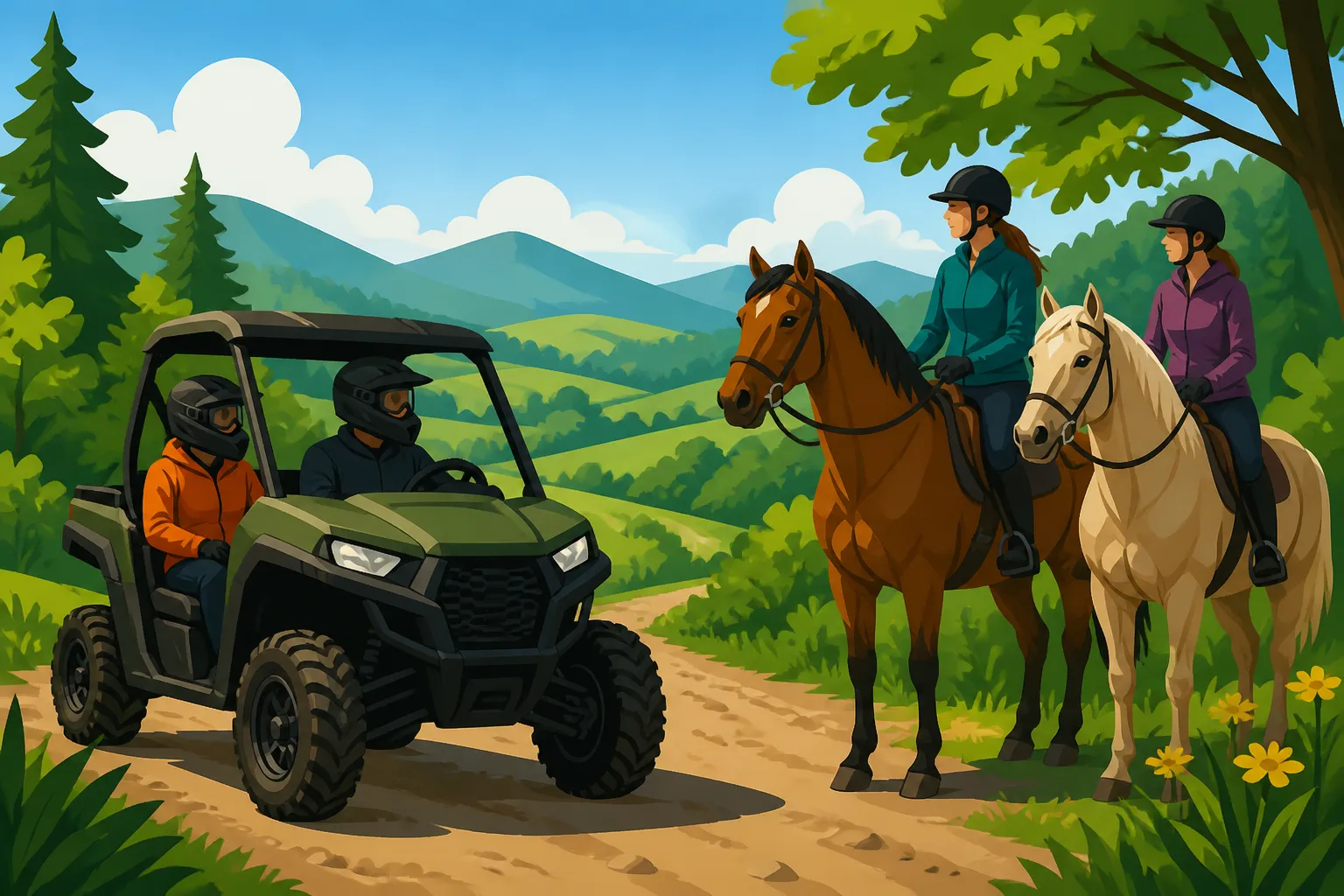
Sharing a Vermont corridor with horses can feel tense, especially when a narrow trail leaves little room to pass and an ATV or UTV’s engine may startle an animal. The safest response is to slow early, give the horse and handler plenty of space, and wait for clear directions before moving. This guide walks through what to do before, during, and after an encounter.
Why horse encounters need extra care
Horses may react to noise and movement
A horse can be calm around traffic and still react unpredictably to an ATV or UTV. Engine noise, vibration, sudden movement, or a machine appearing around a bend may frighten it. Even a well-trained trail horse may sidestep, turn, or bolt if surprised, potentially putting the rider and nearby trail users at risk.
That is why slowing down only when you are already close is not enough. On a shared corridor, ease off the throttle as soon as you see a horse, hear one, or approach a spot where sightlines are limited. Avoid revving the engine, accelerating past, or making abrupt movements. A quiet, predictable approach gives the handler time to assess the situation and tell you what will work best.
Horses and riders are not always easy to see in wooded areas, especially around tight turns, vegetation, or uneven trail sections. Stay alert, keep a speed that lets you stop safely, and watch for signs that other users may be nearby. For broader guidance on sharing trails, see Vermont Trail Etiquette on Private Land.
A corridor may be shared even if the trail feels quiet
Vermont’s trail network includes corridors that cross private land, and trail conditions or access arrangements can vary from one place to another. A route that seems primarily used by motorized riders may still bring you alongside hikers, equestrians, landowners, or other trail users. Don’t assume that a quiet stretch is reserved for ATVs and UTVs.
Use marked routes and follow posted instructions. Staying on the corridor matters not only for your own safety but also for maintaining the landowner relationships that make trail access possible. Staying on the Marked Corridor is a useful reminder that riding beyond a signed route can create problems for landowners and other trail users.
Before a trip, review the route, local guidance, and any available trail updates. onX Offroad can be one tool for planning where you intend to ride, but a navigation app should not replace posted signs, club instructions, or current access information. A route shown on a screen does not necessarily tell you whether a trail has changed, is temporarily closed, or is appropriate for your machine.
What to do when you see horses
Slow down and stop before you reach them
As soon as you spot a horse, reduce speed gradually and stop well back if there is room. Don’t drive right up behind the animal or crowd the rider while they decide what to do. If you are approaching from the front, stop with enough space that the horse is not forced to pass close to your machine.
Keep your machine under control and avoid sudden steering, braking, or throttle changes. Don’t honk, shout, or try to get the horse’s attention with a loud call. If the trail is narrow, wait rather than attempting to squeeze by. The rider may need a moment to move to a wider spot or get the horse positioned safely.
A simple, calm greeting can help the handler understand that you have seen them, but don’t assume they want you to move. Wait for the rider to speak or signal. If they ask you to remain stopped, back up, or move to a particular place, follow their directions if you can do so safely. A handler who knows the horse is best placed to judge how it may respond.
Pass only when the handler says it is safe
There is no one passing maneuver that works for every horse or every section of trail. The handler may prefer that you stay still while they lead the horse past, or they may ask you to move slowly by at a specific point. Give the horse generous room and follow the rider’s directions rather than trying to guess what will make the animal comfortable.
When the pass begins, move slowly and steadily. Avoid sudden acceleration, revving, or stopping close beside the horse. Keep enough distance that the animal has room to shift position without contacting your machine. If the rider signals that the horse is nervous or the space is too tight, stop and wait. It is better to lose a few minutes than to turn an uncertain situation into a dangerous one.
| What you notice | Safer response | Avoid |
|---|---|---|
| A horse ahead on a narrow trail | Slow down early and stop at a comfortable distance | Following closely or trying to squeeze by |
| A horse approaching from the other direction | Stop and wait for the handler’s directions | Assuming the horse will pass without reacting |
| The handler asks you to back up | Back up slowly if the route behind you is clear | Reversing quickly or making abrupt turns |
| The horse looks tense or shifts around | Stay still and give the handler time | Revving, honking, or creeping closer |
| The rider gives a clear passing signal | Move slowly and predictably, leaving ample room | Accelerating past or stopping beside the horse |
| You cannot see around a bend | Reduce speed and be prepared to stop | Entering the bend quickly or riding side by side |
Handling difficult trail situations
When the trail is narrow, muddy, or steep
A tight corridor can make a pass feel awkward even when both parties are calm. Don’t force the issue by driving onto soft shoulders, private property, or unmarked ground. The edge may be unstable, muddy, or too steep for a safe maneuver, and leaving the marked route can damage the trail or surrounding land.
If there is no safe place to pass, wait for the handler to choose a suitable spot. That may mean backing up slowly to a wider section, but only do so when you can see that the path behind you is clear. If another ATV or UTV is behind you, communicate calmly and make sure the group understands that you are holding for horses. Do not let pressure from riders behind you rush the decision.
After heavy rain or during muddy conditions, the trail shoulder may be especially fragile. A detour around the horse can widen the corridor, damage vegetation, or create a new rut. Check Vermont Trail Conditions Before You Tow when planning a trip, and take closures or reroutes seriously. When conditions are poor, the safest choice may be to wait, turn around when it is safe, or choose another open route.
When you meet horses in a group
A group of horses may take longer to pass than a single rider. Stop early and allow the entire group to get organized. Don’t move forward just because the first horse has gone by; wait until the handler confirms that the last horse is clear and gives you a signal.
If you are riding with friends, keep the group together and quiet. Avoid splitting around the horses or having several machines move at once. One rider can speak with the handler while everyone else waits at a safe distance. If you are at the front of a group, use a clear hand signal or calm voice to alert the riders behind you. Never assume they have seen the horses.
A navigation tool such as onX Offroad may help your group plan the route and identify where you expect to ride, but it can’t coordinate a real-time pass or tell you how a particular horse will react. Keep the app as a planning aid, and rely on what you see, what the signs say, and what the handler communicates on the trail.
Prepare before the ride and leave the corridor in good shape
Plan for shared use, not just the route
Before heading out, check the trail information available for your planned area and make sure your group understands that other users may be present. The Vermont ATV Trails: The VASA System guide can help provide context on the network, while Vermont Trail Signs and What They Mean can help you recognize why posted directions matter.
If you use onX Offroad or another mapping tool, download or review what you need before entering areas with unreliable cell service. Confirm the route with current local or club information rather than relying only on an app. Keep the group small enough to manage safely, and agree ahead of time that everyone will stop when the lead rider signals an encounter.
Preparation also means checking your machine and carrying what you need to handle a delay. A horse encounter may require waiting on the trail or backing up to a wider point. Give your group enough time that no one feels pressured to pass when it is not safe. Let someone know your general route and expected return, particularly if you are riding in a remote area.
Keep the landowner relationship in mind
Many Vermont corridors depend on permission from private landowners. Respectful behavior around horses is part of being a responsible trail user, not simply a way to avoid a collision. Stay on the marked route, keep noise under control near homes and farms, and leave gates as you found them. For more on why access depends on cooperation, see Vermont Landowner Permission Holds the System Together.
If a handler asks you to wait or take a different safe approach, treat that request as a practical safety instruction rather than a challenge. A calm encounter can reassure other trail users that motorized riders are willing to share the corridor. A rushed pass, loud engine, or detour across land can have the opposite effect.
If you are unsure about a route’s current access or how a particular corridor is managed, check with the relevant club or trail contact before riding. Who to Call About Vermont Trail Conditions can help point you toward the right kind of local information. When you do meet horses, slow early, wait for clear directions, and pass only when there is enough space for everyone to remain safe.
Disclaimer
This article is for general informational purposes only and does not constitute professional advice. Laws, prices and regulations vary by location and change over time. Consult a qualified professional for guidance on your specific situation.