Carrying a Radio on a Long Ride
A long ATV ride in Vermont can turn a simple separation into a stressful problem: tree cover, ridgelines, and patchy cell service can make it hard to reach someone just a short distance away. A radio helps your group keep in touch, but only if you choose a suitable type, set it up before leaving, and have a backup plan for dead zones and emergencies.
Why radios matter on Vermont ATV rides
Terrain can defeat a phone call
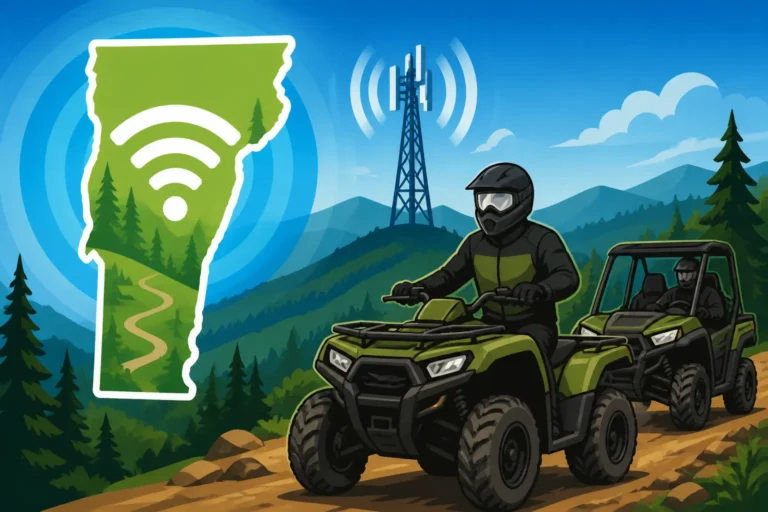
In the Northeast Kingdom, a route around Island Pond or Newport may lead through wooded corridors, dips, and rolling terrain where cell service changes quickly. The same can happen on rides elsewhere in the state. A phone that worked at the trailhead may lose service after a turn or behind a ridge, so it’s risky to assume you can call or text the rest of your group whenever you need to.
Two-way radios can be useful because riders can communicate directly without relying on a mobile network. You might use one to tell the lead rider that someone has stopped, warn the group about a blocked section, or coordinate a safe place to regroup. That’s especially helpful when the group stretches out along a trail and riders can’t easily see one another.
A radio isn’t a guarantee of contact, though. Hills, thick woods, weather, antenna placement, and the radios themselves all affect performance. A radio may reach a nearby rider in one spot and fail to reach the same person a short distance farther along the corridor. Treat it as one part of your communications plan—not as a substitute for route planning, navigation, or emergency preparation.
Trail access and group etiquette still come first
Vermont’s ATV trail network depends heavily on landowner permission and club maintenance. A radio doesn’t change where you’re allowed to ride, and it doesn’t make it okay to leave a marked corridor to look for someone. If a rider falls behind, stop somewhere safe and use your group’s agreed procedure rather than cutting across land or taking an unapproved shortcut. Vermont Trail Etiquette on Private Land
Before the ride, check the route with the club responsible for that area and confirm that the corridors you plan to use are open. Conditions can change, and permission for a trail can be withdrawn. Reviewing Vermont Trail Conditions Before You Tow can help you remember to check access before loading up, rather than assuming last season’s route is still available.
It’s also worth agreeing on radio manners. Keep messages short, wait for another rider to finish speaking, and don’t tie up the channel with casual conversation when the group is navigating a tricky section. Good communication is useful only when everyone can hear an important call.
Choosing a radio for an ATV group
Compare radio types before buying
The right radio depends on your group, how you ride, and whether anyone already has compatible equipment. Consumer handheld radios are convenient, but different radio services have different rules and capabilities. Don’t assume two radios can communicate just because they look alike or advertise similar features.
| Radio type | Potential benefit | Important limitation |
|---|---|---|
| FRS handheld radio | Simple option for short-range group communication; no individual license is generally required | Range can drop sharply in wooded or hilly terrain |
| GMRS radio | Can support compatible handheld or vehicle-mounted setups | A license is generally required; check current FCC requirements before use |
| Amateur radio | Flexible option for riders who are properly licensed and equipped | Operators need the appropriate license, and the system may not match ordinary consumer radios |
| Satellite communicator | Can provide a way to send messages or request help where cellular service is absent | Usually works differently from a two-way group radio and may require a subscription or service plan |
For many casual rides, a basic handheld radio may be adequate for communicating within a group when riders are relatively close. For longer rides or more challenging terrain, ask experienced local riders what works on the corridors you plan to ride. Their experience is useful, but still test your own setup: different radios and antennas can behave differently.
If you’re considering GMRS or amateur equipment, check the applicable licensing and operating rules before transmitting. Don’t use a radio service without understanding its requirements, and don’t count on being able to call emergency responders over a consumer radio. A radio only reaches people listening on a compatible channel or system.
Understand the difference between advertised and practical range
Radio packaging often promotes range under favorable conditions. Real trail conditions are less predictable. A clear view between two riders is very different from trying to communicate through a hillside, dense forest, or a bend in a narrow corridor. Vehicle bodies and where a handheld radio is carried can also affect reception.
A useful test is not to ask, “How many miles does this radio claim?” but “Can our riders reach one another along the route we actually use?” Test the radios in a safe, open area first, then try them at a location with terrain more like the planned ride. If possible, check communication between riders at different points without sending anyone off the approved route.
Privacy codes or tone settings can reduce chatter from other users who aren’t using the same setting, but they don’t make your conversation private or encrypted. They also need to match across the group. If one radio is set to the wrong channel or tone, its owner may hear nothing while everyone else assumes the radio is working.
Set up a reliable group communication plan
Agree on settings and simple call signs
Before unloading at a trailhead, choose a channel and any required compatible settings, then have every rider test a brief transmission. Don’t wait until the group is spread out to discover that one radio is set differently or has a nearly depleted battery. Ask each rider to confirm that they can hear the lead person and respond.
Call signs can be as simple as “lead,” “sweep,” and a rider’s name or machine color. The lead rider can coordinate the route, while the sweep rider stays at the back and checks that nobody is left behind. That arrangement gives the group a clear point of contact at both ends, especially when a corridor bends out of view.
Keep messages specific. “Stop at the next safe pull-off” is clearer than “Hold up somewhere.” A rider who needs help can state their location using a trail marker, signed junction, or recognizable feature—not an uncertain estimate of distance. If you use a mapping app such as onX Offroad, review the map together before departure so everyone understands the route names and agreed meeting points. A map does not guarantee radio coverage, but shared reference points make radio calls more useful.
Establish rules for stops, separation, and emergencies
Decide in advance what the group will do if someone stops unexpectedly. For instance, the rider who notices a gap can tell the lead and sweep, while the other riders pull over at a safe place rather than continuing until they lose contact. On a narrow or uneven trail, choose a turnout or wider section where stopping won’t block other users or create a hazard.
Make a lost-contact rule that doesn’t depend on every radio transmission getting through. The group might agree to wait at the next designated junction or return only as far as the last known meeting point, depending on the trail and conditions. Avoid sending one person alone to search. If someone may be injured or in immediate danger, use the group’s emergency plan and contact emergency services through the most reliable available means.
A radio should not be treated as a direct line to help unless you know that a staffed service is monitoring the system you’re using. If an emergency occurs, identify the problem, your location, the number of people involved, and what assistance is needed. Keep a phone available where practical, and consider whether a satellite communicator is appropriate for the route and group. For broader preparation, pair communications with First Aid Worth Carrying and a plan for what to do if a rider is injured.
Prepare radios and backup tools before the ride
Check power, mounting, and weather protection
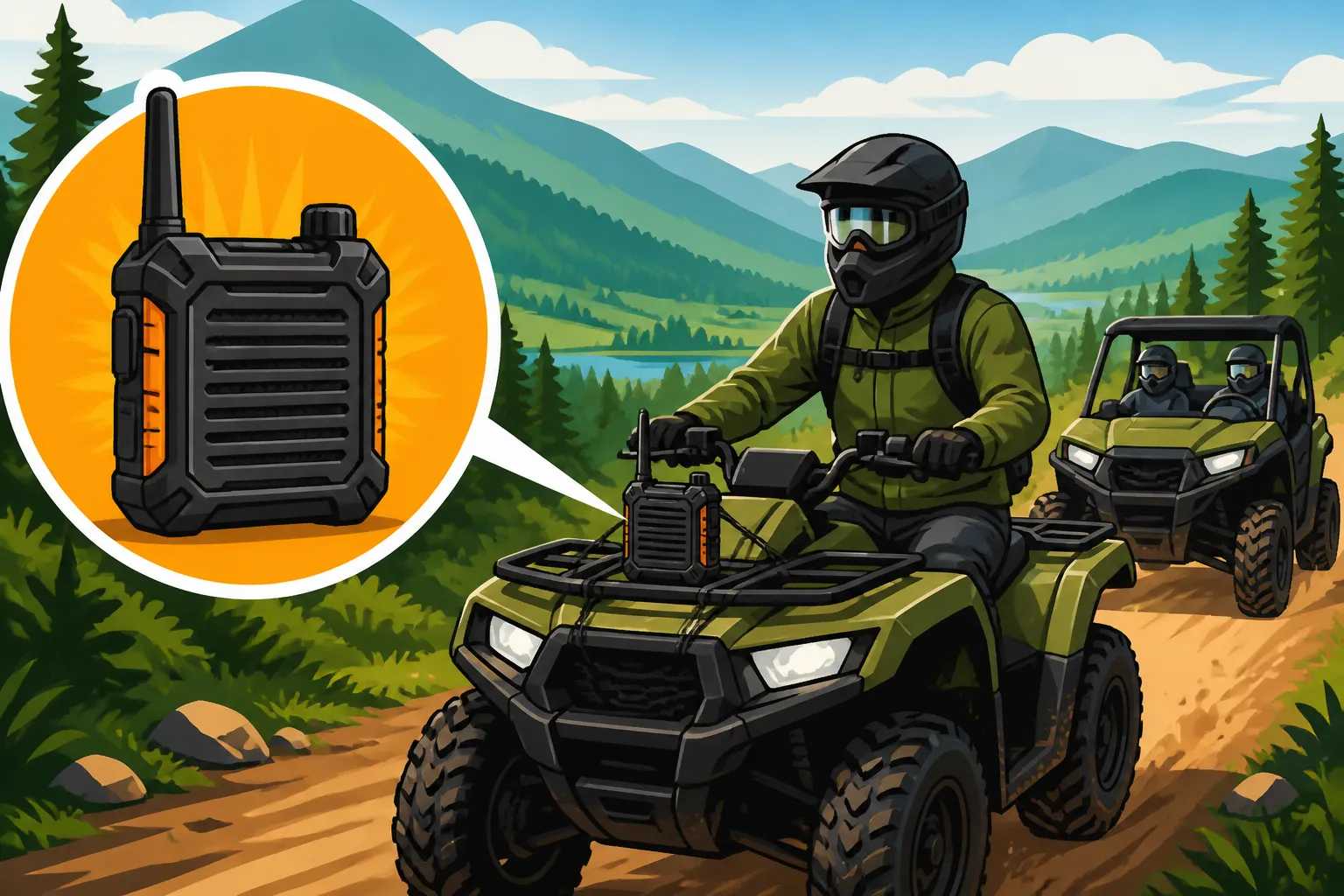
Charge every radio fully and bring a compatible spare battery or charging option if your equipment supports one. Cold mornings, long days, and frequent transmissions can drain batteries sooner than expected. Store a handheld where it is easy to reach without taking your attention off riding; a radio buried under cargo is not much help when a quick message matters.
Use a secure clip, pouch, or mount that won’t interfere with riding controls or protective gear. Keep the microphone accessible, but avoid dangling cords that could snag. Protect the radio from mud and water according to the manufacturer’s instructions. Even a model described as weather-resistant may have limits, particularly around charging ports, battery covers, and exposed connectors.
Do a quick function check at the start of the day and after a long break. Confirm that the radio is on, set to the agreed channel, and transmitting clearly. If a radio is dropped, soaked, or hit hard, don’t assume it still works just because the display lights up. Test it with another rider before depending on it again.
Carry navigation and backup communication
Radios help people talk; they don’t show where a trail goes. Carry an offline map or other suitable navigation backup and make sure the group knows how to use it. Mobile mapping tools, including onX Offroad, can be useful when a rider has prepared the map for offline use before losing service. Check the area and device settings before leaving, and don’t rely on a downloaded map as proof that a route is open or authorized.
Paper maps can be a practical backup if a phone battery dies or a device fails. Decide who carries the map, who knows how to read it, and what landmarks or junctions are likely to matter. Paper Maps Versus a Phone App is a useful companion topic when deciding how to prepare for a route with inconsistent coverage.
Before a long ride, tell someone outside the group where you plan to ride and when you expect to return. Include a reasonable point at which they should check in or seek help if you haven’t made contact. This is particularly useful when riding in areas with cell dead zones, including parts of the Kingdom. Cell Dead Zones in the Kingdom offers another reminder to plan for gaps rather than assuming a phone will solve every problem.
Make communication part of the route plan
A radio works best when it supports a route plan everyone understands. Review the planned corridor, the intended turnaround point, and the locations where the group will regroup. Use current club information and maps rather than relying on a remembered route. Vermont ATV Trails: The VASA System can help readers understand how the statewide trail network and its club-maintained corridors fit together.
Think through the practical details before the machines start moving. Who leads? Who rides sweep? What happens if the group is separated at a junction? Which rider carries the first-aid kit, spare battery, and map? If you’re planning a longer outing, also check fuel needs and access points; Fuel Range on a Long Loop can help you think beyond the radio itself.
If you use onX Offroad or another mapping tool, make sure the riders who may need it can access the route information—not just the person who planned the trip. Have everyone note at least one clear regrouping point and understand that a route line on a screen doesn’t replace trail signs, club updates, or landowner permission. The goal is not to make every ride complicated. It’s to avoid making a confusing moment worse by discovering that nobody knows the plan.
Disclaimer
This article is for general informational purposes only and does not constitute professional advice. Laws, prices and regulations vary by location and change over time. Consult a qualified professional for guidance on your specific situation.