How the ATV and ASV Classes Change Your Fee
Vermont ATV and ASV classifications determine vehicle registration fees based on specific weight limits, seating arrangements, and steering types.
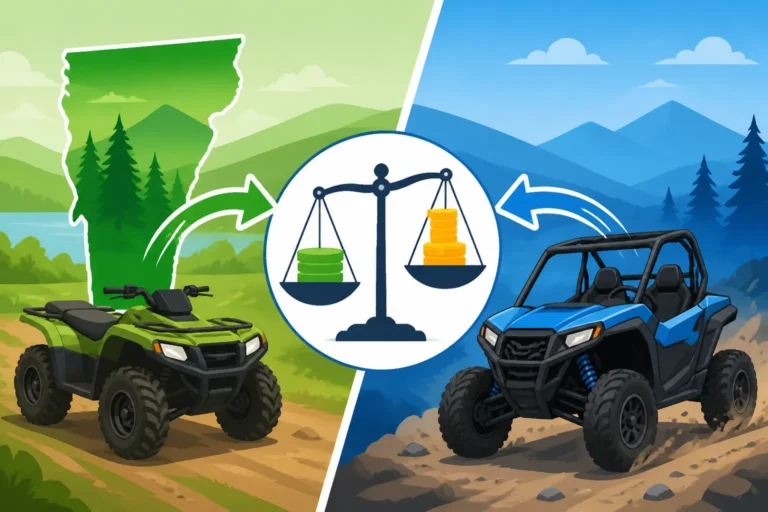
Vermont ATV and ASV classifications determine vehicle registration fees based on specific weight limits, seating arrangements, and steering types.

Vermont legal definitions for motor-assisted bicycles explain registration rules, speeds under 20 miles per hour, and differences from ATVs.

Dry weight and curb weight differences for ATVs and UTVs impact vehicle registration and trail rules in Vermont.
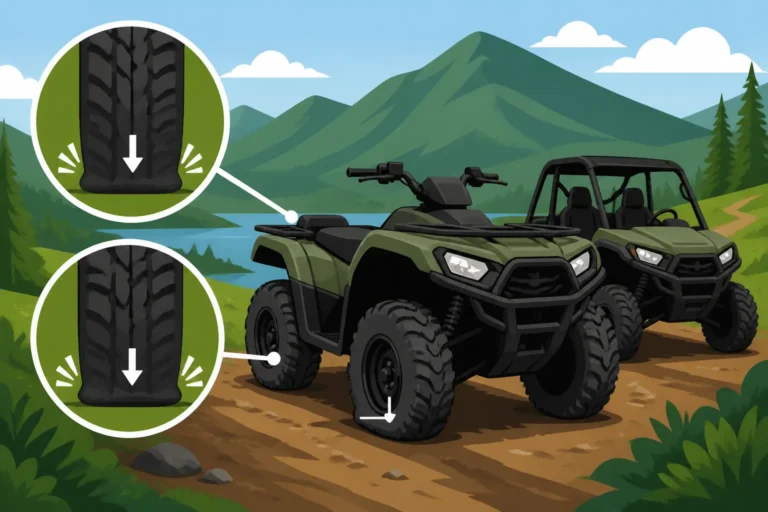
Vermont ATV registration rules require at least two low pressure tires, specific dimensions, and proper weight limits for official classification.

The Vermont Department of Motor Vehicles mails new ATV plates to the specific mailing address listed on your registration application form VD-119.

Vermont legislative changes from May 13, 2025, update ATV and UTV definitions, machine classifications, and vehicle registration procedures.

Vermont Act 18 of 2025 updates off-road vehicle definitions, registration rules, and trail access for ATVs and ASVs across the state.
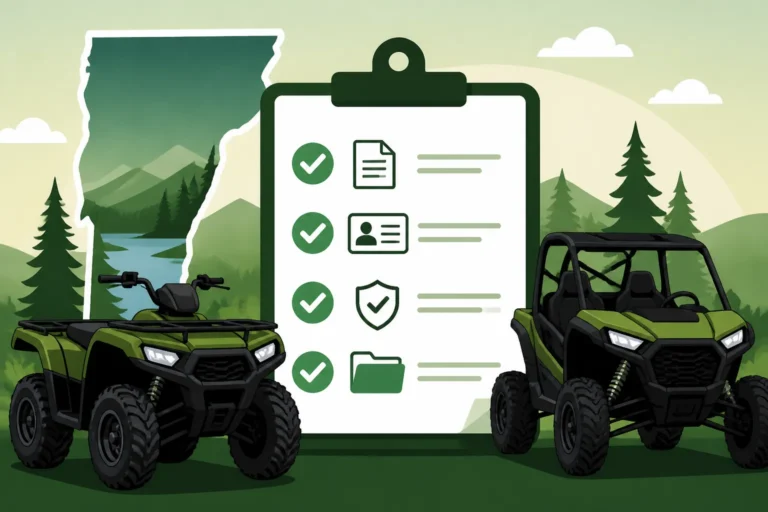
Vermont ATV and UTV registration paperwork requirements, including proof of ownership documents and vehicle identification numbers.
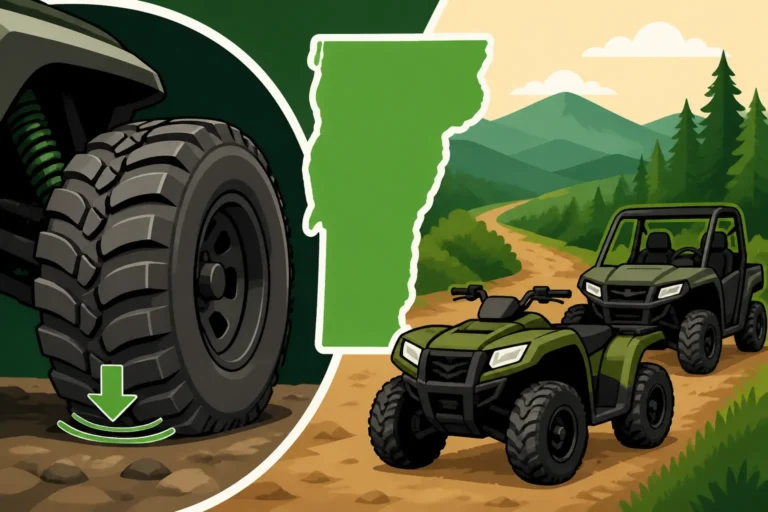
Vermont law mandates low-pressure tires running at four to ten PSI on ATVs and UTVs to protect trails and ensure safety.
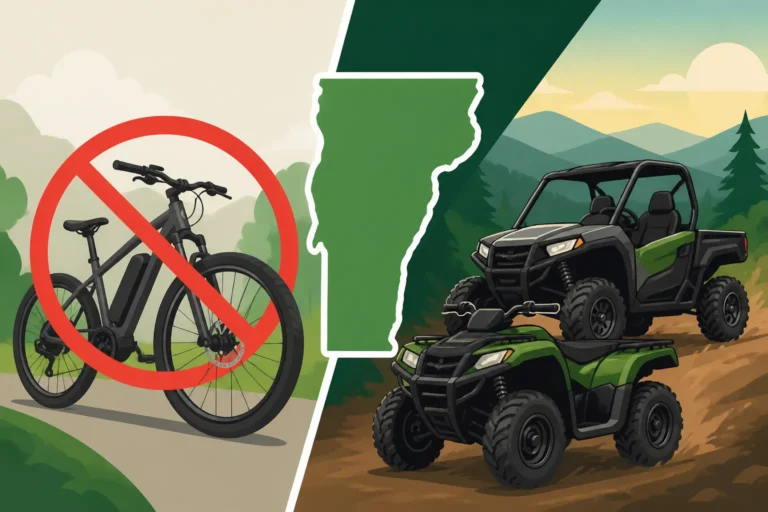
Vermont legal definitions exclude electric bikes from all-terrain vehicle categories, explaining registration and trail rules.