Motor-Assisted Bicycles and Why They Differ
It’s a common scenario here in Vermont: you're out enjoying the beautiful scenery, and you see someone cruising along on what looks like a bicycle, but it's got a motor humming quietly. Then, just down the road, an ATV roars past on a designated trail. It’s easy to get these machines confused, especially with so many new types of personal transport popping up, and that confusion can lead to real headaches when it comes to understanding Vermont's rules. This guide is here to untangle the specific legal definitions that set motor-assisted bicycles apart from traditional ATVs and UTVs in Vermont, helping you understand what's required for each so you can ride confidently and within the law.
The Core Confusion: What Even Is a Motor-Assisted Bicycle?
The lines between different types of recreational vehicles can feel incredibly blurry sometimes, especially when you're looking at something with pedals and a motor. Many folks see an e-bike and wonder, "Is that just another kind of ATV I need to register?" Thankfully, Vermont has clear definitions that separate these categories, and understanding them is the first step to avoiding any registration mishaps.
Defining "Motor-Assisted Bicycle" in Vermont
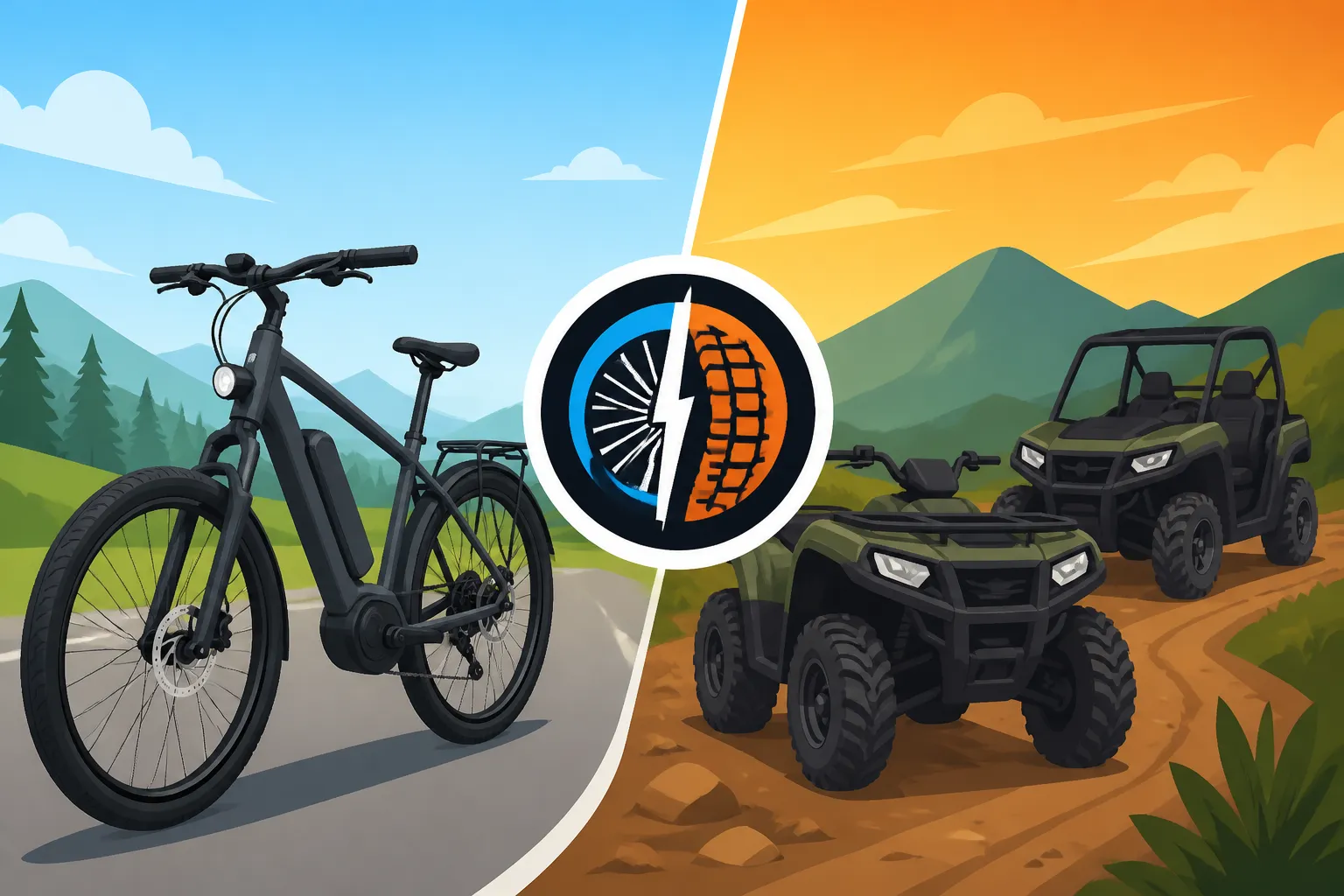
In Vermont, a "motor-assisted bicycle," often colloquially known as an e-bike, is specifically defined to distinguish it from other motor vehicles. For a bicycle to fall into this category, it generally needs to meet a few key criteria. First and foremost, it must still be equipped with fully operative pedals for human propulsion. This isn't just a decorative feature; it's a fundamental part of its classification. Secondly, the electric motor must be relatively small, typically under one horsepower, and designed to assist, not completely replace, pedaling. The speed limit is also crucial: the motor can't propel the bicycle beyond a certain speed, usually around 20 miles per hour, without the rider actively pedaling.
What this means for you, the rider, is that if your machine fits these descriptions, it is legally treated more like a traditional bicycle than a motorized off-road vehicle. This is a huge distinction, because it immediately sets it outside the requirements for registration, titling, and many of the other formalities that come with owning an ATV or UTV. You won't find yourself needing to visit the DMV for a tag or worrying about purchase and use tax in the same way you would for a quad.
Why This Definition Matters for Riders
Knowing whether your ride is legally a "motor-assisted bicycle" or something else entirely has significant implications for how and where you can operate it, and what paperwork you'll need (or won't need!). For instance, if you have a genuine motor-assisted bicycle, you generally don't need to worry about [Vermont ATV Registration Costs] or figuring out [Vermont ATV Titles and What They Cost]. You can enjoy public roads and designated bike paths much like a regular bicyclist, though it's always wise to check local ordinances, as some towns might have specific rules about where e-bikes can go.
This clarity offers a breath of fresh air for many, removing the burden of dealing with the Department of Motor Vehicles for what is essentially a powered bicycle. It means you can often buy one, hop on, and ride without the often-complicated steps of proving ownership, applying for a title, or keeping up with yearly renewals. This distinction not only simplifies ownership but also informs your expectations for maintenance, insurance, and the kind of gear you might need.
How ATVs and UTVs Diverge Legally in Vermont
While motor-assisted bicycles carve out their own niche, All-Terrain Vehicles (ATVs) and Utility Task Vehicles (UTVs), which Vermont often groups under the umbrella of "ASVs" for registration purposes, are a completely different ballgame. These machines are designed for off-road performance and rugged terrain, and the state's legal framework reflects that purpose.
Vermont's Definition of an All-Terrain Vehicle (ATV)
Vermont's legal definition of an ATV is quite specific, aiming to clearly categorize these powerful off-road machines. Historically, a key characteristic has been their width, often capped at 50 inches, but it's important to be aware of [Vermont's 72-Inch, 2,500-Pound ATV Definition], which reflects how these classifications can evolve. Generally, an ATV is a motorized vehicle designed for off-highway use, with three or more low-pressure tires, a dry weight under a certain threshold, and a straddle-style seat for the operator. Think of the traditional quad bike – that's your classic ATV.
The purpose of these definitions is not just bureaucratic; it's about safety, trail management, and ensuring that appropriate taxes are collected. Because ATVs are built for aggressive off-road use, they come with a different set of risks and require different regulations than a motor-assisted bicycle. This means that if you're riding an ATV in Vermont, you'll absolutely need to understand the full registration process, which typically involves proving ownership and paying various fees.
Understanding the ASV (Side-by-Side) Classification
When it comes to larger, multi-passenger off-road vehicles, Vermont uses the term "ASV" or Automated Side-by-Side Vehicle. These are distinct from traditional ATVs and have their own set of rules. Unlike an ATV where the rider typically straddles a seat, ASVs feature a steering wheel, side-by-side seating for the operator and passengers (much like a car), and often seat belts. They also tend to be wider and heavier than traditional ATVs. This is where [Vermont ATV Versus ASV Classes] really comes into play, as the different classifications affect registration fees and sometimes even the trails you can access.
The ASV category encompasses many of the popular UTVs, side-by-sides, and recreational off-highway vehicles (ROVs) you see today. Because of their size and capacity, ASVs generally have a higher registration fee than ATVs. For instance, you might be looking at [Vermont ASV Registration at $108 a Year] for a one-year period, as opposed to the standard ATV fee. Understanding whether your machine falls into the ATV or ASV class is critical for proper registration and avoiding any legal snags out on the trail.
The Big Legal Implications: Registration, Titles, and Road Use
The biggest differentiator between motor-assisted bicycles and ATVs/UTVs in Vermont boils down to formal legal requirements: registration, titling, and how they can be used on public thoroughfares. This is where the casual rider can run into the most trouble if they misunderstand the rules.
No Registration, No Title for E-Bikes – A Breath of Fresh Air
One of the most appealing aspects of owning a motor-assisted bicycle in Vermont is the sheer lack of bureaucratic hurdles. As long as your e-bike meets the state’s definition, you are not required to register it with the Department of Motor Vehicles, nor do you need to apply for a title. This means no annual registration fees, no waiting in line at the DMV, and no specific vehicle inspection requirements related to its motor.
For many, this simplicity is a game-changer. It means you can buy an e-bike, whether new from a dealer or used from a private seller, and start riding without any immediate paperwork stress. This freedom also means you won't incur Vermont's purchase and use tax directly through a DMV transaction, though sales tax may still apply at the point of purchase from a retail establishment. It truly simplifies the ownership experience compared to a power-sports vehicle.
The Mandatory Requirements for ATVs and UTVs
For ATVs and UTVs (ASVs), the situation is quite different. These machines absolutely require registration and, in many cases, a title. If you're bringing a new ATV or ASV into Vermont, whether from a dealer or a private sale, you'll need to learn [How to Register an ATV in Vermont]. This process typically involves providing proof of ownership, like a manufacturer's certificate of origin (MCO) or a valid bill of sale, and paying the necessary registration fees. Don't forget, [Vermont ATV Titles and What They Cost] is another line item to consider, as most newer machines will need a title to prove legal ownership.
Beyond the initial paperwork, ATVs and ASVs also typically require liability insurance to be ridden legally on public land and designated trails, and often when crossing public roads. This protects you and others in case of an accident. Unlike e-bikes, which can generally use most public roads (adhering to bicycle traffic laws), ATVs and UTVs are primarily restricted to the VASA trail system and specific town roads that have been designated by local selectboards. Riding an unregistered ATV or one without the proper insurance on a public trail or road can lead to significant penalties, including fines and potential impoundment of your machine. [Vermont Penalties for Riding Unregistered] are not something you want to experience.
| Feature | Motor-Assisted Bicycle (E-Bike) | All-Terrain Vehicle (ATV) | Automated Side-by-Side Vehicle (ASV/UTV) |
|---|---|---|---|
| Pedals Required | Yes, functional | No | No |
| Motor Output | Generally < 1 horsepower | Varies, typically higher | Varies, typically higher |
| Maximum Speed (motor only) | Usually < 20 mph | Much higher | Much higher |
| Registration Required | No | Yes | Yes |
| Title Required | No | Yes (for most machines) | Yes (for most machines) |
| Road Access | Generally allowed on public roads (like bicycles), bike paths | Restricted to designated trails and approved town roads | Restricted to designated trails and approved town roads |
| Helmet Requirement | Recommended, sometimes optional by law (check local rules) | Mandatory for all riders on public trails/roads | Mandatory for all riders on public trails/roads |
| Insurance Requirement | Often covered by homeowner's/renter's, specific policies rare | Mandatory liability insurance for public/designated use | Mandatory liability insurance for public/designated use |
| Typical Seating | Bicycle saddle (1 person) | Straddle seat (1-2 persons) | Bucket/bench seats (2-6+ persons), side-by-side |
| Steering | Handlebars | Handlebars | Steering wheel |
Operational Differences and Trail Access
Beyond the legal definitions, the practical realities of riding motor-assisted bicycles versus ATVs/UTVs are vastly different. These distinctions affect everything from where you can go to the safety gear you need to wear.
Where Can You Ride Them?
This is perhaps the most fundamental operational difference. A motor-assisted bicycle, because it's treated much like a regular bicycle, enjoys broad access to public infrastructure. You can typically ride it on paved roads, bike lanes, and many designated recreational paths. This opens up a huge network for exploring towns, commuting, or simply enjoying a leisurely ride in the countryside. They’re designed for relatively smooth surfaces and integration into existing bicycle traffic flows.
ATVs and UTVs, on the other hand, are built for rugged, off-highway adventures. Their access is far more restricted. In Vermont, you'll primarily be riding these machines on the extensive [Vermont ATV Trails: The VASA System], which is a network of trails maintained by volunteer clubs, primarily on private land with landowner permission. Additionally, some towns have elected to open specific town roads to ATV/UTV traffic, but these are clearly marked and often come with strict rules regarding speed limits and operating hours. You cannot simply take your ATV out on any public paved road in Vermont. This limited access means careful planning is essential for any ATV or UTV outing, often requiring you to trailer your machine to an approved trailhead.
Safety Gear and Age Restrictions
Safety gear requirements also vary significantly between these categories. For motor-assisted bicycles, while a helmet is always highly recommended for safety, it may not be legally mandatory in all situations for adults in Vermont, similar to traditional bicycles. However, for younger riders, helmet laws are generally stricter. Eye protection is also a good idea, but not explicitly mandated for e-bikes in the same way it is for ATVs.
For ATVs and UTVs, the rules are much more stringent, reflecting the higher speeds, rougher terrain, and increased risks involved. [Vermont ATV Helmet Law for Every Rider] is quite clear: everyone operating or riding as a passenger on an ATV or UTV in Vermont must wear a protective helmet, regardless of age, whenever the machine is being operated on public land or designated routes. This isn't a suggestion; it's the law, and wardens will enforce it. Eye protection is also mandatory. Furthermore, there are specific age restrictions for operating ATVs and UTVs, with riders under 18 often required to hold a valid ATV safety certificate. This typically means taking and passing a state-approved safety course. You'll find more details on requirements like [Vermont ATV Safety Course Required Under 18], which ensures that younger riders have received proper training before heading out.
Why the Distinction Matters: Avoiding Legal Headaches
The differences between motor-assisted bicycles and ATVs/UTVs are not just academic; they have very real consequences for riders. Understanding these distinctions is crucial for enjoying your chosen machine without fear of fines, legal disputes, or worse.
Avoiding Fines and Penalties
Misunderstanding these classifications can lead directly to legal trouble. If you mistakenly believe your ATV or ASV doesn't need registration because it's "just for recreation," you could face significant fines for operating an unregistered vehicle. As mentioned, [Vermont Penalties for Riding Unregistered] can be costly and include potential impoundment of your machine. Similarly, riding an ATV on a road not designated for its use, or without the proper safety gear, can also result in tickets. These penalties aren't minor; they're designed to deter unsafe and illegal operation and keep Vermont's trails and roads safe for everyone.
For e-bike riders, while the direct penalties for misregistration aren't a concern, operating an e-bike that exceeds the state's definition (perhaps a very powerful model that goes much faster than 20 mph without pedaling) could potentially lead to it being reclassified as a moped or even a motorcycle, suddenly bringing a host of new registration, license, and insurance requirements you didn't anticipate. Always double-check your machine's specifications against Vermont's legal definitions to stay in the clear.
Protecting Yourself and Your Investment
Beyond avoiding legal trouble, understanding these differences also helps you protect your investment and yourself. When it comes to insurance, for example, a motor-assisted bicycle might be covered under your existing homeowner's or renter's policy for liability, similar to a regular bicycle. However, an ATV or UTV requires dedicated off-road vehicle insurance with specific liability minimums to be ridden legally on trails and designated roads. Without this, you're exposing yourself to significant financial risk in case of an accident. [Vermont ATV Insurance Requirements] are clear and should not be overlooked.
Even for transactions, the clarity matters. While motor-assisted bicycles don't need formal registration, having a solid bill of sale is always smart for any purchase, especially from a private seller, to prove ownership and protect against disputes. Services like LawDepot can provide customizable templates for such documents, giving you peace of mind. For ATVs and UTVs, a proper bill of sale is absolutely critical, as it's a key piece of documentation required by the DMV for initial registration and titling. A well-drafted bill of sale, potentially created with the help of a tool like LawDepot, can make the difference between a smooth transfer and a drawn-out headache at the DMV counter when you're trying to prove you legitimately own the machine, as detailed in [Writing a Bill of Sale the Vermont DMV Accepts]. Whether you're buying or selling, clear documentation protects everyone involved.
Disclaimer
This article is for general informational purposes only and does not constitute professional advice. Laws, prices and regulations vary by location and change over time. Consult a qualified professional for guidance on your specific situation.