Rollover Bars Instead of a Helmet
Vermont helmet laws require all ATV and UTV riders and passengers to wear head protection despite vehicle rollover bars.
Legal here, illegal one county over.
What each state allows, the mirrors, horn and signals a conversion requires, and the county and city overrides that quietly change the answer.
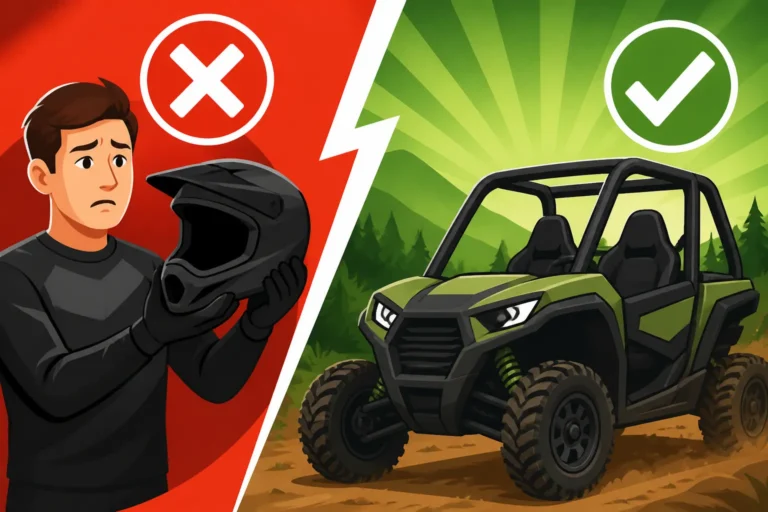
Vermont helmet laws require all ATV and UTV riders and passengers to wear head protection despite vehicle rollover bars.

Vermont ATV helmet laws and safety stickers, including DOT certification requirements for riders on trails and roads.

Vermont law requirements for ATV and UTV helmets, including safety standards, police equipment checks, and proper chin strap fastening.

Vermont law requires all ATV riders to come to a complete stop and yield to traffic at paved state highway crossings.

Vermont ATV rules for 12-year-olds detail mandatory safety certificates, age restrictions, and direct adult supervision requirements for road crossings.

Vermont ATV pavement crossings require following town road traffic laws and VASA rules to ensure legal safety.

Vermont ATV laws govern riding near private land boundaries and public roads without trespassing or facing fines.
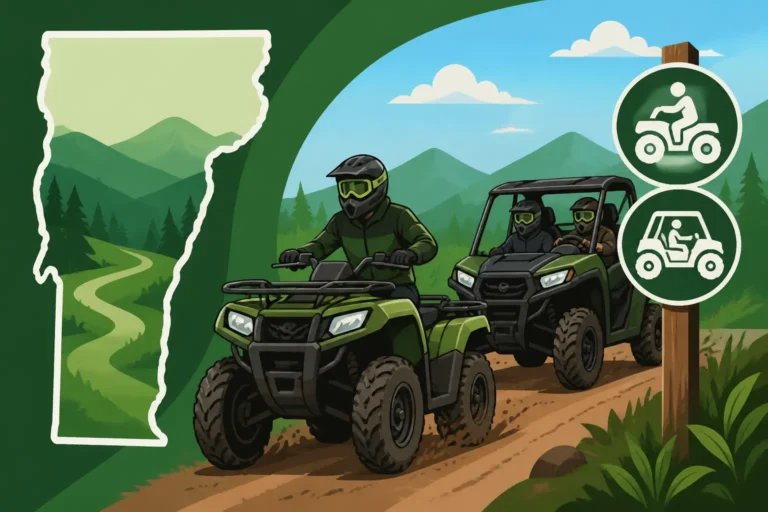
Official signs on Vermont town roads show legal ATV and UTV routes, helping riders avoid accidental trespassing.
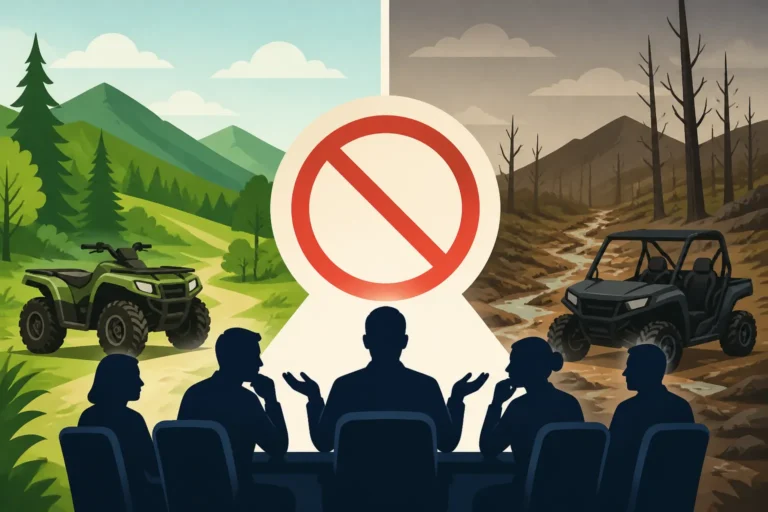
Vermont selectboard inaction on annual ATV road designations means those public roads automatically revert to closed status.

Vermont town selectboards require yearly renewal of ATV road designations to maintain local control and manage community concerns.