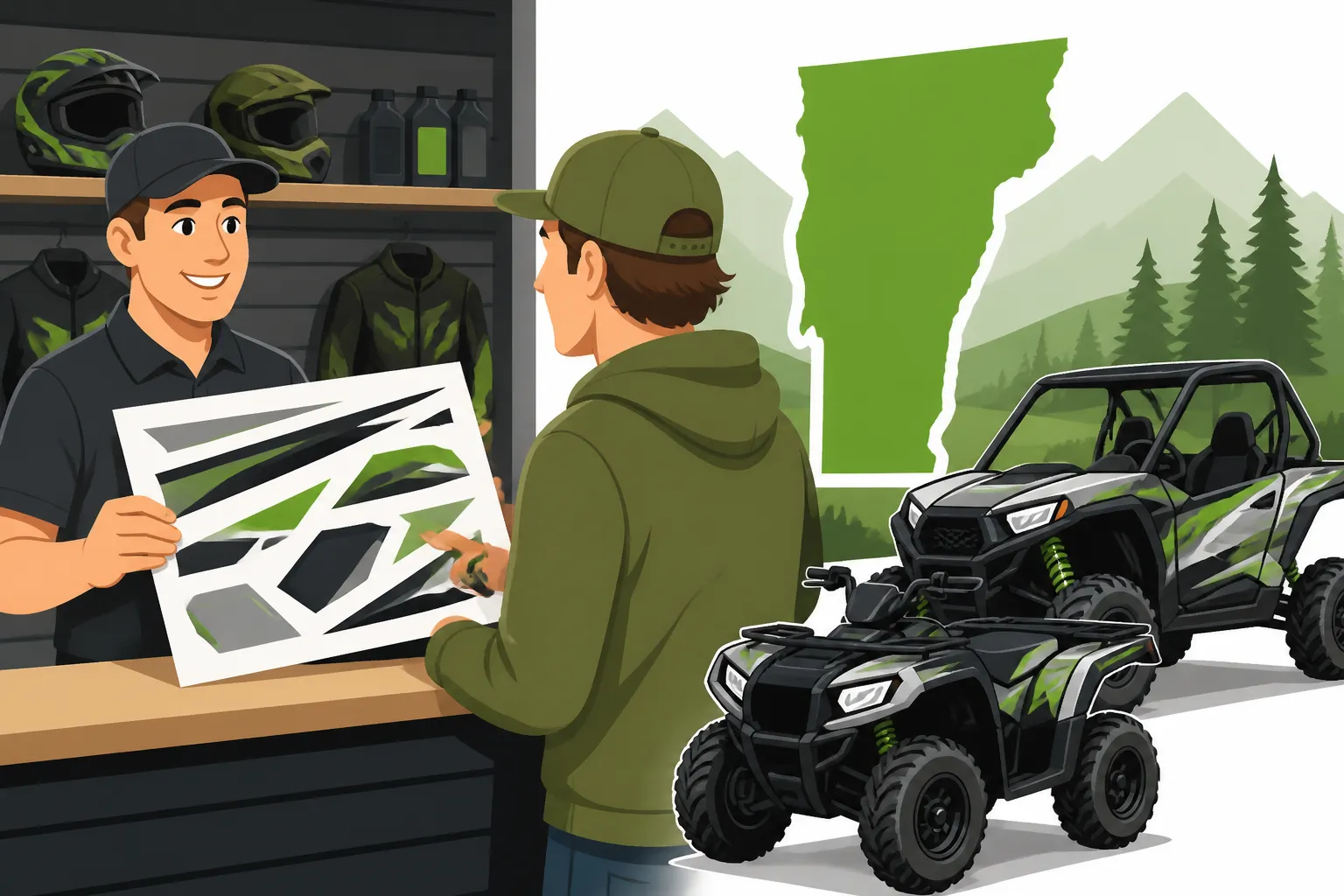
Buying a Decal at a Local Shop
If you want to ride Vermont’s ATV trail network, getting the right Trail Access Decal (TAD) is a separate step from registering your machine. Buying in person can make it easier to confirm which decal applies, but availability and what a seller asks you to bring can vary. Here’s how to prepare, what to check at the counter, and what to do before you ride.
What a Vermont Trail Access Decal Does
A TAD gives an eligible machine access to Vermont’s organized ATV trail system when the rider also meets the applicable registration and safety requirements. It is not a substitute for vehicle registration, and having a registration plate alone does not provide trail access. The key distinction is simple: registration identifies the machine for legal operation where registration is required; the decal is for access to the participating trail network.
That difference matters if you are visiting Vermont. A machine registered in another state may be recognized for Vermont trail use, but visitors still generally need the required Vermont TAD to use the network. Check the details for your home state before you travel, especially if your machine is registered in Quebec or another jurisdiction. The rules and required documentation depend on the situation. See Vermont Out-of-State Machines Still Need a TAD and Vermont Reciprocity for Out-of-State Machines for the related requirements.
A TAD is not permission to ride anywhere in Vermont. The organized network relies on designated routes and landowner permission. A decal does not open state land, private property, or roads that are not part of an authorized route. Before setting out, check the trail information for the area and confirm that the route is open. For a broader look at the difference between a plate and a decal, see Vermont Requires Registration Plus a TAD.
| Item | What it is for | What it does not do |
|---|---|---|
| ATV registration | Identifies the machine for registration purposes | Does not by itself provide access to the VASA trail network |
| Trail Access Decal | Provides access to eligible organized trails for the decal period | Does not replace registration or grant permission to ride on any land |
| Landowner permission or route designation | Allows use of a particular private route or road when applicable | Is not automatically included with a registration or decal |
The decal period is important when you plan a trip. Vermont TADs expire on December 31, rather than lasting for a rolling year from the date of purchase. A decal bought late in the season therefore does not carry into the following calendar year. Check Vermont TADs Expire December 31 before deciding when to buy.
A local shop can be a convenient place to purchase a decal, but not every ATV-related business sells them. Some sellers may be clubs or participating local businesses, and inventory or sales arrangements can change. Do not assume that a repair shop, dealership, gas station, or general outdoor retailer has decals available just because it serves riders.
Before You Visit a Local Seller
The most useful preparation is to confirm that the seller is currently offering TADs and to ask what information it needs. A phone call can prevent a wasted drive, particularly if you are traveling from out of state or buying for more than one machine. Ask whether the seller has the decal type you need, whether it can complete the transaction while you wait, what payment methods it accepts, and whether it has any sales restrictions or limited hours.
Have the machine’s current registration information available. Depending on your circumstances and the seller’s process, you may be asked to show registration or provide details that identify the machine. Visitors should bring proof of the machine’s home registration and be ready to explain where it is registered. If you are buying for several machines, collect the documents and identifying information for each one rather than assuming one machine’s paperwork will cover the group.
Before going, work out which general category fits your situation:
- A Vermont-registered machine
- A machine registered outside Vermont
- A second machine for an owner who is already buying a decal
- A rented machine, where the rental provider may handle the decal
These categories can affect the kind of purchase or proof needed. If you are unsure, ask the seller how it determines the correct decal before paying. You can also review Vermont TAD for a Visitor’s Machine and Vermont TAD for a Second Machine. Rental customers should confirm responsibility with the rental operator rather than buying a decal automatically; see Vermont TAD for a Rented Machine.
For a visiting rider, do not treat the trail decal as a fix for missing registration documents. If the machine is not properly registered at home, resolve that question before traveling. Vermont’s recognition of another jurisdiction’s registration and the separate decal requirement are related but not interchangeable. A counter purchase should not be assumed to make an otherwise ineligible machine compliant.
It also helps to make a short checklist before you leave:
- Confirm that the shop or club is an active decal seller.
- Ask which documents it wants for your type of machine.
- Have the registration information for every machine you plan to use.
- Confirm the current price and accepted payment methods with the seller.
- Ask whether the decal is issued at the counter or requires another step.
- Check the seller’s hours and whether it recommends purchasing in advance.
Prices and sales processes can change, so use the seller or an official program source for current figures. If you want to compare in-person purchasing with other methods, How to Buy a Vermont TAD explains the broader options, while Buying a Vermont Trail Access Decal Through a Club focuses on club-based sales.
At the Counter: Confirm the Decal Before You Pay
When you reach the seller, describe where the machine is registered and how many machines need decals. If you are a visitor, say so clearly and show the registration proof the seller requests. If you are buying for a second machine, confirm that the seller is applying the correct category to that machine rather than assuming the first purchase automatically covers it.
Before paying, check the details on the transaction or decal materials. Make sure the number of decals matches the number of machines, and confirm whether the decal is assigned to a specific machine. Ask when the decal becomes usable, whether there are instructions for placing it, and what proof you should carry. If something on the receipt or paperwork does not match your situation, stop and ask the seller to clarify it before leaving.
Do not assume a decal can be transferred freely between machines. If you replace a machine or make a mistake during application, ask the seller or the program administrator what to do. A decal is not a general pass for every ATV in a household. Rules for transfers, replacements, and second machines can be specific; Transferring a Decal to a New Machine and Vermont TAD Replacement If Lost address those situations.
Ask what the decal purchase includes. Vermont’s trail access arrangements can connect the TAD with club participation and support for the trail system. That does not mean every seller will explain the same details at the counter, so ask if you want to know which club or network the purchase supports. The general explanation is covered in Vermont TADs Cover VASA and Club Dues.
Keep the receipt or other purchase confirmation until you have checked that the decal is in place and your documents are in order. A receipt may help resolve a question about the transaction, but do not assume it replaces the decal or any required registration paperwork. If the seller gives you instructions or a card to carry, follow them and keep them with the machine’s registration documents.
If the seller cannot confirm which decal is right for your machine, do not guess based on the machine’s size, brand, or where you bought it. Ask for guidance from an official Vermont trail-access source or a participating club. It is better to pause the purchase than to discover at a trail gate that the decal does not match the machine or its registration status.
After Buying: Apply It and Check Trail Access
Read the placement instructions before applying the decal. Clean and dry the recommended surface, and choose a spot where the decal can remain attached and visible during normal riding. Avoid placing it where mud, body panels, a cargo rack, or frequent contact will quickly obscure or damage it. For the specific placement guidance, see Vermont TAD Placement on the Machine.
Once it is attached, take a moment to check the result. The decal should be secure, readable, and placed according to the current instructions. Keep any proof of purchase and the machine’s registration information together, and make sure the rider knows where those documents are stored. If the decal is damaged, peels off, or is applied incorrectly, ask about the replacement process instead of trying to alter or reuse it.
Before riding, confirm that the trail or corridor you plan to use is open and that your machine is permitted on it. Trail access can depend on landowner permission, route designation, seasonal closures, and local conditions. A TAD does not override a closure or authorize travel on an unmarked route. Check current club or trail information shortly before departure, because conditions can change after you buy the decal.
For visitors, check both sides of the compliance picture: the machine’s registration must be recognized for the planned use, and the Vermont trail-access requirement must be met. Keep the plate and decal on the machine as required, and carry registration and any other requested proof. The articles Carrying Both Plate and Decal and What a Trail Warden Checks cover what riders may need to show.
Finally, plan the next season around the decal’s calendar-year expiration. Buying from a nearby seller can be convenient, but it does not extend the validity period or guarantee that the same seller will have decals later. If you ride regularly, ask how and when that seller handles purchases for the next season. If you ride only occasionally, check the expiration date before making a late-season purchase so you understand how much of the decal period remains.
Disclaimer
This article is for general informational purposes only and does not constitute professional advice. Laws, prices and regulations vary by location and change over time. Consult a qualified professional for guidance on your specific situation.