A Second ATV Ordinance Ticket Costs $75
We've all been there: out enjoying the beautiful Vermont trails or permitted town roads on our ATVs or UTVs, only to find ourselves facing a ticket. It's frustrating, often confusing, and can certainly put a damper on your day. But what happens when that initial warning or first violation turns into a second one? This guide is here to walk you through the specifics of receiving a second ATV ordinance ticket in Vermont, focusing on the $75 cost, what it means for you as a rider, and how to navigate the sometimes-tricky landscape of local regulations to avoid further penalties.
Understanding Vermont's ATV Ordinance Tickets
Riding an ATV or UTV in Vermont offers incredible freedom and access to breathtaking scenery, but it also comes with a responsibility to understand and follow the rules. Many of these rules aren't state-level mandates but rather local ordinances set by individual towns. This can be incredibly confusing because what's perfectly fine in one town might lead to a ticket just a few miles down the road. It's this patchwork of rules that often catches even experienced riders off guard, leading to those frustrating tickets.
The Frustration of Getting a First Ticket
That first ticket can feel like a real punch to the gut. Maybe you didn't see the sign, or perhaps you genuinely misunderstood a local regulation. The initial fine, often around $50, serves as a stark reminder that ignorance of the law is no excuse. It's easy to feel targeted, especially when you're just trying to enjoy your machine responsibly. We hear it all the time from fellow riders: "I thought this road was open!" or "The map I had didn't show that restriction." It's a valid frustration, because keeping up with every single town's specific rules can feel like a full-time job.
You might have been riding a perfectly legal machine, properly [Registering an ATV With the Vermont DMV] and with your [Vermont ATV Plates and Where They Go] correctly mounted, only to run afoul of a local time restriction or a designated route. The intent is usually to educate and deter, but the immediate sting is the financial penalty. You might think, "Okay, I got it. I'll be more careful next time." But sometimes, despite our best intentions, another slip-up can happen, and that's when things escalate slightly. For details on how the first violation works, you can check out [What Happens After a First ATV Ordinance Ticket].
Why Fines Escalate
The reason fines escalate for repeat offenses is pretty straightforward: local authorities want to encourage compliance. A first ticket is often seen as a warning shot, a chance for you to correct your behavior and become more aware of the local rules. When a second violation occurs, it signals to the enforcing officer that the message might not have fully landed, or perhaps the rider isn't taking the ordinances as seriously.
Think of it like any other repeated minor infraction – whether it's parking tickets or library late fees. The goal isn't to punish excessively, but to create a stronger incentive to follow the rules. For towns like Brighton or Newport, which have specific ordinances, ensuring riders respect these rules is crucial for maintaining public access and managing community concerns like noise and dust. The progressive fine structure is designed to be a deterrent, making it financially less appealing to repeatedly ignore the local regulations. It's a way for towns to say, "We appreciate your enjoyment of our area, but we also need you to be a good neighbor."
Common Ordinance Violations
So, what kinds of things typically lead to these ordinance tickets? It's almost always about where and when you're riding, rather than the machine itself. For instance, towns often set specific [Vermont ATV Speed Limits on Town Roads]. Exceeding these, even by a small margin, can get you pulled over. Another big one is riding on roads or trails not designated for ATVs. While the state has general rules, individual [Vermont ATV Road Rules: Towns Decide] which of their roads are open. You might encounter signs that say "ATV Prohibited" or find yourself on a road that simply hasn't been officially opened for ATV use by the local selectboard.
Curfews are another common source of violations. Many [Vermont Town Ordinances That Set Curfews] prohibit riding late at night or early in the morning, often to address noise concerns for residents. For example, [Brighton's ATV Ordinance Explained in Vermont] includes specific time restrictions. Going off-trail on private property without permission, even if it's just a shortcut, is also a serious infraction. And while not always an ordinance, issues like excessive noise from aftermarket exhausts can draw attention from local enforcement. It really boils down to being aware of the specific "how, when, and where" of riding in each locality.
The Specifics of a Second Offense: $75
When that second ticket comes, it carries a slightly heavier weight. The financial impact is more noticeable, and it signifies that you're now on a trajectory of increasing penalties if you don't adjust your riding habits. Understanding why it's $75 and what else might come with it is key to moving forward responsibly.
Breaking Down the $75 Fine
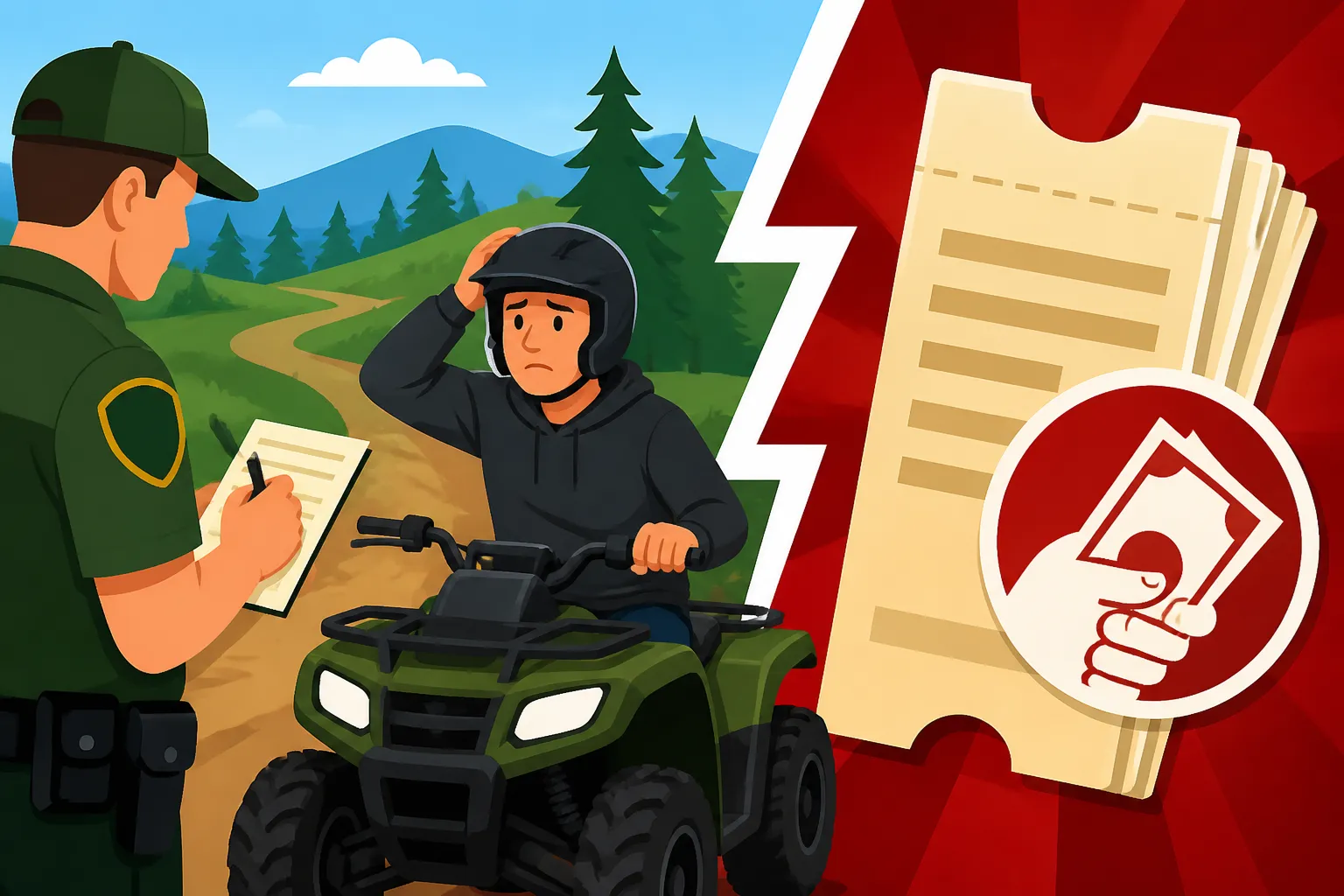
The $75 fine for a second ATV ordinance ticket in Vermont is a direct step up from the typical first offense. This figure is generally set by the individual town's ordinance, not by state law, though state law often provides the framework for towns to establish such penalties. It's a clear signal from the local authorities: "We gave you a warning, and now we need you to pay closer attention." This increased amount is meant to be a stronger deterrent than the initial fine, pushing riders to be more diligent in checking local rules and adhering to designated routes and times.
When you receive that ticket, it will detail the specific ordinance you violated. It's crucial to read this carefully. Often, the ticket will also provide instructions on how to pay the fine or, if you choose, how to [Paying a Waiver Instead of a Fine] or contest it. Make sure you understand the deadline for payment. Ignoring the fine can lead to even greater penalties, including late fees or potentially having the matter sent to court, which can be far more costly in terms of time and money. While the state has general guidelines for ATVs, these specific fines are a local matter, varying town by town.
Beyond the Fine: Other Consequences
While the $75 fine is the immediate financial hit, there can be other, less direct consequences of a second ordinance violation. Repeated infractions can strain relationships between the riding community and local residents, potentially leading towns to impose stricter rules or even close routes that were previously open. This hurts all riders, not just the individual who received the ticket. Nobody wants to see their favorite riding areas become off-limits because a few riders didn't respect the local agreements.
In some cases, particularly if the violation involved trespassing or property damage, the situation could escalate beyond a simple fine. Depending on the severity and nature of the offense, property owners could pursue civil action, or law enforcement could decide on more serious charges. It's also worth noting that repeated violations, especially if they involve reckless behavior, could potentially impact your ability to acquire or renew a [Vermont VASA Membership Prices] or even face scrutiny from your insurance provider, as [Vermont ATV Insurance Requirements] are mandatory. While it's rare for minor ordinance violations to have these extreme outcomes, it's a reminder that compliance is about more than just avoiding a dollar amount; it's about maintaining access and good standing within the community.
How Towns Enforce These Rules
You might wonder, "Who exactly is handing out these tickets?" In Vermont, enforcement of local ATV ordinances can come from a few different sources. You'll often see town constables or local police officers enforcing these rules within their jurisdiction. These are the folks who know their town's specific road designations and curfews intimately. They might patrol known ATV routes, respond to resident complaints, or conduct random checks. [Who Enforces ATV Rules: Warden or Town Officer?] covers this in more detail, highlighting the dual nature of enforcement.
Vermont Fish and Wildlife wardens also have the authority to enforce ATV regulations, especially on trails and public lands, though their primary focus is often on state-level rules and environmental protection. For example, if you're riding in an area designated as a wildlife management zone where ATVs are prohibited, a warden might be the one to issue a citation. The key takeaway is that various local and state law enforcement personnel are authorized to uphold these rules, and they are usually well-informed about the regulations in their patrolling areas. They're not just looking to spoil your fun; they're ensuring public safety and preserving access for everyone.
| Violation Type (Examples) | First Offense (Typical) | Second Offense (Typical) | Third Offense (Typical) |
|---|---|---|---|
| Exceeding Local Speed Limit | $50 | $75 | $100 |
| Riding Off Designated Route | $50 | $75 | $100 |
| Violating Local Curfew | $50 | $75 | $100 |
| Riding on Closed Town Road | $50 | $75 | $100 |
| Disturbing Quiet Hours | $50 | $75 | $100 |
| Failure to Display Plate Clearly | $50 | $75 | $100 |
Note: These are typical fines based on common Vermont town ordinances and can vary. Always check local town regulations for exact figures.
Avoiding a Third Ticket and Future Penalties
Nobody wants to keep racking up tickets. The goal is to learn from these experiences and adapt your riding habits to stay on the right side of the law. A third ticket comes with an even higher price tag, as outlined in [A Third ATV Ordinance Violation Runs $100], so taking proactive steps now is incredibly important.
Learning from Your Mistakes
The most important step after receiving a second ticket is a self-assessment. What exactly went wrong? Did you not consult a current map? Did you misread a sign? Were you simply riding too fast and didn't realize the local speed limit was lower? Take the time to genuinely understand the specific violation. It's easy to get defensive, but identifying the root cause is the only way to prevent it from happening again. This isn't just about avoiding another fine; it's about becoming a more responsible and informed rider.
Consider reviewing your equipment too. For instance, if you had trouble seeing a faded sign, perhaps a more robust windshield or better lighting for night rides, possibly from a brand like SuperATV, could help with visibility. It's about proactive solutions. Make it a habit to check the town's official website or stop at the town clerk's office before riding in a new area. Many towns, like those mentioned in [Newport City's ATV Routes in Vermont], have online maps or posted information about their specific ATV rules. Knowledge truly is your best defense against future tickets.
Staying Informed About Local Rules
Given the variability of local rules, staying informed requires a bit of effort, but it’s absolutely worth it. Before you head out, especially if you’re exploring a new part of Vermont, make it a non-negotiable step to check the local ordinances for the towns you plan to traverse. Many towns publish their specific ATV rules on their municipal websites. You can often find links to these on the Vermont Association of Snow Travelers (VASA) website, as VASA works closely with towns to establish and maintain routes.
Another fantastic resource is your local ATV club. These clubs are usually on top of all the local happenings, including changes to ordinances, trail closures, and new route designations. Joining a club is not only a great way to meet fellow enthusiasts but also ensures you have access to the most current information. They often organize workdays, too, so you can actively contribute to the trail system you enjoy. Finally, pay close attention to posted signs on trails and roads. They're there for a reason, and they're your primary, real-time indicator of what's permissible. Sometimes, the rule isn't complex, but the signs are just hard to spot or are temporarily obscured. Ensure your machine, perhaps equipped with high-visibility accessories from SuperATV, helps you spot those crucial markers. Familiarize yourself with [Vermont Posted Routes and Their Signs] to understand what to look for.
Appealing an Ordinance Ticket
Sometimes, despite your best efforts, you might feel that a ticket was issued unfairly or mistakenly. Perhaps the sign was genuinely obscured, or you believe you were within the bounds of the ordinance. In such cases, you do have the right to appeal or contest an ordinance ticket. The ticket itself should have instructions on how to do this, usually involving contacting the municipal court or town clerk's office within a specified timeframe.
When appealing, come prepared. Gather any evidence you have: photographs of the obscured sign, a copy of the official town ordinance you believe supports your case, or witness statements if available. Be polite and respectful in your interactions. The goal is to present your side of the story clearly and factually. While it might seem like a hassle, appealing an unfair ticket is your right, and it’s important to exercise it if you genuinely believe you have a case. However, if you know you violated the rule, it's often simpler and less stressful to pay the fine and focus on preventing a third infraction. Remember, the process is there to ensure fairness, but it requires your active participation and clear communication.
Disclaimer
This article is for general informational purposes only and does not constitute professional advice. Laws, prices and regulations vary by location and change over time. Consult a qualified professional for guidance on your specific situation.