Rutting and Why Clubs Close Trails
A trail can look rideable from the parking area and still be soft enough to damage after a few hundred yards. In Vermont, repeated tire traffic on wet soil can deepen ruts, redirect water and make a corridor harder to maintain. This guide explains why clubs close muddy trails, how to judge conditions, and what riders can do to help protect access.
How ATV rutting damages a Vermont trail
What rutting is and why wet ground is vulnerable
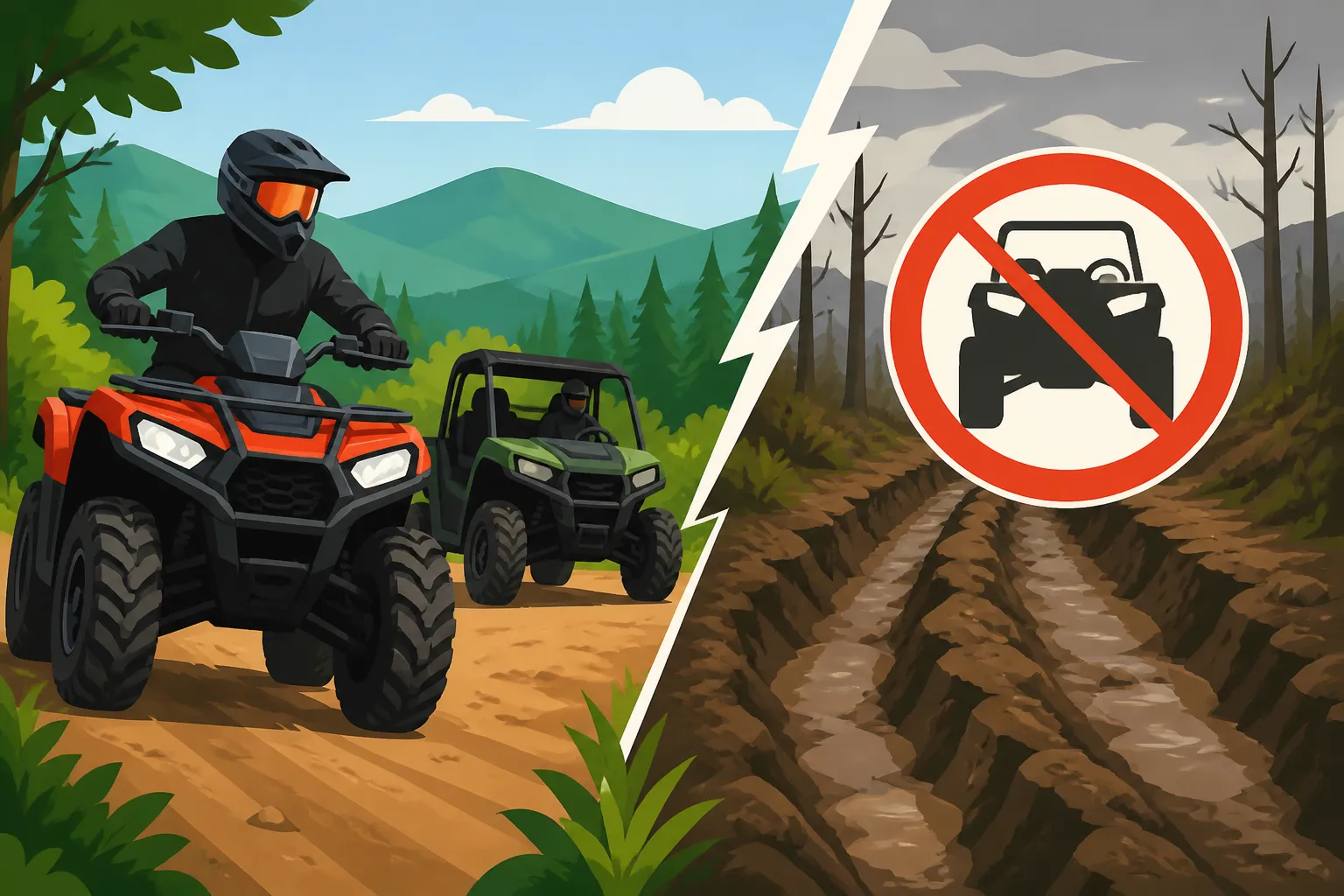
Rutting happens when tires press into soft ground and leave grooves behind. A shallow mark may seem harmless, but repeated passes can compact soil and push loose material to the sides. As the grooves deepen, they may channel water along the trail instead of letting it drain across or away from the riding surface.
Vermont’s mix of wooded corridors, hills, farm edges and old roads creates a range of trail conditions. A gravelly stretch may hold up well while a shaded, low-lying section nearby stays saturated. In spring, melting snow and frequent rain can leave soil wet below the surface even when the trail looks dry from above. A machine may cross the first soft patch without trouble, but every pass can make the next one worse.
Rutting is not just a cosmetic issue. Deep grooves can make a trail uncomfortable or difficult to ride, especially on a narrow corridor. They can also expose roots and rocks, loosen soil, damage drainage features, and leave muddy runoff in places where it can spread. The longer the damage persists, the more work volunteers may need to do to restore the route.
How tire traffic turns a wet spot into a bigger problem
A rider who reaches a muddy patch may try to power through it. That can spin the tires, dig into the soil and make a rut deeper. The next rider follows the same line, and the groove becomes more pronounced. If riders try to avoid it by driving around the edge, they can widen the damaged area and create new tracks through vegetation.
This is one reason a trail can deteriorate quickly even when each rider is out for only a short trip. A club may be managing a long corridor with changing conditions, and the softest sections often take the most damage. A route that held up earlier in the week may not be safe to ride after several days of rain or a sudden thaw.
It helps to distinguish ordinary tire impressions on firm ground from active rutting. A mark in dry, stable soil may not threaten the trail. A deep groove that holds water, grows with each pass, or forces riders to leave the marked route is a different matter. When conditions are uncertain, avoid testing the softest section with a full group behind you.
Why damage can affect more than the trail surface
Ruts can alter how water moves through a corridor. If a groove becomes a drainage channel, water may carry soil downhill, wash out a low section or contribute to damage around a culvert or crossing. On a slope, that runoff can make an already fragile area harder to stabilize.
There is also a practical access concern. Vermont’s trail network depends on continued cooperation with landowners, clubs and other partners. A damaged corridor can create extra maintenance demands and concern about erosion, noise, or riders straying beyond the permitted route to get around mud. A closure can give the ground time to dry and allow a club to assess repairs before more traffic arrives.
For riders planning a trip, it is worth checking Vermont Trail Conditions Before You Tow and Vermont Mud Season Closures before loading machines. A trailhead that was open during a previous visit is not proof that every section remains suitable today.
Why clubs close trails when they become muddy
A closure protects the corridor while it recovers
A club may close a trail when the surface is too wet to support normal use without significant damage. The goal is usually to prevent the problem from becoming worse, not to punish riders or spoil a planned outing. A short pause in traffic can give the ground time to firm up and give volunteers a chance to inspect trouble spots.
The decision may depend on more than the appearance of the trail at its entrance. Conditions can vary along a corridor, and a dry stretch near a road may lead to a saturated low area farther in. Clubs may consider recent weather, drainage, the condition of bridges or culverts, and reports from people who have been on the route. A closure can also be localized: one section may need to remain closed while other trails in the area are usable.
Because some Vermont trails cross private property, access can change when a landowner asks for a route to close or when a club needs to address a specific concern. Riders should respect closure signs and gates, even if they believe a particular section looks passable. Why a Landowner Can Close a Trail Overnight explains why access can change with little notice, while Vermont Trail Etiquette on Private Land covers the habits that help preserve permission to ride.
What a club may do during a closure
A closure can give volunteers time to check whether water is pooling, flowing along the trail, or undermining a crossing. Depending on the damage, maintenance might involve clearing a blocked drainage path, reshaping a surface, or arranging more involved work. Not every muddy area requires the same fix, and simply filling a rut may not solve the underlying drainage issue.
Clubs also need to decide when a trail is ready to reopen. The surface may look better at the entrance but remain soft in shaded or low-lying places. Reopening too early can lead to new damage and another closure. That is why current club notices and posted signs matter more than a rider’s memory of how the trail looked on a previous visit.
Closures can be inconvenient, particularly if you have already arranged a group ride or driven a long way. Still, riding around a closed area can undermine the reason for the closure and create a new route outside the marked corridor. If you are unsure what is open, check Who to Call About Vermont Trail Conditions rather than relying only on an older map or a social post that may not reflect recent changes.
Why a detour around mud is not always a safe workaround
When riders encounter a wet section, the instinct may be to go around it. But a detour can widen the trail, damage plants and soft soil, or cross land that is not part of the approved route. Even a short bypass may become a second track once other riders follow it.
A marked corridor is the route the club and landowner have made available for riding. Staying on it matters when the ground is dry, and it matters even more when mud tempts riders to improvise. Review Staying on the Marked Corridor before a ride, and do not assume that an opening beside the trail is an authorized detour.
If you meet a wet section that is not marked closed, use judgment. Avoid spinning your tires or widening the route, and turn back if continuing would mean leaving the corridor or causing obvious damage. Riding Around a Wet Section offers more context on making that decision without creating a new problem.
How to check conditions and make a responsible riding decision
Check more than one source before leaving
Before towing to a Vermont trailhead, look for the latest information from the club responsible for the route. Check posted notices, trailhead signs, and any official club updates you can find. Conditions can change after rain, thawing temperatures or a storm, so an old screenshot or a map saved weeks earlier may not tell you whether a corridor is open today.
Navigation apps, including onX Offroad, can help riders understand where they are and plan around a broader area. They should not be treated as permission to ride a route, proof that it is open, or a substitute for current club notices and signs. Use the app as one planning aid, then verify access through the group responsible for maintaining or authorizing the trail.
| What to check | Why it matters | What to do if information is unclear |
|---|---|---|
| Club updates and trail notices | Closures can change with weather and maintenance needs | Contact the club before you tow |
| Signs and gates at the trailhead | They may show a current restriction not reflected on an older map | Follow the posted instruction |
| Recent rain, thaw or storm conditions | Soil can remain soft after the weather improves | Choose a more suitable day or confirmed open route |
| Your navigation map | It helps with orientation but may not reflect a new closure | Confirm access with the club and watch for signs |
| Reports from other riders | They may help identify problem areas, but conditions can change | Treat informal reports as a prompt to verify |
After a storm, conditions may differ from one section to the next. A route could have standing water, a washout, or a newly damaged crossing. For more on that situation, see Vermont Trail Closures After a Storm. When a trip depends on an open corridor, checking before departure is much easier than finding a closure after you arrive.
Recognize signs that the ground is too soft
There is no single visual cue that applies to every Vermont trail, but several signs suggest that the surface may not be holding up. Look for deep tire grooves, standing water in the riding line, fresh soil pushed into ridges, or tracks that appear to get deeper along a short stretch. If riders are already going around the mud, that may be evidence the route is deteriorating.
Pay attention to how the machine responds. If tires sink, spin, or require repeated throttle to move through a section, stop before the route gets wider or more damaged. Do not use another rider’s ability to get through as proof that the trail is firm enough for your machine. Vehicle weight, tire setup and riding style can all affect the mark left behind.
A group ride needs extra care because several machines may cross the same soft patch in quick succession. If a section looks vulnerable, do not encourage the group to push through simply because everyone has already arrived. Turn around where it is safe to do so, and let the club know what you observed. Clear, specific information—such as the corridor name and approximate location—can be more useful than a general report that a trail is “bad.”
Adjust your plan rather than forcing the ride
If a route is closed or visibly too soft, reschedule or choose a route whose access and condition have been confirmed. This may mean changing the day, shortening the outing, or picking a different riding area. It can be frustrating to make that call after arranging trailers, meals and a group, but preventing trail damage helps keep future rides possible.
For a longer trip, build a little flexibility into your plan. Check conditions again shortly before leaving, especially after a wet spell. Keep a backup destination in mind, and make sure everyone in the group understands that closure signs are not optional. If you use onX Offroad to help plan, pair that map with current club information and follow the route as marked on the ground.
Vermont trails rely on people who are willing to maintain them as well as ride them. Vermont Club Volunteer Work Days is a useful next read if you want to understand how riders can support trail upkeep beyond following closure notices. When everyone avoids soft sections, respects signs and reports damage responsibly, clubs have a better chance of reopening routes in good condition.
What riders can do to help prevent trail closures
Ride in a way that limits damage
On a wet or fragile stretch, smooth throttle and steady control are better than spinning tires or making abrupt turns. Avoid repeatedly crossing the same soft spot to test it. If the route is marked closed, do not pass a gate or look for a side path. A closure is a clear signal that the corridor needs a break, inspection or repair.
Stay within the marked route, leave gates as you found them, and avoid widening the corridor to get around mud. These habits matter because a small shortcut can become a new track used by many riders. Where you see a closure notice, turn around safely and choose another confirmed open option.
Do not assume that a machine with more ground clearance or aggressive tires can make a wet trail safe for everyone else. The issue is often the soil’s ability to support repeated traffic, not simply whether one vehicle can get through. A successful crossing can still leave ruts that the next group will deepen.
Report damage without adding to it
If you find an unexpected muddy or damaged section, avoid driving back and forth to document it. Note the location as clearly as you can, then contact the club responsible for the route. A brief report can mention whether the issue is standing water, deep ruts, a blocked drain, a damaged crossing, or a sign that appears to be missing.
If it is safe and permitted, a photo taken from the trail edge may help a club understand what needs attention. Do not enter a closed section to get a better view, move barriers, or attempt repairs without permission. Maintenance may require specific tools, materials or coordination with a landowner.
If you ride with a group, pass along closure information before anyone starts unloading. That helps avoid a situation where some riders enter a route while others are still trying to confirm conditions. Good communication is a small step that can prevent a lot of frustration for riders and unnecessary work for volunteers.
Think of closures as part of responsible access
A trail closure can disrupt a plan, but it can also prevent a wet corridor from becoming more difficult and expensive to restore. Respecting the closure helps protect the route, the land beneath it and the relationships that allow access in the first place.
Before each trip, confirm the route is open, follow signs on the ground, and be willing to change plans if conditions are too soft. In Vermont, where conditions can shift from one stretch to another, that flexibility is part of responsible ATV and UTV riding. The payoff is a trail system that has a better chance of staying usable for the next visit.
Disclaimer
This article is for general informational purposes only and does not constitute professional advice. Laws, prices and regulations vary by location and change over time. Consult a qualified professional for guidance on your specific situation.