Brighton’s Night Curfew in Vermont
Riding your ATV or UTV in the beautiful Vermont landscape is an experience like no other, but it can be really frustrating when you're trying to plan a full day out and you're not sure if you'll run afoul of local rules after the sun goes down. Many towns, like Brighton, have specific ordinances regarding when you can and can't operate your machine, especially at night. This guide is here to untangle the specifics of Brighton's night curfew for ATV and UTV riders, helping you enjoy your time on the trails without any unexpected surprises.
Understanding Brighton's Specific ATV Curfew
It's a common misconception that all towns in Vermont operate under the same set of rules for ATV and UTV use, but that couldn't be further from the truth. Vermont truly empowers its local selectboards to make decisions about ATV access on town roads, and that includes setting curfews. Brighton is one such town that has taken this responsibility seriously, putting in place specific hours when off-road vehicles are simply not permitted on its designated routes.
For riders heading to Brighton, it's crucial to know that the town has established a night curfew that impacts when you can legally operate your machine. This isn't just a suggestion; it's a regulated period designed to maintain peace and safety within the community. Ignoring these specific hours can lead to fines and, more importantly, can jeopardize the privilege of trail access for everyone in the long run. When you're planning your route through the Northeast Kingdom, especially if you're basing yourself around the Brighton area, having these hours firmly in mind is as important as checking your fuel levels.
The Exact Hours of Restriction in Brighton
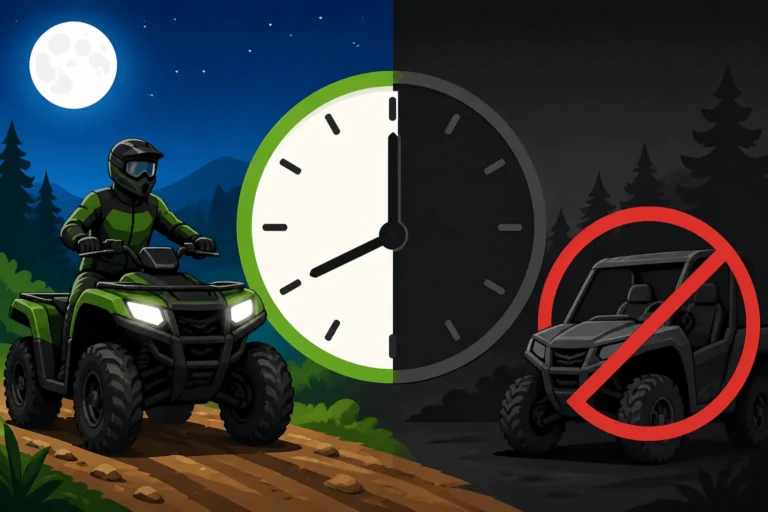
The Brighton town ordinance clearly states a specific night curfew that all ATV and UTV riders must observe. This curfew typically runs from 9 p.m. to 7 a.m. the following morning. This means that once 9 o'clock rolls around in the evening, your machine needs to be off the designated town roads and trails. You can't just be almost home; you need to be parked and quiet until the clock strikes 7 a.m. again. This curfew applies seven days a week, so there's no weekend reprieve from the quiet hours. It's designed to give residents a solid block of undisturbed night, and as responsible riders, we need to respect that.
These specific hours aren't arbitrary. They're usually set after careful consideration by town officials, often in response to community input about noise and disturbance during typical sleeping hours. Think about it from a resident's perspective: an ATV rumbling past their home late at night, even at legal speeds, can be quite jarring. The 9 p.m. cutoff gives people a chance to settle in for the evening without the concern of late-night vehicle noise, and the 7 a.m. restart acknowledges that the workday is beginning, but still gives a bit of a buffer before recreational noise picks up. This curfew is part of a larger framework of local rules, which can also include [Brighton's 25 mph Cap in Vermont] and specific [Brighton's Season Dates in Vermont].
What "Night Curfew" Means for Riders
Practically speaking, Brighton's night curfew means you need to adjust your ride planning to ensure you're off the trails and designated town roads before 9 p.m. If you're out on a long loop, you need to factor in enough time to get back to your lodging, campsite, or trailer before the curfew takes effect. It's not just about stopping your ride, it's about not being in operation on any routes designated for ATV use within the town limits during those hours. This includes connecting roads and any sections that pass through residential areas.
For many riders, this means early starts are key to maximizing daylight riding hours. If you're someone who loves to explore, you might be used to pushing it right up until dusk, but in Brighton, you have an earlier hard stop. This could influence where you choose to stay, how far you plan your excursions, and even which trails you decide to tackle. It's also important to remember that these rules are in place for safety, too. Visibility decreases significantly after dark, even with proper lighting, and the risk of encountering wildlife increases. So, while it might feel restrictive, it's also a nudge towards safer riding habits. Ensure your machine, perhaps outfitted with quality accessories from brands like SuperATV, is always ready for the trails, especially when considering daytime adventure.
Why Towns Implement Night Curfews for ATVs
It's easy for us as riders to feel like curfews are just another hurdle, but understanding the reasoning behind them can help us appreciate their necessity and, hopefully, encourage compliance. Town selectboards aren't trying to make riding harder; they're balancing the recreational desires of ATV enthusiasts with the quality of life for their permanent residents. In a place like Brighton, where rural charm meets popular outdoor recreation, finding that balance is crucial for harmonious living.
These curfews are often born out of public discussions and local concerns. Residents want to enjoy the quiet of their homes, especially in the evenings, and the unique sounds of ATVs and UTVs can carry quite a distance in the still night air. It's about protecting the community atmosphere and preventing potential conflicts that could ultimately lead to tighter restrictions or even the closure of valuable riding routes.
Noise Concerns and Residential Areas
One of the primary drivers behind night curfews for ATVs and UTVs is noise. Modern machines are quieter than their predecessors, but they still produce a distinct sound that can travel far, especially in the quiet, open spaces of rural Vermont. Residents living along designated ATV routes, or even within earshot of them, value their peace and quiet, particularly during evening and overnight hours. The rumble of an engine, even for a short pass, can disrupt sleep, wake children, or simply be an unwelcome intrusion.
Towns like Brighton recognize that maintaining good relationships between riders and residents is paramount to the continuation of ATV access. Excessive noise complaints can quickly turn public opinion against ATV use, leading to debates at town meetings and potentially stricter rules or the closure of routes. By implementing a curfew, the town aims to mitigate these noise disturbances during sensitive times, allowing residents to enjoy their evenings without interruption. This approach helps to sustain the privilege of riding on designated town roads rather than risking its complete withdrawal. Making sure your machine has a compliant muffler is part of being a good neighbor, and ensuring that any aftermarket parts, perhaps from a reputable dealer, adhere to local sound regulations is also a must.
Safety Considerations After Dark
Beyond noise, safety is a significant concern that underpins night curfews. Riding an ATV or UTV after dark introduces a whole new set of challenges and risks, even for experienced riders. While [Vermont Headlight and Tail Light Rules] mandate certain lighting, visibility is still dramatically reduced compared to daylight hours. It's harder to spot hazards like potholes, fallen branches, or sudden changes in terrain. Wildlife, such as deer or moose, are also more active and harder to see at night, increasing the risk of collisions.
Furthermore, in the event of an accident or breakdown, assistance can be much harder to come by in the dark. Cell service can be spotty in many parts of the Northeast Kingdom, and locating an injured rider or a stranded machine is more challenging for emergency services in low light conditions. By limiting riding to daytime hours, towns are essentially trying to reduce the potential for serious accidents and ensure that riders are operating under the safest possible conditions. This also helps to reduce the burden on local emergency responders who might otherwise be dispatched to remote locations in the middle of the night.
Navigating Night Riding Rules in Vermont
The landscape of ATV and UTV regulations in Vermont can feel like a patchwork quilt because each town has the authority to make its own decisions about road access. What's perfectly fine in one town might be strictly prohibited just a few miles down the road. This local control is a core part of Vermont's approach to recreational vehicle use, and it means that riders need to be constantly aware of where they are and what the specific rules are for that location.
It's not just about curfews; it's about understanding the broader framework. From speed limits to permissible roads and even equipment requirements, the rules vary. This means that simply knowing Brighton's curfew isn't enough if your ride takes you through other townships. A comprehensive approach involves checking local ordinances for every town you plan to traverse, which can feel like a lot of homework, but it's essential for a hassle-free ride. Remember, safety and legality go hand in hand on the trails.
How Town Ordinances Work
In Vermont, towns have significant autonomy when it comes to regulating ATV and UTV use on their local roads. This is a direct result of state legislation that grants local selectboards the power to open or close town roads to these vehicles. They do this by passing specific ordinances, which are essentially local laws. These ordinances can cover everything from the types of machines allowed, the specific roads that are open, the speed limits, the dates during which roads are open, and, of course, any curfews. [Vermont ATV Road Rules: Towns Decide] is a fantastic resource for understanding this concept more deeply.
What this means for riders is that a single, statewide "rule book" for ATV access on town roads simply doesn't exist. Each town's selectboard will weigh factors like public safety, noise concerns, road maintenance, and the desires of its residents when crafting their ordinances. They might hold public hearings, gather input from various stakeholders, and then vote on the specific rules. Once an ordinance is passed, it becomes legally binding for anyone operating an ATV or UTV within that town's boundaries. This localized approach is why researching each town you intend to ride through is absolutely critical.
| Rule Category | Example in Brighton (as discussed) | General Vermont Town Approach |
|---|---|---|
| Night Curfew | 9 p.m. to 7 a.m. | Varies widely; many towns have one |
| Speed Limits | 25 mph cap on certain roads | Often 25 mph, but can be posted higher |
| Season Dates | May 1 to October 1 | Varies by town, typically late spring to fall |
| Open Roads | Specific routes designated | Selectboards designate specific roads |
| Front Plate | Requested (not statewide mandatory) | Some towns may ask for one |
State-Level Equipment Requirements for Night Riding
Even when a town's local ordinance dictates when you can ride, there are overarching state-level requirements that dictate how your machine must be equipped for night riding, should it be permitted. While Brighton has a night curfew, if you're riding in a town that does allow night operation or you're riding during permitted dusk/dawn hours, you need to ensure your machine meets Vermont's equipment standards. These are not optional, and they are in place regardless of local curfews.
Specifically, your ATV or UTV must be equipped with working headlights and tail lights. This isn't just for seeing where you're going; it's also crucial for being seen by others. The state mandates that headlights be visible for a certain distance and tail lights be clearly visible from the rear. You should also have appropriate reflectors. Think of it this way: even if you're out just before the 9 p.m. curfew in Brighton, or if you're headed to another area, having your lights in perfect working order is non-negotiable. Many riders will upgrade their lighting systems with high-quality aftermarket options, and companies like SuperATV offer a range of products designed to improve visibility and safety, ensuring you can see and be seen even when conditions are less than ideal.
Consequences of Violating Brighton's Curfew
Nobody wants to be on the wrong side of the law, especially when you're out trying to enjoy a recreational activity. Violating a town ordinance like Brighton's night curfew for ATVs and UTVs isn't just a minor oversight; it carries real consequences. These aren't just theoretical penalties; they are enforced by local authorities and state wardens, and they can significantly impact your wallet and your future riding privileges. Understanding these ramifications is a powerful motivator for adhering to the rules.
Beyond the immediate financial hit, repeated violations can have a detrimental effect on the broader ATV community. Every time a rider disregards a local rule, it chips away at the goodwill between residents and riders, making it harder for VASA clubs to maintain and expand the trail network. It truly is a case where a few bad apples can spoil it for everyone, so adhering to these rules is an act of community responsibility.
The Fine Schedule for Violations
Brighton, like many towns, has a structured fine schedule for violations of its ATV ordinance, including the night curfew. It's usually not a one-and-done flat fee. Typically, the penalty escalates with subsequent violations, indicating that the town takes repeat offenses seriously. For a first offense of violating [Brighton's Night Curfew in Vermont], you might receive a warning or a relatively modest fine. However, if you're caught a second time, that fine will almost certainly increase, and a third offense will come with an even steeper penalty. [Brighton's Fine Schedule in Vermont] provides a detailed breakdown of these escalating costs.
These fines are designed to be a deterrent, making it more expensive to repeatedly ignore the rules than to simply comply. It's not just a slap on the wrist; these can be significant financial burdens that quickly add up. Imagine trying to enjoy a weekend ride, only to come home with a ticket that costs you a substantial portion of your vacation budget. It's far better to pack it in before the curfew and avoid the headache altogether.
Enforcement and Local Authority
You might wonder who actually enforces these local ATV rules. It's a combination of different authorities. Vermont State Game Wardens have the authority to enforce ATV regulations statewide, including local ordinances. In addition, local law enforcement, such as town constables or sheriff's deputies, are also empowered to enforce their town's specific ordinances. This means that you could encounter a variety of officers on the trails or roads.
These officers are often familiar with the local riding areas and specific town ordinances. They are out there not just to catch people breaking rules, but also to ensure safety and maintain order. They can issue warnings, write tickets, and in some cases, even impound machines for serious or repeated violations. It's important to always carry your registration and any required permits, as wardens and officers can ask to see them at any time. A polite and cooperative attitude goes a long way if you are stopped, but ultimately, the best way to deal with enforcement is to simply abide by the rules.
Impact on Future Trail Access
Perhaps the most significant consequence of widespread or repeated violations of town ordinances, including curfews, is the potential negative impact on future trail access. When residents experience frequent noise disturbances or witness riders disrespecting local rules, it creates tension. This tension often translates into complaints directed at the town selectboard, and those complaints can put significant pressure on officials to reconsider their stance on ATV access.
Towns that currently allow ATV use do so as a privilege, not a right. This privilege is contingent upon riders acting responsibly and respecting the rules put in place for the community's benefit. If a town like Brighton sees a consistent pattern of curfew violations, it could lead to the selectboard voting to impose even stricter rules, reduce the number of designated roads, shorten the riding season, or in extreme cases, even close access to ATVs and UTVs entirely. This scenario is every rider's nightmare, but it's a very real possibility if we, as a riding community, don't demonstrate respect for local regulations. We all share a responsibility to protect the riding opportunities we have.
Planning Your Brighton Ride Around the Rules
Knowing about Brighton's night curfew shouldn't dampen your spirits or deter you from riding in this beautiful part of Vermont. Instead, it should empower you to plan your adventures smarter, ensuring that every ride is enjoyable, safe, and entirely legal. It's all about proactive planning and making informed decisions before you even put your helmet on. Think of it as part of the preparation, just like checking your tires or packing snacks.
Embracing these rules allows you to be a responsible ambassador for the sport, fostering goodwill with local communities and helping to secure the future of ATV and UTV riding in Vermont. With a little foresight, you can still maximize your time on the trails and enjoy everything the Northeast Kingdom has to offer, all while respecting the local guidelines.
Timing Your Rides for Daytime Enjoyment
The easiest way to navigate Brighton's night curfew is to simply plan your rides to be completed well before 9 p.m. This means making the most of the daylight hours. Consider starting your day earlier. If you're staying locally, perhaps grab breakfast and then hit the trails shortly after the 7 a.m. restart. This gives you a solid 14 hours of potential riding time, which is more than enough for even the most ambitious day trips.
For longer loops or rides that take you further afield, plan your turnaround points carefully. Use a GPS or trail map to estimate your travel time, and build in some buffer time for unexpected stops, photo opportunities, or slower-than-anticipated sections of trail. Aim to be back at your base by 8 p.m. at the absolute latest, giving you a full hour to park your machine and settle in before the curfew takes effect. This approach ensures you're never rushing in the dark or risking a violation.
Using Local Resources and Trail Maps
Never underestimate the power of good information. The Vermont Association of Snow Travelers (VASA), along with its member clubs, is an invaluable resource for ATV and UTV riders. They maintain the vast network of trails and are usually the best source for current information on trail conditions, closures, and local rules. Before you head out, check the VASA website or contact the local club in the Brighton area. [Vermont ATV Trail Map Downloads] are often available, providing detailed layouts of the designated trails and connecting roads.
These maps are crucial not only for navigation but also for identifying the boundaries of different towns and understanding where one town's rules might transition to another's. Some maps might even indicate specific restrictions. Taking the time to study these resources can prevent you from inadvertently straying onto a prohibited road or missing a crucial turn that would get you back before curfew. Many riders also use GPS apps on their phones or dedicated GPS devices, often pre-loaded with VASA trail data, to stay on track.
Essential Gear for Safe Daytime Riding
Even though Brighton has a night curfew, focusing on daytime riding doesn't mean you can slack on your gear. In fact, ensuring your machine and yourself are properly equipped for any ride is crucial for safety and enjoyment. You'll want to make sure your helmet meets safety standards, and you're wearing appropriate eye protection, gloves, long pants, and sturdy boots. These are essential for protecting yourself from debris, branches, and potential impacts.
For your machine, reliable tires with good tread are a must for Vermont's varied terrain, from rocky climbs to muddy sections. Skid plates, particularly those from manufacturers like SuperATV, can protect the underside of your machine from impacts. A winch, a small tool kit, a first-aid kit, and enough water and snacks for your planned ride are also highly recommended. Even during daylight hours, having functional headlights and tail lights is a good practice for visibility, especially if conditions become overcast or you're riding through wooded areas. Being well-prepared means you can focus on the fun, knowing you're ready for whatever the trail throws your way.
Disclaimer
This article is for general informational purposes only and does not constitute professional advice. Laws, prices and regulations vary by location and change over time. Consult a qualified professional for guidance on your specific situation.