Does Vermont Sell a Single-Day Trail Pass?
A one-day ride can still require the same trail access decal as a longer visit. Vermont does not offer a single-day pass for its VASA trail system, so visitors should confirm what they need before hauling a machine to a trailhead. The key distinction is that registration and trail access are separate requirements.
Does Vermont sell a single-day trail pass?
No. Vermont does not offer a single-day trail pass for access to the VASA trail system. Riders planning one short outing should expect to need a valid Trail Access Decal, usually called a TAD, just as riders planning a longer trip do.
That can feel like a poor fit if you are visiting for only a few hours. But the pass is not priced or issued by the day, and buying one near the end of the season does not turn it into a one-day permit. A TAD expires on December 31, regardless of when during the year it was purchased. For details on the calendar, see Vermont TAD Expiration Date and Why a TAD Bought in October Still Ends December 31.
The TAD is for access to the VASA trail network and the club-maintained corridors that participate in the system. It is separate from your machine’s registration. Having an out-of-state registration, or a Vermont registration, does not by itself provide permission to ride those trails. Vermont’s visitor information is covered in Vermont Out-of-State Machines Still Need a TAD.
| Your situation | What to plan for |
|---|---|
| You are riding VASA trails for one day | A valid TAD is still required; there is no single-day option |
| Your machine is registered in another state or Quebec | Check reciprocity rules, but do not assume registration replaces the TAD |
| You are riding only on private land with the owner’s permission | Trail-system access rules may not apply in the same way; confirm the landowner’s conditions and applicable laws |
| You are riding a town road or a route open to ATVs | Check the town’s rules and the machine’s registration and insurance requirements; a TAD is not a road-access permit |
| You are renting a machine | Ask who provides the required trail access decal and what areas the rental covers |
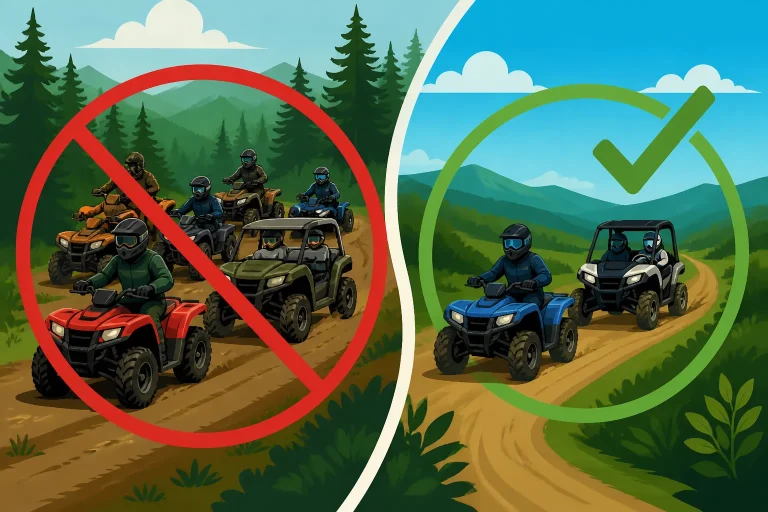
The distinction between trail access, registration and road use matters. A TAD does not authorize every road, private property or public parcel, and a registration plate does not grant entry to a closed club trail. If your trip includes more than one kind of riding, check each access requirement separately.
What the TAD covers and what it does not
Vermont’s trail network depends on permission to cross private land and on local clubs that maintain and manage corridors. A TAD is the trail-access credential for participating VASA trails. It is not a general pass to ride anywhere in the state.
Before you buy, identify the route or area you intend to ride and confirm that it is open to your machine and included in the access system. Trail status can change: a corridor may close at a landowner’s request, for maintenance, or because conditions make riding damaging or unsafe. A decal does not override a closure sign, a gate or a posted restriction. Vermont Trail Closures Landowners Request explains why access can change even after a rider has planned a trip.
A TAD also does not replace the machine’s registration. Visitors should review Vermont Reciprocity for Out-of-State Machines to understand how a home-state registration is treated, and Vermont Requires Registration Plus a TAD for the separate roles of registration and trail access. The practical point is simple: reciprocity may help satisfy a registration requirement, but it does not make the trail decal optional.
Nor is the TAD a substitute for required safety or insurance documents. Riders should confirm which rules apply to their machine, age and route before setting out. A club trail ride and a trip along a town road can involve different requirements. For instance, Vermont ATV Insurance Requirements covers insurance, while Vermont ATV Road Rules by Town explains why road access depends on local designations and rules.
A TAD is not a day pass for every Vermont ride
The phrase “trail pass” can sound broader than it is. Vermont trail access is not interchangeable with permission to use town roads, state land, private property or trails outside the VASA network. Check the specific route rather than relying on a general assumption that a decal opens every riding area.
Some trails cross private land because a landowner has allowed a corridor. That permission is not permanent or unconditional. Stay on the marked route, follow signs, and do not treat an unmarked road or spur as an extension of the trail. For more on how access works across private property, see Vermont Landowner Permission Holds the System Together.
If the ride is entirely on land where you have permission, the VASA TAD question may be different from a ride on a VASA corridor. That does not mean all other requirements disappear. Registration, insurance, safety rules and landowner conditions may still apply. Confirm the situation before assuming that a private-land ride is exempt from every rule.
How to plan a one-day Vermont ride
If you are coming for a short visit, handle the access question before you load the trailer. A little preparation can prevent a wasted trip or an awkward stop at a closed gate.
- Choose the riding area. Pick the town, club area or corridor you plan to use. Do not assume that the closest trailhead provides access to every connected route.
- Check whether the route is open. Contact the relevant club or check its current trail information before leaving. Weather, trail work and landowner requests can affect access.
- Confirm the machine’s registration status. Visitors should review Registering at Home Before You Visit and the applicable reciprocity information. Keep registration proof available.
- Arrange the TAD before riding. Find out how to buy a decal through an authorized channel and whether it must be displayed on the machine. See How to Buy a Vermont TAD and Vermont TAD Placement on the Machine.
- Check other requirements for your group. Age, supervision, training, insurance and equipment rules may apply. A one-day outing does not create an exception to those requirements.
- Bring proof and follow the posted route. Carry the documents the rules require, keep the TAD in its proper place, and respect gates, signs and closures.
Buying access in advance can make arrival smoother, especially if you are traveling a long distance or reaching the trailhead outside normal shop hours. Confirm the seller’s current process and whether the decal can be purchased online, through a club or at a participating local business. The methods and availability can vary, so check with the current provider instead of planning around an old listing.
If you are visiting from out of state, review Vermont TAD for a Visitor’s Machine. A machine’s registration from home and its Vermont trail access decal answer different questions. Keep both matters straight when preparing documents and displaying decals or plates.
If you are renting
Do not assume the rental company’s machine automatically comes with trail access. Ask whether the machine has the required TAD, whether the decal is valid for the date of your ride, and which trails the rental agreement permits you to use. Also ask whether the rental is limited to a particular property, a guided route or a club corridor.
A rental operator may handle access differently from a visitor bringing a privately owned machine. The operator can explain what is included in the rental, but you should still understand the boundaries: a rental’s TAD does not make closed trails open, and permission for one route does not necessarily cover another. For related questions, see Vermont TAD for a Rented Machine.
If you are renting across the border and bringing the machine into Vermont, check the rental provider’s rules before booking. Ask who is responsible for the decal, registration documents and insurance proof. Do not wait until you arrive at a trail entrance to find out that the machine or route is not covered.
Common mistakes to avoid
The most common planning mistake is treating a one-day visit as a reason to skip the TAD. Because Vermont does not sell a single-day pass, the short length of the ride does not by itself remove the access requirement for VASA trails.
A second mistake is confusing a registration sticker or plate with trail permission. Registration identifies and authorizes the machine under the applicable registration rules; the TAD provides access to participating trails. Visitors should check both, rather than relying on one document to cover the other.
Riders can also assume that a valid TAD guarantees access everywhere for the rest of the season. It does not. Trails may close, routes may be restricted, and a landowner’s permission may change. Check current information close to the ride date and obey posted signs even if a map or old itinerary shows the corridor as open.
Finally, do not buy a decal without confirming that it is appropriate for the machine and situation. The purchase process, current requirements and available sales channels can change. Confirm details with the relevant Vermont trail-access provider or club before traveling. If you need to compare visitor and resident requirements, Who Has to Buy a Trail Access Decal is a useful starting point.
For a one-day outing, the practical answer is straightforward: plan for a TAD if you intend to ride VASA trails, and treat it as a season-based access decal rather than a day ticket. Check the route, registration, current trail status and any extra requirements before setting off. That approach is less convenient than buying a pass for one afternoon, but it is more reliable than arriving at a trailhead without the access credential Vermont requires.
Disclaimer
This article is for general informational purposes only and does not constitute professional advice. Laws, prices and regulations vary by location and change over time. Consult a qualified professional for guidance on your specific situation.