Registering at Home Before You Visit
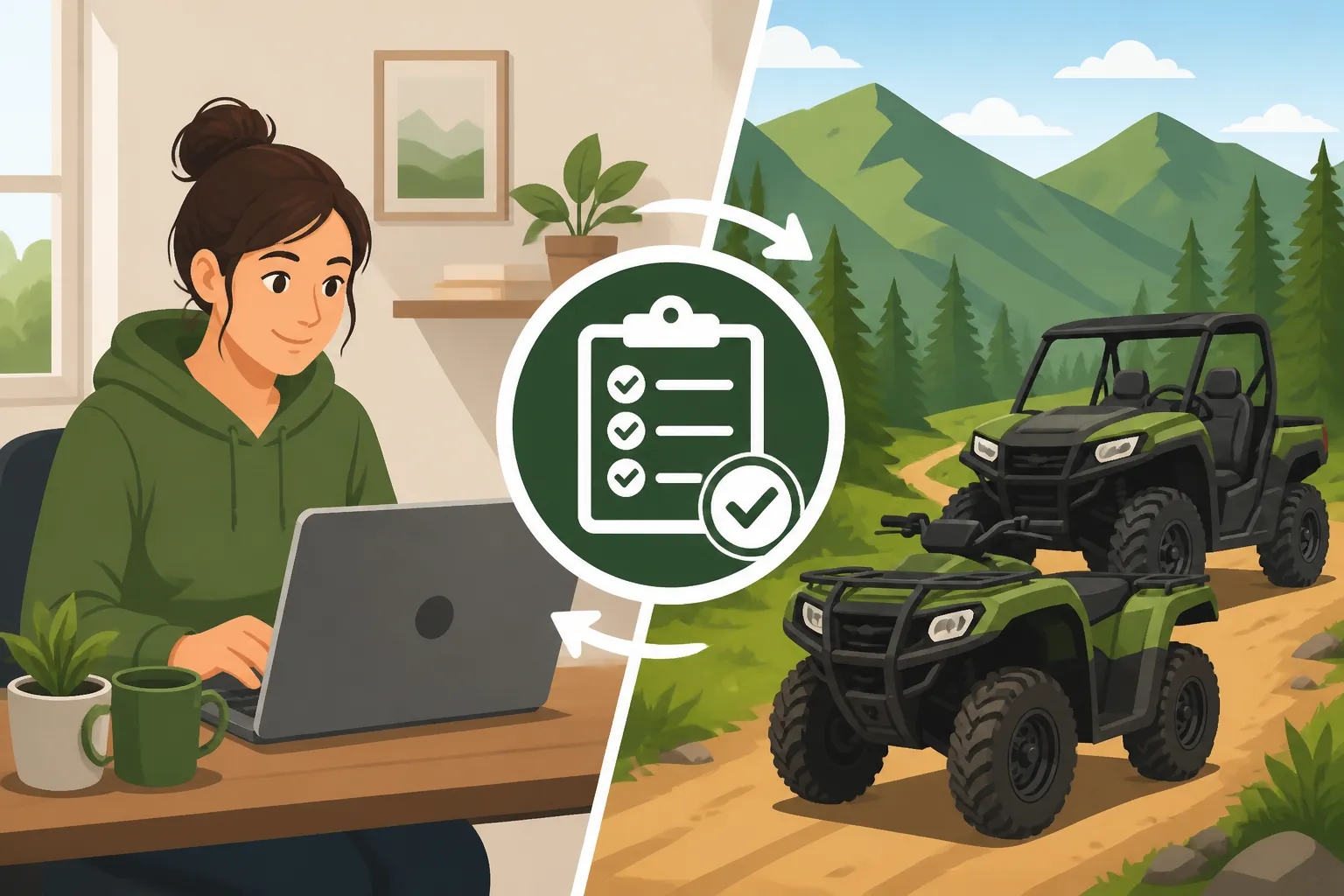
Planning a Vermont ride from out of state? Sorting out registration before you leave can prevent a frustrating stop at a trailhead. The key is to separate your machine’s home-state registration from Vermont’s Trail Access Decal and from local road permissions. Here’s what to check before loading your ATV or UTV, and what to carry once you arrive.
What registering at home does for a Vermont visit
If your ATV or UTV is registered where you live, that registration may be recognized for a Vermont visit under reciprocity rules. Vermont has specific recognition information for some neighboring jurisdictions, including Quebec, New Hampshire and Maine. The details can depend on where the machine is registered and the rules that apply to it, so do not treat an out-of-state plate as automatic permission for every kind of riding.
Starting with your home registration is often simpler than trying to obtain Vermont registration for a short visit. Check that the registration is current, that it applies to the machine you plan to bring, and that you can show proof of it. If you live in one of the jurisdictions Vermont addresses specifically, review the relevant details for Vermont Recognizes Quebec Registrations, [Vermont Recognizes New Hampshire Registrations] or Vermont Recognizes Maine Registrations. For the broader visitor question, see Vermont Reciprocity for Out-of-State Machines.
Reciprocity is about whether Vermont recognizes a registration issued elsewhere. It does not mean Vermont has taken over your home jurisdiction’s registration, and it does not settle every other requirement for riding. In particular, it is not the same thing as buying a Vermont Trail Access Decal, carrying insurance, meeting safety rules or having permission to use a road or trail.
| What you need to check | What it addresses | What it does not automatically provide |
|---|---|---|
| Current home-state or home-jurisdiction registration | Whether the machine is registered where it is normally kept | Vermont trail access or permission to use a particular road |
| Reciprocity eligibility | Whether Vermont recognizes that registration for a visitor | A Vermont Trail Access Decal |
| Vermont Trail Access Decal | Access to participating Vermont trail corridors under the applicable program rules | Permission to ride closed routes or roads |
| Insurance and required proof | Coverage and documentation requirements for riding | Registration or route access |
| Local road designation | Whether a particular town road is open to ATVs or UTVs | Permission to use every road in town |
The practical takeaway: settle the home-registration question before the trip, but do not stop there. A visitor may have a properly registered machine and still need a separate trail access decal to ride Vermont’s trail network. The distinction is covered in Vermont Requires Registration Plus a TAD and Vermont TAD for a Visitor’s Machine.
If your home jurisdiction is not one of the places specifically addressed in Vermont’s reciprocity information, ask the appropriate Vermont authority or trail organization what applies to your machine before traveling. Do not assume that a plate from any state, province or other jurisdiction is treated the same way. The machine’s type and its registration status may matter, and rules can change.
Registration is not the same as Vermont trail access
A registration plate answers one question: whether the machine is registered under the system that issued the registration, and whether Vermont recognizes it for the purposes covered by reciprocity. A Trail Access Decal, often called a TAD, is a separate part of using Vermont’s organized trail system.
For visitors, this distinction is easy to miss. A rider can arrive with a valid home registration, unload at a trailhead and still be missing the separate access authorization required for the trails they intend to ride. Check the current purchase process and eligibility for a visitor machine before your travel date. The details are in Vermont TAD for a Visitor’s Machine and Who Has to Buy a Trail Access Decal.
A TAD does not turn every public or private route into an open route. Vermont’s trail network depends on access permissions, posted corridors and local conditions. A decal does not override a closure, a landowner’s decision to withdraw permission, a club restriction or a town’s road rules. Before riding, make sure your planned route is currently open and that your machine is permitted on it.
Nor should the TAD be treated as a substitute for registration. Carry both forms of proof when applicable. A plate or other registration evidence and a trail decal serve different purposes, and having one does not prove you have the other. Carrying Both Plate and Decal explains what to keep on the machine.
Use this pre-trip sequence:
- Confirm the machine’s home registration. Check its expiration date and verify that the registration belongs to the machine you are bringing. If the paperwork is in someone else’s name, resolve any questions about your authority to use the machine before departure.
- Check Vermont reciprocity for your jurisdiction. Look for the rules that apply to your state or province and to your type of machine. If the situation is unclear, get confirmation rather than relying on a general assumption that neighboring registrations are accepted.
- Find out whether you need a TAD. Determine the requirements for an out-of-state machine and buy the decal through an approved channel before the ride if that is the most convenient option. Confirm that it will be valid for your planned dates.
- Check the routes, not just the region. Use current trail and club information to confirm which corridors are open, where you may stage and whether the route has any machine-specific limits.
- Review insurance and safety requirements. Make sure your policy covers the machine and the kind of riding you plan to do. Carry whatever proof the rules require, and check age, helmet and training requirements for each rider.
- Pack the paperwork together. Keep registration evidence, TAD information, insurance proof and any required safety documentation accessible. A phone image may be useful as a backup, but do not assume it replaces documentation that must be carried in another form.
A visitor decal’s purchase and expiration details may differ from what a Vermont resident expects. Check the current rules directly rather than buying based on an old trip plan or another rider’s experience. The broader explanation of the decal is available in Vermont TAD Expiration Date.
Before you unload: confirm the route and carry proof
A valid registration and decal are only part of a ride plan. Vermont trail access is not a blanket right to ride across the state. Corridors can cross private land, and access depends on the permissions and conditions that apply to each route. Trail conditions and closures may change, so check close to your departure and again before heading out.
This matters particularly if your plan involves a town road, a trail connection or a route shown on an older map. A road being open to local ATV or UTV use does not mean every road in that town is open, and a trail map is not permission to leave the marked corridor. Town road access can depend on local decisions and signs. Review Vermont ATV Road Rules: Towns Decide before planning to ride on roads, and use current route information to confirm the designation of a specific road.
Carry documents where you can reach them without unpacking the machine. A roadside or trail check may involve questions about registration, decal, insurance or rider eligibility. Keep your information orderly and make sure the plate and decal remain visible and attached as required. Mud, luggage or a poorly placed bracket can make otherwise valid proof difficult to inspect. For a quick overview of what may be checked, see What a Trail Warden Checks.
Insurance deserves its own check before departure. Do not assume that coverage automatically extends to all off-road use, passengers, rented or borrowed machines, or riding across state and provincial borders. Read the policy or contact the insurer to confirm what is covered and what proof should be carried. Vermont’s requirements and documentation are a separate question from the registration issued at home; see Vermont Registration and Insurance Proof.
Use this checklist before you set out:
- The machine has current registration from its home jurisdiction.
- You have confirmed Vermont’s reciprocity treatment for that jurisdiction.
- You have obtained any required Vermont Trail Access Decal for the machine.
- You have checked that the decal and registration cover the planned ride dates.
- Your intended trails are open and the machine is permitted on them.
- You have verified road access separately instead of assuming every connecting road is usable.
- Required insurance and safety documents are available to the rider.
- Each rider meets applicable age, training, supervision and equipment rules.
- The plate and decal are mounted where they can be seen.
- You know how to check for a closure or route change during the trip.
If you are bringing more than one machine, check each one separately. Do not assume a registration record, decal or proof of purchase for one ATV or UTV covers the others. Likewise, if a machine is borrowed, newly purchased or registered to another person, make sure you have the documents and permission needed to establish its status.
The safest plan is to verify the paperwork before you load, then verify the route before you ride. Home registration can make a visit easier when Vermont recognizes it, but it is only one layer of the process. A current plate, the right trail access authorization, adequate insurance and an open, permitted route all need to line up.
Disclaimer
This article is for general informational purposes only and does not constitute professional advice. Laws, prices and regulations vary by location and change over time. Consult a qualified professional for guidance on your specific situation.