Vermont TAD for a Visitor’s Machine
A Vermont visit can involve more than bringing a registered ATV or UTV: riders also need the trail access decal required for the trail system they plan to use. The rules can feel confusing when your machine is registered in another state or province. Here’s how to understand the TAD requirement, arrange access, and avoid arriving at a trailhead without what you need.
What a Vermont TAD does for a visitor
A Vermont Trail Access Decal, or TAD, is an access requirement for riding on participating trails in Vermont’s VASA system. It is separate from your machine’s registration. If you are visiting with an ATV or UTV registered outside Vermont, a valid home registration does not by itself replace the TAD.
Think of the requirements as two different checks:
- Registration identifies the machine and shows it is registered under the rules that apply to it.
- The TAD provides access to participating Vermont trails for the decal period.
- Other requirements may include insurance, rider safety training, and compliance with trail or town rules.
The TAD is not a statewide riding permit. It does not give you permission to use every road, private track, or public parcel in Vermont. Access depends on the trail’s status, the landowner’s permission, the local club’s rules, and any applicable closures. Vermont’s trail system relies heavily on permission to use private land, so a route can change or close even after you have planned a trip. For context on how the system works, see Vermont ATV Trails: The VASA System and Vermont’s Trails Run on Private Land.
A visitor should generally plan to bring a machine that is properly registered at home, then obtain the Vermont TAD for that machine before using participating trails. Vermont recognizes some out-of-state registrations under its reciprocity rules, but recognition of a registration does not eliminate the separate trail-access requirement. If you’re unsure whether your home registration qualifies, check Vermont Reciprocity for Out-of-State Machines and confirm the current requirements before traveling.
| Item | What it covers | What it does not cover |
|---|---|---|
| Home-state or province registration | Registration status for the machine under the applicable rules | Vermont trail access by itself |
| Vermont TAD | Access to participating trails during its valid period | Permission to ride every road or parcel |
| Insurance | Financial protection required for riding where applicable | Trail access or registration |
| Safety certificate | A rider-training requirement when it applies | Permission to ride a closed or unauthorized route |
The TAD applies to the machine, not just to the person who purchased it. Plan on obtaining an appropriate decal for each machine you intend to ride, and make sure the decal is associated with the correct vehicle. If your group is hauling several machines, don’t assume one visitor decal covers the whole trailer.
A TAD also does not make a machine eligible for every type of route. ATV and UTV classifications can matter, particularly when a machine is larger or heavier than a standard ATV. If your vehicle’s classification is unclear, review Vermont ATV Versus ASV Classes and verify how Vermont treats your particular machine before relying on a trail map.
How to get the decal before your trip
Visitors should arrange the TAD before planning to ride. The practical options and purchase process can vary, so check the current information from VASA or a participating club or seller rather than relying on an old receipt, social media post, or last season’s instructions. The visitor decal has a different cost structure from the one for a Vermont-registered machine; confirm the current amount and any second-machine rate with the official seller. The details in Vermont TAD Prices for Visitors and Vermont TAD for a Second Machine can help you understand what to check.
Use this checklist:
- Confirm the machine’s registration. Make sure its registration is current and that you can show proof. If you are bringing a machine from outside the United States or have unusual paperwork, check the requirements before traveling rather than assuming a standard out-of-state registration rule applies.
- Identify each machine you’ll ride. Match the decal purchase to the vehicle that will use it. If you are bringing more than one ATV or UTV, confirm whether each needs its own decal and what the current price is for additional machines.
- Purchase through an approved channel. Follow the current instructions from VASA or a participating club. If buying online, allow enough time for delivery and check whether the decal must arrive before you ride.
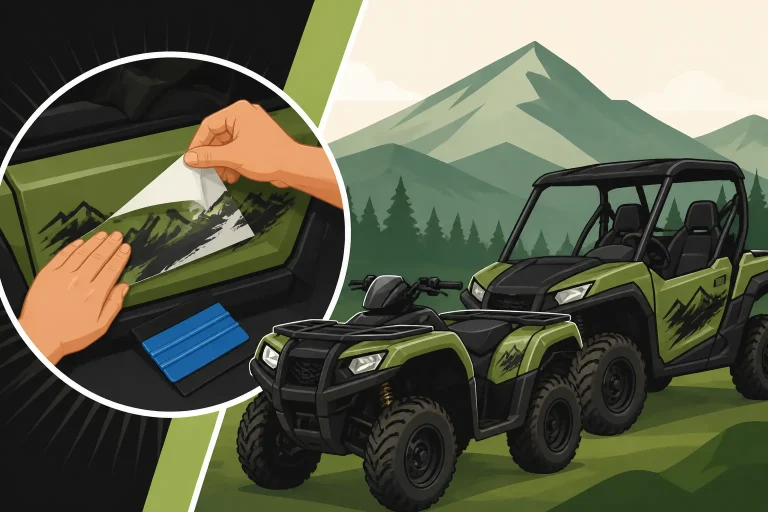
- Apply the decal as instructed. Keep it visible and attached to the correct machine. Follow the supplied placement directions; don’t move it to another vehicle unless the program expressly permits that.
- Carry supporting documents. Bring your registration and any required proof of insurance or training. A decal is easier to verify when the related paperwork is readily available.
- Check the actual route. Confirm that the trail is open to your machine and that your planned connection roads are legally available to ATVs or UTVs.
Do not wait until you are already at a trail gate to sort out the decal. A club or retailer may not be nearby, and a trail warden can turn riders around if they lack the required access credential. For details on buying one, see How to Buy a Vermont TAD. If you’ve purchased one but are uncertain where it belongs, check Vermont TAD Placement on the Machine.
Vermont’s TAD period does not necessarily match the dates of your vacation. TADs expire on a set annual schedule, so a decal bought late in the season may not provide a full year of access. Check the expiration date before making travel plans, especially if you expect to return for another trip. [Vermont TAD Expiration Date] explains why timing matters.
What to verify before riding
A valid TAD is only one part of a visitor’s preparation. Before unloading, confirm the machine and rider meet the requirements for the specific route. A trail shown on a map is not automatically open on the day you arrive, and a town road that connects two trails may have different rules from the trails themselves.
Registration and reciprocity
Keep your home registration current, and carry the registration document or other accepted proof with you. Vermont has reciprocity arrangements with some nearby jurisdictions, but the details depend on where the machine is registered and the type of machine. Don’t assume that a registration accepted for one visitor is automatically accepted for every visitor or every vehicle class. The related topics Vermont Recognizes Quebec Registrations, [Vermont Recognizes New Hampshire Registrations], and Vermont Recognizes Maine Registrations can help you check the jurisdiction-specific details.
If you are a visitor who has not registered the machine at home, do not assume that buying a TAD will fix that. A trail decal does not substitute for vehicle registration. Start with Registering at Home Before You Visit and resolve any registration questions before loading the machine.
Insurance and rider requirements
Check that the machine has the insurance required for the riding you plan to do, and carry proof in a form you can produce if asked. A policy that covers the vehicle on public roads may not cover every activity or location, so read the policy rather than guessing. Vermont ATV Insurance Requirements covers the state-specific insurance issue, while Vermont Insurance Proof at a Trailhead is useful for planning what to carry.
Rider training and supervision rules can also apply, especially for younger riders. A visitor’s out-of-state certificate may or may not meet Vermont’s requirements. Check the rules for each rider in your group before departure; do not treat the TAD as proof that the rider is qualified. The state’s requirements are outlined in Vermont ATV Safety Course Required Under 18.
Trail and road access
Look at current club information close to the day of your ride. Weather, landowner requests, damaged bridges, wet conditions, and seasonal closures can affect access. Stay on signed, authorized corridors, obey gates and posted notices, and turn around rather than trying to find an unofficial bypass. Vermont Trail Conditions Before You Tow and Vermont Trail Signs and What They Mean can help you prepare.
Town roads are a separate question. Some towns designate specific roads or routes for ATV use, and local rules can set conditions such as operating hours or seasons. A TAD does not open a closed town road, nor does it make an unposted road part of the trail network. Check Vermont ATV Road Rules: Towns Decide before using roads to connect trail sections.
Common visitor mistakes and an arrival checklist
The most avoidable problems usually come from mixing up trail access with registration or assuming that a decal is a blanket permission to ride. A little preparation makes it easier to handle a roadside check or a closed gate without disrupting the trip.
Mistake: assuming out-of-state registration includes trail access. Registration and the Vermont TAD serve different purposes. Confirm both.
Mistake: buying one decal for multiple machines. Make sure each vehicle you plan to ride has the required decal. Verify the current rules for additional machines rather than transferring a decal between vehicles.
Mistake: assuming every trail is open because a map shows it. Check current club notices and respect closures. A map can help with planning, but it cannot guarantee that a corridor remains open.
Mistake: treating the decal as permission to use town roads. Road access is local and can have separate rules. Confirm the exact route and any local restrictions.
Mistake: leaving paperwork at the campsite or in the tow vehicle. Keep your machine’s registration and required proof accessible while riding. Make sure everyone in the group knows where the documents are.
Before leaving for a Vermont ride, confirm the following:
- Each machine has current registration recognized for the trip.
- Each machine has the correct Vermont TAD, applied according to its instructions.
- The TAD is still valid for the planned riding dates.
- Required insurance and rider documents are available.
- The planned trail corridors are open to your machine.
- Any connecting town roads are designated for the use you intend.
- Riders understand closures, gates, local rules, and the need to stay on marked routes.
If a warden, club representative, or landowner asks to see your documents, cooperate and show what you have. If the route is closed or the machine lacks a required credential, stop and resolve the issue rather than continuing past a gate. For more on checks and trail access, see What a Trail Warden Checks and Being Turned Around at a Gate.
A visitor’s TAD is straightforward once it’s treated as a trail-access credential rather than a replacement for registration or a universal Vermont riding permit. Get the decal for each machine, confirm that your home registration and rider paperwork meet the rules, and check current access before heading out. That preparation helps protect both your trip and the landowner permission that keeps Vermont’s trail network available.
Disclaimer
This article is for general informational purposes only and does not constitute professional advice. Laws, prices and regulations vary by location and change over time. Consult a qualified professional for guidance on your specific situation.