Vermont Parent Riding With a Child
Taking a child on a Vermont ATV ride means sorting out more than whether there’s room on the machine. The rules depend on whether the child is a passenger or operator, and trail access brings its own requirements. Here’s how to think through supervision, helmets, seats, training and permits before you head out.
First decide whether your child is a passenger or an operator
A child riding behind you as a passenger is in a different position from a child operating their own machine. That distinction matters: supervision and training rules apply to a young operator, while passenger safety depends heavily on the machine’s design and the rider’s ability to sit securely.
| Situation | Main things to check |
|---|---|
| Child rides as a passenger | The machine is designed to carry a passenger, and the child can sit securely in the designated seat and use its restraints or handholds |
| Child operates a separate ATV | The child meets Vermont’s applicable training and supervision requirements, and the machine is appropriate for their ability |
| Parent and child ride on a VASA trail | Each machine meets the trail’s access requirements; confirm registration and Trail Access Decal requirements |
| Parent and child use a town road | The road is open to ATV use under the town’s rules; being a parent or passenger does not make a closed road legal to ride |
Riding as a passenger
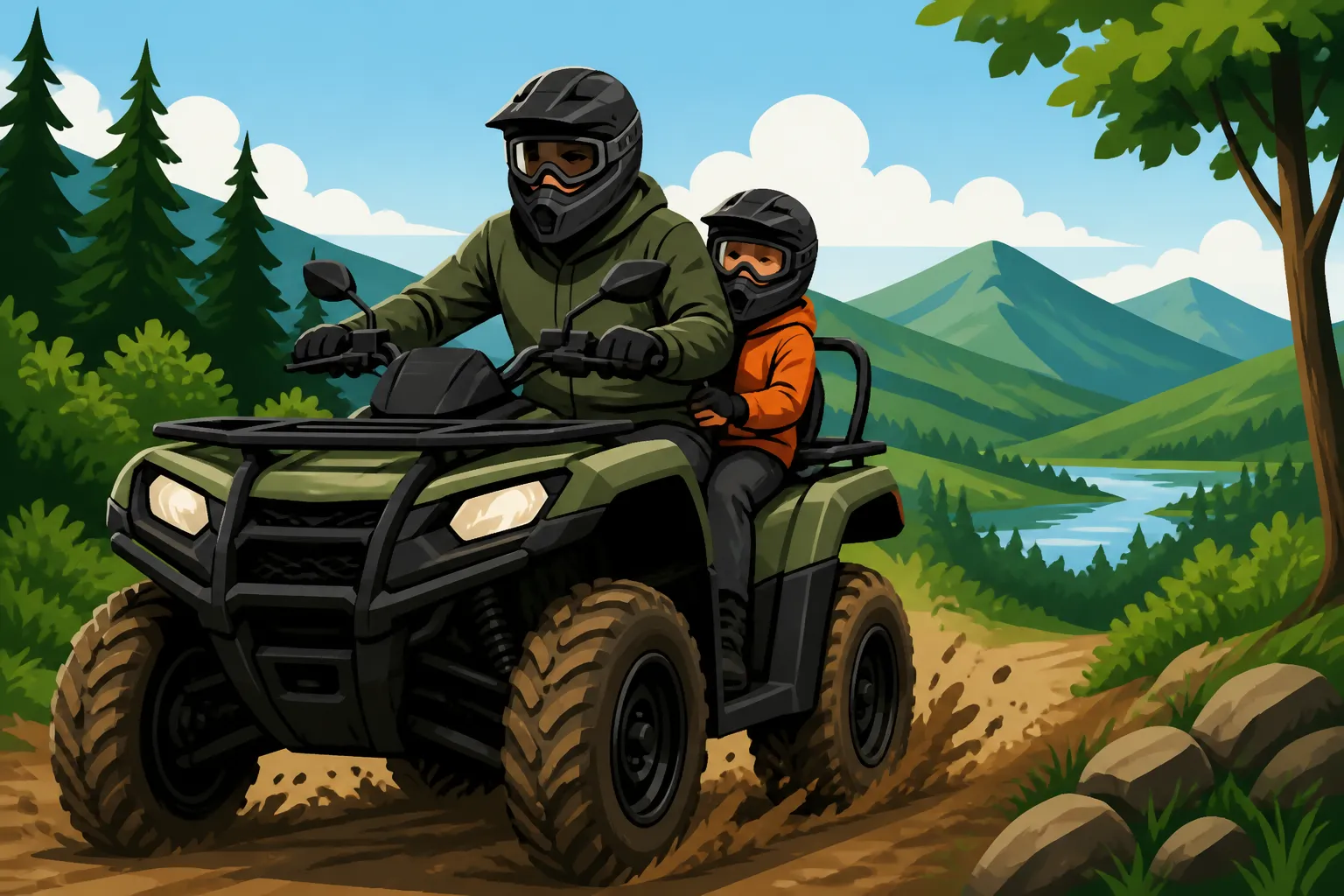
Start with the owner’s manual. If the ATV is designed for one rider, do not carry a child on the seat, rack, cargo box or your lap. A second person can change the machine’s balance and handling, and a passenger who cannot stay seated or reach the handholds may shift unexpectedly.
A side-by-side may have separate seating positions and seat belts, but those features do not automatically make every child a suitable passenger. Check the manufacturer’s instructions for passenger age, size, seating and restraint requirements. Keep the child in the designated seat and have them use the belt as directed. Do not let them ride in the cargo area.
A helmet does not make an unsuitable seat safe. If the child cannot sit upright, hold on as intended and keep their feet in the appropriate position, choose another activity or a machine designed for a passenger their size. For more on the legal passenger rules, see Vermont ATV Rules for Passengers.
Riding as the operator
A child who controls the throttle, steering or brakes is operating the ATV, even if a parent rides beside them. Do not treat close parental involvement as a substitute for Vermont’s training and supervision requirements.
Vermont’s rules include a safety-course requirement for young operators, along with additional supervision requirements for riders under 16. The course is available beginning at age 12, and the applicable rules can depend on the rider’s age and where the machine is being used. Check the current requirements before letting a child operate, rather than assuming that being on private family land removes every restriction. The related Vermont ATV Safety Course Required Under 18 and Vermont Supervision Rules Under 16 explain those requirements in more detail.
The practical test is stricter than “the child can reach the controls.” A young operator needs to understand how to stop, turn, avoid obstacles and respond if the machine starts to slide or stall. A parent riding nearby can help, but cannot instantly take over a child’s controls. Choose a machine the child can manage without stretching, and start in a controlled area before considering a trail.
Understand supervision, training and age limits
For a child operating an ATV, Vermont’s supervision rule is especially important under age 16. The adult should be able to provide direct supervision, not merely be somewhere else on the property or at the far end of a trail. Before riding, check the current legal definition and apply it conservatively: stay close enough to see what the child is doing, communicate promptly and intervene if needed.
A family ride on separate machines is not the same as an adult operating a machine with a child as passenger. If your child is on their own ATV, plan the ride around their experience and keep them within immediate reach. Avoid splitting up at intersections or letting a child ride out of sight around a bend. On unfamiliar trails, riding behind the child can help you monitor their pace, while riding ahead can help you warn them about hazards. Either way, keep the distance short.
Training is not just a box to check. A course helps a young rider learn basic controls, trail awareness and safe decisions before encountering other machines or difficult terrain. A Vermont safety certificate does not expire, but families should still refresh the child’s skills after a long break or before moving to a more demanding machine. See Vermont Safety Certificates That Never Expire for the certificate’s role, and confirm what proof of training the child should carry.
Be careful with exceptions. Rules for family land, an instructor’s supervision or other specific circumstances may differ from the general requirements, but an exception should not be assumed to apply to a public corridor, a town road or every kind of property. Private ownership by a parent does not turn every nearby route into private land. If the ride will leave the family’s property, check the rules for that exact location.
Build the route around the child
A child’s first trip should be short and predictable. Choose a route with room to stop, manageable terrain and a way to turn back without pressure. Avoid making a first ride a long group outing where the child feels compelled to keep up.
Before setting out, agree on simple signals for stopping, slowing down and regrouping. Tell the child not to pass you or another rider unless you have clearly agreed on how to do it. If the child is operating, keep the group slow enough that they can respond without sudden braking or sharp turns.
Stop if the child becomes tired, cold, overwhelmed or distracted. Fatigue can make it harder to hold a position, notice trail signs or control the machine. A planned turnaround is better than expecting a child to push through the rest of a route.
Check helmets, clothing and the machine
Vermont’s helmet requirement applies to riders, including children. A passenger should have a properly fitted helmet just as an operator should. Check that it is the right size, fastens securely and is in good condition. A helmet that slides around, tips back or blocks vision is not a good fit.
Use eye protection and clothing that covers exposed skin. Boots, gloves and long sleeves can help protect against branches, rocks, hot machine parts and changing weather. Dress the child for the conditions at the trail, not just the temperature at home. For the specific helmet requirements, see Vermont ATV Helmet Law for Every Rider.
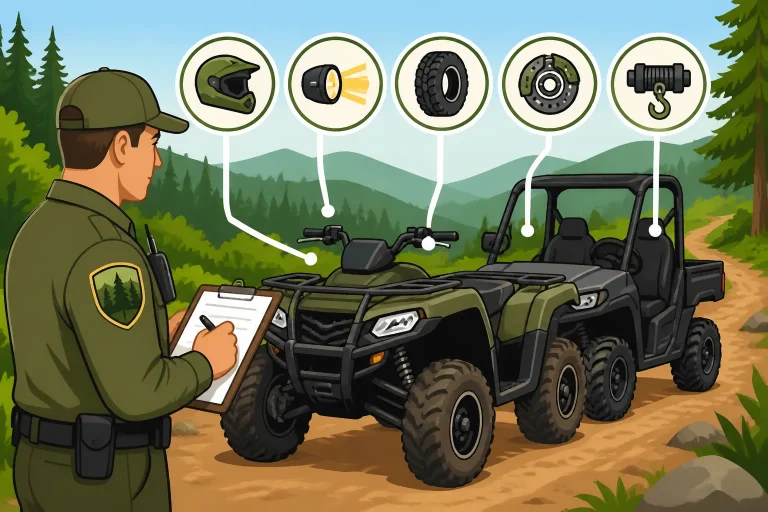
Before each ride, check the machine’s brakes, tires, throttle, lights and controls. Confirm that the child can reach and use the controls if they are operating, and that a passenger’s seat and restraints are secure if they are riding with you. A child who is uncomfortable or cannot maintain a stable position should not be carried on that machine.
Keep the pace conservative around other riders, pedestrians, horses and homes. Slow down where visibility is limited, and leave enough space to stop without putting the child in a sudden maneuver. On a shared corridor, teach the child to stay on the marked route, yield as required and avoid wandering off to pass an obstacle. For additional equipment details, see Vermont ATV Equipment Requirements.
Sort out trail access and town-road rules
A child being accompanied by a parent does not automatically provide access to a Vermont ATV trail. For riding on the VASA system, check the current requirements for registration and a Trail Access Decal. Out-of-state machines may have different registration circumstances, but visitors still need to confirm the decal and access rules before riding. The overview Vermont Requires Registration Plus a TAD is a useful starting point.
Keep the documents and decal requirements straight for each machine. If parent and child are riding two ATVs, do not assume one machine’s paperwork or decal covers both. If the child is a passenger on your machine, the access requirement generally relates to the machine being ridden, but confirm the current rules for the type of ride and the trail system.
Town roads are a separate question. Vermont towns decide whether specific roads are open to ATV traffic, and an open route may come with local restrictions. A road that is convenient for reaching a trailhead is not necessarily an approved ATV route. Check the town’s posted signs and current route information before taking a child onto a public road. Vermont ATV Road Rules: Towns Decide explains why access can vary from one town to another.
Before leaving home, use this checklist:
- Decide whether the child will ride as a passenger or operate a machine.
- Check the machine manual and confirm it is designed for the intended number of riders.
- Verify the child’s training and supervision requirements if they will operate.
- Fit a helmet and suitable clothing, and check the machine’s controls and restraints.
- Confirm registration, Trail Access Decal and route requirements for the riding area.
- Choose a short route with a clear turnaround plan and keep the child within close supervision.
The safest family ride is one where the child’s role, the machine and the route all match their size and experience. If any part is uncertain, resolve it before starting the engine.
Disclaimer
This article is for general informational purposes only and does not constitute professional advice. Laws, prices and regulations vary by location and change over time. Consult a qualified professional for guidance on your specific situation.