The $108 ASV One-Year Fee
Understanding the intricacies of ATV and ASV registration in Vermont can sometimes feel like navigating a particularly twisty trail – confusing, with a few unexpected bumps along the way. Many riders, especially those new to the Green Mountain State or upgrading their machine, often wonder why the fees differ and what exactly that $108 one-year registration fee for an ASV entails. This guide is here to clear the mud, explaining what an ASV is, why it costs $108 to register for a year, and what you need to know to get your machine legal and ready for Vermont's beautiful trails.
Differentiating Your Machine: ATV Versus ASV in Vermont
Before we dive into the fee itself, it's absolutely crucial to understand how Vermont differentiates between an All-Terrain Vehicle (ATV) and an All-Terrain Side-by-Side Vehicle (ASV). This isn't just bureaucratic jargon; it directly impacts your registration cost, among other things. Many riders might casually refer to their side-by-side as an "ATV," but for the Vermont Department of Motor Vehicles (DMV), there's a distinct line, and crossing it (or being over it, literally) changes everything.
What Exactly is an ASV in Vermont's Eyes?
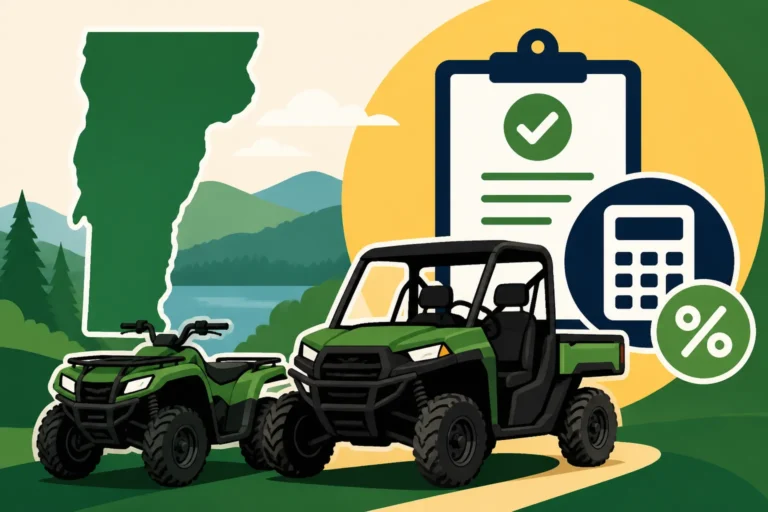
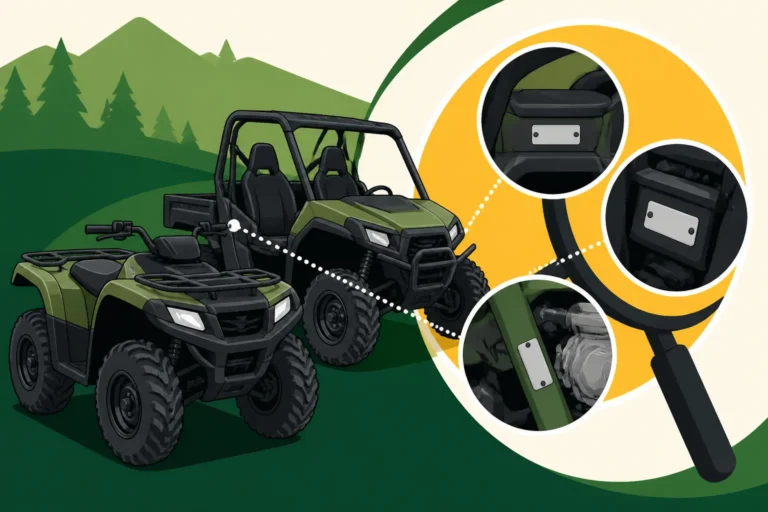
The simplest way to think about an ASV, often referred to as a side-by-side or UTV, is by its size and seating arrangement. While traditional ATVs are designed for a single rider (or sometimes a rider and a passenger in tandem), ASVs typically offer side-by-side seating, much like a small car or truck. But it's not just the seating; the Vermont DMV has specific dimensional and weight criteria that push a machine into the ASV category. Generally, if your machine is wider than 50 inches but no more than 72 inches, and/or has a dry weight of more than 1,000 pounds but not exceeding 2,500 pounds, it likely falls into the ASV classification. This classification is vital because it's the primary reason for the fee difference. You might be interested in reading more about [Vermont's 72-Inch, 2,500-Pound ATV Definition] to fully grasp these boundaries.
Key Characteristics That Define an ASV
Beyond the side-by-side seating, an ASV typically comes with a steering wheel instead of handlebars and foot pedals for acceleration and braking. They are often larger, more stable, and capable of carrying more gear or multiple passengers. Think of popular models like Polaris RZRs, Can-Am Commanders, or Honda Pioneers. These machines are built for utility, recreation, and often more challenging terrain, providing a different riding experience than a traditional quad. The distinction between these vehicle types is clearly laid out in the official definitions, which dictate how they are handled for registration purposes. If you're unsure which class your machine belongs to, it's always best to check the manufacturer's specifications against the Vermont DMV's criteria. Understanding [Vermont ATV Versus ASV Classes] will help you avoid any surprises at the registration counter.
The $108 One-Year ASV Registration Fee Explained
Now that we've clarified what an ASV is, let's get down to the brass tacks of the $108 fee. This isn't just a random number; it reflects Vermont's specific approach to registering these larger, often more complex off-road vehicles. It’s a common point of confusion for many riders, especially when they see that traditional ATVs have a different, lower fee.
Why ASVs Cost More to Register
The primary reason for the higher ASV registration fee of $108, compared to the $45 one-year fee for a standard ATV, boils down to the vehicle's classification and perceived impact. Vermont's legislative framework often assigns different fee structures based on vehicle type, size, and weight. ASVs, being larger and heavier, are sometimes seen as having a different footprint on trails and public lands, even though they share many of the same riding privileges as ATVs. This distinction in fees isn't unique to Vermont, but it's important to recognize that the state has made a clear decision to separate the two. It's not about one machine being "better" than the other, simply that they are categorized differently for administrative and financial purposes. This might feel frustrating if you're coming from a state with a single off-road vehicle category, but in Vermont, it's the reality. You can find more details about these differences in [How the ATV and ASV Classes Change Your Fee].
What the $108 Covers (and What It Doesn't)
The $108 fee specifically covers the registration of your ASV for a one-year period. This fee allows you to legally operate your ASV on designated trails and roads within Vermont. When you successfully register your ASV, you'll receive a registration certificate and the necessary plate to display on your machine. What this fee doesn't cover, however, are other crucial items like the Vermont Trail Access Decal (TAD) required for VASA trails, or any associated purchase and use tax that might be due at the time of initial registration. Think of the $108 as the entry ticket to legal operation, but there might be other costs associated with actually enjoying the trails. For instance, the registration fee structure for snowmobiles in Vermont is actually split differently, but ATVs and ASVs have a unified approach, which means [Vermont Snowmobile Fees Split, ATV Fees Do Not] isn't something that applies to your ASV registration cost.
Eligibility and Documentation for ASV Registration
Getting your ASV registered isn't just about handing over $108; it's about proving ownership, identity, and sometimes, tax compliance. The Vermont DMV has a clear set of requirements to ensure that every machine on its books is properly accounted for. Missing a single document can turn a quick trip to the DMV into a frustrating multi-day ordeal, so being prepared is half the battle.
Essential Paperwork for Your ASV
When you head to the DMV, or prepare to mail in your registration, you'll need a collection of documents to demonstrate that the ASV is yours and you're a legitimate resident (or non-resident seeking to ride here). This typically includes:
- Proof of Ownership: This is paramount. For a new machine, you'll need the Manufacturer's Certificate of Origin (MCO). If you bought it used, you'll need the previous owner's signed title. If the machine is old enough not to have a title, you'll need a bill of sale that meets DMV requirements. Sometimes, an ownership affidavit can suffice in unique circumstances. For those private sales, a robust bill of sale is critical, and resources like LawDepot offer excellent templates to ensure all necessary details are included and legally sound for Vermont's requirements. Remember, the DMV is strict on what they accept as [Proof of Ownership Vermont's DMV Will Accept].
- Proof of Identity: A valid driver's license or state-issued ID card.
- Proof of Residency: If you're a Vermont resident, a utility bill or similar document showing your Vermont address might be requested.
- Application Form: The official Vermont registration application form (Form VD-119). Make sure it's completely filled out and signed.
Knowing what you need before you go can save you a world of headache; a full [Vermont Registration Paperwork Checklist] is an invaluable tool.
Navigating Purchase and Use Tax
For most first-time registrations of an ASV in Vermont, you'll also encounter the state's Purchase and Use Tax. This tax is levied on the purchase price of the vehicle, much like sales tax on other goods. If you bought your ASV from a dealer in Vermont, they likely collected this tax at the point of sale and will provide you with documentation showing it was paid. However, if you bought your ASV in a private sale, or from a dealer out of state, you'll typically be responsible for paying this tax directly to the Vermont DMV when you register. There are specific exemptions, such as gift transfers between immediate family members. Always be prepared to pay this tax or provide proof of exemption. Understanding [Vermont Purchase and Use Tax on an ATV] is key to budgeting for your new machine. Using a customizable bill of sale from a reputable service like LawDepot can help document the sale price accurately, which is essential for calculating this tax.
The Step-by-Step: Registering Your ASV and Paying the $108 Fee
Once you have your ducks (and documents) in a row, the actual process of registering your ASV and submitting the $108 fee is fairly straightforward. Vermont offers a couple of different avenues for registration, catering to various schedules and preferences.
Registering In-Person at a Vermont DMV Office
Many riders prefer the in-person approach, especially for their first registration, as it allows for immediate clarification of any questions and instant receipt of your registration and plate (assuming all paperwork is in order). To register your ASV in person:
- Gather all required documents: As discussed above, this includes your proof of ownership (title, MCO, or bill of sale, perhaps generated using LawDepot), ID, and the completed registration application.
- Locate your nearest Vermont DMV office: Plan ahead, as some smaller offices might have limited hours.
- Be prepared for the Purchase and Use Tax: If applicable, you'll pay this along with your registration fee.
- Pay the $108 registration fee: You can typically pay with cash, check, or credit/debit card.
- Receive your registration and plate: If everything checks out, you'll walk out with your valid registration certificate and an ASV plate to affix to your machine. For a broader overview, refer to [How to Register an ATV in Vermont].
Registering Your ASV by Mail
If visiting a DMV office isn't feasible, Vermont does allow registration by mail for certain transactions, including renewals and sometimes initial registrations if all documentation is perfectly clear. For initial registrations, it's often smoother to go in person to avoid potential delays from missing or unclear paperwork. If you opt for mail:
- Assemble your complete package: This means all original documents (or certified copies where originals are not required to be surrendered, like an ID) and the filled-out application. Make sure your proof of ownership, such as a correctly executed bill of sale from LawDepot, is clear.
- Include payment: A check or money order for the $108 registration fee (plus any applicable Purchase and Use Tax) made out to "Vermont DMV."
- Mail to the Vermont DMV headquarters: Ensure you send it to the correct address for vehicle registrations.
- Expect processing time: Mail-in registrations will take longer to process than in-person applications, so factor this into your plans, especially if you're eager to ride. You can learn more about this process by reviewing [Registering by Mail Versus in Person]. The DMV will mail your plate and registration certificate to you once processed.
Beyond the $108: Other Essential ASV Riding Requirements in Vermont
While securing your $108 one-year ASV registration is a significant step, it's just one piece of the puzzle for legal and responsible riding in Vermont. There are other crucial requirements you need to be aware of to ensure your adventures are safe and compliant with state laws and trail rules. Ignoring these can lead to fines, frustrating trail closures, or even legal liabilities.
The Vermont Trail Access Decal (TAD)
If you plan on riding your ASV on any of Vermont's extensive network of VASA (Vermont Association of Snow Travelers) trails, you absolutely need a Vermont Trail Access Decal, or TAD. This decal is separate from your state registration and directly funds the maintenance and development of the trails by VASA and its member clubs. Think of it as your trail pass. Even if your ASV is registered with the state, you cannot ride VASA trails without a current TAD. The TAD also covers your membership dues to a VASA club, which is fantastic for supporting the riding community. Prices vary for residents and non-residents, and for first or second machines, so it's essential to check the current rates. For a deeper dive into this, see [Vermont TAD: The Trail Access Decal Explained].
Vermont's Mandatory ATV/ASV Insurance
Just like with cars on public roads, Vermont mandates that all registered ATVs and ASVs carry liability insurance. This isn't optional; it's a legal requirement designed to protect you and others in the event of an accident. The minimum coverage limits are generally $25,000 for bodily injury to one person, $50,000 for bodily injury to two or more persons, and $10,000 for property damage. Make sure your insurance policy specifically covers your ASV for off-road use and that you carry proof of insurance with you while riding. Many riders find that their existing auto insurance provider can add their ASV to their policy, but it's crucial to confirm. Missing this can have serious consequences. Get all the details on [Vermont ATV Insurance Requirements] to ensure you're fully covered.
ATV Safety Course for Younger Riders
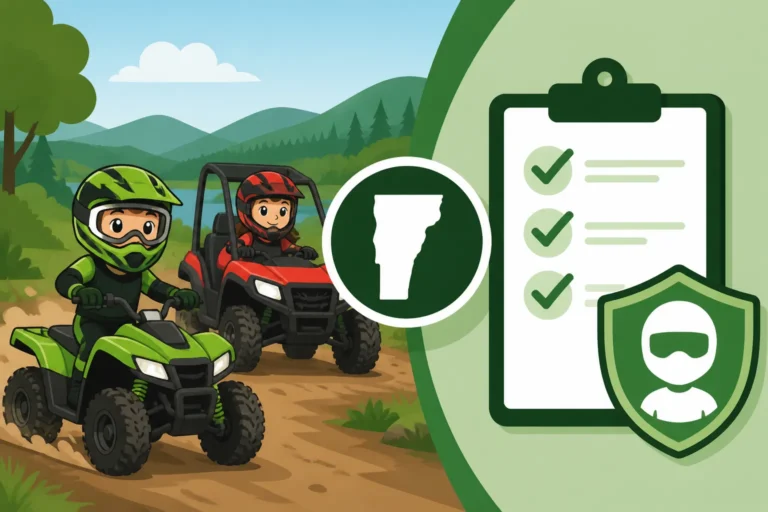
For anyone under the age of 18 operating an ASV (or ATV) in Vermont, completing an approved ATV safety course is a legal requirement. This course teaches crucial safety principles, responsible riding techniques, and Vermont's specific laws. While adults aren't mandated to take the course, it's highly recommended for all riders, regardless of age or experience level, as it reinforces safe practices. There are online and in-person options available. Ensure that if a young person is riding your ASV, they have this certification in hand. Understanding [Vermont ATV Safety Course Required Under 18] will clarify who needs it and where to find approved courses.
Summary of ASV vs. ATV Fees and Features
To help you visualize the differences, here’s a quick comparison of key aspects between typical ATVs and ASVs in Vermont:
| Feature | Typical ATV (Quad) | Typical ASV (Side-by-Side/UTV) |
|---|---|---|
| Seating | Straddle-style, 1 or 2 tandem riders | Side-by-side bench or bucket seats, 2+ riders |
| Steering | Handlebars | Steering wheel |
| Acceleration/Braking | Hand/thumb throttle, hand/foot brake | Foot pedals (gas/brake) |
| Vermont Dimensions | Max 50" width, up to 1,000 lbs dry weight | Up to 72" width, up to 2,500 lbs dry weight |
| One-Year Registration | $45 | $108 |
| TAD Requirement | Yes (for VASA trails) | Yes (for VASA trails) |
| Insurance Requirement | Yes | Yes |
| Safety Course (Under 18) | Yes | Yes |
This table highlights why the classification matters, especially when you're looking at that $108 fee for an ASV. It's not just a higher cost for no reason; it's tied to the vehicle's design and regulatory category.
Disclaimer
This article is for general informational purposes only and does not constitute professional advice. Laws, prices and regulations vary by location and change over time. Consult a qualified professional for guidance on your specific situation.