Why an ASV Costs More to Register
It can be truly bewildering to find yourself staring at Vermont's DMV forms, trying to figure out why your brand-new side-by-side costs more to register than your friend's quad, even though both are off-road machines. Many riders hit this exact snag, feeling like they're being penalized for choosing a vehicle that offers more comfort or utility. This guide will walk you through the specifics of Vermont's ATV and ASV classifications, revealing exactly why All-Terrain Side-by-Side Vehicles (ASVs) carry a higher registration fee and what that means for your wallet and your riding experience.
Understanding Vermont's ATV and ASV Classifications
When you're dealing with off-road vehicles in Vermont, it's not simply a matter of "it's an ATV, so it registers like an ATV." The Green Mountain State has distinct classifications that directly impact your registration costs and even where you can ride. This is where the crucial difference between a traditional ATV and an All-Terrain Side-by-Side Vehicle, or ASV, comes into play. It's a distinction that often catches new owners off guard, expecting a universal fee for anything with knobby tires.
The state's Department of Motor Vehicles (DMV) defines these vehicles based on a specific set of physical characteristics. These aren't just arbitrary lines in the sand; they're based on how the vehicles are designed to be operated, their typical use, and their potential impact on trails and roads. Understanding these nuances is the first step in demystifying those varying registration costs and why your ASV might be in a different fee bracket. It's all about how the state categorizes what you're riding.
The Traditional ATV Definition
When most folks think of an ATV, they picture the classic four-wheeler: a machine where you straddle the seat like a motorcycle, steer with handlebars, and often ride solo or with a single passenger seated behind you. In Vermont, this image largely aligns with the state's traditional ATV definition. These machines are typically designed for agile, single-track riding and tend to be narrower and lighter than their side-by-side counterparts.
Vermont law carefully outlines what constitutes an ATV. Generally, it refers to a motorized vehicle that's designed for off-road use, has four low-pressure tires, a seat designed to be straddled by the operator, and handlebars for steering. Critically, these vehicles usually fall within specific width and weight limits. While these limits can evolve, like [Vermont's 72-Inch, 2,500-Pound ATV Definition] changes that took effect recently, the core idea remains: a vehicle ridden with a straddling posture. The registration fees for these traditional ATVs are set with these characteristics in mind, reflecting what the state perceives as their typical use and impact on the trail system.
The All-Terrain Side-by-Side Vehicle ASV
Now, let's talk about the All-Terrain Side-by-Side Vehicle, or ASV – what many of us commonly refer to as a UTV or side-by-side. This is where the "why it costs more" question really begins. ASVs, by their very design, are a different beast from traditional ATVs. Instead of straddling a seat, operators and passengers sit side-by-side in bucket or bench seats, much like in a car. You steer with a steering wheel, not handlebars, and these machines almost universally come equipped with rollover protection systems and seatbelts.
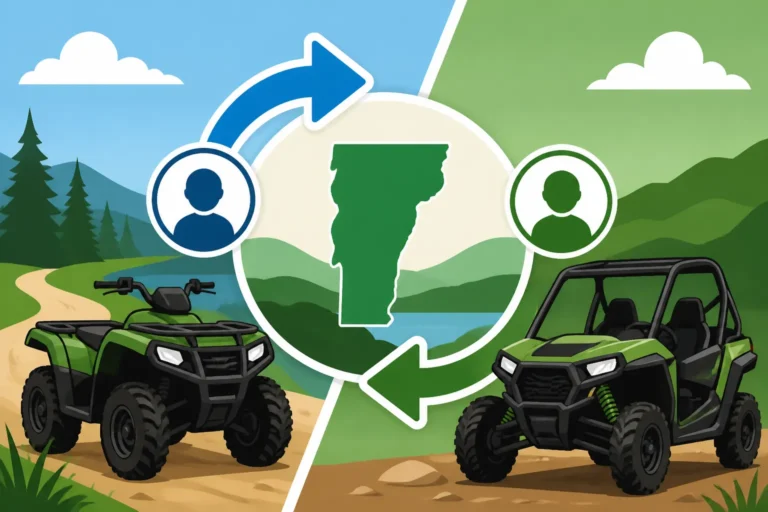
Vermont classifies these vehicles as "Class A" ASVs, and this designation is key to understanding the difference in registration fees. These machines are often significantly wider and heavier than standard ATVs, designed to carry multiple passengers (sometimes up to six!) and often used for more substantial utility tasks in addition to recreation. Think of hauling gear for hunting, working on a remote property, or taking the whole family out for a ride. The increased size, weight, and passenger capacity mean that the state places them into a different category, recognizing their distinct characteristics and potential impact. This difference in classification is the primary driver behind why [Vermont ATV Versus ASV Classes] exist and why their registration costs diverge.
The Financial Impact: Higher Fees for ASVs
Once you understand how Vermont distinguishes between an ATV and an ASV, the higher registration fee for ASVs starts to make a bit more sense. It's not just about paying "more"; it's about paying a different rate structure for a different class of vehicle. The state has determined that ASVs, due to their design and capabilities, should fall into a separate financial category when it comes to keeping them street-legal for designated routes and registered for trail use.
This difference isn't unique to Vermont, but the specifics of its implementation can still feel like a sting when you're at the DMV counter. While I can't give you exact dollar amounts, as those change, the pattern is consistent: ASVs will generally have a higher registration cost than traditional ATVs. This isn't intended as a penalty, but rather as a reflection of several factors that the state considers when setting fees. It’s important to remember that these fees contribute to the overall maintenance and administration of the trail system and public access points that riders enjoy.
Factors Influencing Higher ASV Fees
So, what exactly are these factors that lead to ASVs costing more to register? It boils down to a few key considerations that state legislatures and DMV officials weigh when creating fee schedules for different types of recreational vehicles. It's a mix of perceived impact, capacity, and administrative considerations.
- Increased Roadway Impact: ASVs are often designed with a wider stance and a heavier curb weight than most traditional ATVs. When these machines traverse town roads designated for ATV use, or even club trails, their increased size and weight can theoretically lead to greater wear and tear. Imagine a heavy-duty side-by-side with several passengers compared to a lightweight sport quad – the stress on gravel roads, culverts, and bridges could be seen as different. Higher registration fees might be allocated to help offset these perceived increased maintenance costs for the infrastructure, both on paved routes and on the [Vermont Trails That Use Class 4 Roads].
- Greater Capacity and Perceived Risk: ASVs are built to carry more people – sometimes two, four, or even six passengers. More passengers inherently mean a higher overall weight on the machine and a larger footprint on the ground. While no one wants to imagine an accident, the potential for a larger number of individuals being involved in a single incident might factor into how states categorize these vehicles. This isn't about saying ASVs are inherently more dangerous, but rather about the scale of their operation.
- Infrastructure Considerations: While less direct, the wider dimensions of many ASVs can sometimes impact trail design and maintenance. Wider bridges or gates might be needed on some parts of the VASA trail system to accommodate these larger machines, which can involve additional costs for trail clubs and the state. These infrastructure investments, even if subtle, are supported by registration fees.
- Administrative Complexity: The "Class A" designation for ASVs, as mentioned earlier, introduces a slightly different layer of administrative handling for the DMV. While likely a minor component of the overall fee difference, any additional categorization or tracking can add to overhead. This is part of the reason why the [Vermont ASV Class A Registration Explained] is separate from other ATV guidelines.
Comparing the Registration Costs
When you look at the raw numbers, the ASV registration fees are indeed higher. For example, [Vermont ATV Registration Costs and Terms] will show you the standard rates for traditional ATVs, while the ASV rates, such as [Vermont ASV Registration at $108 a Year], clearly sit at a higher tier. This applies whether you're opting for a one-year or a two-year registration period. The state's reasoning, as we've explored, ties back to the fundamental differences in vehicle class.
It's absolutely essential to check the current figures directly on the Vermont Department of Motor Vehicles website or by calling one of their offices. Prices and terms can change, and you want the most up-to-date information for your budgeting. Beyond the core registration fee, remember that you'll also likely owe [Vermont Purchase and Use Tax on an ATV] when you first register a machine in Vermont, unless you qualify for an exemption. And, if your ASV requires a title (which many do, especially newer models), there will be a separate fee for that, as detailed in [Vermont ATV Titles and What They Cost]. It’s a multi-layered process, so budgeting for all these components is crucial.
Beyond Registration: Other Considerations for ASV Owners
Owning an ASV in Vermont involves more than just paying a higher registration fee. It's about understanding the broader ecosystem of regulations, safety requirements, and operational considerations that come with these larger, multi-passenger machines. As a lifestyle blogger who loves hitting the trails, I want you to be fully prepared for all aspects of your ASV ownership, ensuring safe and compliant riding adventures across the Green Mountain State. The initial cost difference is just the starting point; there are practical implications that touch on everything from where you can ride to how much you'll pay for insurance.
These additional considerations are part of the overall experience of owning a side-by-side and are just as important as the registration process itself. Being informed about these aspects will not only prevent headaches down the road but also ensure you're a responsible and well-prepared rider, ready to enjoy Vermont's beautiful landscapes from your ASV.
Trail Access and Permitting
Just because your ASV is registered with the Vermont DMV doesn't mean you can instantly hit every trail. Far from it! Vermont has a well-developed trail system, largely managed by the Vermont Association of Snow Travelers (VASA) and its member clubs, that requires an additional permit: the Vermont Trail Access Decal (TAD). Even with your vehicle fully registered, you won't be allowed on VASA trails without a valid [Vermont TAD: The Trail Access Decal Explained] affixed to your machine.
Furthermore, some specific trails or sections might have width restrictions that could impact larger ASVs. While the overall VASA system aims to be inclusive, always check with the local club or consult trail maps for any specific limitations, especially if you have a particularly wide machine. Town ordinances also play a massive role here; while [Vermont ATV Road Rules: Towns Decide] often permit ATVs and ASVs on designated town roads, these rules can vary wildly from one community to the next. You might find a town that welcomes ASVs on its gravel roads to connect trail sections, while a neighboring town might have much stricter rules or even prohibit them. Always do your homework on local regulations before you venture out, especially if you're exploring new areas.
Insurance and Safety Gear
Given their higher purchase price and capacity, ASVs often come with higher insurance premiums compared to single-rider ATVs. It's not just about covering the value of your machine; it's also about liability. Vermont mandates specific liability insurance coverage for all registered ATVs and ASVs, whether they are ridden on designated roads or just off-road. You'll want to review your policy carefully and understand your [Vermont ATV Insurance Cost] to ensure you meet the state minimums and are adequately protected against potential damages or injuries.
Safety gear is another critical area. Vermont has a strict [Vermont ATV Helmet Law for Every Rider], meaning that everyone on your ASV – driver and all passengers – must wear a DOT-compliant helmet. This isn't optional, and wardens and local law enforcement take it seriously. Beyond helmets, the very design of an ASV with its seats, steering wheel, and roll cage emphasizes occupant containment. Always ensure all passengers are properly buckled into their seatbelts, and that any children meet age and size requirements for the specific seating arrangements. Being prepared with the right gear and adequate insurance is paramount for a safe and worry-free ride.
The Role of Documentation and Ownership
Proper documentation is absolutely crucial for any vehicle, and your ASV is no exception. When you go to register your machine, the Vermont DMV will require proof of ownership. This usually means a clear [Writing a Bill of Sale the Vermont DMV Accepts] if purchased privately, or an MCO (Manufacturer's Certificate of Origin) if you bought it new from a dealer, as outlined in [An MCO at the Vermont DMV Counter]. Having accurate and complete paperwork prevents major headaches down the line and ensures a smooth registration process.
For private sales, it's incredibly important that the bill of sale includes all the necessary details: buyer and seller information, the ASV's VIN, make, model, year, purchase price, and the date of sale. A generic handwritten note might not cut it. This is where tools from companies like LawDepot can be incredibly helpful. Using a service like LawDepot to generate a legally sound bill of sale ensures that all the required fields are filled out correctly and that the document is comprehensive, giving both the buyer and seller peace of mind and meeting the DMV's expectations. This level of detail helps prevent issues when transferring ownership or applying for a title, making the whole process much smoother for everyone involved.
| Feature | Standard ATV | All-Terrain Side-by-Side Vehicle (ASV) |
|---|---|---|
| Riding Position | Straddles seat, handlebars | Bucket/bench seats, steering wheel |
| Passenger Capacity | Usually 1-2 (with designated passenger seat) | Often 2-6 (multi-seat configuration) |
| Primary Use | Recreation, light utility | Recreation, heavier utility, family outings |
| Dimensions (Gen.) | Generally narrower, lighter, more agile | Generally wider, heavier, more stable |
| Safety Features | Helmets required | Helmets required, rollover protection, seatbelts |
| Registration Fee | Standard ATV rate | Higher ASV (Class A) rate |
| Trail Access | VASA TAD required | VASA TAD required (check width restrictions) |
Disclaimer
This article is for general informational purposes only and does not constitute professional advice. Laws, prices and regulations vary by location and change over time. Consult a qualified professional for guidance on your specific situation.