Registering a Machine You Bought at a Dealer
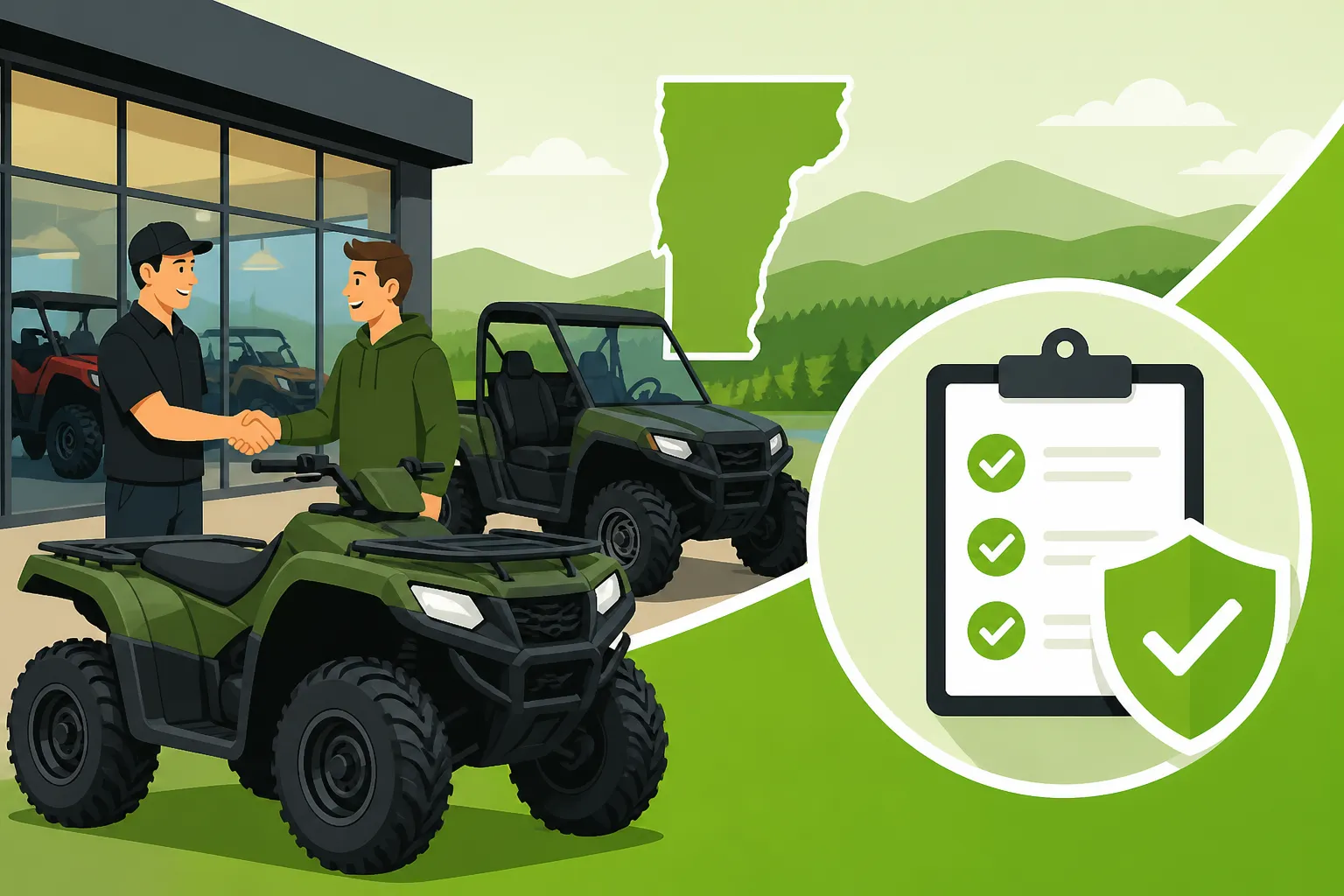
Buying a new or used ATV or UTV from a dealership in Vermont should feel exciting, but for many folks, the thought of wading through registration paperwork can quickly turn that excitement into a headache. You’ve just made a significant investment, and the last thing you want is to hit a bureaucratic roadblock before you even hit the trails. This guide is here to untangle the process of registering your off-road machine when you buy it from a dealer in the Green Mountain State, helping you understand exactly what the dealership will handle and what you'll need to do yourself to get your new ride street-legal for designated routes and ready for the trails.
What to Expect When Buying from a Vermont ATV Dealer
When you walk into a reputable ATV or UTV dealership in Vermont, you’re not just buying a machine; you’re usually buying into a service that includes handling much of the initial registration legwork. This can be a huge relief, especially if you're new to powersports or the Vermont registration process. Dealers are typically well-versed in the ins and outs of the Vermont Department of Motor Vehicles (DMV) requirements, as it's part of their regular business operation. They want to make the sale as smooth as possible, and that often means taking care of the dreaded paperwork for you.
However, "handling everything" doesn't mean you can completely disengage. It's crucial to understand your role and what documents to expect from the dealer. Think of it as a partnership: they prepare the necessary forms and often submit them, but you still need to provide accurate information, sign where required, and understand the financial commitments involved, such as taxes and registration fees. The good news is, a reliable dealer will typically guide you through each step, explaining what each document means and why it's necessary. Don't be shy about asking questions if something isn't clear; it's your investment, and you have every right to be fully informed.
The Dealer's Expertise and What They Provide
One of the biggest advantages of buying from a dealer is their familiarity with Vermont's specific regulations. They know which forms are needed, how to fill them out correctly, and the proper channels for submission. For a brand-new machine, the dealer will provide you with a Manufacturer's Certificate of Origin (MCO), which is essentially the birth certificate for your ATV or UTV. This crucial document verifies that the machine is new and has not been previously titled or registered. For a used machine, they'll typically have the previous owner's title, properly signed over to the dealership, and then to you.
Beyond the MCO or previous title, the dealer is responsible for generating a proper bill of sale. This document is incredibly important as it records the purchase price, the machine's vehicle identification number (VIN), the date of sale, and the names of both the buyer and seller. It serves as your proof of purchase and is essential for calculating the [Vermont Purchase and Use Tax on an ATV]. A good bill of sale will clearly itemize the cost of the machine, any accessories, labor, and of course, the sales tax collected. Even if the dealer is handling the submission, it’s wise to keep copies of all documents they give you. For those who like to be extra prepared or want to understand the components of a robust legal document, resources like LawDepot can provide insights into what makes a comprehensive bill of sale, which can be useful even if your dealer supplies the primary form.
Understanding the Initial Costs and Fees
When you finalize your purchase at a dealer, you'll be presented with a breakdown of costs that goes beyond the machine's sticker price. This often includes the purchase and use tax, which is typically collected by the dealer at the time of sale and then remitted to the state on your behalf. There will also be a fee for processing the registration, which the dealer might include as part of their service or itemize separately. While the dealer doesn't charge the state's official registration fees themselves, they often collect these from you to facilitate the registration process.
You'll also need to factor in the cost of a title. In Vermont, all ATVs and UTVs (defined as all-terrain vehicles) require a title, regardless of their age. The dealer will typically handle the application for your new title, collecting the title fee from you as part of the total sale. It’s important to understand that these fees are distinct from the actual purchase price of the machine and are mandated by the state. Knowing these additional costs upfront helps you budget appropriately and avoids any unwelcome surprises when you're signing the final paperwork.
The Paperwork Trail: What Your Dealer Handles
Navigating the registration process can feel like a maze, but when you purchase from a Vermont dealer, a significant portion of that maze is handled for you. Their role is to ensure that your machine leaves their lot with all the necessary initial documentation in motion, setting you up for a smooth transition to full registration. This includes not only the basic sales documents but often the actual submission of forms to the Vermont DMV.
Filing the Application for Title and Registration
One of the most valuable services a dealer provides is the preparation and often the submission of your Vermont Title and Registration Application (often Form VD-119). They will fill out the required sections with your personal information, the machine's details (make, model, VIN), and the purchase information. They'll attach the Manufacturer's Certificate of Origin (MCO) if it's new, or the properly assigned previous title if it's used. This process ensures that the machine is officially recorded in your name and that the state has a record of your ownership. The dealer will also collect the applicable fees for the title and the registration period you choose. Remember that [Vermont ATV Titles and What They Cost] is a separate fee from the annual registration, and both are crucial for legal operation.
The dealer acts as an intermediary, sending all these documents and fees to the DMV on your behalf. This is a huge time-saver and reduces the chance of errors that could delay your registration. Without this service, you would have to gather all these documents yourself, fill out the forms, and either mail them in or make an appointment at a DMV office, which can be time-consuming. When you leave the dealership, you should have some temporary proof of sale or a temporary registration that allows you to transport the machine home, though riding it often requires the actual plates and decals.
Collecting and Remitting Purchase and Use Tax
Vermont imposes a Purchase and Use Tax on ATV and UTV sales, and dealers are responsible for collecting this tax from you at the point of sale. This is typically calculated based on the purchase price of the machine, minus any trade-in value if applicable. They then remit this tax directly to the state. This means you won't have to worry about calculating or paying this tax separately to the DMV yourself, as it's folded into your initial transaction.
It's important to verify that the tax is clearly itemized on your bill of sale. This transparency ensures you understand what you're paying for and that the dealer is handling it correctly. If you've traded in an older machine, make sure the trade-in value is properly applied to reduce the taxable amount, potentially offering you some savings. Sometimes, special circumstances or exemptions apply, but generally, the dealer will ensure this part of the financial obligation is met on your behalf. [Vermont Purchase and Use Tax Exemptions] are rare in a dealer sale, but worth being aware of for future reference.
Your Post-Purchase Checklist for Vermont Registration
While your dealer handles a lot of the heavy lifting, your responsibilities don’t end when you drive off the lot. There are still a few crucial steps you'll need to follow and documents you should keep track of to ensure your Vermont ATV or UTV registration is completed successfully and you're ready to hit the trails legally. Being prepared means fewer headaches down the road.
Receiving Your Plate and Registration Decals
After the dealer submits your paperwork to the DMV, it takes some time for the state to process everything. You won't walk out of the dealership with your permanent plate and registration decals in hand. Instead, these items will be mailed directly to you from the Vermont DMV. The processing time can vary, but generally, you can expect to receive them within a few weeks. It's important to be patient during this waiting period.
Once they arrive, you'll need to properly affix your new Vermont registration plate to the rear of your machine, ensuring it’s visible and secure. [Vermont ATV Plates and Where They Go] details the requirements for plate placement. You'll also receive a registration decal that corresponds to your registration period. These decals are usually placed on the plate or in a designated spot on the machine, indicating that your registration is current. Make sure to keep your paper registration certificate with you when you ride, as law enforcement or trail wardens may ask to see it.
Understanding Your Insurance Requirements
Before you even think about riding your newly registered ATV or UTV on public lands or designated routes in Vermont, you must have adequate liability insurance. Vermont law explicitly requires ATV and UTV operators to carry minimum liability insurance coverage. Your dealer might offer to help you connect with an insurance provider, but ultimately, securing this coverage is your responsibility. It's not something the dealer typically arranges directly as part of the sales transaction.
Take the time to shop around for insurance that meets Vermont's minimum requirements, which include coverage for bodily injury and property damage. Your policy should specifically list your new ATV or UTV by its VIN. Don't assume your existing auto or homeowner's policy will cover your off-road machine; dedicated ATV/UTV insurance is almost always necessary. Having proof of insurance on hand is just as important as having your registration, as wardens can check for both. For a deeper dive into what’s needed, research [Vermont ATV Insurance Requirements].
Additional Trail Access Decal (TAD)
Beyond state registration, if you plan to ride on Vermont's extensive network of VASA (Vermont Association of Snow Travelers) trails, you will need to purchase a separate Vermont Trail Access Decal (TAD). This decal is crucial for accessing these private and public lands maintained by VASA and its member clubs. The TAD is not handled by the DMV or typically by the dealer during the initial sale; it's a separate purchase.
You can usually buy your TAD online through the VASA website or through a VASA-affiliated club. The cost of the TAD helps fund trail maintenance and landowner relations, which are vital for keeping Vermont's trail system open. Remember, having a valid state registration gets you legal to own and transport your machine, but the TAD gets you legal to ride on VASA trails. It's a two-part process for full trail access. For more information, you'll want to look into [Vermont TAD: The Trail Access Decal Explained].
Navigating Fees, Taxes, and the Waiting Game
Getting a new ATV or UTV is exciting, but the journey to fully legal trail riding in Vermont involves understanding various fees, taxes, and the administrative timelines. Being informed helps manage expectations and ensures you complete all necessary steps without unnecessary delays.
A Breakdown of Typical Costs
When you purchase from a dealer, several costs will be rolled into your final bill, covering not just the machine itself but also the necessary steps to get it ready for the road and trail. Here’s a general overview of the financial components:
| Cost Type | Description | Handled By Dealer? | Buyer's Responsibility |
|---|---|---|---|
| Machine Purchase Price | The agreed-upon cost of the ATV/UTV. | Yes, negotiated and charged. | Paying the agreed amount. |
| Purchase and Use Tax | A state tax applied to the purchase price (minus trade-in, if applicable). | Yes, collected from buyer and remitted to the state. | Ensuring it's correctly calculated and paid. |
| Title Fee | Fee for issuing a new Vermont title, establishing official ownership. [Vermont Title for an Off-Road Vehicle] | Yes, collected from buyer; dealer submits title application and fee to DMV. | Confirming title application is completed with accurate details. |
| Registration Fee | Annual or biennial fee to register the machine with the Vermont DMV. [Vermont ATV Registration Cost] | Yes, collected from buyer; dealer submits registration application and fee to DMV. | Choosing registration period (one or two years) and ensuring payment. |
| Dealer Doc/Processing Fee | A fee charged by the dealership for handling paperwork, submission, and administrative tasks. | Yes, charged directly by the dealer. | Understanding what this fee covers. |
| Liability Insurance | Mandatory insurance coverage for operating an ATV/UTV on public lands or designated routes. [Vermont ATV Insurance Requirements] | No, buyer is responsible for securing this coverage from an insurance provider. | Researching policies, purchasing adequate coverage, and carrying proof of insurance. |
| Trail Access Decal (TAD) | Required for riding on VASA trail systems. [Vermont TAD Prices for Visitors] | No, purchased separately by the buyer, usually through VASA or a club. | Purchasing the correct TAD and affixing it properly to the machine. |
Remember, while dealers collect and handle many of these fees on your behalf, it’s always smart to review the final purchase agreement carefully and ask for clarification on any charges you don’t understand.
The Timeline: From Purchase to Trail
The moment you sign the papers for your new ATV or UTV, the clock starts ticking on your registration. While the dealer initiates the process, the Vermont DMV needs time to process the submitted documents and mail out your official plate and registration.
Typically, you can expect the following timeline:
- Day of Purchase: Dealer collects all necessary information, completes the bill of sale, MCO/title transfer, and the Vermont Title and Registration Application. They collect all fees (purchase and use tax, title fee, registration fee) from you. You receive temporary proof of purchase.
- Within a few days to a week: The dealer packages and sends all your documents and fees to the Vermont DMV. This can sometimes involve an electronic submission if the dealer has that capability, potentially speeding things up slightly.
- Two to four weeks (average): The Vermont DMV processes your application. This includes issuing your new title and preparing your registration plate and decals.
- Upon Arrival: Your official Vermont ATV/UTV registration plate and decals will arrive by mail at the address you provided. You'll need to affix them to your machine as required by law.
- Before Riding Trails: Secure your liability insurance and purchase your VASA [Vermont Trail Access Decal (TAD)] separately.
It's common for folks to feel a bit antsy during this waiting period, especially when the weather is perfect for riding! However, resist the urge to ride your machine on public lands or VASA trails without a valid plate, decals, and insurance. The penalties for riding unregistered or uninsured can be significant. If the waiting period seems unusually long (beyond 4-6 weeks), you can generally contact the Vermont DMV with your machine's VIN and the date of purchase to inquire about the status of your registration. Keeping copies of all your original paperwork from the dealer will be essential for such inquiries.
What if I Bought a Used Machine from a Dealer?
The process for a used machine bought from a dealer is very similar to a new one. The dealer will still handle the title transfer from the previous owner (or their own inventory title) to you. They'll generate a bill of sale, collect the purchase and use tax, and submit your application for a new title and registration. The key difference is that instead of an MCO, the dealer will use the existing title, making sure it's properly assigned to you. All the fees, timelines, and your responsibilities regarding insurance and the TAD remain the same.
In summary, while buying from a dealer simplifies much of the initial registration burden, staying informed and proactive about the remaining steps is key to enjoying your Vermont ATV or UTV without any legal hitches.
Disclaimer
This article is for general informational purposes only and does not constitute professional advice. Laws, prices and regulations vary by location and change over time. Consult a qualified professional for guidance on your specific situation.