Vermont Registration Transfer for $10
Oh, the ever-present question of fees and transfers when it comes to your beloved ATV or UTV in Vermont! It can feel like navigating a maze trying to figure out exactly what you need to pay, especially when you're just trying to swap machines or buy from a friend. Many riders are surprised to learn that sometimes, a simple $10 transfer fee can cover certain changes, saving you a chunk of money. This guide is here to untangle the confusion surrounding Vermont's $10 registration transfer, explaining precisely when it applies, what paperwork you'll need, and how to make sure your transfer goes smoothly without any unexpected hiccups.
What Exactly is Vermont's $10 Registration Transfer Fee?
When you’re an ATV or UTV owner in Vermont, you quickly learn that registration is a non-negotiable part of responsible riding. But what happens when life changes? You get a newer, shinier machine, or maybe you sell your old faithful to a buddy. Do you always have to shell out for a brand-new registration, complete with all the bells and whistles (and higher fees)? Not necessarily! Vermont offers a specific, reduced $10 fee for certain types of registration transfers, a little-known lifesaver for many riders. This isn't just a random discount; it's a specific provision designed to cover particular administrative changes without requiring a full new registration.
The Purpose Behind the Reduced Fee
Think of the $10 transfer fee as a convenience charge for updating your existing registration details rather than initiating an entirely new one from scratch. The state understands that once you've paid for a full year or two of registration, you might need to make adjustments before that period expires. The purpose is to simplify administrative changes, prevent you from paying full registration costs twice for what is essentially the same period of use, and keep things moving without undue burden on riders. It’s about reflecting an ongoing registration, not starting a fresh one. This is a crucial distinction that can save you significant time and money if you understand when and how to apply for it. It helps keep the system efficient for both the DMV and the rider.
Two Key Ways the $10 Fee Can Apply
The $10 transfer fee typically comes into play under two main circumstances, each with its own set of rules and requirements. It's not a universal "get out of full registration free" card, but it's incredibly useful when applied correctly.
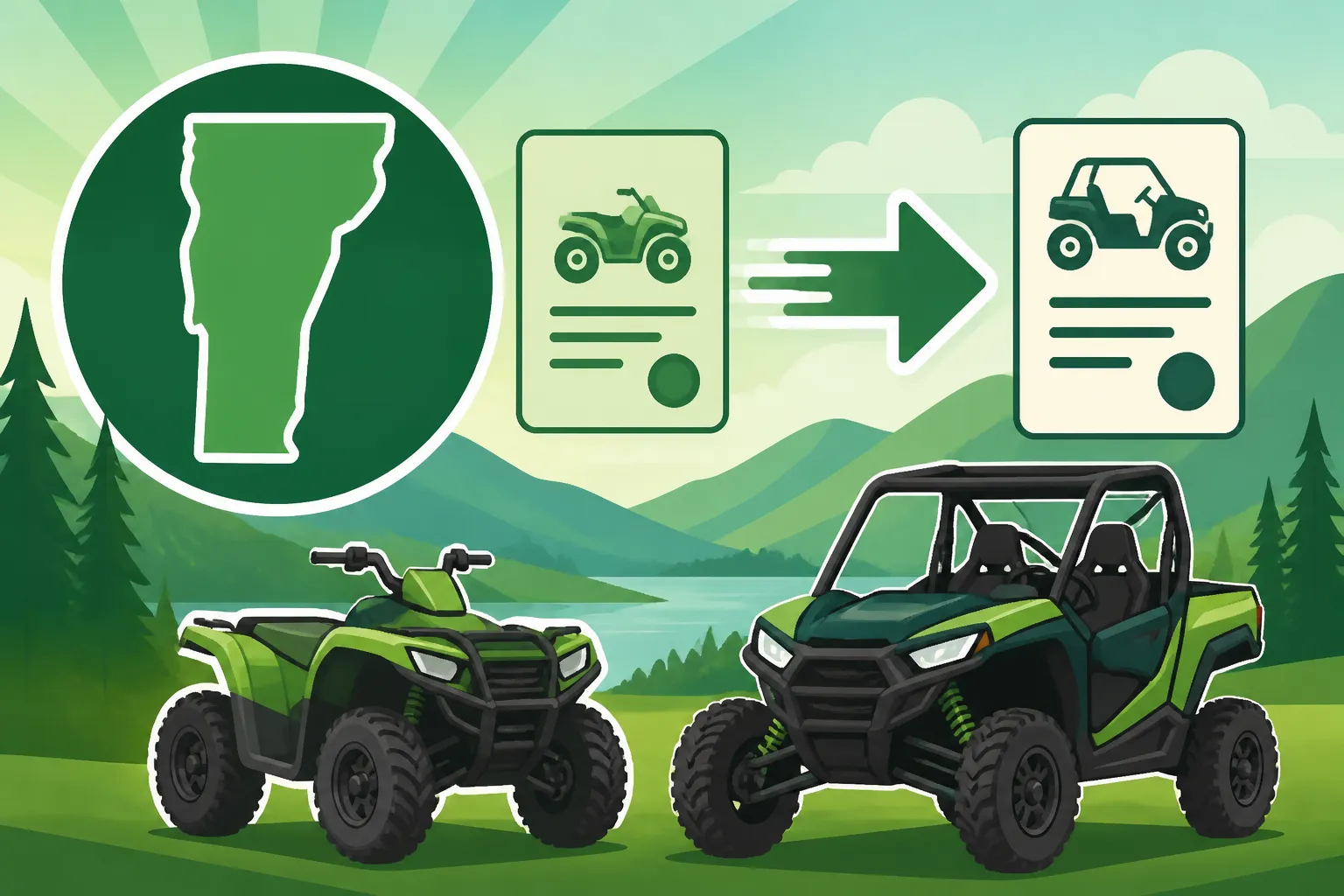
Firstly, it applies when you, as the current registered owner, want to move the remaining period of an existing registration from one ATV or UTV to another machine you now own. For example, if you sell your old quad and buy a new side-by-side mid-season, you can transfer the unexpired portion of your registration to the new machine. This is a common scenario and a huge benefit for those upgrading their ride. You've already paid for the privilege of riding for that time, and the state allows you to continue enjoying that benefit on your new machine.
Secondly, and this is where it gets a bit trickier, the $10 fee can also apply when you are transferring the remainder of a registration period to a new owner when you sell or gift a machine that is currently registered. This means the new owner can take over the existing registration for the remaining period instead of having to buy a brand new, full-term registration. However, this particular scenario often comes with additional considerations, especially regarding proof of ownership and purchase and use tax, which we'll dive into shortly. Understanding these two distinctions is key to determining if the $10 transfer is an option for you. [The $10 Transfer Fee] is designed to cover these specific administrative updates.
Scenario 1: Moving Your Existing Registration to a Different Machine
This is perhaps the most straightforward application of the $10 transfer fee and one that many seasoned ATV and UTV riders in Vermont appreciate. It’s all about maintaining continuity for your riding privileges, even if the machine under you changes. You’ve paid for your registration period, and the state acknowledges your right to utilize that period, even if your specific vehicle changes. This flexibility is a real boon for those who like to upgrade or swap machines.
When You Upgrade or Swap Out Your ATV/UTV
Let's say you registered your trusty ATV back in May, and now it's August. A fantastic deal comes along for a newer, more powerful side-by-side, and you just can't pass it up. You sell your old ATV and purchase the new machine. Your ATV registration is still valid for several months. Instead of buying an entirely new registration for your side-by-side and effectively losing the value of the remaining months on your ATV's registration, Vermont allows you to transfer that unexpired period. You simply apply to move your existing registration from the old machine (which you no longer own) to your newly acquired ATV or UTV. This keeps you riding legally without having to bear the full cost of a new registration twice within a short period. It's a smart way to manage your expenses when you change machines mid-registration cycle. This specific process is often referred to as [Moving a Vermont Registration to a New Machine for $10].
The Benefits of Transferring Your Remaining Registration Period
The primary benefit here is, quite simply, saving money. Full ATV or UTV registrations in Vermont aren't free, and getting a prorated refund on an old registration isn't typically how it works. By using the $10 transfer option, you leverage the investment you already made in your registration. You retain the value of the remaining months, ensuring you only pay a minimal administrative fee to update the record with your new vehicle's information. This means more money in your pocket for gas, gear, or trail snacks! Beyond the financial aspect, it's also a matter of convenience. The process is generally quicker and requires less documentation than a brand-new registration, as you've already established your ownership and residency for the previous registration. It streamlines the administrative burden, getting you back on the trails with your new machine faster.
Scenario 2: Transferring an ATV/UTV Registration to a New Owner
This scenario involves a change of ownership for an already registered ATV or UTV. It’s important to understand that while the $10 fee applies here, it typically covers the transfer of the remainder of the existing registration period to the new owner, rather than a full new registration. This can be a really helpful option for both buyers and sellers, but it requires careful attention to detail to ensure all other legal obligations are met.
When a Private Sale or Gift Occurs
Imagine you're selling your registered ATV to a friend, or perhaps gifting it to a family member. If your ATV still has a valid registration with time remaining on it, the new owner might be able to utilize that remaining period. For instance, if you sold your ATV in June and its registration was valid until the end of the year, the new owner could apply to have that remaining period transferred to them for the $10 fee. This means they get to ride legally for several months without immediately needing to purchase a brand-new registration. It’s a nice perk that can be factored into the sale or gift, adding value for the recipient. However, both parties need to be aware that simply transferring the registration doesn't always clear all other hurdles. When it comes to [Selling a Registered ATV in Vermont], clearly defining this option can be a benefit.
Limitations and Additional Costs for the New Owner
While the $10 transfer fee for a new owner sounds appealing, it's vital to recognize that it's often not the only cost involved. The most significant additional consideration for the new owner is the Vermont Purchase and Use Tax. If the machine was purchased (even from a private seller), the new owner will almost certainly be required to pay this tax when they register it, even if they're only transferring the remaining period. The $10 fee doesn't exempt them from this tax obligation. Similarly, if the ATV or UTV has never been titled in Vermont or if the new owner wants a title in their name (which is highly recommended for off-road vehicles), there will be a separate [Vermont Title for an Off-Road Vehicle] fee. So, while the registration period might transfer for $10, expect to pay the purchase and use tax and potentially a title fee on top of that. Think of the $10 as an administrative fee for switching the name on the registration card for its existing term, not a blanket waiver for all other financial obligations. [Transferring the Remainder of a Period] is possible, but riders should budget for other costs.
Essential Paperwork for a Smooth $10 Transfer
Whether you're swapping machines or transferring ownership, having your paperwork in order is the absolute bedrock of a smooth $10 registration transfer. The Vermont DMV is, understandably, very particular about documentation, as it ensures proper ownership, tax collection, and safety. Missing even one piece of paper can mean a wasted trip, extra frustration, and a delay in getting your machine legally registered. It's not just about showing up with a ten-dollar bill; it's about proving who you are, what you own, and that all financial obligations have been met.
Proving Ownership: Titles, Bills of Sale, and Affidavits
Proof of ownership is paramount. For newer machines, a Manufacturer's Certificate of Origin (MCO) or a clear title is usually the gold standard. However, many older ATVs and UTVs, especially those primarily used off-road, might not have a formal title. In these cases, a detailed Bill of Sale becomes incredibly important. This document should clearly identify both the buyer and seller, the machine (make, model, VIN), the sale price (even if $0 for a gift), and the date of the transaction. If you're buying privately, ensure the seller provides a solid bill of sale. Sometimes, if original paperwork is lost or never existed, the DMV might accept an Affidavit of Ownership, where you swear under penalty of perjury that you own the machine. Resources like LawDepot can be invaluable for drafting clear, legally sound documents such as bills of sale or affidavits, ensuring all necessary details are included and recognized by the DMV. Having robust [Proof of Ownership Vermont's DMV Will Accept] is crucial. For guidance on creating this document, consider consulting resources on [Writing a Bill of Sale the Vermont DMV Accepts].
The Registration Application Form Itself
Of course, you’ll need to fill out the correct Vermont DMV form to initiate the transfer. This is typically an application for registration, where you'll indicate that you are seeking a transfer rather than a new registration. It will ask for details about both the "old" machine (if you're transferring from one to another) or the current registered machine (if you're changing ownership). You'll need to provide your personal information, the machine's vehicle identification number (VIN), make, model, year, and often its dry weight and dimensions. Be meticulous when filling this out; any errors can lead to processing delays. The form will also have a section where you can clearly mark that you are applying for a "transfer" and list the registration number of the machine from which you are transferring. Make sure to double-check all fields before submitting. A comprehensive [Vermont Registration Paperwork Checklist] can prevent missed steps.
Dealing with Purchase and Use Tax During a Transfer
This is where many riders get confused, especially with private sales. Even if you're only paying the $10 fee to transfer an existing registration, if you bought the ATV or UTV, you are generally obligated to pay Vermont Purchase and Use Tax on the transaction. The DMV will collect this tax based on the purchase price listed on your bill of sale (or a fair market value if the price seems unusually low or it was a gift, though gifts between immediate family members might have exemptions). The $10 transfer fee only covers the administrative cost of changing the registration record; it does not exempt you from this tax. You will usually pay the tax at the time of transfer, alongside any title fees. Understanding [Vermont Purchase and Use Tax on an ATV] is essential for any transfer involving a change of ownership, as it will likely be a significant part of your total cost, regardless of the $10 registration transfer fee. If you're unsure about tax exemptions or how to calculate the tax, always ask the DMV directly or consult their guidelines.
Navigating the Transfer Process at the Vermont DMV
Once you've gathered all your documents, the next step is to actually process the transfer with the Vermont Department of Motor Vehicles. This can sometimes feel like a daunting task, especially if you're new to it, but knowing the steps beforehand can make it much less stressful. Whether you choose to visit an office in person or handle things by mail, being prepared is your best defense against delays.
Step-by-Step: From Gathering Documents to Getting Your New Card
The first step, as we've discussed, is thorough preparation. Ensure you have your bill of sale, previous registration (if applicable), proof of Vermont residency, and any other relevant ownership documents ready. If you're transferring from one machine to another, you'll need details for both. If you're a new owner taking over an existing registration, you'll need the seller's information and the previous registration number.
Next, accurately complete the Vermont Registration Application form. Be sure to check the box indicating it's a "transfer" and fill in all the vehicle and personal details.
Third, calculate any applicable fees. This is where you include the $10 transfer fee, any necessary title fees (if applying for a new title), and the Vermont Purchase and Use Tax if you bought the machine.
Finally, submit everything to the DMV. If successful, you'll walk out (or receive in the mail) a new registration card that reflects the updated machine or owner information, valid for the remainder of the original registration period. The process for [Registering an ATV With the Vermont DMV] provides a general overview, and transfers follow a similar administrative path.
In-Person Versus Mail-In Transfers
Vermont generally offers two primary ways to handle your registration transfer: in person at a DMV office or by mail.
In-person: This is often the preferred method for transfers, especially if you have questions or anticipate any complexities with your paperwork. Visiting an office allows a DMV clerk to review your documents immediately, catch any errors, and guide you through the process. You can pay all fees on the spot and, in most cases, walk out with your new registration card. This immediate feedback and resolution can save you a lot of time and frustration compared to sending documents back and forth. It's a great option if you want peace of mind and don't mind the potential wait times.
By mail: If you live far from a DMV office or have a straightforward case, mailing your documents can be convenient. You’ll need to make sure all forms are meticulously filled out, all necessary copies are included, and you’ve enclosed the correct payment (usually a check or money order). Make sure to include a self-addressed, stamped envelope for the return of your new registration card. The main drawback here is the processing time; it can take several weeks for mail-in applications to be processed and for you to receive your new card. If you plan to ride soon after the transfer, mail might not be the best option. Always consider sending important documents via certified mail for tracking purposes.
Why the $10 Fee Isn't Always the Only Cost
It’s easy to get excited about the idea of a mere $10 fee, but it’s crucial to remember that this fee is quite specific in what it covers. Many riders mistakenly believe that if they qualify for the $10 transfer, that's the only money they'll spend. This isn't usually the case, especially if a change of ownership is involved. Understanding the full financial picture upfront will prevent unwelcome surprises and ensure you budget correctly for your ATV or UTV.
New Registrations vs. Transfers: Understanding the Price Difference
A new, full-term ATV or UTV registration in Vermont typically costs significantly more than $10. These fees cover the full administrative costs associated with initiating a brand new registration period, regardless of whether it's for one year or two. The [Vermont ATV Registration Cost] can vary, but it's generally in the tens of dollars for a single year. The $10 transfer fee, on the other hand, is specifically for updating an existing registration record (either for a new machine under the same owner, or a new owner for the remainder of an existing period). It doesn’t create a new full term. This distinction is vital for budgeting: if you're buying an unregistered machine, or one whose registration has completely lapsed, you'll be looking at the full registration fee, not just $10. Always verify the status of the machine's registration before assuming the lower fee.
The Title Fee: A Separate but Often Necessary Cost
Beyond registration, many ATVs and UTVs in Vermont also require or can obtain a title. A title is the legal document that proves ownership, much like a deed to a house or a title for your car. The fee for applying for a Vermont title is separate from registration fees, including the $10 transfer fee. So, if you're buying a machine that has never been titled, or you're the new owner and want the title issued in your name (which is highly recommended for security and future resale), you will need to pay the title fee in addition to your $10 registration transfer fee (and any purchase and use tax). The title fee is typically a set, modest amount, but it’s an extra cost you need to account for. Don't confuse the registration card (proof of legal operation) with the title (proof of ownership). They are distinct documents with separate fees. You can find more details on [Vermont ATV Titles and What They Cost].
When Purchase and Use Tax Applies (Even on a Transfer)
We touched on this earlier, but it bears repeating: the Vermont Purchase and Use Tax is a separate obligation that generally applies when you acquire an ATV or UTV, regardless of whether you're performing a $10 registration transfer or a full new registration. This tax is typically calculated as a percentage of the purchase price or the fair market value of the machine. Even if you're taking over an existing registration for just $10, if you bought the machine, the DMV will still collect this tax. There are specific exemptions, such as gifts between immediate family members, but these require specific documentation. It’s a common pitfall for buyers who budget only for the $10 transfer fee and are then surprised by a larger tax bill. Always budget for this tax when acquiring a machine, even if it's currently registered. For instance, LawDepot templates can help you generate a solid bill of sale that clearly outlines the sale price, which is essential for accurate tax calculation.
Avoiding Common Mistakes and Ensuring a Valid Transfer
Transferring a registration should be a relatively simple administrative task, but minor errors or misunderstandings can quickly complicate things. Nobody wants to deal with a delayed transfer or, worse, ride an illegally registered machine. By being proactive and paying attention to a few key details, you can ensure your $10 transfer goes as smoothly as possible, saving you headaches and potential penalties.
The Importance of Accurate Documentation
We cannot stress this enough: accurate and complete documentation is the single most important factor for a successful transfer. Double-check every single field on your application form. Ensure the VIN on your bill of sale or title matches the VIN on your machine exactly. Verify that the previous owner's information is correct if you're the new owner. Missing signatures, incorrect dates, or transposed numbers can all lead to your application being rejected or significantly delayed. If you're unsure about what specifically constitutes a valid bill of sale or proof of ownership, don't hesitate to contact the Vermont DMV directly before you submit your paperwork. Using reliable templates from services like LawDepot for your bill of sale can help ensure all necessary legal elements are present and correctly formatted, reducing the chance of rejection due to incomplete or improperly drafted documents.
Timelines and Avoiding Lapsed Registrations
When transferring an existing registration, you're relying on the original registration period. If that period expires before your transfer is processed, you could find yourself needing a full new registration, not just the $10 transfer. It’s always best to initiate your transfer as soon as possible after acquiring a new machine or deciding to swap registrations. Don't wait until the last minute, especially if you're mailing your application, as processing times can vary. Riding with an expired or improperly transferred registration can lead to fines and other penalties, so ensure you have a valid, current registration card in hand before you hit the trails. Planning ahead and being prompt with your paperwork is key to avoiding an unintentional lapse.
What Happens If You Don't Qualify for the $10 Fee
Sometimes, despite your best intentions, your situation might not actually qualify for the $10 transfer fee. For example, if the machine's previous registration has completely lapsed, or if you're trying to transfer a registration from an owner who is not the legal owner, the DMV will likely deny the $10 transfer. In such cases, you will be required to go through the full new registration process, which means paying the standard [Vermont ATV Registration Cost] and fulfilling all the requirements for a brand-new registration. This might include proving ownership more rigorously, paying the full registration fee, and still paying any applicable title and purchase and use taxes. It's much better to clarify your eligibility upfront than to assume you qualify and then be met with an unexpected demand for higher fees or additional paperwork. If in doubt, contacting the DMV or reviewing their official guidelines before submitting your application is always the safest bet.
| Scenario for $10 Transfer Fee | When It Applies | Additional Costs to Expect | Key Documentation Needed |
|---|---|---|---|
| Same Owner, New Machine | Transferring current valid registration to a different ATV/UTV you now own. | None, beyond the $10 fee, if machine already titled and tax paid. | Old registration, Proof of ownership for new machine (title/MCO/bill of sale), Application. |
| New Owner, Same Machine | Taking over the remainder of an existing valid registration from a seller/gifter. | Purchase and Use Tax (if bought), Title Fee (if new title issued), beyond the $10 fee. | Previous registration, Bill of Sale (or Affidavit), Application, Proof of Vermont residency. |
Disclaimer
This article is for general informational purposes only and does not constitute professional advice. Laws, prices and regulations vary by location and change over time. Consult a qualified professional for guidance on your specific situation.