Rollover Bars Instead of a Helmet
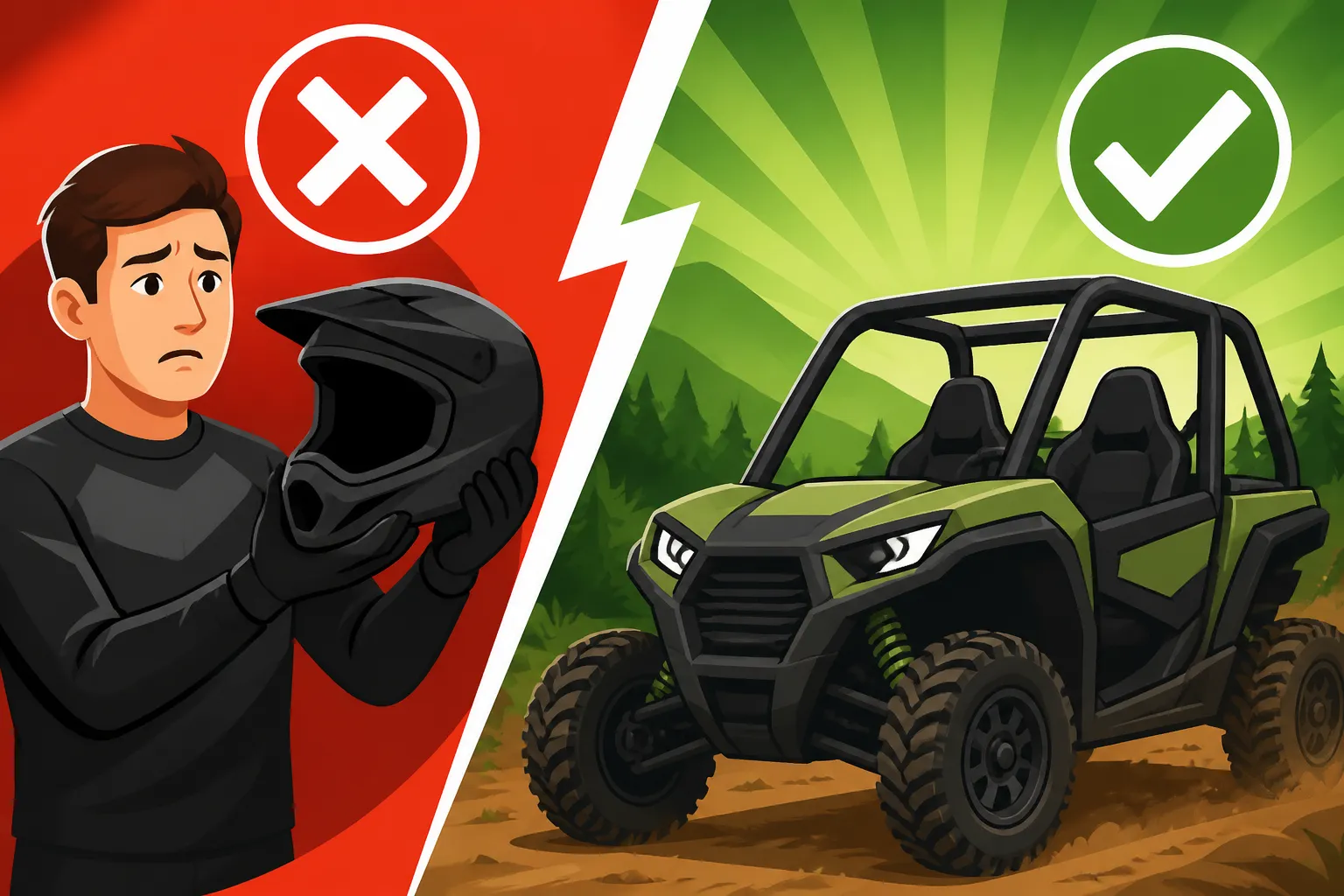
It's a common thought among ATV and UTV riders, especially when you're strapped into a side-by-side with a sturdy roll cage: "Do I really need a helmet when I have all this protection around me?" Many riders feel a sense of security from those stout steel bars, believing they offer enough safety to forgo a helmet. However, in Vermont, the law is crystal clear, and the real-world dangers of off-road riding make a helmet an absolute necessity. This guide will unpack why those rollover bars, while valuable, are not a substitute for proper head protection and what Vermont law expects from every rider.
The Core Rule: Vermont's Helmet Law is Universal
Let's cut right to the chase: In Vermont, if you're operating or riding as a passenger on an ATV or UTV, you need to wear a helmet. Period. There's no carve-out that says "unless your machine has a roll cage" or "unless you're over a certain age." This can be a tough pill to swallow for some, particularly those coming from states with different regulations or who feel invincible inside a modern side-by-side. You might see the substantial framework of your UTV, perhaps even enhanced with aftermarket cages from companies like SuperATV, and think, "This is strong, surely my head is safe." But the law and the physics of an accident tell a very different story.
Why Helmets Are Non-Negotiable
A helmet's primary job is to protect your brain and skull from impact, abrasion, and penetration. When you're riding an ATV or UTV, even at low speeds, the potential for an accident is always present. A rollover, a collision with an obstacle, or being thrown from the machine are all scenarios where a helmet becomes your last line of defense.
Think about it this way: In a rollover, even with a roll cage, your head can still strike internal components of the vehicle, the ground, or passing obstacles. The forces involved in these incidents are tremendous. A helmet, specifically designed for powersports, distributes the impact force across a larger area, reduces the acceleration of the head, and resists penetration. Without it, a seemingly minor bump against the roll bar could result in a severe concussion or worse. If you're ejected from the machine, which can happen even with seatbelts in extreme conditions, a helmet provides critical protection when your head hits the ground, rocks, or trees. The sheer energy involved in these impacts demands a dedicated piece of safety equipment for your head that rollover bars simply cannot provide.
What Rollover Bars Actually Do and Don't Do
Rollover bars, often referred to as ROPS (Roll-Over Protective Structures) in UTVs, are engineered to prevent the machine from collapsing on its occupants in the event of an overturn. They are crucial for maintaining the structural integrity of the passenger compartment and creating a survival space. They are designed to withstand significant crush forces, protecting the general body area of the occupants. This is undeniably important for safety.
However, what rollover bars don't do is immobilize your head or provide direct, localized impact absorption for your skull. While they protect the overall cabin, your head still has a range of motion within that space. In an accident, your body might shift, your head could whip, or an arm or leg might move in unexpected ways. Even if the roll cage remains intact, your head could impact the cage itself, an interior panel, or an object protruding into the cabin. Furthermore, in many rollover scenarios, riders can be partially ejected or sustain impacts from outside objects before the vehicle comes to a rest. The helmet is designed to mitigate those specific head injuries, offering a layer of protection that the general structural protection of a roll cage simply cannot replicate. [Vermont Rollover Protection Exception] is not something you should count on to skip the helmet.
Understanding Vermont's ATV and UTV Safety Requirements
Vermont takes ATV and UTV safety seriously, and that's reflected in its laws. The state's regulations are designed to minimize risks for all riders, regardless of their experience level or the type of machine they're operating. It's not about stifling fun; it's about preventing serious injury.
Who Needs a Helmet in Vermont
The answer is straightforward: everyone. If you're driving an ATV or UTV on a designated trail or approved public land in Vermont, you, and any passengers you have, must wear an approved helmet. There are no age-based exemptions for helmets for adults, and certainly none for children. Even if you're just moving your machine a short distance on private land you own, it's best practice, and often legally required depending on the specific town ordinance, to wear your helmet. This rule applies whether you're on a single-rider ATV, a two-seat side-by-side, or a larger multi-passenger UTV. When you're considering [Vermont ATV Helmet Law for Every Rider], understand that "every rider" means exactly that.
For younger riders, the helmet requirement is often coupled with additional rules regarding supervision. For instance, [Vermont Supervision Rules Under 16] mean that not only do young riders need a helmet, but they also need an adult present and actively supervising them. The state is committed to ensuring that all riders, from the youngest to the most seasoned, are protected against the inherent risks of off-road vehicle use.
Approved Helmet Standards
Just any old helmet won't do. Vermont law requires helmets to meet specific safety standards. Typically, this means your helmet should be approved by the U.S. Department of Transportation (DOT), the Snell Memorial Foundation, or the American Society for Testing and Materials (ASTM). These certifications mean the helmet has undergone rigorous testing to prove its ability to protect against various types of impacts and penetration.
When you're shopping for a helmet, look for the DOT sticker on the back. Many powersports helmets will also carry a Snell rating, which is often a more stringent standard, especially favored by serious off-road racers. Some may also have an ASTM certification, particularly for youth models. Make sure the helmet fits snugly but comfortably, without obstructing your vision. A poorly fitting helmet won't protect you properly. It's also vital to ensure the helmet is in good condition, without any cracks, deep scratches, or signs of impact that could compromise its integrity. An old, damaged helmet offers significantly less protection than a new, certified one. Remember, you should be [Fastening a Helmet the Way Vermont Law Requires] and [Checking a Helmet's Safety Sticker Before You Ride] every single time.
Here's a quick overview of what rollover bars and helmets are designed for:
| Feature/Item | Primary Function | Replaces Helmet? | Protects Against (Head) | Protects Against (Body) | Required in Vermont? |
|---|---|---|---|---|---|
| Rollover Bars (ROPS) | Maintain structural integrity of cabin during overturn | No | Indirectly (survival space) | Directly (crush protection) | Yes (on UTVs/SxS) |
| Helmet | Direct head impact protection, absorption, penetration resistance | N/A | Directly (all impacts) | No | Yes (all ATVs/UTVs) |
Consequences of Not Wearing a Helmet
Ignoring Vermont's helmet law isn't just about taking a risk with your personal safety; it also carries significant legal and financial repercussions. It's easy to think "it won't happen to me," but wardens and local law enforcement officers are out on the trails, and they enforce these rules for a reason.
Legal Penalties and Fines
If you're caught riding an ATV or UTV in Vermont without a helmet, you're looking at a penalty. While specific fine amounts can vary and may change, you can expect a citation and a fine. These aren't just minor slaps on the wrist; they are designed to deter non-compliance and reinforce the importance of safety. Repeated offenses can lead to escalating fines and potentially even further legal action.
Beyond the immediate fine, remember that law enforcement, including game wardens and local police, are authorized to conduct [Vermont Equipment Checks by Police] on trails and roads. If they find you in violation of the helmet law, they will act. It’s part of their job to ensure everyone is riding responsibly and safely. It's much simpler, and certainly cheaper, to just put on the helmet before you hit the trail.
Insurance Implications
This is a big one that many riders overlook until it's too late. Your ATV or UTV insurance policy is there to protect you financially in case of an accident. However, many policies have clauses that relate to legal compliance and rider safety. If you are involved in an accident while not wearing a legally required helmet, your insurance company could potentially deny or significantly reduce your coverage for medical expenses or damage claims.
Think about a scenario: you're riding your UTV, not wearing a helmet, and you have a rollover. Even if the rollover bar saves the machine from being completely crushed, you sustain a severe head injury. If your insurance company finds out you weren't wearing a helmet as required by Vermont law, they might argue that your negligence contributed to the severity of your injuries. This could leave you on the hook for substantial medical bills that your policy would otherwise cover. [Vermont ATV Insurance Requirements] are in place, but your policy’s effectiveness hinges on following all state laws, including the helmet mandate. Always [Carrying Vermont Insurance Proof on the Machine] is good practice, but being compliant with all laws, like wearing a helmet, is paramount.
In essence, by choosing not to wear a helmet, you're not only putting your brain at risk, but you're also potentially jeopardizing your financial well-being and any claim you might need to make on your policy. It's a double whammy of risk that is easily avoidable.
So, while those beefy rollover bars from your UTV, perhaps even custom-fabricated ones or those from brands like SuperATV, give a strong sense of protection, they are absolutely not a substitute for a properly fitting, certified helmet when riding your ATV or UTV in Vermont. The law demands it for everyone, and your safety, along with your financial protection, depends on it. Take the extra seconds to strap on your lid every single time you ride. It’s a small effort for a huge payoff in safety and peace of mind.
Disclaimer
This article is for general informational purposes only and does not constitute professional advice. Laws, prices and regulations vary by location and change over time. Consult a qualified professional for guidance on your specific situation.