Vermont Selectboard Hearings on ATVs
It's incredibly frustrating when you just want to enjoy the beautiful Vermont trails on your ATV or UTV, but the rules about where you can ride on town roads feel like they're constantly shifting or, worse, entirely unclear. Many riders find themselves scratching their heads, wondering why one town has open routes while the next is completely shut down. This guide is here to demystify one of the most crucial parts of that process: the Vermont Selectboard hearing, explaining what it is, why it matters, and how you can make your voice heard to shape local ATV access.
What Exactly is a Vermont Selectboard, Anyway?
Before we dive into the nitty-gritty of hearings, let's talk about what a selectboard actually is. If you're new to Vermont, or just haven't had much reason to engage with local town government, it can feel a bit obscure. In simple terms, a Vermont selectboard is the executive body for most towns in the state. Think of them as your local town council or board of commissioners in other places. These are typically elected volunteers from your community – your neighbors, perhaps the owner of the local hardware store, or someone who's lived in town for decades.
Their responsibilities are broad, covering everything from town budgets and road maintenance to approving various permits and, yes, setting local ordinances, which absolutely includes rules about where and when ATVs and UTVs can operate on town roads. They're the ones who ultimately decide if that stretch of gravel road between two trail systems becomes a legal ATV route, or if your local village will have a specific curfew for machines. This local control means that what's legal in one town might be forbidden just a mile down the road, leading to a patchwork of rules that can be tough for riders to navigate.
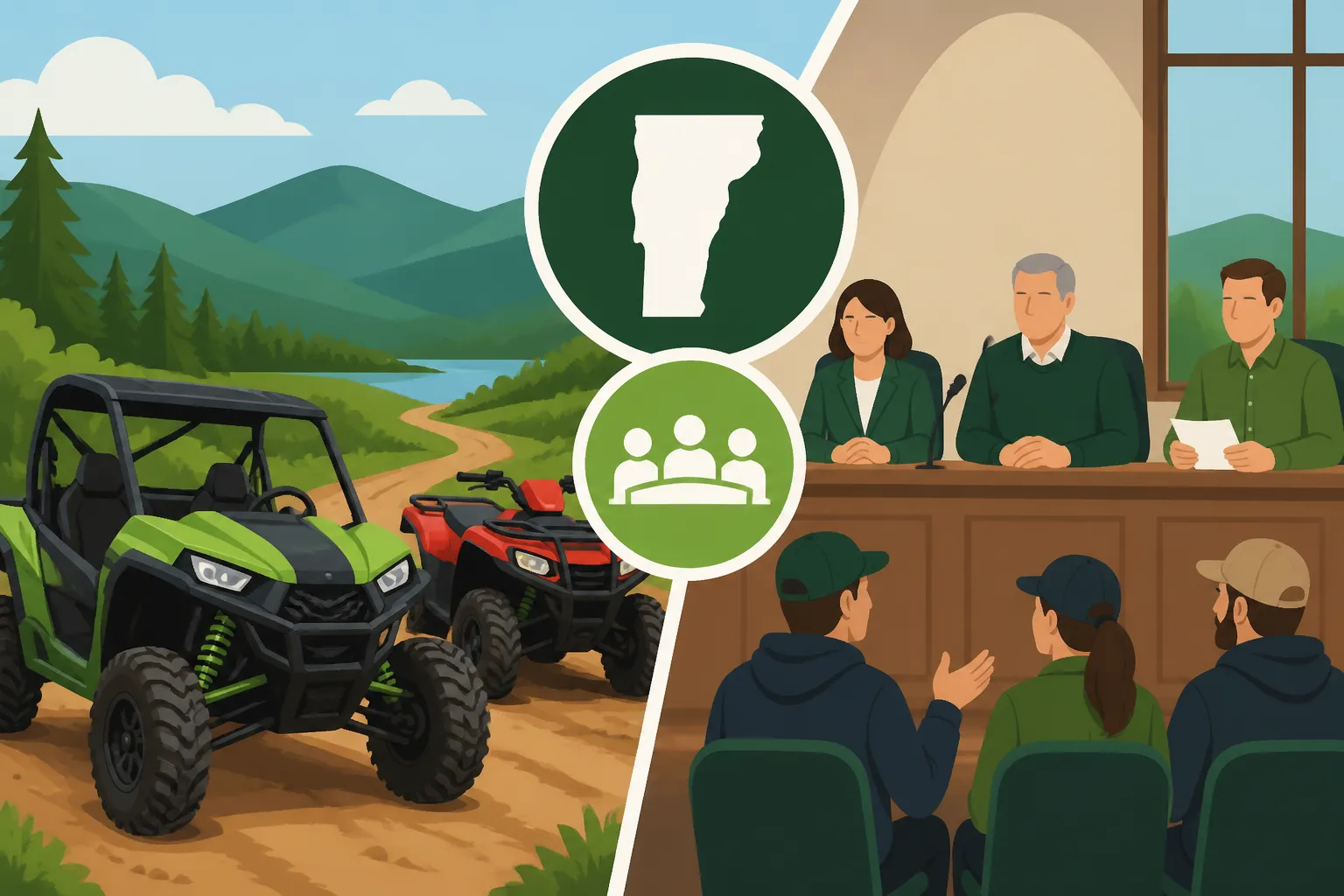
They hold regular meetings, usually once or twice a month, and these meetings are open to the public. It's during these meetings, especially when an ATV-related issue is on the agenda, that the "hearing" aspect comes into play. It's your chance to directly address the people who have the power to make or break local riding opportunities.
Why Selectboard Hearings are a Big Deal for ATV & UTV Riders
For anyone who loves to ride an ATV or UTV in Vermont, a selectboard hearing isn't just another dry government meeting; it's where the rubber meets the road – literally. These gatherings are the primary arena where local decisions about ATV and UTV access on town roads are made. Without understanding and engaging with this process, riders risk losing access or, conversely, missing out on opportunities to expand riding areas.
Opening, Closing, or Restricting Town Roads
The most direct impact of a selectboard hearing on ATV riders is the decision to open, close, or restrict certain town roads for ATV use. In Vermont, towns have the authority to designate their Class 3 and Class 4 roads (and sometimes even Class 2 or 1, with specific conditions) for ATV travel. This isn't a one-time decision; [Why Vermont Road Designations Must Be Renewed Yearly] means these decisions can be revisited and changed annually. A selectboard hearing is where residents and riders can advocate for opening a new link, or conversely, where opposition can be voiced to close an existing route.
Imagine a situation where a new trail segment is being developed, but it needs a half-mile stretch of town road to connect two previously isolated sections. A selectboard hearing would be the platform to present this proposal, discuss its benefits to local tourism and rider experience, and address any potential concerns from residents. Without this crucial connection, riders might be forced to backtrack, or worse, illegally ride on closed roads, risking penalties. Conversely, if there have been issues, a hearing might lead to the implementation of [Vermont Town Ordinances That Set Curfews] or other restrictions designed to mitigate problems like noise or safety.
Shaping Local ATV Ordinances
Beyond simply opening or closing roads, selectboard hearings are where the specific rules and regulations governing ATV use in a given town are hammered out. These local ordinances can cover a wide range of topics, from speed limits on designated routes to specific operating hours, and even requirements for certain safety equipment. For example, while state law might set a baseline for helmets, a local ordinance could impose additional rules or designated areas.
This means that local selectboards hold significant power in shaping your riding experience. It's not uncommon for towns to consider rules regarding noise, dust, or even specific types of machines. [Vermont ATV Road Rules: Towns Decide] is a powerful concept here; what's allowed in Brighton might be different from Newport or Island Pond. The input received during a hearing directly informs these decisions. If you feel a proposed ordinance is too restrictive, or not restrictive enough, the hearing is your chance to articulate why.
The Role of VASA and ATV Clubs
Often, the proposals brought before a selectboard hearing originate from local ATV clubs or the Vermont ATV Sportsman's Association (VASA). These organizations work tirelessly to develop and maintain trails, secure [Vermont Landowner Permission Rules], and advocate for responsible riding. They often act as the primary liaison between the riding community and local governments.
When a club proposes opening a new route or modifying an existing one, they will typically present a detailed plan to the selectboard. This plan might include economic impact studies, proposed signage, and strategies for managing potential issues. Riders who are members of these clubs often attend hearings to show solidarity and provide additional testimonials. Their unified voice, backed by organizational efforts, can significantly influence a selectboard's decision. It demonstrates a commitment to responsible riding and community engagement, which resonates strongly with local officials.
Participating Effectively in a Selectboard Hearing
Attending a selectboard hearing can feel a bit intimidating, especially if you're not used to speaking in public or engaging with local government. But your voice truly matters. These are your neighbors making decisions about your community and your recreational opportunities. Approaching a hearing with preparation, respect, and a clear message can make all the difference.
Do Your Homework: Research and Understand
The first step to effective participation is preparation. Don't walk into a hearing uninformed.
- Know the specific proposal: Is the hearing about opening a new road, closing an existing one, or discussing a new town ordinance? Understand the exact scope.
- Review existing ordinances: Familiarize yourself with your town's current ATV regulations. This information is usually available on the town's website or at the town clerk's office. Knowing what's already on the books helps you speak to specific changes or needs.
- Gather supporting data: Do you have examples of economic benefits from ATV tourism in other Vermont towns? Can you speak to the safety record of organized ATV clubs? Data, even anecdotal, can be powerful. If you are proposing an opening, research similar situations where it has worked well. If you are opposing a closure, highlight the positive impacts of current access.
- Understand the "why": Try to understand the selectboard's or residents' concerns. Are they worried about noise, dust, speeding, or safety? Anticipating these concerns allows you to prepare thoughtful responses rather than being caught off guard.
Crafting Your Message: Clear, Concise, and Respectful
When it's your turn to speak, remember these tips for making a strong, positive impression:
- Be polite and respectful: Even if you disagree vehemently with others, maintain a respectful tone. This goes a long way in showing that ATV riders are reasonable, responsible members of the community. Address the board members directly and thank them for their time.
- State your name and address: This is standard procedure and helps the board understand you're a local resident or stakeholder.
- Be concise and clear: Get to the point quickly. Selectboards often have many items on their agenda, and time for public comment might be limited. Focus on 1-2 key points you want to convey.
- Focus on community benefits: Frame your arguments in terms of how ATV access benefits the broader community. This could include increased tourism revenue for local businesses, improved access for hunters and outdoor enthusiasts, or simply providing healthy outdoor recreation for residents. For example, "Opening this section of road connects our community to the larger VASA trail network, which means more visitors stopping at the general store and gas station, supporting local jobs."
- Address concerns directly (and constructively): If noise is a concern, explain how riders can commit to riding quieter machines, adhering to speed limits, and respecting residential areas. Emphasize that most riders are responsible and want to be good neighbors. This might also be a place to mention the importance of maintaining machines with quality parts to ensure they run efficiently and quietly, perhaps even noting that responsible riders invest in reliable components, whether it's for performance or simply keeping their machine in top shape.
- Offer solutions: Instead of just complaining, propose constructive solutions. If residents are worried about safety, suggest increased signage, specific speed limits, or volunteer patrols from local clubs.
Remember, the goal is to build bridges, not burn them. A collective effort, possibly initiated through [Vermont Petitions to Open a Road], shows the board a unified front of concerned and engaged citizens.
Leveraging the Power of Clubs and VASA
Don't go it alone if you don't have to. Joining your local ATV club or VASA provides a powerful collective voice. These organizations have experience navigating these hearings, often have data and established relationships, and can help you prepare your remarks. Many times, the club will have a designated spokesperson, and your role might be to simply show up in support, or to offer a brief, personal anecdote that reinforces the club's main points. Your presence alone shows the selectboard that there's significant community interest in the topic. [Vermont ATV Clubs and What They Maintain] also speaks volumes about their commitment to the sport and the community.
What to Expect During and After a Hearing
The hearing itself can be quite dynamic, with various opinions and perspectives shared. Understanding the flow and what happens afterward will help manage your expectations and guide your next steps.
The Hearing Process: Public Comment and Deliberation
Typically, a selectboard hearing will start with the board chair introducing the topic. There might be a presentation from a town administrator, a VASA representative, or a local club about a specific proposal. After this, the floor is usually opened for public comment. This is your chance to speak. The board members will listen to all comments, both in favor and against the proposal. Sometimes there's a back-and-forth, with board members asking questions for clarification.
It's important to understand that the selectboard might not make an immediate decision. They often take all the public input under advisement, possibly continuing the discussion at a later, regular meeting, or even tabling the issue for further research. This is a normal part of the process, especially for contentious issues. Sometimes, [What Happens If a Board Takes No Action] means the status quo continues, which might be a win or a loss depending on the specific context.
Possible Outcomes and Next Steps
After weighing all the input, the selectboard will eventually vote on the proposal. Possible outcomes include:
- Approval: The proposal passes, and roads are opened, a new ordinance is adopted, or rules are changed. Keep in mind that new ordinances typically have a period of time before they take effect, often [Sixty Days Before an Ordinance Takes Effect].
- Denial: The proposal is rejected, and existing rules remain. This can be disappointing, but it doesn't mean the fight is over. It might require rethinking the approach or gathering more support.
- Modification: The board might approve a modified version of the proposal, perhaps with additional restrictions or a trial period. This is often a compromise.
- Tabling/Postponement: The decision is put off for a future date, often to gather more information, consult with experts, or allow more public input.
Regardless of the outcome, ongoing engagement is key. If roads are opened, continue to ride responsibly and respect the rules to ensure continued access. If a proposal is denied, work with your local club and VASA to understand why and strategize for future attempts.
Here's a quick look at the pros and cons of engaging with your local selectboard on ATV access:
| Aspect | Pros of Engagement | Cons of Disengagement |
|---|---|---|
| Access | Potential for new or expanded riding routes, connecting trails. | Loss of existing access, missed opportunities for new routes. |
| Rule Clarity | Opportunity to shape fair and clear local ordinances. | Ambiguous rules, confusing enforcement, or overly restrictive regulations. |
| Community Impact | Position ATVs as a positive contributor to local economy and recreation. | Negative perceptions of riders, increased friction with non-riders. |
| Representation | Your voice and concerns are heard directly by decision-makers. | Decisions made without input from the riding community. |
| Future Riding | Establishes a precedent for future dialogue and collaboration. | Can lead to long-term closures or permanent bans on local roads. |
| Local Economy | Increased tourism, support for local businesses (gas, food, lodging). | Reduced visitor traffic, loss of potential economic benefits. |
Engaging with your local Vermont selectboard on ATV access is more than just attending a meeting; it's about being an active, responsible member of the community. By understanding the process, preparing your arguments, and speaking respectfully, you can play a vital role in shaping the future of ATV and UTV riding in the Green Mountain State.
Disclaimer
This article is for general informational purposes only and does not constitute professional advice. Laws, prices and regulations vary by location and change over time. Consult a qualified professional for guidance on your specific situation.