Vermont Registration for a Business Machine
Using an ATV or UTV for your Vermont business operations can be an absolute game-changer, whether you're a landscaper hauling tools, a farmer checking fence lines, or a small contracting firm navigating tricky job sites. But here’s the rub: many business owners mistakenly believe that because a machine is for work, it might be exempt from the usual registration rules, or that the process is completely different. This guide will walk you through the specifics of registering an ATV or UTV when it’s owned and operated by a business entity in Vermont, ensuring you stay compliant and avoid unnecessary headaches.
Understanding Why Business Machines Need Vermont Registration
It’s easy to think of your workhorse ATV or UTV as just another piece of equipment, like a lawnmower or a specialized tool. However, in Vermont, if that machine fits the state's definition of an All-Terrain Vehicle (ATV) or an All-Purpose Vehicle (ASV), it needs to be registered, regardless of whether it's for personal recreation or commercial endeavors. This isn't just a bureaucratic hurdle; it's about ensuring all vehicles operating on designated trails or permitted town roads are accounted for, insured, and contribute to the system that maintains those pathways.
The Legal Distinction: Personal vs. Commercial Use
From the Vermont Department of Motor Vehicles' (DMV) perspective, the core registration requirements for an ATV or ASV don't fundamentally change based on its intended use. The forms you fill out, the fees you pay, and the information requested will be largely the same as for a privately owned machine. However, the distinction becomes crucial when it comes to ownership, liability, and often, insurance. For a business, the machine isn't just yours; it belongs to the company, whether that's a sole proprietorship, an LLC, or a corporation. This legal ownership dictates how names are listed on documentation and, more importantly, how liability is handled in the event of an incident.
Think about a landscaping company based out of St. Johnsbury. They might use a UTV to transport mulch, tools, or even small trees across clients' properties or between job sites that require brief travel on town-designated ATV routes. If that UTV is registered in the owner's personal name, but primarily used for commercial purposes, it can create a messy situation regarding insurance claims or legal responsibilities if an accident occurs while on the clock. Registering it clearly under the business name clarifies its role and aligns with commercial insurance policies.
Meeting Vermont's Definition of an ATV or ASV
Vermont has specific definitions for what constitutes an ATV and an ASV (All-Purpose Vehicle, often synonymous with UTVs or side-by-sides). Generally, an ATV is a motor-driven off-road vehicle capable of traveling over unimproved terrain, 50 inches or less in width, and having an unladen dry weight of 1,000 pounds or less. An ASV (or UTV) is a bit broader, typically wider and heavier, designed for utility work or carrying passengers and cargo.
Most machines used in business operations, from smaller ATVs for quick tasks to larger, multi-seat UTVs for crew transport or heavy lifting, will fall neatly into one of these categories. Even if your machine is equipped with specialized attachments like a plow or a sprayer, its base vehicle type usually determines its classification for registration purposes. It's really important to confirm your machine's dimensions and weight to ensure you're registering it correctly, as this impacts the fee structure. For a deeper dive, check out [Vermont's 72-Inch, 2,500-Pound ATV Definition]. The good news is, if your business machine fits these definitions, the process largely mirrors that of a recreational one.
The Importance of a Valid Registration for Business Operations
Operating an unregistered ATV or UTV, especially one used for commercial activities, is a serious gamble. Unregistered machines can incur hefty fines from law enforcement, whether it's a game warden on a trail or a town constable enforcing local ordinances. Beyond penalties, an unregistered machine might be impounded, which can lead to significant downtime for your business and associated costs to retrieve it. For a small business, having a critical piece of equipment sidelined can mean missed deadlines, unhappy clients, and lost revenue.
Furthermore, insurance policies are often contingent on legal operation. If your business machine is involved in an incident while unregistered, your commercial insurance carrier could deny a claim, leaving your business fully exposed to liability for damages or injuries. Imagine a scenario where a landscaping UTV, unregistered, backs into a client's prize-winning rose bush while moving materials. Without valid registration, proving proper operational status to your insurer could be a nightmare, or worse, impossible. A valid registration is a fundamental component of responsible business operation, just like proper licensing for your vehicles or workers' compensation for your employees.
The Registration Process for a Vermont Business Machine
When you’re ready to register your business-owned ATV or UTV in Vermont, the general steps will feel familiar if you’ve registered a personal vehicle before. However, there are a few key considerations that are specific to registering a machine under a business entity. The goal here is to ensure the legal ownership is clear and that all documentation reflects your company, not just an individual.
Required Documentation for Business Ownership
This is where registering a business machine typically differs most from registering a personal one. While you'll still need the standard proofs of ownership, like a manufacturer's certificate of origin (MCO) for a new machine, or a bill of sale and previous title for a used one, you'll also need documentation to prove the existence and authority of your business entity.
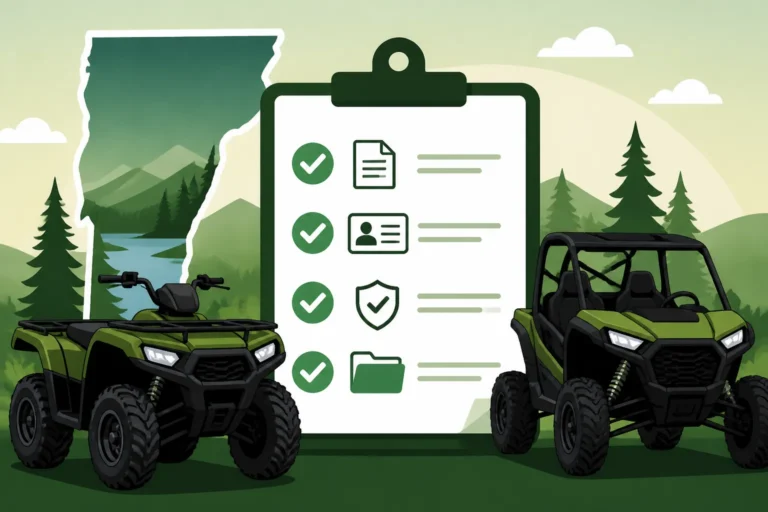
For example, if your business is an LLC, you'll likely need to present your Articles of Organization or other official state-filed documents that confirm your LLC’s existence and name. If you operate as a sole proprietorship under a "doing business as" (DBA) name, you might need your DBA registration certificate. If you've created these types of business formation documents, a service like LawDepot can be incredibly helpful for drafting and organizing them, ensuring they contain all the necessary legal language. For corporations, official corporate resolutions might be required, granting specific individuals the authority to register vehicles on behalf of the company. You'll also need identification for the authorized representative who is completing the registration, proving they have the right to act for the business. Don't forget to gather all the standard vehicle documents; for a comprehensive list, consult [Vermont Registration Paperwork Checklist] and [Proof of Ownership Vermont's DMV Will Accept].
Naming the Business on Registration and Title
When filling out the registration and title application forms, the owner field should clearly state the legal name of your business entity. So, instead of "Jane Doe," it would be "Jane's Landscaping LLC" or "Green Mountain Contracting, Inc." This is vital for establishing legal ownership and responsibility. The authorized signatory for the business (e.g., the owner, a partner, or a designated officer) will sign on behalf of the company.
For new machines, the MCO should ideally be issued directly to the business name. If you purchase a used machine from a private seller, ensure the bill of sale clearly indicates that the machine is being sold to your business, using its full legal name. Sometimes, if a sole proprietor is buying the machine and intends to use it for business, they might still register it in their personal name but use their business address. While this is an option, registering directly under the business name often simplifies accounting, insurance, and liability management. This detail on the title is fundamental for all future transactions, including selling the machine later. For details on how titles work in Vermont, see [Vermont Title for an Off-Road Vehicle].
Fees, Taxes, and Payment Methods for Commercial Registrations
The good news here is that the registration fees for a business-owned ATV or UTV are generally the same as for a privately owned one. Vermont doesn't typically charge a higher fee just because the machine is for commercial use. You'll pay the standard annual or two-year registration fee, which might be different for an ATV versus an ASV. For current figures, you'll want to check the official Vermont DMV website, but generally, expect to pay a set amount for a one-year or two-year period. You can find more specific information on [Vermont ATV Registration Costs and Terms].
However, the application of Vermont's Purchase and Use Tax can be a significant factor. If you’re buying a new or used machine for your business, and tax hasn't been paid, you will be liable for this tax at the time of initial registration. This is calculated as a percentage of the purchase price or appraised value. Make sure you have your bill of sale handy with the purchase price clearly stated. Businesses typically pay these fees and taxes using a company check, business credit card, or other official business payment methods. For more on the tax implications, check out [Vermont Purchase and Use Tax on an ATV]. Understanding all the payment options available can also be helpful, as detailed in [Vermont Registration Payment Methods].
Practical Considerations and Ongoing Compliance for Business ATVs/UTVs
Registering your business ATV or UTV is a crucial first step, but ongoing compliance is just as important. For a business, this means not only keeping your registration current but also ensuring your insurance coverage is robust enough for commercial use and that you understand how to manage your fleet effectively if you have multiple machines.
Insurance Requirements for Business-Owned Machines
This is perhaps the biggest practical distinction for business machines. While Vermont requires liability insurance for all registered ATVs and ASVs, a personal recreational policy likely won't cut it for a machine used in a commercial context. Your business needs a commercial ATV or UTV insurance policy. This type of policy is specifically designed to cover the unique risks associated with business operations, including property damage, bodily injury, and other liabilities that could arise while the machine is being used for work.
Imagine a construction firm in Rutland using a UTV to ferry equipment around a job site. If an employee, while operating this UTV, accidentally damages another contractor's property, a standard personal policy might deny the claim because the incident occurred during commercial activity. A commercial policy, on the other hand, is built to protect your business from these very real and costly scenarios. Ensure your commercial policy meets or exceeds Vermont's minimum liability requirements, which are typically set at specific dollar amounts for bodily injury and property damage. Detailed information on these requirements can be found in [Vermont ATV Insurance Requirements]. Always discuss your specific business usage with your insurance agent to ensure you have adequate coverage.
Renewing a Business Machine's Registration
The renewal process for a business-owned ATV or UTV is largely identical to that for a personal machine. You'll receive a renewal notice from the Vermont DMV, usually in the mail to the registered business address. You can typically renew online, by mail, or in person at a DMV office. When renewing, make sure all business details are still accurate. If your business address has changed, update it promptly.
You'll have the option to renew for one year or two years. For businesses that rely heavily on their machines, opting for the two-year registration can save a bit of administrative hassle and ensure continuous compliance without having to remember an annual deadline. This is a practical consideration for busy business owners who want to minimize paperwork interruptions. For more information on this, check out [Renewing a Vermont ATV Registration] and [Vermont's Two-Year ATV Registration Option].
Managing Multiple Machines or a Fleet
If your business operates a fleet of ATVs or UTVs, managing their registrations efficiently becomes even more critical. Each machine will need its own distinct registration and, where applicable, title. Keep a centralized record of all your machines, their VINs, registration dates, and renewal deadlines. This could be a simple spreadsheet or a more sophisticated fleet management software, depending on the size of your operation.
When adding new machines to your fleet, repeat the registration process for each one. If you're frequently buying and selling machines, or have a dedicated rental fleet, the administrative burden can grow. Keeping all purchase documents, bills of sale, and MCOs organized is paramount for a smooth registration process. Services like LawDepot can provide customizable bill of sale templates that ensure all necessary information is captured for each machine your business acquires or sells, streamlining your record-keeping. While we're not talking specifically about rental fleets here, many of the principles of managing multiple business machines are similar to those for [Vermont Registration for a Rental Fleet].
Common Questions and Avoiding Pitfalls
Navigating the nuances of business machine registration can raise a few specific questions. Let's address some common concerns and highlight key areas where business owners often encounter issues. Being prepared can save you time, money, and potential legal trouble.
Can I Use a Personal ATV for Business?
This is a gray area many small business owners or sole proprietors wrestle with. You might already own an ATV for recreational purposes and think, "Can't I just use that to haul some firewood for a client, or scout a job site?" While physically you can, legally and for insurance purposes, blurring the lines between personal and business use can lead to significant problems.
If a machine is primarily used for business, or if it's used for any revenue-generating activity, it really should be registered and insured as a business asset. If an incident occurs while you're using your personally registered and insured ATV for business, your personal insurance policy might deny coverage, citing commercial exclusion clauses. This leaves you, the individual, and potentially your business, financially vulnerable. It’s always safer and more financially sound to keep these uses distinct. If a machine serves a dual purpose, consider if the business use is significant enough to warrant re-registering it under your business name and obtaining a commercial insurance policy.
What if My Business Machine Is Not an ATV/ASV?
Vermont's registration requirements are specifically for ATVs and ASVs. Not all off-road or utility vehicles fall into these categories. For instance, large agricultural tractors, certain types of construction equipment, or specialized farm implements might be exempt from ATV/ASV registration, but they may have their own specific regulations or road-use permits depending on their design and intended operation. The key differentiator is usually whether the machine fits the legal definition of an ATV or ASV based on width, weight, and tire type.
For example, a traditional farm tractor, even if it has low-pressure tires and is used off-road, is distinct from an ATV or ASV and falls under different agricultural equipment regulations. Similarly, heavy-duty excavators or bulldozers are construction equipment, not ATVs or ASVs. If you're unsure about your specific machine, especially if it's highly specialized, it's always best to consult the Vermont DMV directly to confirm its classification and any applicable registration requirements. Understanding the distinctions between the different classes can be complex, and [Vermont ATV Versus ASV Classes] can provide some clarity.
Keeping Records and Documentation Organized
For any business, meticulous record-keeping is vital. This is especially true for assets like ATVs and UTVs, which have specific registration, titling, and insurance requirements, not to mention their depreciation for tax purposes. Keep all your registration certificates, titles, bills of sale, MCOs, and insurance declarations in a secure, easily accessible place. Consider both physical and digital copies.
Should you ever be audited, need to file an insurance claim, or decide to sell a business machine, having all your documentation neatly organized will be invaluable. This organization extends to any permits or local ordinances specific to where your business operates its machines. For instance, if you operate in a town that requires a front plate in addition to the rear plate, keep those records too. Leveraging tools or services, such as document templates from LawDepot, can help ensure your business maintains a professional and compliant record of all its vehicle assets and related legal documents.
| Document Type | Required for Individual Owner | Required for Business Owner | Notes |
|---|---|---|---|
| Proof of Ownership | Yes (MCO, Bill of Sale, Title) | Yes (MCO, Bill of Sale, Title) | MCO/Bill of Sale should list business name as purchaser |
| Proof of Identity | Yes (Driver's License) | Yes (for Authorized Signatory) | Must be individual authorized to act on behalf of the business |
| Proof of Vermont Residency | Yes | Yes (Business Address) | For business, typically a business utility bill or lease agreement |
| Business Formation Docs | No | Yes (e.g., Articles of Org) | Proves existence and legal structure of the business entity (LLC, Corp, DBA) |
| Certificate of Authority | No | Yes (if applicable) | For agents/officers signing on behalf of the company |
| Payment for Fees/Tax | Yes | Yes | Can be business check/card, or personal if sole proprietorship (less clear) |
| Safety Certificate | Yes (for under 18) | Yes (for under 18) | Applies to operators, regardless of ownership |
| Insurance Proof | Yes | Yes (Commercial Policy) | Commercial policy tailored to business use is critical |
Disclaimer
This article is for general informational purposes only and does not constitute professional advice. Laws, prices and regulations vary by location and change over time. Consult a qualified professional for guidance on your specific situation.