Vermont Reciprocity With Quebec
A Quebec-registered ATV or UTV can make a Vermont trip simpler, but Quebec registration alone does not open every trail or road. You’ll need to understand what reciprocity covers, when a Vermont Trail Access Decal is needed, and which insurance and riding rules still apply. Here’s how to prepare before crossing the border so you can avoid surprises at a trailhead.
What Quebec reciprocity covers
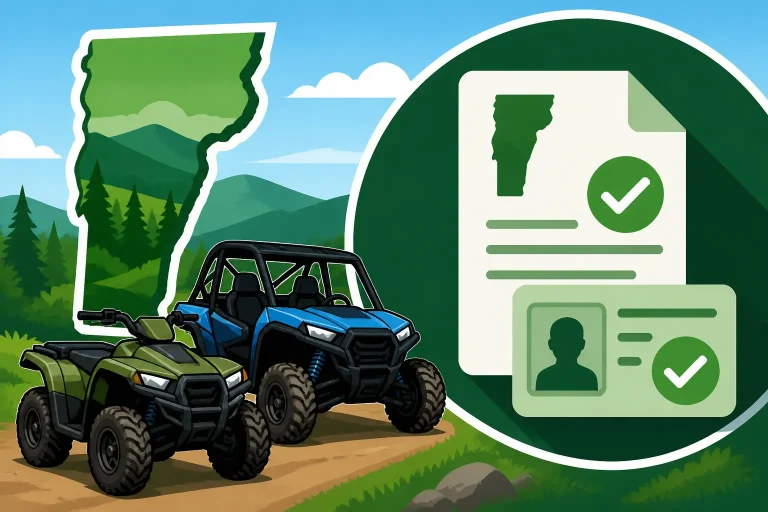
Vermont recognizes Quebec ATV registrations for visiting machines. In practical terms, a visitor with a currently registered machine can generally rely on that home registration rather than registering the machine again in Vermont just for a visit. Reciprocity is about recognizing the registration; it is not a general permission to ride wherever you like.
Carry your Quebec registration document with you, and make sure it identifies the machine you brought. Keep the plate attached and readable. If the machine is registered to someone else, or your name is not shown on the paperwork, bring the owner’s permission as well. A receipt or bill of sale can help explain a recent purchase, but it does not replace valid registration.
The rules can differ if you are moving to Vermont, keeping the machine there, or using it for more than a visit. Reciprocity for a visitor is not the same as registering a machine as a Vermont resident. If your circumstances have changed, review Registering at Home Before You Visit and the rules for Vermont Reciprocity for Out-of-State Machines before riding.
| What you have or plan to do | What to check |
|---|---|
| A Quebec-registered machine used on a Vermont trip | Carry current Quebec registration and keep its plate attached |
| Riding on a VASA corridor | Check whether you need a Vermont Trail Access Decal |
| Riding a road or village route | Confirm that the specific road is open to ATVs and UTVs |
| Bringing a machine covered by a Quebec policy | Confirm the policy covers the machine and riding in Vermont |
| Staying in Vermont or becoming a resident | Check whether Vermont registration is required for your situation |
The distinction between registration and trail access matters most. A machine can be properly registered in Quebec and still be turned away from a trail if the required Vermont access decal is missing, the corridor is closed, or you do not have permission to use the land.
Trail access and the Vermont decal
Vermont’s VASA trail network operates on corridors that depend heavily on landowner permission. A Quebec registration does not substitute for a Trail Access Decal, commonly called a TAD, when one is required for the VASA system. Visitors should check the current decal requirements before traveling, rather than assuming that a home registration or a Quebec trail pass covers Vermont access.
The TAD requirement is specific to the network and its access rules. It does not grant blanket permission to ride on private property, state land, or every town road. Corridors can close or change, and a decal does not override a landowner’s decision to withdraw permission. Check the club or trail information for your intended area close to the trip.
For visitor machines, start with Vermont TAD for a Visitor’s Machine. It explains the visitor decal process and helps distinguish a decal for an out-of-state machine from one for a Vermont-registered machine. You can also read Vermont Requires Registration Plus a TAD for the basic distinction between having a registered machine and having the access credential required on the trail system.
A practical pre-trip sequence is:
- Confirm that the machine’s Quebec registration is current and bring the document.
- Identify the trails or corridors you intend to ride, then check their current access status.
- Confirm whether your machine needs a visitor TAD and arrange it before arriving if possible.
- Check where and how the decal must be displayed. Keep it visible and attached as directed.
- Bring proof of purchase or the owner’s permission if the registration does not clearly establish your right to use the machine.
Do not assume that a road leading to a trail is itself an open ATV route. A town may authorize some roads and keep others closed, and those designations can change. A valid Quebec plate and a TAD do not make a closed road legal to ride. For road access, check Vermont ATV Road Rules: Towns Decide and confirm the status of the specific route with the relevant town or local trail organization.
Insurance, training, and road rules still matter
Reciprocity does not exempt a visitor from Vermont’s operating rules. Before departure, contact your insurer and ask whether the policy covers the specific ATV or UTV while it is being ridden in Vermont. Ask what proof of coverage you should carry, and confirm that the policy does not exclude off-road use or trail riding. A Quebec policy document is useful only if the coverage applies to the machine and activity in Vermont.
Vermont has liability insurance requirements for ATVs. Visitors should verify that their coverage meets the applicable requirements rather than assuming that any insurance card will do. See Vermont ATV Insurance Requirements for more detail. Keep proof accessible on the machine or with the rider, and make sure the registration, plate, and insurance documents all correspond to the machine being used. If your policy covers several machines, confirm that the one you are bringing is specifically included.
Age and training rules deserve the same attention. Vermont has safety-certificate requirements for younger riders, along with supervision rules that depend on age. If a rider in your group is under 18, check Vermont ATV Safety Course Required Under 18 before the trip. Do not assume a Quebec training card or certificate will automatically satisfy Vermont’s requirements; confirm acceptance and any supervision conditions in advance.
Road riding is a separate question from trail riding. Towns decide whether particular roads or road segments may be used, and local restrictions can apply even when a nearby road is open. A machine that is legal on a trail is not automatically legal on a road. Before using a road to reach a trailhead, establish that the segment is designated for ATV use and check for posted limits, seasonal restrictions, and local ordinances.
Also plan for the basics: obey signs and gates, stay on the marked corridor, and turn around if a route is closed or access is unclear. A trail access decal is not a pass to explore adjacent land. For a useful roadside and trailhead checklist, see What a Trail Warden Checks.
A practical checklist for a Quebec-to-Vermont ride
Most problems are preventable with a short document and route check. Before loading the machine, match its registration, plate, insurance, and any trail decal to the machine you are actually taking. If several people are traveling with multiple machines, label or organize the documents so each set can be found quickly.
Keep the following together in a waterproof document pouch:
- Current Quebec registration for each machine
- Proof of insurance that confirms Vermont coverage
- Owner authorization if the machine is not registered to the rider
- Proof of safety training when a rider’s age makes it relevant
- Trail Access Decal information or confirmation, if required
- A map or saved route information showing the corridors you plan to use
A waterproof pouch from an outdoor retailer or Amazon can help protect papers from rain and mud, but it should be secured so it cannot interfere with controls or become a hazard. Keep a backup photo of important documents on your phone, but do not rely on the photo instead of carrying any document that must be presented in its original form.
Then check the route itself. Vermont trail access can depend on club corridors and private landowner permission, so a route that appeared open earlier may have changed. Look for current notices, closures, and trail conditions before setting out. If you are uncertain whether a road or trail segment is open, ask the local club or town rather than relying on a general map or another rider’s old route.
If you are transporting the machine across the international border, verify the current border and customs requirements separately. Reciprocity concerns recognition of registration for riding in Vermont; it does not replace any requirements for bringing a machine into the United States. Keep ownership and registration documents available during travel, and confirm any paperwork needed for your particular situation with the relevant authorities.
The short version is straightforward: valid Quebec registration helps establish that your machine is registered at home, but it does not replace Vermont trail access, insurance, safety, or local road rules. Prepare those pieces separately, and confirm current requirements before leaving. For more on the registration side, see Vermont Recognizes Quebec Registrations.
Disclaimer
This article is for general informational purposes only and does not constitute professional advice. Laws, prices and regulations vary by location and change over time. Consult a qualified professional for guidance on your specific situation.