Why a Decal Costs More From Away
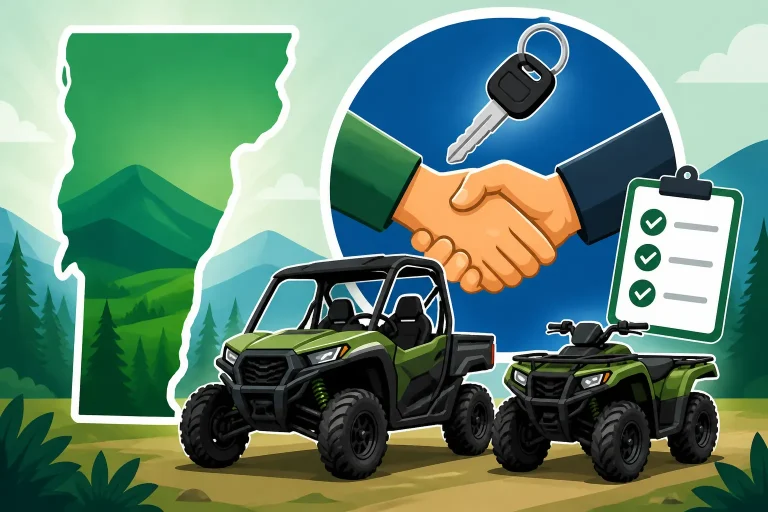
If you ride an ATV or UTV into Vermont from another state, the trail access decal can cost more than it does for a Vermont machine. The difference is easy to mistake for a registration fee or a penalty for being from away. Here’s what the decal covers, how the visitor rate works, and what to check before you travel.
What the Vermont trail access decal pays for
Vermont’s Trail Access Decal, or TAD, is separate from vehicle registration. It is the trail-access requirement for riding on the VASA trail system and participating club corridors. A plate or registration from your home state does not, by itself, take the place of a Vermont TAD.
The decal fee supports access to a trail network that depends heavily on agreements with private landowners and work by local clubs. Club members and volunteers help maintain and sign corridors, address trail conditions, and work with landowners when routes need to change. A TAD is therefore not just a sticker that identifies a machine. It is part of the system that funds and organizes access.
That distinction matters when comparing rates. Registration is handled under the rules that apply to the machine and its owner, while the TAD is tied to access to participating trails. The two requirements serve different purposes and may both apply to the same ride. Vermont Requires Registration Plus a TAD
The decal’s cost may include more than the physical decal itself. Vermont’s TAD structure bundles access with VASA and club dues, so the payment helps support the trail organizations involved in maintaining the network. Vermont TADs Cover VASA and Club Dues The precise allocation and current rates should be confirmed with the organization or club selling the decal, particularly if you are comparing a visitor purchase with a resident purchase.
A visitor should also avoid assuming that buying a decal gives access to every place where an ATV or UTV could physically travel. It covers participation in the applicable trail system, not permission to ride on any private land, public road, or state property. Trail routes, landowner permissions, seasonal closures, and local rules still matter. Vermont Trails Run on Private Land
Why the visitor rate is higher
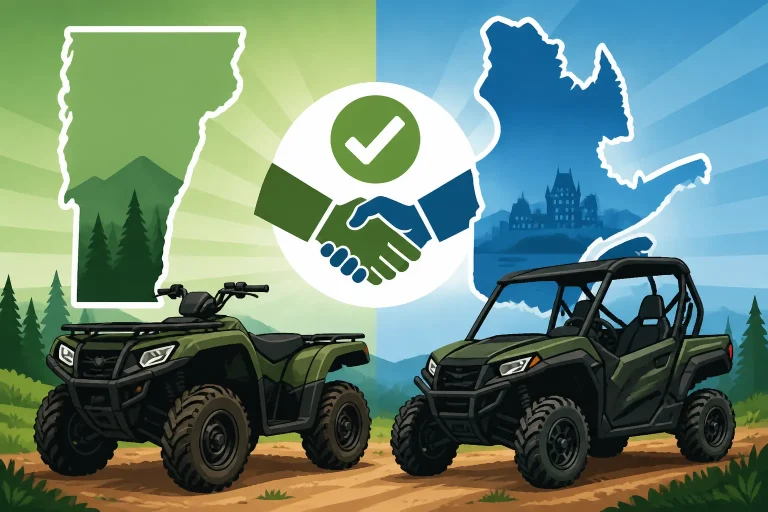
Vermont uses separate TAD rates for Vermont-registered machines and machines registered outside the state. The visitor rate is higher, and the difference is built into the rate structure rather than being a late fee or a special charge assessed at the trailhead.
The rate categories reflect how access is organized and funded. A visitor may not be part of a Vermont club or have an existing membership relationship with the local trail network. The TAD payment can bundle access and club support together, rather than requiring an out-of-state rider to arrange those pieces separately. That is a practical reason the visitor rate can be higher, although riders who want the precise breakdown should ask the seller or relevant organization how the current fee is allocated.
A higher visitor rate is not a sign that an out-of-state registration is invalid. Vermont recognizes some out-of-state registrations under its reciprocity rules, but recognition of a registration and the requirement to obtain a TAD are separate matters. Vermont Reciprocity for Out-of-State Machines Visitors should check the specific rules for their home jurisdiction and machine before assuming that registration reciprocity settles trail access too.
The rates listed for Vermont TADs have distinguished between a machine registered in Vermont and a visitor’s machine. The published amounts have included $80 for a TAD for a Vermont-registered machine and $125 for an out-of-state machine. A second-machine rate has also been listed at $60 for a Vermont-registered machine and $105 for a visitor’s machine. Rates can change, so treat these figures as a comparison of the categories, not a substitute for checking the current amount before purchase. Vermont TAD Cost in 2026
| Machine category | Listed TAD rate | What to check |
|---|---|---|
| Vermont-registered machine | $80 | Confirm the current rate and eligibility |
| Second Vermont-registered machine | $60 | Check how the second-machine rate is applied |
| Out-of-state machine | $125 | Confirm whether your registration qualifies for the visitor category |
| Second out-of-state machine | $105 | Ask whether the reduced rate applies to your additional machine |
The point of the comparison is the structure: visitors pay more than Vermont-registered riders, and a second machine may have a different rate. Don’t assume that “second machine” means a second rider, a passenger’s vehicle, or any machine in your group. It generally refers to an additional machine in the relevant purchase category. Check the current seller instructions to see how multiple machines must be entered and whether each machine needs its own decal. [Vermont TAD for a Second Machine]
Registration, reciprocity, and the TAD are different
A common source of confusion is treating a TAD as if it were a Vermont registration. They are not interchangeable. Registration documents the machine under applicable vehicle rules; the TAD concerns access to the participating trail system.
For visitors, that means two questions need separate answers:
- Is the machine properly registered for the trip, including under any applicable reciprocity rules?
- Does the machine have the Vermont trail access decal required for the trails you plan to ride?
A visitor who has a valid registration from home may still need a Vermont TAD. Conversely, buying a TAD does not fix an expired, missing, or otherwise inadequate registration. Vermont Out-of-State Machines Still Need a TAD Carry the required registration paperwork and make sure the machine displays the decal as directed.
This separation also helps explain why the visitor fee is not necessarily calculated as a simple conversion of the resident fee. The state registration category and the trail-access purchase are distinct, and the decal rate can reflect the access and club-support structure attached to the TAD. If your machine’s classification is unusual, or you are unsure whether it counts as an ATV or an ASV under Vermont rules, confirm that before buying. The vehicle class can affect registration requirements, while the TAD has its own access rules. Vermont ATV Versus ASV Classes
Before leaving home, check all of the following:
- Your machine’s registration is current and appropriate for the jurisdiction where it is registered.
- The machine qualifies for the TAD category you plan to purchase.
- You know whether each machine in your group needs its own decal.
- The decal is placed where Vermont’s instructions require it.
- Your route is open to the type of machine you are bringing.
- You have any other required documents or equipment for the ride.
A valid TAD does not override local road rules or trail closures. Town roads may have separate restrictions, and a club corridor can close when conditions or landowner requests require it. If your trip includes town-road riding, check the rules for each town rather than relying on the trail decal as general permission to ride. Vermont ATV Road Rules by Town
How to buy the right decal before you travel
Buying ahead can prevent a frustrating delay at a trailhead or local shop. Start by identifying the machine’s registration jurisdiction and the number of machines you plan to bring. Then use the current TAD instructions to select the proper category. If a machine is registered to a business, leased, newly purchased, or registered in a jurisdiction with different terminology, ask the seller to confirm which category applies instead of guessing.
Use this process:
- Confirm your registration details. Check the registration document and identify the jurisdiction that issued it. Do not rely only on where you live or where you bought the machine.
- Count the machines. Each machine may have its own decal requirement. A group order is not necessarily one decal for the whole group.
- Check the current fee and eligibility. Rates and purchase procedures can change. Confirm the amount and the visitor or second-machine category with the current seller.
- Buy through an authorized channel. Follow the current instructions for online or in-person purchases, and keep any receipt or confirmation with your riding documents.
- Apply the decal as instructed. Place it on the machine in the designated location and keep it visible and attached.
- Check trail conditions and access. Make sure the routes you intend to use are open and that you have permission for any riding outside the participating trail network.
If you are bringing several machines, make the purchase details clear before paying. Ask whether the additional-machine rate applies to the same owner, the same order, or another condition set by the seller. Also ask what happens if you enter the wrong registration information or need to replace a decal. Those details are easier to settle before the trip than after arrival. Buying a Decal Before You Travel
Keep the decal and registration paperwork separate in your mind, even if you store them together. A receipt can help document your purchase, but it is not a replacement for displaying the decal correctly or carrying required vehicle documents. Carrying Both Plate and Decal
What the higher fee does not mean
The visitor rate can feel like a surcharge, especially when you are already paying to transport a machine, arrange lodging, or join a local ride. But it should not be read as a fee for crossing the state line, a penalty for having an out-of-state plate, or a guarantee that every corridor will be open during your visit.
It also does not automatically include other costs that may arise during a trip. Depending on the ride and local rules, you may need to consider insurance, registration, trail conditions, town-road access, and any required training or safety equipment. A TAD does not replace those requirements. Vermont ATV Insurance Requirements
Nor does purchasing the decal make a visitor a member of every club or grant unrestricted access to land. The decal supports the trail-access arrangement, but individual corridors depend on permission and ongoing cooperation. Some trails may be rerouted or closed, and seasonal conditions can affect access. Follow signs and club directions, stay on marked corridors, and do not ride around a closed gate or wet section to keep a planned route intact.
The fairest way to evaluate the higher rate is to compare what each category covers and how the trail system is maintained. Visitors pay more under the separate visitor category, while the decal fee contributes to the access and club structure that makes organized trail riding possible. If you want a detailed explanation of the current split between access and dues, ask the seller or relevant club before purchasing rather than assuming the entire difference is a general state fee.
For trip planning, the practical takeaway is straightforward: budget for the visitor TAD separately from registration, buy one for each machine as required, verify the current rate, and check the route before setting out. That keeps a fee difference from becoming a paperwork problem at the start of your ride.
Frequently Asked Questions
Do out-of-state riders need a Vermont TAD?
Visitors generally need a TAD to ride the participating Vermont trail system, even when their machine has a valid registration from home. Registration reciprocity and trail access are separate requirements.
Why does a visitor pay more?
Vermont has separate rate categories for Vermont-registered and out-of-state machines. The TAD bundles trail access with support for VASA and club dues; ask the current seller for details about the fee allocation.
Does one decal cover every machine in a group?
Do not assume so. Check the current instructions for each machine and ask whether a second-machine rate applies to your purchase. The decal requirement is tied to the machine, not simply the group.
Can a TAD be used on any Vermont road or private trail?
No. A TAD is not general permission to ride anywhere. Town-road rules, trail closures, landowner permission, and other requirements still apply.
Disclaimer
This article is for general informational purposes only and does not constitute professional advice. Laws, prices and regulations vary by location and change over time. Consult a qualified professional for guidance on your specific situation.