Vermont Tax on an Out-of-State Purchase
So, you've been searching far and wide for that perfect ATV or UTV, perhaps you found a fantastic deal just across the state line in New Hampshire, New York, or even further afield. You snagged it, shook hands, and now you're bringing it home to Vermont, eagerly anticipating hitting those gorgeous trails. But then a thought nags at you: "Wait, does Vermont want a piece of this action, even though I bought it somewhere else?" It's a completely understandable concern, and it's one that many riders face. This guide will walk you through Vermont's Purchase and Use Tax for vehicles brought into the state from an out-of-state purchase, so you can avoid any unwelcome surprises and get your machine registered smoothly.
Understanding Vermont's Purchase and Use Tax for Out-of-State Buys
Let's cut right to it: yes, Vermont generally expects you to pay a Purchase and Use Tax on an ATV or UTV you buy outside the state, just as if you had bought it from a dealer or private seller right here in Vermont. This isn't Vermont trying to be difficult; it's actually designed to create a level playing field. Imagine if everyone could just pop over the border, buy a machine tax-free, and bring it back – local Vermont dealerships would be at a significant disadvantage, and the state would miss out on revenue that helps fund essential services. The Purchase and Use Tax ensures that the financial obligations for owning and operating these machines in Vermont are consistent, regardless of where the initial transaction took place.
Think of it this way: the tax isn't strictly on the "purchase" itself in another state, but on the "use" of that machine within Vermont. When you bring your newly acquired ATV or UTV into Vermont and intend to register it here, you are essentially bringing it into the state's tax jurisdiction for its ongoing use. This applies whether you're buying a brand new machine from a huge powersports dealership over the border or picking up a well-loved used one from a private individual. The principle remains the same. You'll definitely want to understand [Vermont Purchase and Use Tax on an ATV] fully as you plan your purchase and registration.
The Vermont Department of Motor Vehicles (DMV) handles the collection of this tax at the time of registration. This means you won't typically be sending a separate check to the tax department; it's all part of the process when you go to get your Vermont plate. It’s a crucial step in [How to Register an ATV in Vermont], and skipping it means your machine simply won't get a valid Vermont registration.
Calculating and Paying the Tax When You Bring a Machine In
When you're bringing an ATV or UTV into Vermont that you bought out-of-state, the calculation for the Purchase and Use Tax is fairly straightforward, mirroring how it's done for in-state sales. The tax rate is a percentage of the purchase price. You'll find the current percentage by looking into [Vermont Purchase and Use Tax Rate]. It's applied to the "net" purchase price, which is generally the price you paid for the machine, minus any trade-in value if you swapped another vehicle.
To pay this tax, you'll do so directly at the Vermont DMV when you go to register your machine. They won't issue you a registration or plate until this tax is either paid or an exemption is clearly established. This means having all your ducks in a row with your paperwork is absolutely essential.
Documenting Your Purchase Price
This is where many people can run into snags. The DMV needs clear, verifiable proof of what you actually paid for the machine. For a new ATV or UTV bought from a licensed dealer, this is usually easy: you'll have a formal sales invoice or bill of sale that clearly shows the purchase price, any trade-in value, and any sales tax already paid (more on that later).
However, if you purchased your machine from a private seller out-of-state, you absolutely need a detailed and properly executed bill of sale. A simple handwritten note saying "I sold this quad to [your name] for $X" might not be sufficient for the DMV, especially if the price seems unusually low or high compared to market value, or if it lacks specific identifying information about the machine. I can't stress this enough: a thorough bill of sale protects both the buyer and the seller and makes the registration process much smoother.
When creating a bill of sale for a private sale, make sure it includes:
- The full names and addresses of both the buyer and seller.
- The date of the sale.
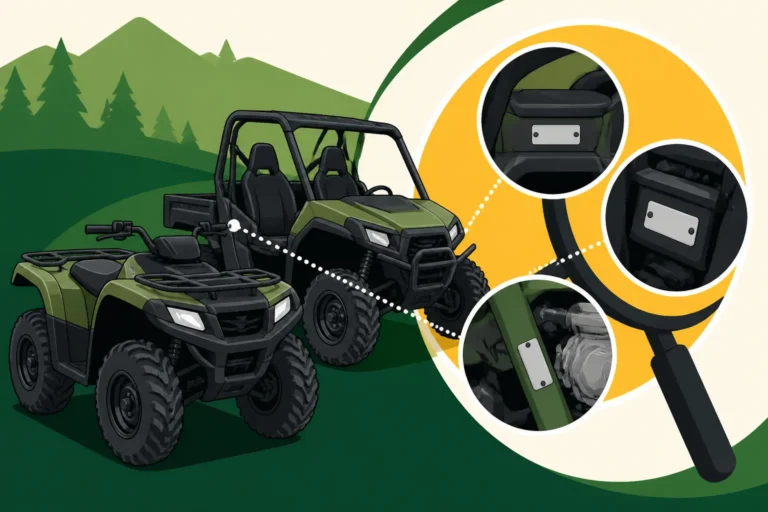
- A clear, detailed description of the ATV/UTV, including make, model, year, and most importantly, the Vehicle Identification Number (VIN).
- The exact purchase price in numerical and written form.
- A statement that the vehicle is being sold "as-is" (or any other agreed-upon conditions).
- Signatures of both parties.
If you're unsure how to draft a legally sound document, especially for a private transaction, consider using a reputable online template service like LawDepot. They offer customizable bill of sale templates that can help ensure you cover all the necessary bases for the Vermont DMV, preventing delays down the line. Having a robust bill of sale is crucial for [Writing a Bill of Sale the Vermont DMV Accepts]. This is even more important for [Vermont Registration for a Machine Bought Out of State], as the DMV will scrutinize out-of-state purchases closely.
When You Pay the Tax
The Purchase and Use Tax is collected at the same time you apply for your initial Vermont registration. It's not a separate step you complete beforehand. When you arrive at the DMV with your [Vermont Registration Paperwork Checklist] completed, including your title or Manufacturer's Certificate of Origin (MCO) and your bill of sale, the clerk will calculate the tax owed based on the purchase price documented. You'll then pay this amount along with your registration fees and any title fees.
Exemptions and Special Circumstances
While the general rule is that Vermont's Purchase and Use Tax applies to most out-of-state ATV and UTV purchases, there are specific situations where you might be exempt or where the tax calculation is modified. It's crucial to understand these, as they could save you a significant amount of money or clarify your obligations. For a full breakdown, you should review [Vermont Purchase and Use Tax Exemptions].
Gift Transfers
One of the most common exemptions is for vehicles received as a bona fide gift. If an ATV or UTV was truly given to you, without any money or other consideration changing hands, it might be exempt from the Purchase and Use Tax. However, this isn't a loophole to avoid tax; the DMV has strict requirements to prove it's a genuine gift, especially if it's not from an immediate family member.
Typically, for a gift transfer, you'll need to submit an affidavit or a specific form provided by the DMV that declares the vehicle was a gift and details the circumstances. This document will need to be signed by both the donor and recipient, often notarized. Using a legal document service like LawDepot for an affidavit of gift can provide the formal structure the DMV often looks for, ensuring all pertinent details are included to satisfy the requirements for [Vermont Tax Exemption for a Gift].
Keep in mind that gifts between unrelated parties might face more scrutiny. The DMV is looking for genuine transfers of ownership, not a disguised sale.
Trade-Ins and Prior Sales Tax Paid
If you traded in another vehicle as part of your out-of-state ATV or UTV purchase, the value of that trade-in will reduce the amount subject to the Purchase and Use Tax. For example, if you bought an ATV for $8,000 and traded in an old snowmobile for $2,000, you would only pay tax on the remaining $6,000. Your bill of sale needs to clearly show the trade-in allowance for the DMV to apply this credit. This is an important detail when considering [Vermont Tax Credit for a Trade-In].
What about sales tax already paid in another state? This is a point of common confusion. Vermont does not offer a credit for sales tax paid in another state on ATVs or UTVs. Unlike some states that have reciprocity agreements for sales tax on road vehicles, Vermont's Purchase and Use Tax on ATVs/UTVs is applied independently. So, even if you paid sales tax in New Hampshire (which typically doesn't have it) or Massachusetts, you would still owe the full Vermont Purchase and Use Tax when you register your machine here. This is a critical difference to remember compared to how sales tax might be handled for cars or trucks.
Here's a quick comparison of how the tax generally applies:
| Purchase Scenario | Vermont Purchase and Use Tax Application | Key Documentation Needed |
|---|---|---|
| New Machine from Out-of-State Dealer | Yes, full tax on the net purchase price. No credit for sales tax paid in another state. | Dealer's Bill of Sale/Invoice, MCO (Manufacturer's Certificate of Origin) |
| Used Machine from Out-of-State Private Seller | Yes, full tax on the purchase price. Value declared on bill of sale. | Detailed Bill of Sale (consider LawDepot template), previous owner's title (if applicable) |
| Gift from Out-of-State Family/Friend | Possibly exempt, if a genuine gift with no consideration. Strict requirements. | Signed/Notarized Gift Affidavit (e.g., from LawDepot), previous owner's title (if applicable) |
| Out-of-State Purchase with Trade-In | Tax applied to the purchase price minus the trade-in value. No credit for sales tax paid in another state. | Bill of Sale/Invoice clearly showing trade-in value, MCO or previous title |
| Inherited Machine from Out-of-State | Generally exempt, but requires official probate documents or specific affidavits to prove inheritance. | Will/Probate documents, Death Certificate, Ownership Affidavit (e.g., from LawDepot if no will) |
Remember that official forms and requirements can change, so always double-check the latest information on the Vermont DMV website or contact them directly. For situations like [Filing an Ownership Affidavit at the Vermont DMV] after inheriting a machine, clear documentation is paramount.
What Happens If You Don't Pay?
Ignoring the Purchase and Use Tax on an out-of-state ATV or UTV purchase isn't really an option if you plan to legally ride it in Vermont. The system is set up to ensure compliance, and there are clear consequences for trying to bypass this requirement.
Registration Denial
The most immediate consequence is that you simply won't be able to register your ATV or UTV in Vermont. The DMV clerk will not process your application for a plate or registration sticker until the Purchase and Use Tax (or proof of a valid exemption) has been satisfied. This means your machine will sit unridden, or worse, you might be tempted to ride it without proper registration. For more information on what you need for a smooth registration, consult the article on [Vermont Registration Paperwork Checklist].
You might think, "Well, I'll just ride it on private land," but even there, if you ever need to transport it on public roads (even just from your driveway to a friend's house down the street), you're exposing yourself to legal issues. Furthermore, without registration, you won't be able to obtain a [Vermont TAD: The Trail Access Decal Explained] which is absolutely necessary to ride on the VASA trail system.
Enforcement and Penalties
Riding an unregistered ATV or UTV on public lands, designated trails, or even crossing a public road (where allowed by town ordinance) is a violation of Vermont law. Wardens, state police, and local law enforcement officers regularly patrol these areas. If you're stopped and your machine isn't properly registered, you could face significant penalties. These can include fines, and in some cases, your machine could even be impounded. You definitely want to avoid [Vermont Penalties for Riding Unregistered].
Beyond the initial fines, having a history of violations can also impact future interactions with law enforcement and the DMV. It's simply not worth the risk. The small amount you might "save" by trying to avoid the Purchase and Use Tax pales in comparison to the potential legal fees, fines, and headaches that come with a violation.
Even if you managed to get a plate from another state, Vermont law requires Vermont registration for machines primarily garaged and used here. This isn't just about a sticker; it's about being a responsible, legal rider within the state. When you consider [Vermont Tax on a Private ATV Sale], the process for an out-of-state purchase is ultimately similar in its tax implications. It’s always best to be upfront and follow the regulations from the start, ensuring your adventures on Vermont's beautiful trails are always worry-free.
Disclaimer
This article is for general informational purposes only and does not constitute professional advice. Laws, prices and regulations vary by location and change over time. Consult a qualified professional for guidance on your specific situation.