Vermont Riding in Orleans County
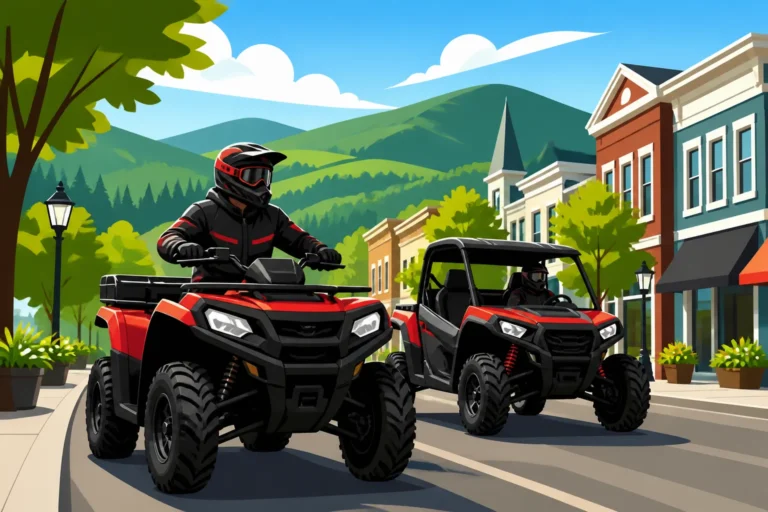
Ah, Orleans County. There's a certain magic to the Northeast Kingdom, isn't there? Those rolling hills, the dense forests, the glimmering lakes – it’s a paradise for anyone looking to escape the daily grind. For ATV and UTV enthusiasts, the thought of exploring these breathtaking landscapes on four wheels is incredibly appealing. However, the reality of legally riding your machine on the roads and connecting those incredible trails in Vermont, especially in a region like Orleans County, can feel like navigating a complex maze of rules and regulations. This guide is here to untangle that web, helping you understand how to enjoy the beauty of Orleans County from your ATV or UTV, legally and responsibly.
The Unique Landscape of ATV and UTV Riding in Orleans County
Orleans County truly embodies the heart of Vermont's Northeast Kingdom. With its vast tracts of undeveloped land, numerous lakes, and charming small towns like Newport, Derby, and Craftsbury, it offers an enticing backdrop for off-road adventures. Many riders are drawn to the promise of extensive trail networks. However, unlike some states where it's a free-for-all, Vermont's approach to ATV and UTV riding, particularly when it comes to road access, is carefully managed and often highly localized. This means that while the scenery is incredible, you can't just hop on your machine and go wherever the spirit moves you.
The core of the riding experience in Orleans County often revolves around the Vermont ATV Sportsman's Association (VASA) trail system. These trails are a phenomenal resource, offering hundreds of miles of riding opportunity. Yet, these trails frequently cross or connect via town roads, which is where the "street legal" question really comes into play. Riders often get frustrated because a perfectly legal trail can abruptly end at a paved road, leaving them wondering if they can even cross it, let alone ride a short distance down it to the next trail segment. Understanding the relationship between these designated trails and the public roads is the first critical step to riding successfully here.
What makes Orleans County particularly interesting, and sometimes challenging, is the mosaic of land ownership and local governance. You have private land that VASA clubs have secured permission to cross, state land with its own restrictions, and town roads that are under the jurisdiction of local selectboards. This creates a patchwork where what's permissible in one town might be strictly prohibited in an adjacent one. It's a reality that demands diligent research and a respectful approach from every rider.
Navigating Town Ordinances and Road Access in Orleans County
When it comes to riding your ATV or UTV on public roads in Vermont, the cardinal rule is: towns decide. This isn't a statewide mandate allowing ATVs on all secondary roads; rather, each town's selectboard must actively vote to open specific roads, or portions of roads, to ATV traffic. This creates a highly localized set of rules that can be incredibly confusing if you're not prepared. For example, while you might find [Newport City's ATV Routes in Vermont] clearly designated, another town just a few miles away might have decided against opening any roads at all.
This town-by-town approach means that your detailed planning is paramount. You can't assume that because you rode on a town road in one part of Orleans County last year, the same rules apply everywhere, or even that they haven't changed in that specific town this year. Selectboards often review and renew their ordinances annually, and sometimes they choose not to renew them, or they amend specific conditions like speed limits, curfews, or even which roads are open. It’s a dynamic landscape, and staying informed about [Vermont Town Ordinances That Set Curfews] or other specific rules is essential for a stress-free ride.
Before you even load up your machine, it's wise to consult the local VASA club for the area you plan to ride, or directly check the websites of the town clerk's offices for the towns you intend to traverse. Many towns that do open roads will have their specific ATV ordinances published. These documents will outline not just which roads are open, but also the specific conditions, such as required safety gear, hours of operation, and even speed limits. Failing to check these can lead to fines and a ruined ride, highlighting why a thorough understanding of [Vermont ATV Road Rules by Town] is so important.
The Nuances of Local Rules: Speed Limits and Curfews
Even when a town in Orleans County opens its roads to ATVs and UTVs, it's never a blank check to ride as you please. Local ordinances almost always include specific restrictions designed to ensure safety and minimize disturbance to residents. Speed limits are a common example; while the posted speed limit for cars might be 35 mph, the ATV ordinance could cap it at 20 mph or even lower, especially in village areas. This is often to reduce noise and dust, which are common complaints from residents.
Curfew hours are another frequently encountered regulation. Many towns in Orleans County, like those mentioned in discussions about [Newport City's Curfew Hours in Vermont], might restrict ATV use on town roads after dark, or after a certain evening hour like 9 p.m. or 10 p.m. This is primarily to address noise concerns and ensure peace for residents. Ignoring these curfews, even if you’re just trying to get back to your lodging after a long day on the trails, can result in a citation and dampen the spirit of your adventure. It's not uncommon for local law enforcement or game wardens to patrol these areas, especially during peak riding season.
Understanding these nuances is key to being a respectful and responsible rider. It’s not just about avoiding a ticket; it’s about maintaining positive relationships with the local communities and landowners who make the VASA trail system possible. When riders consistently disregard local rules, it creates tension and can lead to towns closing off routes that were once open, diminishing the overall riding opportunities for everyone. So, always ride with the local rules firmly in mind, and if you’re unsure, err on the side of caution.
Essential Vermont Regulations for Street-Legal ATV/UTV Use
Beyond the specific town ordinances, there are overarching state-level requirements that every ATV and UTV operator must meet before even considering riding on any public road in Orleans County or anywhere else in Vermont. These foundational rules cover everything from registration to insurance and operator qualifications, and they are non-negotiable. Without these, even if a town has opened its roads, you are riding illegally.
First and foremost, your machine must be registered with the Vermont Department of Motor Vehicles (DMV). This isn't just a suggestion; it's a legal requirement for any ATV or UTV operated on public lands, VASA trails, or designated town roads. The cost and duration of registration can vary, with options for one or two years. You'll need proof of ownership, and possibly pay [Vermont Purchase and Use Tax on an ATV] if you haven't already. Without that little green plate mounted clearly on the rear of your machine, you're looking at potential fines.
Equally critical is insurance. Vermont law mandates that all ATVs and UTVs operated on public roads or designated trails carry specific liability insurance. This isn't optional; it's there to protect you and others in case of an accident. The minimum coverage limits are set by state law and include bodily injury and property damage. Make sure your policy specifically covers ATV/UTV use, as a standard auto policy often won't. [Vermont ATV Insurance Requirements] are quite clear on this, and wardens will check for proof. You should always carry a physical or digital copy of your insurance card with you while riding.
Helmet Laws and Operator Requirements
Vermont takes rider safety seriously, especially when it comes to head protection. The state has a universal helmet law for ATVs and UTVs, meaning every rider, regardless of age, must wear a helmet. This isn't just for kids or inexperienced riders; it applies to everyone. The helmet must meet safety standards, such as those set by the U.S. Department of Transportation (DOT). This is a critical safety measure, and it's enforced. It's a simple rule, but one that can literally save your life and prevent serious injury during an unexpected tip or collision.
Beyond helmets, there are also rules concerning who can operate an ATV or UTV, especially on public roads. While there isn't a specific "ATV license" in Vermont, riders must be of a certain age and, in some cases, have completed a safety course. For example, riders under 18 years old typically need to have passed a Vermont-approved ATV safety course. [Vermont ATV Safety Course Required Under 18] is a key regulation to be aware of if you have younger riders in your group. Moreover, if you're riding on public roads, having a valid driver's license can be a requirement in many town ordinances, even if it's not strictly a state-level ATV license.
Finally, while not a "street legal" requirement in the same vein as registration or insurance, for machines used on the VASA trail system (which often connects via town roads), you'll also need a VASA Trail Access Decal (TAD). This decal funds the maintenance and development of the trails. It's a separate requirement from registration, and you absolutely need both to legally ride on VASA trails and connect them via town-designated routes in Orleans County. [Vermont TAD: The Trail Access Decal Explained] details this further.
Equipping Your Machine for Road Use
Just having a registered and insured machine isn't enough for legal road use in an open town. Your ATV or UTV also needs to meet certain equipment standards to be considered "street legal" in the eyes of a town ordinance, and for general safety when interacting with other vehicles. These typically include functional headlights and taillights, which are essential for visibility, especially if you're riding in conditions with reduced light or if a town allows evening access. Many riders also add turn signals and a horn if their machine isn't factory-equipped with them. These are crucial communication tools on the road.
Mirrors are another commonly required item. Having at least one rearview mirror, and often two, is critical for situational awareness when sharing roads with cars and trucks. For those looking to upgrade or add these essential items, companies like SuperATV offer a range of aftermarket parts, from full signal kits to robust mirrors that can withstand the rigors of off-road use while providing road-legal functionality. It's about ensuring you can see and be seen.
Beyond the basics, good tires are also essential. While aggressive mud tires are fantastic on the trail, they can be loud and wear quickly on pavement, and may not provide optimal traction for road speeds. Ensuring your brakes are in excellent working order is also non-negotiable. Ultimately, preparing your machine for road use means ensuring it has all the necessary safety and communication features to coexist safely with other vehicles, even for short stretches.
Planning Your Orleans County ATV Adventure
With the legalities understood, you can now focus on the exciting part: planning your ride! Orleans County offers an incredible diversity of terrain and scenery. To make the most of your trip, some strategic planning can elevate your experience from good to unforgettable, all while staying within the bounds of the law and respecting the land.
One of the most important tools in your planning arsenal will be a current VASA trail map for Orleans County. These maps are invaluable for identifying the designated trails and, crucially, the specific town roads that are open for ATV use. Remember, not every dirt road or back road is open. A VASA map, often available through local clubs or online, will clearly show the approved routes and connections. Always check for updates, as trail conditions and road access can change, especially after severe weather or due to landowner requests.
Additionally, contacting the local VASA clubs in Orleans County, such as the Border Line Ridge Riders near Newport, can provide you with invaluable local knowledge. These club members are the boots on the ground, maintaining the trails and working with landowners and town officials. They often have the most up-to-date information on trail conditions, recent closures, and any specific quirks of local ordinances. Their insights can save you time, prevent navigational errors, and help you discover hidden gems.
Responsible Riding Practices in the Northeast Kingdom
Riding responsibly is not just about following the law; it’s about preserving the privilege of riding in a beautiful place like Orleans County. The VASA trail system largely relies on the goodwill of private landowners who grant permission for trails to cross their property. Abusing this privilege through disrespectful behavior, littering, excessive noise, or trespassing can quickly lead to trail closures. Always stay on marked trails and designated roads, and never venture onto private land without explicit permission.
Environmental stewardship is another critical aspect. Vermont's natural beauty is fragile, and riders have a responsibility to minimize their impact. This means "treading lightly," avoiding riding in excessively muddy conditions that can cause deep ruts and erosion, and packing out everything you pack in. Be particularly mindful of [Vermont Mud Season Closures] and respect them; these closures are put in place to protect both the trails and the surrounding environment from damage.
Finally, remember that you are often sharing the roads and trails with others. This includes hikers, cyclists, horses, and even log trucks or farm equipment on some back roads. Always yield to non-motorized users, pass at a slow speed, and be courteous. Reduce your speed when passing homes or approaching populated areas, and be mindful of your machine's noise levels. Riders who exemplify courtesy and respect are the best ambassadors for the sport and help ensure that opportunities for [Vermont Riding in Orleans County] continue for years to come.
Table: Sample Town Road Access Considerations in Orleans County
To illustrate how varied regulations can be, here’s a simplified look at what riders might encounter when assessing town road access within Orleans County. Remember, these are hypothetical examples to show the types of rules; always check current local ordinances for precise details.
| Town (Hypothetical) | Status of ATV/UTV Road Access | Speed Limit on Open Roads | Curfew for ATV/UTV Use | Specific Restrictions/Notes |
|---|---|---|---|---|
| Newport City | Select routes designated for connectors | 25 mph within village limits | 10 PM – 7 AM | No direct trail access; connects VASA trails to amenities. |
| Derby | Limited Class 3 & 4 roads open | 20 mph on designated dirt roads | 9 PM – 6 AM | Only specific segments open, often connecting VASA trails. |
| Barton | No municipal roads currently open | N/A | N/A | Strict "no ATV on town roads" policy. |
| Craftsbury | Select Class 3 roads open seasonally | 15 mph in residential zones | No specific curfew stated | Focus on connectivity, seasonal closures may apply. |
| Jay | Some Class 4 roads open, no paved | Max 30 mph | None explicitly stated | Primitive roads, often shared with logging trucks. |
This table emphasizes the importance of checking each town's specific ordinance. What's open in one area might be entirely closed a few miles down the road, making pre-trip research an absolute must for a seamless and legal riding experience.
Disclaimer
This article is for general informational purposes only and does not constitute professional advice. Laws, prices and regulations vary by location and change over time. Consult a qualified professional for guidance on your specific situation.