Vermont Riding Areas With Group Rides
Planning a Vermont ATV group ride can get complicated fast: trails cross private land, access changes with conditions, and a route that works for two machines may be awkward for a dozen. This guide explains where riders commonly organize outings, how to find the club responsible for an area, and what to check before inviting everyone to meet at a trailhead.
Where to look for group riding in Vermont
Start with the VASA trail network
The Vermont Association of Snow Travelers, or VASA, coordinates a statewide ATV trail network with local clubs and participating landowners. That makes club information a sensible starting point when you want to join a ride or plan one with friends. A mapped corridor is not simply an open public road, though: access depends on permissions, posted routes, seasonal conditions, and the applicable trail requirements. Learn how the network works in Vermont ATV Trails: The VASA System.
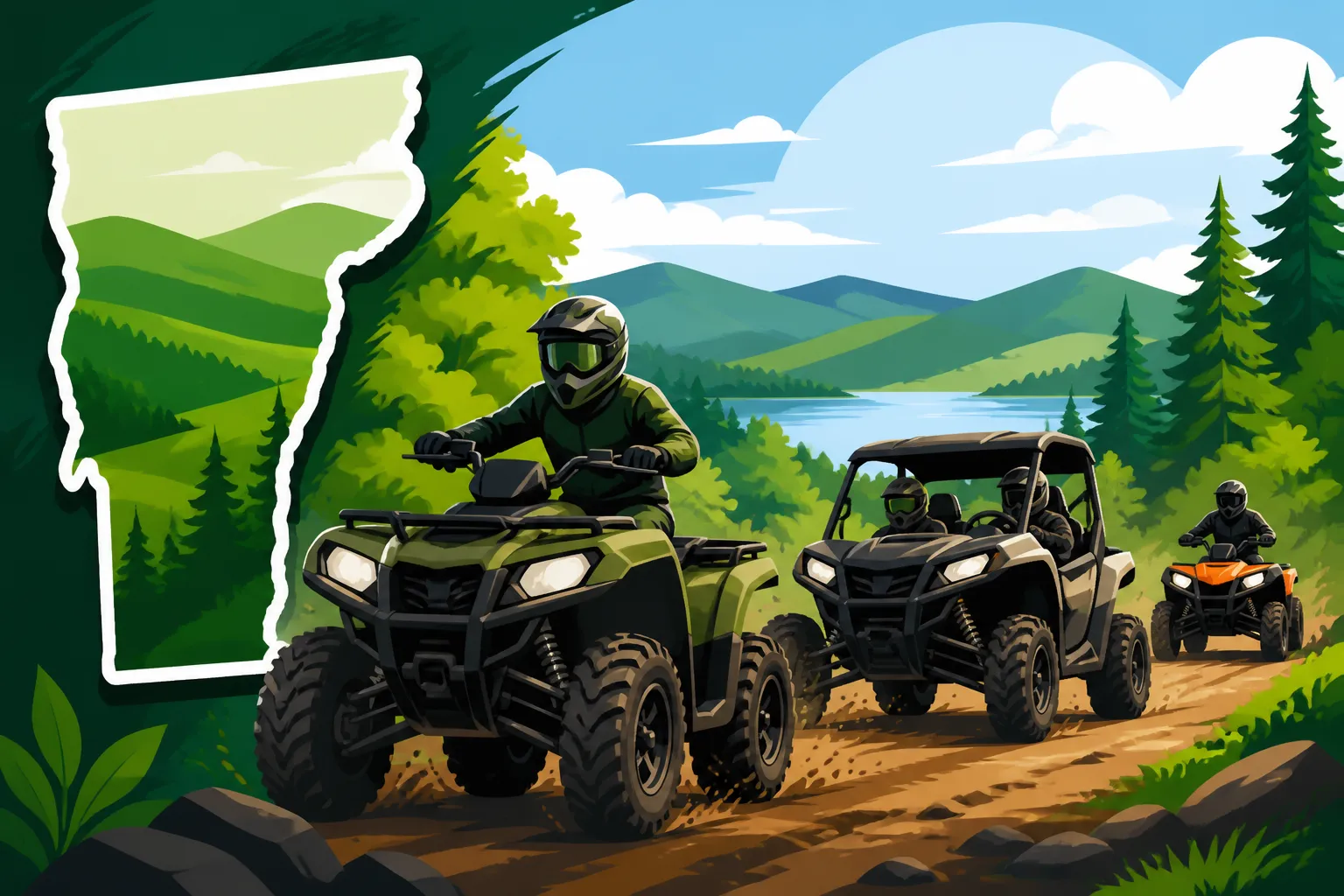
Vermont riding areas often appeal to groups because the experience is as much about traveling through the countryside together as it is about reaching a particular destination. A day may include forest corridors, old roadbeds, farmland, and connections between communities. What is rideable can vary by location and date, so don’t assume a trail shown on an older map is open today. Check the local club’s updates before you trailer machines or promise a route to visitors.
Group access also depends on preparation. Riders generally need to meet the applicable registration and Trail Access Decal requirements, and should confirm insurance, safety, and equipment rules for their circumstances. A visitor should not assume that a plate or trail pass from home automatically covers every Vermont requirement. [Vermont Requires Registration Plus a TAD] explains why it is important to check both access pieces before heading out.
Explore the Northeast Kingdom and other club areas
The Northeast Kingdom is a popular place to start researching a Vermont ride. Island Pond, Newport, and Derby are familiar reference points for riders looking at the region, but the nearest town is not a guarantee that a particular trail is open or that a group can ride directly through it. Local clubs maintain and communicate about their own corridors, so look for the club connected to your intended route. [Finding the VASA Club That Maintains Your Local Trail] is a useful next step.
Other parts of Vermont have local clubs and riding corridors too, including areas around Barre and Rutland. Rather than choosing an area only because it sounds convenient, compare the route access, staging options, group size, and current trail conditions. A group arriving from different directions may find it easier to meet near the riding area than to attempt a complicated multi-town route together. Vermont ATV Clubs and What They Maintain can help you understand why club-level information matters.
Use this table as a starting point for research, not as confirmation that a route is open or suitable for your group.
| Area to research | Useful starting points | Good questions for a group |
|---|---|---|
| Northeast Kingdom | Island Pond, Newport, Derby, and the local clubs serving those areas | Which club maintains the route? Where can the group stage? Are the intended corridors open? |
| Central Vermont | Barre and nearby club areas | Can riders meet without blocking a road or trailhead? Does the route suit a mixed-experience group? |
| Rutland County | Rutland and the clubs maintaining nearby corridors | What access is available on the planned day? Are there closures or landowner requests to know about? |
| Any Vermont riding area | The club responsible for the specific trail corridor | What are the current access, decal, parking, and trail-use requirements? |
How to find an organized ride or build your own
Ask local clubs about rides and events
If you would rather join a ride than plan every detail, contact the club responsible for the area you want to visit. Clubs may share information about volunteer days, gatherings, or organized events, but schedules and access details should be confirmed directly rather than assumed from an old event listing. A club can also tell you whether an outing is open to nonmembers, whether advance arrangements are needed, and what participants should bring.
An organized event can be especially helpful for newer riders. You have a clearer meeting plan, a group with local knowledge, and a chance to learn how people travel through shared corridors responsibly. For a charity ride or poker run, check event requirements before registering: event rules, route access, staging, and participant expectations may differ from an informal ride with friends. See Vermont Poker Runs and Charity Rides for more on that kind of outing.
When contacting a club, be specific. Tell them roughly how many machines you expect, whether riders are visitors, what experience levels are represented, and when you hope to ride. A question such as “Is there an open route for twelve machines?” is more useful than asking for a general recommendation. If the group is large, ask whether it should split into smaller riding units or choose a less busy time.
Plan a private group ride with a local contact
For an informal outing, appoint one person to coordinate with the local club and keep the plan in one place. That person can confirm the route, relay changes, share the meeting location, and make sure every rider understands the access requirements. For groups traveling from different towns, send the details early and ask people to confirm that their machine and paperwork are ready before the trip.
A map app such as onX Offroad can help with advance route planning and orientation, but treat it as one planning aid rather than permission to ride. Compare what you see there with current club information and official trail signs. A line on a screen is not proof that a corridor is open, that a landowner’s permission remains in place, or that a route allows your whole group through. Carry the club’s recommended map or instructions as well, especially where phone coverage may be limited.
That extra confirmation can prevent a frustrating morning. Imagine several trucks and trailers arriving at a gate after a long drive, only to discover that the corridor is closed or that the group misunderstood where parking was allowed. A brief check with the maintaining club before departure is far easier than trying to improvise a legal route on the spot.
Make the ride work for the whole group
Choose a route for the least experienced rider
A route that feels easy to one person may be tiring or stressful for someone who has only ridden a few times. Before choosing a full-day outing, ask about experience, machine type, comfort on narrow corridors, and tolerance for changing weather. Plan around the least experienced rider, not the person most eager to cover distance. Vermont Trail Difficulty Ratings can help you think about matching a route to the group.
Agree on a manageable pace and meeting points before leaving the trailhead. On a mixed-ability ride, the lead rider should know the route and the last rider should be someone who can help if a machine has trouble. Keep the group together at turns and junctions rather than assuming everyone can follow the same tracks. If someone needs a break, stop somewhere safe without blocking the corridor.
Also be realistic about group size. A long line of machines can stretch out, especially on a winding route or when riders naturally keep different distances. Ask the club where to stage a larger party and whether it recommends dividing into smaller groups. [Where to Stage a Group of Six] offers ideas for thinking through that practical detail.
Check access, conditions, and etiquette
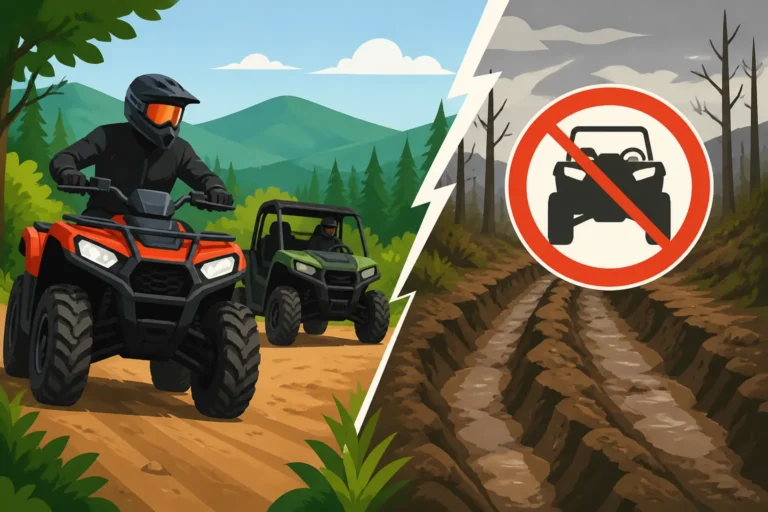
Trail conditions can change after rain, maintenance work, landowner requests, or seasonal closures. Before towing, check the local club’s latest guidance and be prepared to change plans. Avoid riding around a closure or bypassing a gate: those actions can damage property, put the group in an unsafe place, and jeopardize future access. Vermont Trail Conditions Before You Tow covers why this check belongs in your pre-trip routine.
Vermont corridors often depend on the goodwill of private landowners. Stay on the marked route, leave gates as you found them, keep noise down near homes, and take litter back with you. If the trail narrows or another group approaches, slow down and pass carefully. These are not just niceties; courteous riding helps protect the access that makes group outings possible. Review Vermont Trail Etiquette on Private Land with the group before the ride, especially if some participants are unfamiliar with the area.
Use a navigation tool such as onX Offroad to help orient riders, but don’t let phones replace attention to signs, gates, and instructions from the maintaining club. Download or save the information you’ll need before entering an area with weak service, and agree on what the group will do if riders become separated. A clear regrouping plan is more useful than trying to coordinate a scattered group through unreliable cell coverage.
A practical checklist before everyone leaves home
Confirm the details the day before
One person should verify the intended trail access with the local club close to the ride date. Ask whether the route is open, where the group should meet, whether trailers can be parked there, and whether there are any route-specific restrictions. Don’t rely only on a saved map or a previous trip: an access arrangement can change, and a familiar trail can be temporarily closed.
Then send the group a concise plan with the meeting time, location, route expectations, and a backup option. Make clear that riders are responsible for bringing the documents and equipment required for their own machine and situation. For a helpful planning framework, see [Vermont Group Ride Planning]. If the ride is organized by a club or event host, follow its instructions rather than substituting your own route.
Pack for delays and changing conditions
A group ride can take longer than expected when someone gets a flat, a machine needs attention, or a route is slower than anticipated. Bring suitable clothing for changing weather, water, basic first-aid supplies, and the tools or recovery equipment appropriate for your machines and route. Each rider should know how to contact the group if separated, and the lead and sweep riders should agree on their roles before starting.
| Before the ride | What to confirm |
|---|---|
| Trail access | Current club information, open corridors, and any closures |
| Group logistics | Meeting place, parking, group size, lead and sweep riders |
| Machine readiness | Registration, required access decal, insurance, and equipment |
| Navigation | Club guidance, route notes, saved maps, and a regrouping plan |
| Shared-corridor behavior | Staying on marked routes, yielding safely, and respecting landowners |
| Backup plan | A reasonable alternative if access or weather changes |
For navigation, onX Offroad may help the group prepare and understand its general location, but make the club’s current directions and posted signs the priority. Encourage every rider to review the plan rather than relying on one person’s phone. That small step reduces confusion if the group separates or a device loses signal.
Vermont group riding is most enjoyable when the route suits the people riding it and the access details are settled before the trailers arrive. Start with the local club, confirm current conditions, and make space in the plan for a slower pace or a change of route. Whether you join an organized outing or gather friends for a day in the Northeast Kingdom, responsible preparation helps keep the ride safer and the trails available to the next group.
Disclaimer
This article is for general informational purposes only and does not constitute professional advice. Laws, prices and regulations vary by location and change over time. Consult a qualified professional for guidance on your specific situation.