Vermont Riding Areas With Wash Stations
A muddy ride near Island Pond or Newport can leave your ATV packed with clay, grass, and trail debris, while a hose at the trailhead is not something you should assume will be available. This guide explains how to find and confirm wash options in Vermont, what to ask before you ride, and how to clean your machine without sending muddy runoff into a ditch or stream.
What to know about ATV wash stations in Vermont
A wash station may not be at the trailhead
In Vermont, a “wash station” can mean several different things: a designated wash bay at a campground, a hose at a lodging property, a self-serve vehicle wash in a nearby town, or a cleaning area offered by a rental or service business. Those options are not interchangeable. A public trailhead may have parking and trail information but no water, drainage, or place to wash a machine.
That distinction matters on a busy riding day. You might be able to rinse mud from your tires at your lodging, but not on the edge of a parking area or beside a road. Before planning around a wash, confirm who owns the facility, whether ATV or UTV use is allowed, and whether the wash area is meant for a muddy machine rather than a car.
Facilities can also have restrictions that are easy to overlook. A property may allow guests to rinse machines but ask that they avoid pressure washers, clean only in a specific area, or remove heavy mud before using a shared wash bay. Ask directly rather than relying on a listing that simply says “wash station.”
Why washing location and runoff matter
Vermont trails may cross private land, working forests, farms, and sensitive waterways. Mud and plant material can cling to tires, undercarriages, skid plates, and trailer ramps. Rinsing that material into a roadside ditch or stream can cause problems for the property owner and may carry seeds or other debris to another area.
A designated wash area is useful because it gives you a place to clean up without improvising. If there is no approved facility, wait until you reach a place where you have permission and where runoff can be managed appropriately. Do not treat a riverbank, wetland edge, or trail-side drainage ditch as a convenient wash bay.
A little preparation can reduce how much cleaning you need. Use a brush or scraper to remove clumps before they dry, and check the radiator screen, wheel wells, and undercarriage after a muddy ride. For broader cleanup advice, see [Washing a Machine After a Ride] and keep [Vermont Trail Etiquette on Private Land] in mind when using trails that rely on landowner permission.
How to find and confirm a wash option
Check the full route, not just the riding area
Start by identifying where your ride begins and ends. A facility listed near Island Pond, Derby, or Newport may be a useful stop, but it may not be close to the trail access point you plan to use. Likewise, a wash area at a campground may only be available to registered guests. Build the washing plan around your actual ride, lodging, and trailer route rather than assuming a nearby business will accept an ATV.
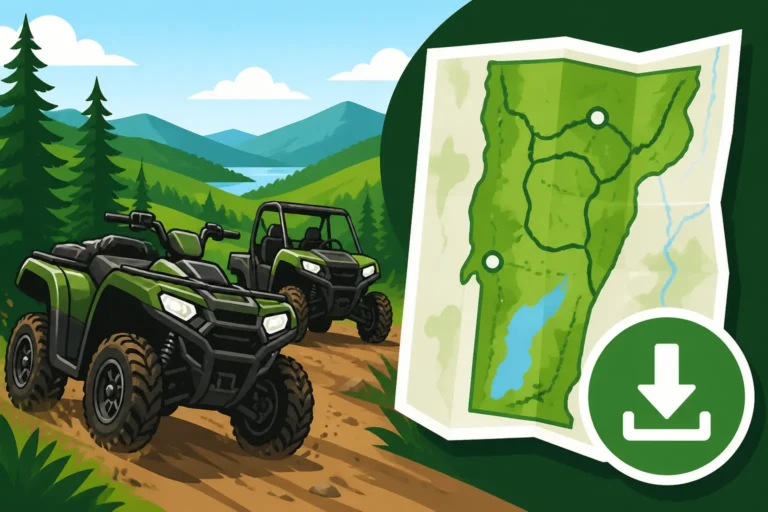
Use current club and property information to understand the riding area, then contact the relevant business or land manager to verify wash access. A map app such as onX Offroad can help you orient yourself around roads, trail corridors, and nearby services, but a mapped point does not confirm that a wash station exists or that ATV washing is permitted there. Confirm the amenity with the operator before counting on it.
It is also worth checking whether you can reach the wash facility legally and safely with a trailer. A short distance on a map can involve a narrow road, limited parking, or a route that is not suitable for a large truck and trailer. Use [Vermont Trailhead Access and Parking] as a planning topic alongside [Vermont Trailhead Access With Trailer Parking] when deciding where to stage.
Ask specific questions before you arrive
A quick call or message can prevent an awkward arrival with a muddy machine and nowhere to rinse it. Instead of asking only, “Do you have a wash station?” explain that you are bringing an ATV or UTV and ask whether the facility is available to riders. Clarify whether you need to be a lodging guest, club member, or customer.
Ask about the practical details too: whether water is available, whether there is a hose or pressure washer, where runoff goes, whether there is room for a trailer, and whether washing is restricted to certain hours. If you are traveling with several machines, confirm that the area can accommodate the group without blocking other guests or traffic.
A useful pre-trip checklist looks like this:
- Identify the trail area, trailhead, lodging, and likely return route.
- Find a possible wash location near the end of the ride or at your overnight stop.
- Contact the operator to confirm ATV or UTV washing is allowed.
- Ask about access rules, equipment, drainage, hours, and trailer space.
- Save a backup option in case the facility is unavailable or conditions change.
| Wash option | What to confirm | Best suited for |
|---|---|---|
| Campground or lodging wash area | Guest rules, hours, machine access, and runoff requirements | Riders staying overnight |
| Rental or service business | Whether non-customers can wash and whether appointments are needed | Riders already using that business |
| Self-serve vehicle wash | Whether ATVs or UTVs are allowed and whether trailer parking is practical | A quick rinse near town |
| Home or private property | Owner permission, water access, and appropriate drainage | Riders with a suitable place to clean |
| No wash available | Where to remove debris safely after returning home | Trips with no confirmed local facility |
Planning a wash around Vermont riding areas
Northeast Kingdom trips
The Northeast Kingdom is a common base for ATV and UTV outings, with places such as Island Pond, Derby, and Newport serving as familiar regional reference points. That does not mean every trailhead or riding corridor has a wash facility. Treat wash access as a separate part of trip planning, especially if your route is remote or you are staying outside a town center.
If you are riding around Island Pond, contact your lodging or campground before arrival and ask whether machine washing is allowed on the property. If you are staging near Newport or Derby, check whether a nearby business accepts off-road machines and whether you can park a trailer there. Regional resources such as [Vermont Trails in Orleans County] and [Newport Area ATV Trails in Vermont] can help you frame your riding-area research, but confirm facilities with the property or business itself.
For long rides, think about when the wash is most useful. Washing before you leave a riding area can reduce mud on a trailer, but only if there is an approved place to do it. If not, use a tarp or other containment method for especially muddy equipment and clean the machine later at a permitted location. Do not let the convenience of a quick rinse override property rules.
Stay overnight near a riding area
Some riders prefer to wash at the end of the day, after returning to a campground or lodge. That can be more practical than searching for a facility mid-ride, but policies vary. A property may have a wash area for cars and ask riders to remove heavy mud elsewhere, or it may prohibit washing machines altogether. Confirm the rules before booking if wash access is important to your trip.
If you are choosing a place to stay, ask whether it welcomes off-road machines, has space for trailers, and offers a designated wash area. A listing that mentions trail access does not necessarily promise machine washing. For a broader stay-and-ride plan, compare [Vermont ATV Trails With Camping] with [Vermont Lodging That Welcomes Machines], then verify each property’s current facilities and guest requirements.
A group should coordinate its cleanup plan in advance. Several muddy machines can occupy a shared wash area for a long time, and some properties may limit the number of vehicles or ask guests to wash in sequence. Decide who will clean first, keep hoses and walkways clear, and follow posted instructions so the facility remains usable for other guests.
A practical cleanup routine after the ride
Remove mud without damaging the machine
Begin with a walk-around while mud is still damp. Check the tires, fenders, footwells, skid plates, and underside, where compacted material can be easy to miss. Use a brush or plastic scraper for thick clumps before rinsing; this reduces the amount of debris entering the wash area and can make a short rinse more effective.
Follow your machine’s owner guidance for cleaning sensitive areas. Avoid directing high-pressure water at electrical connections, seals, bearings, or radiator fins. A careful rinse and gentle brushwork are generally safer than trying to blast every speck away at close range. If the radiator screen is clogged, clear it gently so the machine can breathe properly on the next ride.
Once the exterior is clean, check for damage that mud can hide. Look for loose guards, damaged hoses, or branches caught around moving parts. Dry or inspect the machine according to its care instructions, and clean your boots and gear as well. Mud on clothing, straps, and trailer surfaces can be carried to another property just as easily as mud on tires.
Leave the riding area and wash site in good shape
Before leaving a trailhead, make sure loose debris is not dropping from the machine or trailer. Keep mud off public roads where possible, and avoid washing equipment in a place that has not been approved for that use. If you see a closure, gate, or posted direction, follow it; the continued availability of many corridors depends on riders respecting landowners and local rules.
When a wash facility is available, leave it ready for the next person. Remove large clumps from the wash area if the operator permits, put tools away, and do not leave muddy water or debris where it can create a slipping hazard. If the facility is busy, be considerate of other guests and keep your cleanup efficient.
Finally, check conditions again before your next outing. Trail access and surface conditions can change after rain, during seasonal closures, or when a landowner requests a change. [Vermont Trail Conditions Before You Tow] and [Vermont ATV Trail Map Downloads] are useful topics to review before loading up, while onX Offroad can help with general route orientation when used alongside official club and landowner information. A confirmed wash plan, a clean trailer, and a little respect for local property rules make the whole trip easier.
Disclaimer
This article is for general informational purposes only and does not constitute professional advice. Laws, prices and regulations vary by location and change over time. Consult a qualified professional for guidance on your specific situation.