Vermont Riding Season Month by Month
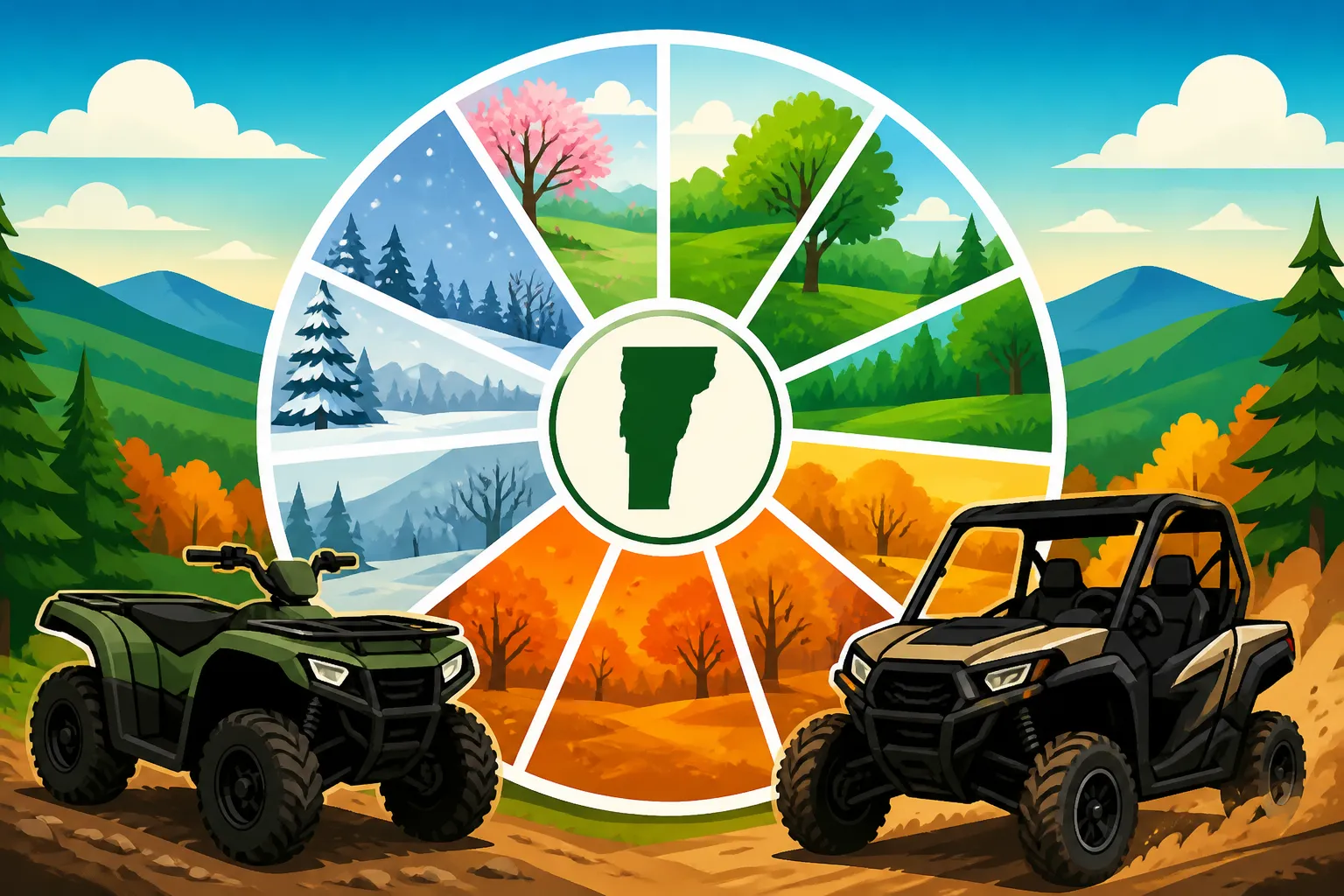
Vermont’s ATV and UTV riding season can feel hard to plan: a trail may be muddy and closed in spring, open and dry a few weeks later, then restricted again after heavy rain. This month-by-month guide explains what riding conditions and access often look like through the year, what to check before towing, and why the local club’s latest trail notice matters more than a calendar date.
Vermont ATV and UTV riding conditions from winter through spring
January and February bring a winter pause
For most riders, January and February are months to store the machine, handle maintenance, and plan for warmer weather rather than expect regular ATV trail access. Snow, ice, frozen ground, and winter trail use by other groups can all affect where machines may go. A corridor that is unavailable to ATVs is not automatically open just because it looks passable from a road or driveway.
Winter is a useful time to inspect tires, brakes, lights, belts, winches, and trailer equipment. Check for cracks or worn parts before spring, when repair shops and riding plans may both get busy. If you use a mapping app such as onX Offroad to organize routes, review your saved areas and confirm that any route you plan to ride is still authorized. A line on a map should never be treated as permission to enter private property or a closed trail.
March and April call for patience
March and April can be especially frustrating because conditions vary sharply from one day—or even one section of trail—to the next. A sunny afternoon may soften snow and ice, while shaded ground stays frozen. When thawing begins, water and soft soil can make a trail vulnerable to deep ruts. Riding through a wet section can damage the surface and leave a mess for the club or landowner to repair.
This is why spring access is often limited or delayed. Some clubs close trails during mud season, and opening dates differ by area and conditions. Do not assume that a trail is ready because a nearby road is dry or because another town has opened its routes. Check [Vermont Mud Season Closures] and the local club’s notices before loading up.
A practical spring routine is to check trail status immediately before departure, not only when you first start planning. If the club says a route is closed, choose another activity rather than trying to get around a gate. For more background on how access varies, see [Vermont Trail Season Dates by Club].
May is a transition month, not a guaranteed opening
May can bring the first promising riding days, but it is not a statewide green light. Some areas may still be saturated or repairing damage from winter and spring runoff. Other routes may open earlier, depending on the land, weather, and the club responsible for them. A warm week does not necessarily mean every corridor is ready for traffic.
Before towing, check the club’s trail conditions, access notices, and any restrictions for your destination. If the status is unclear, contact the club rather than relying on a social media post or an old map. [Vermont Trail Conditions Before You Tow] is a helpful reminder to make that check part of the trip plan. For an overview of the broader system and how club access works, read [Vermont ATV Trails: The VASA System].
Vermont ATV and UTV riding season from June through August
June often brings more options, with conditions still changing
June is often when riders begin finding more opportunities, especially after spring closures have lifted. Even then, access can vary between clubs and corridors. A trail may be open while a nearby section remains closed, and a route can change after a washout, maintenance project, or landowner request.
This is a good month to ease into the season. Start with a shorter ride, check that your machine and trailer are ready, and leave enough time to turn back if conditions are worse than expected. Avoid spinning tires in soft spots or riding around a muddy patch to make a new track. Those shortcuts can widen damage and create more work for trail volunteers.
For local planning, [Vermont ATV Trails Open in June] can help you think through early-season access, but confirm the specific corridor before you go. A route-planning app such as onX Offroad may help you keep your intended ride organized; use it alongside club information rather than as a substitute for current closures or landowner rules.
July is a strong month for longer rides
July often offers a more settled summer riding pattern, with longer daylight and generally firmer conditions than during spring thaw. That can make it easier to plan a day ride or a multi-stop outing. Still, a stretch of heavy rain can quickly change trail conditions, and some routes may close temporarily to prevent damage.
Pack for a full day even if the forecast looks pleasant. Bring water, basic tools, a first-aid kit, weather-appropriate layers, and a way to contact your group if you become separated. Cell coverage can be limited in rural and wooded areas, so agree on a regrouping point before leaving the trailhead. When using onX Offroad or another navigation tool, consider saving the information you need before entering areas with weak service.
Summer also means sharing corridors with other riders and, in some locations, encountering hikers, residents, farm activity, or other users. Slow down near homes and trailheads, follow posted signs, and leave gates as you found them. The guidance in [Vermont Trail Etiquette on Private Land] is especially relevant because much of Vermont’s riding access depends on cooperation with private landowners.
August can mean warm, busy trails and sudden weather changes
August can be an appealing month for longer outings, but it brings its own planning challenges. Popular weekends may mean more traffic at staging areas and on shared corridors. Afternoon storms can also arrive after a clear start, so check the forecast for the area you will ride—not only the town where you are staying.
If your group includes new riders, keep the route conservative and set expectations about pace, stops, and how to handle a machine problem. A shorter loop that everyone can complete comfortably is usually a better choice than pushing for distance. For UTVs, account for the machine’s width and turning needs, and do not assume every narrow trail or road is suitable for every vehicle.
A simple seasonal reference can help you decide what to check before setting out:
| Period | What riders may encounter | Useful planning step |
|---|---|---|
| January to February | Winter conditions and limited ATV access | Store and inspect the machine; confirm any permitted winter use |
| March to April | Thaw, wet ground, and mud-season closures | Check closures and avoid soft or saturated trails |
| May | Staggered openings and changing conditions | Confirm the specific club corridor is open |
| June | More riding opportunities, with local variation | Check conditions after rain and start with a manageable route |
| July to August | Longer outings, busier corridors, summer storms | Plan water, navigation, weather layers, and group communication |
| September to October | Fall riding, changing weather, and possible seasonal closures | Verify local dates and trail status before towing |
| November to December | Shorter days and winter transition | Check for closures and prepare the machine for storage |
Vermont riding season from September through December
September is a good month to plan a flexible ride
September can offer comfortable temperatures and a quieter feel than peak summer weekends, though conditions are never guaranteed. Rain, cooler mornings, and earlier sunsets can affect how far you want to ride. Pack an extra layer and plan to finish well before dark, particularly if your route includes remote or unfamiliar corridors.
This is also a useful time to revisit your route plan. Check for temporary closures, construction, and updated club information before leaving. If you use a digital map, compare it with current local notices and carry a backup plan in case your phone loses service or battery. A mapped route is only useful when it matches the access rules on the ground.
October can be beautiful, but do not count on every trail staying open
Fall color makes October an attractive time to ride, but changing weather and local season dates can narrow the available options. Some corridors may remain open while others close, and heavy rain or a landowner request can affect access at any point. Shorter daylight also makes it important to avoid overestimating how much ground your group can cover.
Check [Vermont ATV Trails Open in October] for seasonal planning ideas, then verify the current status with the club responsible for the route. If you are visiting an area for foliage, make a backup plan that does not depend on riding a particular corridor. It is better to discover a closure before you have driven a trailer across the state than at a locked gate.
Take extra care on wet leaves, slick roots, and uneven surfaces. Slow down, leave room between machines, and be prepared for colder conditions at higher elevations. Even when the day starts mild, a long ride can feel very different after sunset.
November and December usually shift the focus to storage and maintenance
By November, many riders begin wrapping up their season, though local access dates and conditions vary. Cold rain, frost, early snow, and limited daylight can make a familiar route more demanding. Before heading out, check directly with the local club and do not treat an old open-trail notice as current permission.
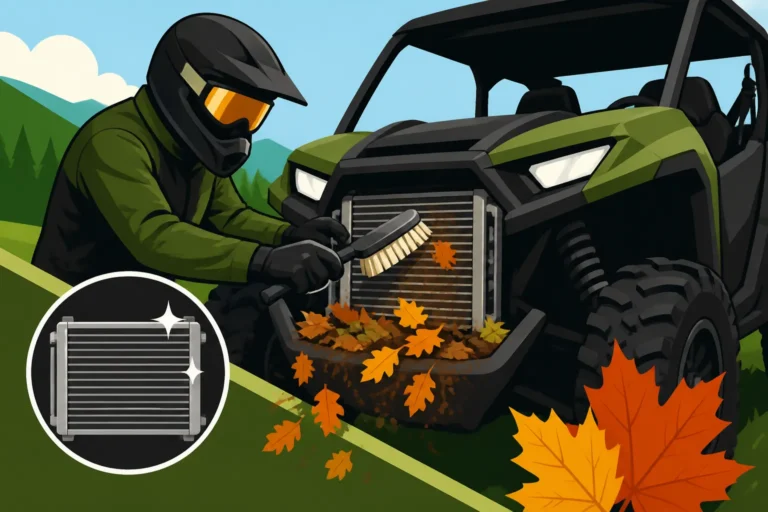
December is often a natural point to clean and store the machine, inspect it for damage, and note repairs to handle before next season. Wash off mud and debris, paying attention to the underside and areas where dirt can collect. Follow your manufacturer’s storage guidance for fuel, battery care, and other maintenance. A little preparation now can make the first spring ride less stressful.
How to plan a ride in any month
Check access, weather, and trail conditions together
A reliable plan combines three checks: whether the trail is authorized and open, whether recent weather has affected its condition, and whether the forecast suits the ride you have in mind. A clear forecast does not mean a corridor is open. An open corridor does not mean it is in good shape after heavy rain. Treat each check as a separate part of the decision.
Use the local club’s announcements for current access information, and look for posted signs at the trailhead. If two sources disagree, pause and confirm before riding. Tools such as onX Offroad can help with route planning, but local notices and signs take priority. Keep a backup route or a non-riding option in mind, especially when traveling a long distance.
Match the ride to the season and the group
In early season, choose a short route and allow time for changing conditions. In summer, plan for heat, rain, and busier trails. In fall, account for shorter days and colder temperatures. For a group with children, first-time riders, or machines with different capabilities, choose a route that suits the least experienced rider rather than the most confident one.
Before leaving, agree on a meeting point, ride order, and what to do if someone needs to stop. Carry water, basic repair supplies, and a charged phone or other communication option. If you are traveling far from home, make sure someone knows your intended area and expected return time.
Respect local access and landowner requests
Vermont’s riding opportunities depend on access being managed carefully. Stay on the marked corridor, obey gates and signs, and never create a route around a closure. Avoid noisy or fast riding near homes, and do not leave trash at a trailhead. If conditions are wet enough to rut the ground, turn back rather than trying to force your way through.
Month-by-month planning helps set expectations, but it cannot replace a local trail check. The best ride is not always the longest one; it is the one that fits the conditions, follows current access rules, and leaves the trail in good shape for the next group.
Disclaimer
This article is for general informational purposes only and does not constitute professional advice. Laws, prices and regulations vary by location and change over time. Consult a qualified professional for guidance on your specific situation.