Vermont Riding Adjacent to Your Own Property
It can feel incredibly frustrating when you own a piece of Vermont paradise, complete with an ATV or UTV, and you just want to enjoy riding on or right next to your own land, but the rules feel like a tangled mess. You want to make sure you’re being a good neighbor, staying legal, and most importantly, avoiding any costly fines or confrontations. This guide is here to untangle those confusing regulations, helping you understand exactly what you can and can't do when riding your off-road vehicle right at home in the Green Mountain State.
Understanding Vermont's ATV Laws Near Your Property
When you think about riding your ATV or UTV, especially close to your own property, it’s easy to assume that "my land, my rules" applies. However, Vermont has a pretty intricate web of regulations that can affect even how you ride adjacent to your own property, particularly when it involves town roads, Class 4 roads, or even crossing other people's land. It’s not just about what's physically on your deed, but also how your property interacts with public access ways and your neighbors’ boundaries.
The Nuances of Property Lines and Public Access
Your property line isn't just an invisible boundary; it's a legal demarcation with significant implications for ATV use. Often, people live near town roads, which, even if unpaved or lightly traveled, are still public rights-of-way. Riding on these roads requires your ATV or UTV to be properly registered and insured, and for you to follow all local ordinances. Even if you're just "popping out" for a quick run along the edge of your field that borders a town road, you're technically on a public thoroughfare. The laws for riding on these town roads are determined by the local selectboard, and they can vary wildly from one town to the next. What's perfectly acceptable in one Vermont town might earn you a ticket just a few miles down the road in another. This is why understanding [Vermont ATV Road Rules: Towns Decide] is absolutely crucial, even when your home is your base.
Beyond paved or gravel roads, Vermont also has a network of Class 4 roads. These are public roads, too, but often unimproved, unmaintained, and can sometimes feel more like a trail. While they might seem like open game for off-roading, the same rules about registration, insurance, and local town ordinances still apply. Even if a Class 4 road runs directly adjacent to your property, you're not automatically free to ride on it without adhering to state and local regulations. The key takeaway here is that just because a road looks like a trail doesn't mean it's unregulated. Always check with your town clerk's office about specific ordinances before you venture out, even if it's just to connect two points on your own land using a Class 4 road.
Registration, Insurance, and Safety Requirements
Before your tires even hit the dirt, whether on your own land or adjacent to it, your machine needs to be street legal, at least in terms of paperwork, if you ever plan to touch a public way. In Vermont, any ATV or UTV operating on public roads, including most town roads and Class 4 roads, must be registered with the Vermont Department of Motor Vehicles (DMV). This isn't just a suggestion; it's the law. Unregistered machines can only be ridden on private land with the express permission of the landowner, and even then, certain safety rules still apply. Think about it: if you need to cross a small section of town road to get from one part of your property to another, your machine absolutely needs to be properly registered. You don't want to risk a penalty for [Riding on Private Land Unregistered] if a warden happens to be passing by and sees you briefly on a public right-of-way.
Alongside registration, Vermont mandates liability insurance for ATVs and UTVs operated on public roads and designated trails. This isn't just for your protection; it's for everyone else's. Accidents happen, and if you're involved in one on a public thoroughfare, having the right insurance can save you a world of financial pain. It's a small annual cost compared to the potential consequences of an incident. Make sure you understand [Vermont ATV Insurance Requirements] and carry proof of coverage with you whenever you ride. Beyond the paperwork, personal safety is paramount. Vermont's [Vermont ATV Helmet Law for Every Rider] is non-negotiable, regardless of where you're riding. Even if you're just tooling around your backyard, wearing a helmet is simply smart practice. No matter how familiar the terrain, an unexpected bump or tip-over can lead to serious injury.
Navigating Public Roads and Private Land Lines
The area "adjacent to your own property" can be a tricky zone. It might include a small strip of land, a town road, or even a neighbor's field. Understanding the legal definitions and restrictions is key to enjoying your ride without worry. It’s about more than just avoiding trouble; it’s about being a responsible member of the community and a respectful outdoor enthusiast.
Designated ATV Routes and Exceptions
Vermont's approach to ATV access on town roads is quite localized. Each town's selectboard has the authority to open or close town roads to ATV use. This means that even if a town road directly borders your property, you cannot automatically ride your ATV on it. You need to verify if that specific road has been designated for ATV use by your town. This information is usually available at the town clerk's office or on the town's website. Sometimes, these designations are for specific seasons, and often have curfews or speed limits attached. For instance, [Brighton's ATV Ordinance Explained in Vermont] provides a good example of how a town sets specific rules for its roads.
There are also instances where riders might use a Class 4 road that acts as a connector between private properties or VASA trails. As mentioned, these are public roads, and regulations apply. Some landowners might grant permission for you to ride across a corner of their land to access a trail or another part of your property, but this must always be express permission. Verbal permission is usually fine, but for peace of mind, especially if it’s a regular route, having something in writing can prevent future misunderstandings. The Vermont Association of Snow Travelers (VASA) also works with landowners to establish designated trails, but these are separate from town road designations. Always be sure you're on a marked and permitted route if you're not on your own land.
Common Misconceptions About Property Borders
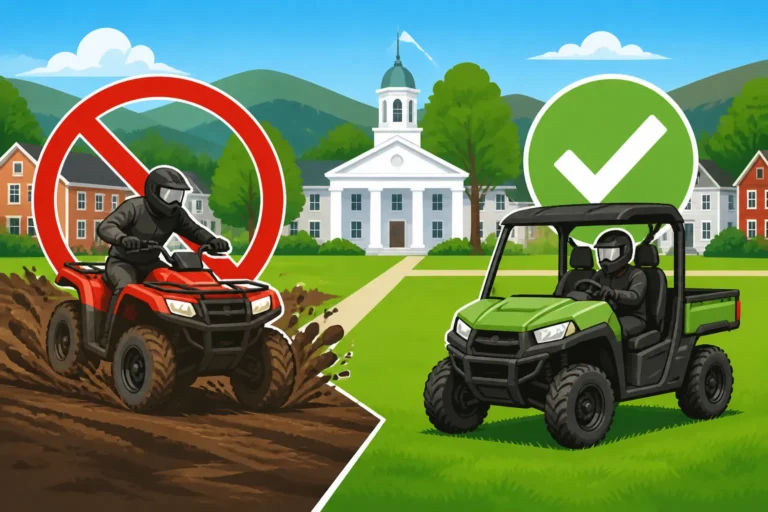
One of the biggest misconceptions is the idea of "implied permission" to ride on adjacent land or roads. Just because a field looks unused or a Class 4 road seems abandoned doesn't mean you have free rein. Vermont's [Vermont Trespass Law for Riders] is clear: you need permission to ride on private land that isn't yours. Even if you've ridden through a neighbor's field for years without issue, a change in ownership, a new fence, or simply a shift in their feelings about ATVs could suddenly make you a trespasser. It’s always best to ask, even for small crossings.
Another common mistake is assuming that if your property borders a vast tract of state forest or private timberland, you can just ride into it. Vermont State Lands are largely closed to ATVs, with very few designated exceptions, usually for crossing specific areas. Private timberland might allow access but usually requires specific permission or adherence to posted rules. Always look for [Vermont ATV Rules on Posted Land] signs, and when in doubt, consider the land closed. Ignorance of these rules is not a defense, and a simple ride could result in a fine. For navigating rougher terrain that might be found on some Class 4 roads or private property with permission, consider aftermarket suspension upgrades from companies like SuperATV to improve your ride comfort and capability, ensuring your machine can handle the varied conditions without undue wear and tear or stability issues.
The Importance of Landowner Permission and Good Neighbor Relations
Riding near your property, especially in rural Vermont, often means you’re sharing the landscape with neighbors, farmers, and other landowners. Building and maintaining good relationships are paramount to ensuring continued access and enjoyment of the sport. Ignoring these relationships can quickly lead to trails closing and increased friction in the community.
Asking for Permission: The Golden Rule
The most crucial step in riding on land that isn't yours, even if it's just a sliver to connect two pieces of your own property, is to ask for permission. This applies to everyone, whether it's a neighbor, a farmer whose field you want to cross, or a timber company managing a large parcel. A simple, polite conversation can go a long way. When you ask, be specific about where you want to ride and when. For example, "I'd like to cross the back corner of your north field to access my woods, maybe once a week on weekends, usually mid-morning. Would that be okay?" This clarity helps landowners understand your request and address any concerns they might have.
Sometimes, a landowner might grant permission but with specific conditions. They might ask you to avoid certain areas, stay off during mud season, or only ride during certain hours. Respecting these conditions is non-negotiable. Breaking their trust by violating their rules is a sure way to lose future access, not just for you but potentially for other riders as well. Remember, landowners are granting you a privilege, not a right. Many of Vermont's extensive VASA trail systems exist only because of the generosity of private landowners, and that permission can be revoked at any time. This relationship forms the backbone of ATV access in the state, as detailed in [Vermont Landowner Permission Rules].
Maintaining Trust and Respectful Riding Practices
Once you have permission, it's up to you to maintain the trust. This means always riding responsibly and respectfully. Here are some key practices:
- Stay on Designated Paths: If a landowner specifies a particular route, stick to it. Don't create new trails or cut corners.
- Respect Property: Don't disturb crops, livestock, fences, or signage. If you open a gate, close it. If you break something, report it and offer to fix it.
- Control Noise: ATVs and UTVs can be loud. Be mindful of noise, especially near homes, farms, or during early morning or late evening hours. Many aftermarket exhaust systems can be louder than stock, so if you've modified your machine, consider the impact on your neighbors.
- Leave No Trace: Pack out everything you pack in. Don't litter. Avoid mud-slinging that can damage trails or fields, especially during wet conditions.
SuperATVoffers sturdy storage boxes and bags for your machine, making it easier to carry out any trash and keep your gear organized. - Yield to Others: If you encounter hikers, horseback riders, or other non-motorized users, yield the right of way. Slow down and be polite.
- Avoid Sensitive Times: If farmers are working their fields, or during hunting seasons, consider if your presence might be a nuisance or a safety concern.
By consistently demonstrating respect and responsibility, you not only secure your own access but also contribute positively to the perception of ATV riders in the community. This can prevent calls for stricter regulations and help foster a more welcoming environment for the sport.
Equipment and Safety Considerations for Riding Near Home
Even when riding close to home, proper equipment and a strong focus on safety are non-negotiable. The familiar terrain can sometimes lull riders into a false sense of security, leading to carelessness. However, accidents can happen anywhere, and being prepared is always the best defense.
Essential Gear and Machine Maintenance
Regardless of whether you're hitting remote trails or just riding through your own back forty, certain gear is absolutely essential. We've already covered the helmet – a fundamental piece of safety equipment. Beyond that, sturdy boots, long pants, a long-sleeved shirt, and eye protection (goggles or a face shield) are critical for preventing scrapes, branches, and debris from causing injury. Gloves can protect your hands from blisters and impacts. Don't skimp on protective gear; it's an investment in your well-being.
Your machine itself also needs to be in top condition. Regular maintenance isn't just about extending the life of your ATV or UTV; it's about ensuring it operates safely. Check your tires for proper inflation and wear, inspect brakes, lights, and steering components regularly. If you ride frequently through rough, rocky, or muddy terrain common in Vermont, consider upgrading components that take a lot of abuse. For instance, SuperATV offers heavy-duty A-arms, axles, and skid plates that can significantly improve your machine's durability and provide extra protection against unforeseen obstacles lurking near property lines or on rough Class 4 roads. Keeping your machine well-maintained also ensures it's ready for any [Vermont Equipment Checks by Police] you might encounter if you venture onto public ways.
Planning for the Unexpected, Even Close to Home
It's easy to think "I'm just going for a quick spin," but even a short ride can turn problematic. Always tell someone where you're going and when you expect to be back, even if it's just your spouse or a family member in the next room. Carry a fully charged cell phone, but don't rely solely on it, especially in areas with spotty service. A small first-aid kit, a basic tool kit, and perhaps a small recovery strap can be lifesavers.
Consider the terrain you're riding. Is it hilly? Is there mud? Are there hidden rocks or stumps? The conditions can change quickly, especially after rain or during different seasons. What was dry last week might be a bog today. Always ride within your skill level and the capabilities of your machine. If you're exploring new sections of your property or adjacent land, start slow and assess the conditions. Overconfidence is a leading cause of accidents. Having good quality tires, perhaps even specialized mud tires from SuperATV, can make a huge difference in traction and control when conditions get slippery near streams or low-lying areas on your property.
What Happens If You Cross the Line: Penalties and Prevention
Ignorance of the law is rarely an excuse. Riding illegally or unsafely in Vermont can lead to a range of penalties, from fines to more serious legal consequences. Understanding these risks is crucial for making informed decisions and ensuring your rides are always within legal and ethical bounds.
Fines and Legal Ramifications
The penalties for riding illegally in Vermont can add up quickly. If you're caught riding an unregistered ATV on a public road, you're looking at a fine. If you don't have the required insurance, that's another fine. If you're riding on private land without permission, you could be cited for trespassing, which also carries a fine. Repeated offenses can lead to higher fines, points on your license (if applicable), or even impoundment of your machine. These legal troubles can be a significant headache and certainly dampen the fun of ATV ownership.
Beyond direct fines, an accident while riding illegally can lead to even greater financial and legal distress. If you cause damage or injury while operating an unregistered or uninsured ATV, you could be personally liable for all costs. This could include medical bills, property damage, and legal fees, potentially costing you thousands of dollars. It's a stark reminder of why adhering to rules about [Vermont ATV Insurance Requirements] and [Vermont ATV Registration Cost] is not just about bureaucracy, but about protecting yourself and your assets.
Being a Responsible Steward of the Land and Sport
The best prevention is always proactive responsibility. By taking the time to understand Vermont's ATV laws, securing necessary permissions, and riding safely, you minimize your risk of penalties and contribute positively to the future of the sport. Vermont is a beautiful state with incredible natural resources, and we all share a responsibility to protect it.
When in doubt about a specific road or property, ask your town clerk, contact a local VASA club, or even reach out to the Vermont State Police for clarification. They're there to help you understand the rules, not just enforce them. Being proactive shows respect for the law, for landowners, and for your fellow riders. This approach not only keeps you out of trouble but also helps ensure that ATV riding remains a cherished and accessible pastime for years to come. Think about how your actions impact the broader ATV community. One rider's irresponsible behavior can lead to landowners closing access for everyone. By being exemplary, you help solidify the sport's reputation and potentially open up more opportunities for riding in the future.
Key Considerations for Riding Adjacent to Your Vermont Property
To help clarify the various rules and considerations when riding your ATV or UTV adjacent to your property in Vermont, here’s a quick overview of what you need to know:
| Aspect | Description | Key Action |
|---|---|---|
| Public Roads (Town Roads, Class 4 Roads) | Any road that is not explicitly private property, even if unimproved or lightly traveled, is subject to state registration, insurance, and local town ordinances. | Check with your town clerk for specific ATV ordinances for all roads adjacent to your property. Ensure your ATV is registered and insured for road use. |
| Private Land (Neighboring or Connecting) | You always need explicit permission to ride on private land that does not belong to you, even for a short crossing or if it appears unused. | Ask landowners for permission. Be specific about your route and timing. Respect any conditions they set. Consider getting permission in writing for regular use. |
| Registration & Insurance | Required for operation on any public road or designated trail in Vermont. Riding an unregistered or uninsured ATV on public ways is illegal and can lead to significant fines and liability. | Ensure your ATV/UTV is registered with the VT DMV and has valid liability insurance. Carry proof of both with you. [Vermont ATV Registration Cost] and [Vermont ATV Insurance Requirements] are good places to start. |
| Safety Gear | Vermont law requires helmets for all ATV/UTV riders. Other protective gear (boots, gloves, eye protection, long clothing) is highly recommended for all rides, even short ones close to home. | Always wear an approved helmet. Equip yourself with proper riding gear. |
| Landowner Relations | The continued access to trails and the general acceptance of ATVs in rural areas heavily rely on positive relationships with landowners and neighbors. Disrespectful riding can lead to lost access for everyone. | Be courteous, control noise, stay on designated paths, close gates, and leave no trace. Report any damage you cause. |
| Penalties | Fines for unregistered/uninsured machines, trespassing, and other violations. In case of an accident while violating rules, you could face personal liability for damages and injuries. | Understand the laws and ordinances. When in doubt, clarify with town officials or landowners. Ride responsibly to avoid legal and financial consequences. [Vermont Trespass Law for Riders] has more details. |
This table serves as a quick reference, but remember, the details for each town and situation can vary. Always do your homework before you ride.
Disclaimer
This article is for general informational purposes only and does not constitute professional advice. Laws, prices and regulations vary by location and change over time. Consult a qualified professional for guidance on your specific situation.