Vermont ASV Registration at $108 a Year
Navigating the ins and outs of registering an off-road vehicle in Vermont can feel like trying to untangle a particularly stubborn fishing line, especially when you're just trying to figure out how much it's actually going to cost you. Many folks get confused by the different classes of machines and what that means for their wallet. This guide is here to clear up the muddy waters around Vermont's ASV (All-Terrain Vehicle, Class A) registration, specifically detailing the $108 annual fee, what it entails, and how to get your UTV or side-by-side legally ready for the trails.
Understanding Vermont's ASV Class A Definition
Before we even dive into the cost, it's crucial to understand what Vermont considers an ASV, or Class A All-Terrain Vehicle. This isn't just bureaucratic jargon; it directly impacts your registration fees and requirements. Many people assume all their off-road machines are just "ATVs," but Vermont's DMV has specific distinctions that separate the traditional quad from the larger, multi-passenger side-by-side or utility vehicle. Getting this wrong can lead to delays or even an incorrect registration.
What Differentiates an ASV from an ATV?
The key differences between an ATV and an ASV in Vermont primarily boil down to size, weight, and seating capacity. A traditional ATV, often called a quad, is typically designed for a single rider, or sometimes a rider and one passenger, with a straddle seat and handlebars for steering. They tend to be narrower and lighter. When you hear "ATV," that's usually what comes to mind.
However, an ASV, or All-Terrain Vehicle Class A, encompasses those larger, more robust machines that have become incredibly popular. Think side-by-sides, UTVs, and other multi-purpose vehicles. The official definition often includes machines that are wider and heavier than standard ATVs. For instance, Vermont's definition specifies machines wider than 72 inches or heavier than 2,500 pounds, or those designed to carry more than one passenger side-by-side, often with a steering wheel and foot pedals, rather than handlebars. This distinction is vital because it places your machine into a different registration category, hence the different fee structure. It's a common point of confusion, and understanding [Vermont's 72-Inch, 2,500-Pound ATV Definition] can really help clarify where your machine fits in.
Common Machines That Fall Under the ASV Category
So, what kinds of machines typically fall under this ASV Class A designation? Primarily, we're talking about side-by-sides and UTVs. These are the workhorses that can haul gear, carry multiple passengers, and often have features more akin to small cars, like roll cages and safety belts. You'll see Polaris RZRs, Can-Am Commanders, Honda Pioneers, and various Kawasaki Mule models often categorized as ASVs.
If your machine has bench seating or multiple bucket seats next to each other, a steering wheel, and a curb weight that feels substantial, it's very likely an ASV. Even some of the larger, sport-oriented side-by-sides, while they might feel nimble, often exceed the width or weight limits for a standard ATV in Vermont. It’s always best to check your vehicle's specifications against the state's definitions to avoid any surprises during the registration process. This is where you might find your beloved UTV, which you've always casually called an "ATV," actually needs an [Vermont ASV Class A Registration Explained].
The $108 Annual ASV Registration Fee
Now that we've cleared up what an ASV is, let's talk about the specific financial commitment: the $108 annual registration fee. This amount is specifically for machines that fit Vermont's ASV Class A definition and choose the one-year registration option. It's a straightforward fee, but understanding what it covers and why it's structured this way can help you budget and plan your riding season.
Breaking Down the Cost: What the $108 Covers
The $108 fee for a one-year ASV registration goes directly to the Vermont Department of Motor Vehicles (DMV) to cover the administrative costs of registering your vehicle and maintaining the state's off-highway vehicle programs. Unlike snowmobile registrations, which have a split fee that contributes to different funds, the ASV fee is a single charge. This money helps support the infrastructure for managing registrations, issuing plates, and generally ensuring that off-road vehicles are properly documented and compliant with state law. It's not just a fee for a sticker; it's what keeps the system running for all riders.
Many riders initially balk at any fee, but when you consider the overall costs of owning and maintaining a recreational vehicle, this annual fee is a relatively small part of the picture. It's the cost of being a responsible, legal rider in Vermont. While it might seem like a bit more than some other states, it's part of Vermont's system to ensure all machines on designated trails and roads are identifiable and properly accounted for. This fee is explicitly defined in Vermont statutes for the one-year period, differentiating it from the standard ATV registration cost.
When the One-Year Option Makes Sense
While Vermont offers a two-year registration option for ASVs, the $108 one-year fee is perfect for certain situations. Perhaps you're new to the state and just want to dip your toes into Vermont's riding scene for a season before committing longer term. Or maybe you're unsure how much you'll actually use your ASV in a given year. If you've just purchased a used ASV and want to ensure everything is in order before investing in a longer period, a one-year registration allows you to get compliant quickly without a bigger upfront cost.
Another scenario where the one-year option is practical is if you anticipate selling your machine within a year. While you can transfer a two-year registration, opting for one year might simplify things. It gives you flexibility. For non-residents who might only visit Vermont for a specific riding season, the one-year registration aligns perfectly with their travel plans, allowing them to legally ride within the state without overpaying for time they won't use. Remember, Vermont charges residents and visitors the same for registration, so the one-year option is equally viable for both. For a comparison, you can look into the [Vermont ASV Two-Year Registration at $211] to see which option best fits your long-term plans.
The Vermont ASV Registration Process
Getting your ASV legally registered in Vermont doesn't have to be a nightmare, but it does require attention to detail and having all your ducks in a row. The process is designed to ensure proper ownership, safety, and tax compliance. Knowing the steps and required documents beforehand can save you a lot of time and potential frustration at the DMV.
Required Documents for ASV Registration
When you head to the Vermont DMV to register your ASV, or even if you're doing it by mail, you'll need a specific set of documents. Think of it like packing for a long trip – forgetting one essential item can throw off your whole journey. The absolute must-haves include proof of ownership, such as a Manufacturer's Certificate of Origin (MCO) for a new machine or a properly executed bill of sale for a used one. For machines purchased privately, a detailed bill of sale is critical. Make sure it includes the seller's and buyer's full names and addresses, the date of sale, the purchase price, and a clear description of the ASV, including its Vehicle Identification Number (VIN). Without proper proof of ownership, the DMV simply cannot process your registration.
You'll also need a completed Vermont registration application form, often referred to as form VD-119. This form asks for all the particulars about your machine and yourself. Additionally, proof of Vermont residency (like a utility bill or lease agreement if you're a new resident) might be required, especially if your address on other documents isn't current. Finally, you'll need payment for the $108 registration fee and any applicable [Vermont Purchase and Use Tax on an ATV]. For a comprehensive list, checking out [Vermont Registration Paperwork Checklist] is highly recommended.
Step-by-Step Guide to Registering Your ASV
Once you have your documents ready, the actual registration process can be fairly straightforward. Here's a typical step-by-step rundown:
- Gather Your Documents: As mentioned, collect your proof of ownership (MCO, bill of sale), identification, and any other relevant paperwork. If you’re unsure about what constitutes valid [Proof of Ownership Vermont's DMV Will Accept], double-check before you go.
- Complete the Application: Fill out the Vermont registration application form (VD-119) accurately. Mistakes can lead to delays. If you purchased from a dealer, they might handle much of this for you.
- Calculate Purchase and Use Tax: If your ASV is new to you, you'll likely owe Vermont's Purchase and Use Tax. This is calculated on the purchase price or fair market value, whichever is higher. Be prepared to pay this at the time of registration.
- Submit Your Application: You have a few options here:
- In Person: Visit a Vermont DMV office. This is often the quickest way to get your plate and registration decal on the spot, assuming all your paperwork is correct. You might want to make an appointment to avoid long waits.
- By Mail: If you're not in a rush, you can mail your completed forms, copies of supporting documents, and payment to the DMV. Be sure to send copies, not originals, of anything you need to keep.
- Receive Your Plate and Decal: Once processed, the DMV will issue you an ASV registration plate and a decal to indicate the validity period. Your registration certificate will typically be mailed to you if you registered by mail.
It sounds like a lot, but by breaking it down, it's manageable. If you bought your ASV in a private sale, make sure you have a solid [Writing a Bill of Sale the Vermont DMV Accepts]. Sometimes, folks even use services like LawDepot to generate legally sound bills of sale, especially if they’re concerned about clarity or missing information.
Handling Purchase and Use Tax for Your ASV
One aspect of registering your ASV that often catches new owners off guard is the Purchase and Use Tax. This isn't just a fee; it's a tax on the acquisition of the vehicle. In Vermont, if you buy an ASV, whether new or used, from a dealer or a private party, you're generally subject to this tax. The tax is calculated as a percentage of the purchase price or the current market value, whichever is greater, at the time of registration. So, when you pay your $108 registration fee, expect to also pay the Purchase and Use Tax, unless an exemption applies.
There are specific exemptions, for instance, if the ASV was a gift between immediate family members, or if you paid a similar sales tax in another state and can prove it. However, most transactions will require this tax payment. It's important to factor this into your budget when considering the total cost of getting your ASV legally on Vermont trails. Don't be surprised by an extra cost when you go to register. For details on how to handle this, particularly if you bought the machine out of state, learning about [Vermont Tax on an Out-of-State Purchase] can be incredibly useful.
Beyond Registration: What Else You Need to Know
While securing your ASV registration for $108 a year is a critical first step, there are other important considerations that every rider needs to be aware of. Registration makes your machine legal, but insurance, proper plate display, and understanding other available registration options ensure you're fully compliant and prepared for the trails.
Insurance Requirements for Vermont ASVs
Just like cars on public roads, Vermont mandates liability insurance for all registered ATVs and ASVs. This isn't an option; it's a legal requirement designed to protect everyone. The minimum liability coverage required is specific: $25,000 for bodily injury to one person, $50,000 for bodily injury to two or more people, and $10,000 for property damage. This is often abbreviated as 25/50/10. Carrying this proof of insurance is not just for the DMV; a warden or law enforcement officer can ask to see it at any time while you're riding.
Failing to have adequate insurance can result in fines and even suspension of your riding privileges. It's not worth the risk. When you call your insurance provider, be sure to specify that it's for an ASV and clarify the coverage for off-road use. Some general vehicle policies might not cover recreational off-road activities, so make sure your policy explicitly covers your ASV for riding in Vermont. For a deeper dive into what you need, check out [Vermont Requires ATV Liability Insurance].
Plates, Decals, and Display Rules
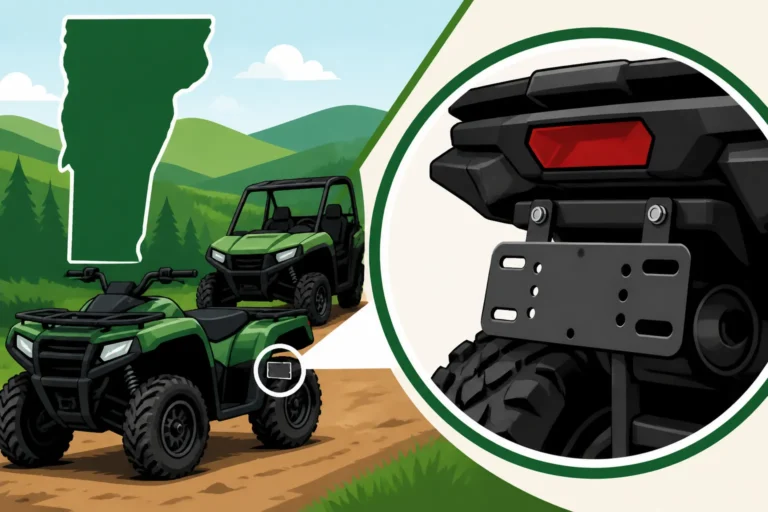
Once your ASV is registered, the DMV will issue you a registration plate and a decal. The plate typically features your registration number, while the decal indicates the year your registration expires. Proper display of both is non-negotiable. Vermont law generally requires the plate to be mounted securely on the rear of the machine, where it's clearly visible. It needs to be kept clean and unobstructed so that it can be easily read by law enforcement.
While the state requires a rear plate, it's worth noting that some towns, like Brighton, have local ordinances that ask for a front plate as well. These are specific municipal rules, so always check local ordinances for the areas you plan to ride. The decal, which is usually a smaller sticker, must be affixed to the plate itself in the designated area. It's a visual cue to wardens and other riders that your registration is current. Keeping your plate readable, especially after a muddy ride, is just good practice and helps avoid unnecessary interactions with authorities. You can find more details on this topic in [Vermont ATV Plates and Where They Go].
Understanding the ASV Two-Year Registration Option
While this guide focuses on the $108 one-year ASV registration, it's important to know that Vermont also offers a two-year option. This allows you to register your machine for a longer period, often at a slightly reduced annual equivalent rate compared to renewing year after year. For example, the two-year ASV registration costs $211. This can be a great option for riders who know they'll be using their ASV consistently in Vermont for the foreseeable future.
The benefit of the two-year option is convenience: you only have to go through the renewal process half as often. It means less paperwork, fewer trips to the DMV, and one less thing to remember each year. If you're a committed Vermont rider and plan to keep your ASV for a while, seriously consider the two-year registration. It simplifies your life and can sometimes offer a small saving over two separate one-year renewals. Just make sure your ownership and insurance plans align with a longer registration period.
Troubleshooting Common ASV Registration Hurdles
Even with all the right information, sometimes things don't go perfectly smoothly. Life happens, paperwork gets lost, or you might find yourself dealing with a unique situation. Knowing how to navigate these common hurdles can save you a lot of stress and get you back on the trails faster.
Lost or Missing Paperwork
One of the most frequent frustrations people encounter during registration is lost or missing paperwork. Perhaps you bought your ASV from a private seller years ago and can't find the original bill of sale, or the previous owner never provided an MCO. Without proper documentation of ownership, the DMV won't be able to register your machine. It feels like a catch-22, but there are solutions.
If you genuinely cannot produce a bill of sale or title, Vermont's DMV allows you to file an Ownership Affidavit. This is a sworn statement, notarized, where you attest to how you acquired the vehicle and why you don't have the standard proof of ownership. While not a guaranteed fix, it's a path forward. Services like LawDepot can be invaluable for creating such affidavits, providing templates and ensuring all necessary legal language is included to meet DMV requirements. It essentially creates a legal document stating your claim to the machine. You'll also need to provide additional supporting evidence, such as old registration cards (if applicable), photos of the machine with its VIN, and any other documentation that supports your claim. This process is detailed in [Filing an Ownership Affidavit at the Vermont DMV].
Out-of-State Purchases and Their Unique Challenges
Buying an ASV from out of state can present its own set of unique challenges for Vermont registration. Different states have different titling laws, sales tax structures, and definitions for off-road vehicles. What might be considered an "off-road vehicle" without a title in one state might require a title in Vermont, or vice-versa. You'll need to confirm that your out-of-state bill of sale or title is acceptable to the Vermont DMV.
The main concern is typically the [Vermont Purchase and Use Tax on an Out-of-State Purchase]. If you paid sales tax in another state, you might receive a credit towards Vermont's tax, but you'll need official documentation proving that tax was paid. It’s also important to ensure the VIN matches all paperwork and that the vehicle itself meets Vermont's definitions for an ASV. Don't assume that because it was registered elsewhere, it will be a simple transfer. Always call the Vermont DMV or visit their website for specific requirements when importing a machine.
Transferring an ASV Registration
Life changes, and so do vehicle owners. Whether you've inherited an ASV, bought one in a private sale, or are simply moving your existing Vermont registration to a new machine, understanding the transfer process is key.
If you're buying an ASV from a private seller in Vermont that already has a valid registration, you generally don't "transfer" the existing registration period directly to your name. Instead, you'll need to register the machine under your own name, paying the $108 fee (or the two-year option) and any applicable Purchase and Use Tax. The previous owner's registration becomes void when the machine changes hands, unless it's a specific, documented transfer between family members. For a small fee, typically around $10, you can move the remainder of a registration period to a new machine if you sell your old one and buy another. This is called a registration transfer, and it's a different scenario than a new owner registering.
For situations like inheriting an ASV, the DMV will require specific documentation such as a death certificate and proof of your legal right to inherit the vehicle (e.g., a will or court order). In essence, each new owner typically starts a new registration period, unless very specific transfer conditions apply. For a deeper understanding, review [Vermont Registration After a Private Sale] and [Vermont Registration for an Inherited ATV].
| Document Type | Required for New Registration (ASV) | Purpose | Notes |
|---|---|---|---|
| Registration Form | Yes (VD-119) | Official application for registration | Available on the Vermont DMV website or at offices. Fill out completely. |
| Proof of Ownership | Yes (MCO, Bill of Sale, Title) | Establishes legal ownership of the ASV | MCO for new, bill of sale for private sales, previous title for titled states. |
| Photo ID | Yes | Verifies identity of the applicant | Valid driver's license, state ID, or passport. |
| Proof of Insurance | Yes | Demonstrates liability coverage as required by law | Must meet Vermont minimums (25/50/10). Carry proof when riding. |
| Proof of Residency | Yes (for new residents) | Confirms Vermont address for registration purposes | Utility bill, lease agreement, etc., if other ID doesn't show VT address. |
| Payment | Yes | Covers registration fee ($108) and Purchase and Use Tax | Check, money order, or credit/debit card (in-person). |
| Ownership Affidavit | Conditional (if no ownership proof) | Sworn statement of ownership when standard documents are missing | Use if MCO/Bill of Sale/Title is unavailable. May require notarization. LawDepot can help with this. |
Disclaimer
This article is for general informational purposes only and does not constitute professional advice. Laws, prices and regulations vary by location and change over time. Consult a qualified professional for guidance on your specific situation.