Vermont Proof of Ownership on the Trail
Vermont ATV proof of ownership on the trail means carrying valid registration and landowner permission; a bill of sale or title alone is not enough.
Your sticker stops at the state line.
Non-resident permits, what they cost and how long they last, and which states honor each other’s — or, increasingly, none at all.
Vermont ATV proof of ownership on the trail means carrying valid registration and landowner permission; a bill of sale or title alone is not enough.
Vermont alcohol rules on club trails: never operate an ATV or UTV impaired, and check club and landowner policies before bringing alcohol.
Vermont fire restrictions can vary by trail and property; check current notices, confirm fires are allowed, and keep hot machines away from dry vegetation.
Vermont ATV and UTV sound rules focus on a working muffler and avoiding excessive noise; check local trail and town requirements before riding.
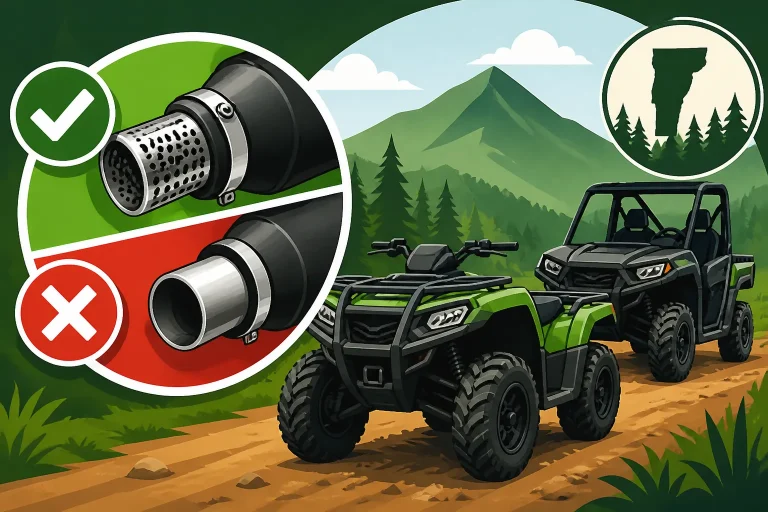
VASA trails may have route-specific spark-arrester rules. Check the local club or land manager, verify your exhaust, and keep noise compliance separate.
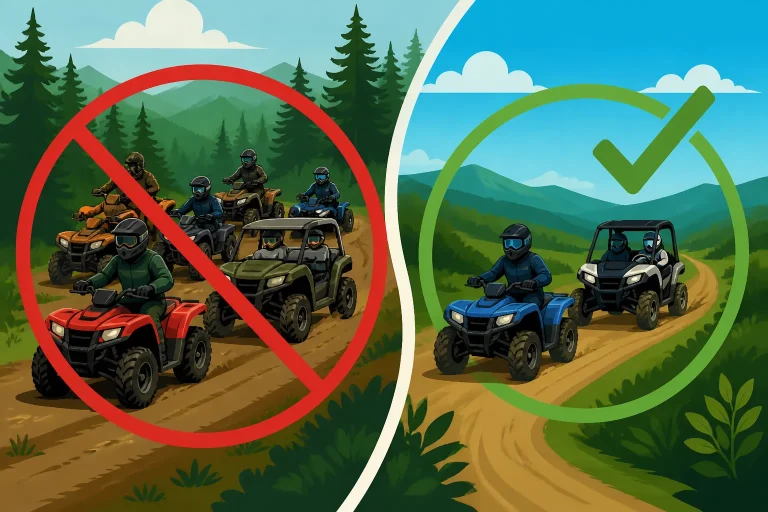
Vermont club trails may have local group limits or conditions. Check the maintaining club, respect land access, and split up when needed.
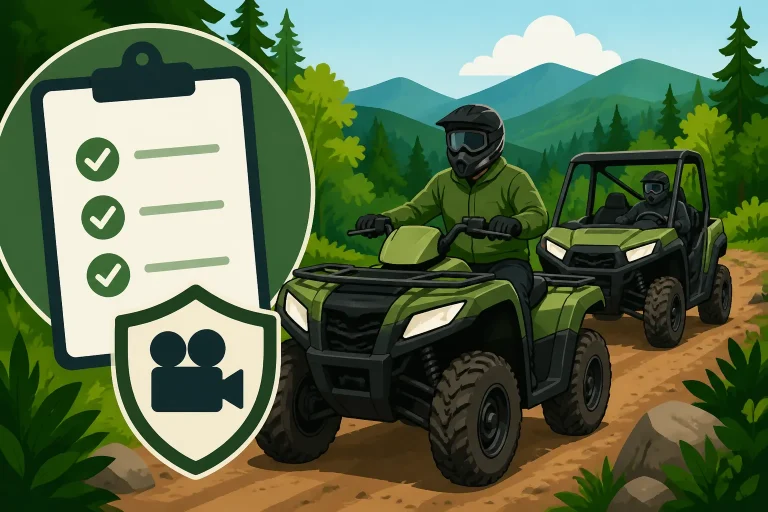
Vermont filming permits on a trail depend on land ownership, club rules and production impact; get written permission before recording or publishing.
Vermont commercial ATV guiding depends on route-specific permission, appropriate insurance, and checking machine and rider requirements before every tour.
Vermont riders under 18 may face enforcement for operating without required ATV safety training; check exemptions, carry proof and follow supervision rules.
Vermont ATV poker runs need route-specific permissions, town approval where applicable, and clear rider and insurance plans before the event.