Aging Out of Vermont’s Certificate Requirement at 18
Vermont’s ATV safety-certificate requirement ends at 18, but registration, trail access, supervision, insurance, and local riding rules still apply.
Your sticker stops at the state line.
Non-resident permits, what they cost and how long they last, and which states honor each other’s — or, increasingly, none at all.

Vermont’s ATV safety-certificate requirement ends at 18, but registration, trail access, supervision, insurance, and local riding rules still apply.

Turning 16 changes Vermont ATV and UTV supervision rules, but riders under 18 may still need safety training and must meet access requirements.

Instructor supervision helps new ATV riders practice skills, but Vermont law requires checking specific trail and highway rules.

Riding an ATV on your parents’ Vermont land can be simpler, but ownership does not automatically waive safety, access, or machine rules.
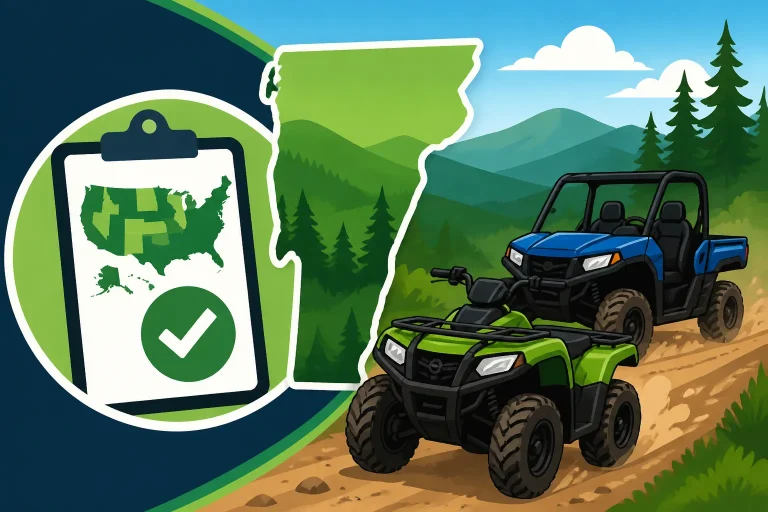
Out-of-state ATV safety courses may count in Vermont, but riders under 18 should verify acceptance and carry proof before relying on a certificate.

Which Vermont State Police accept ATV safety certificates, how out-of-state courses are treated, and what riders should carry to prove completion.
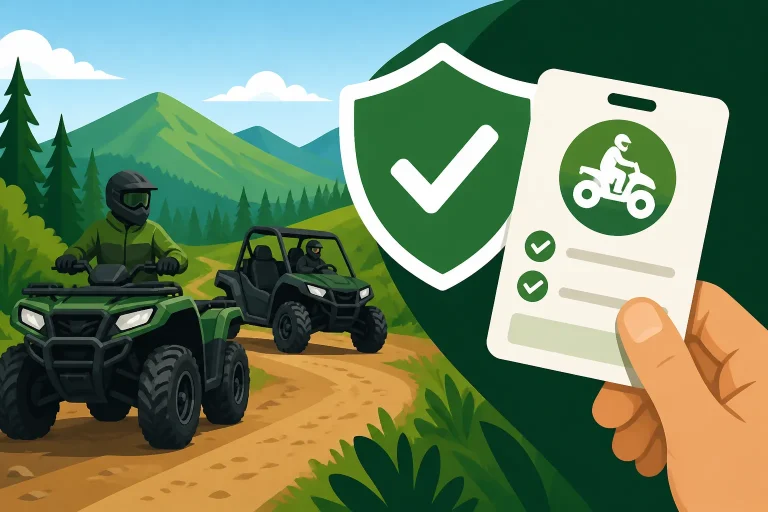
Vermont safety certificate rules require riders under 18 to carry proof of training, separate from machine registration and trail decals.
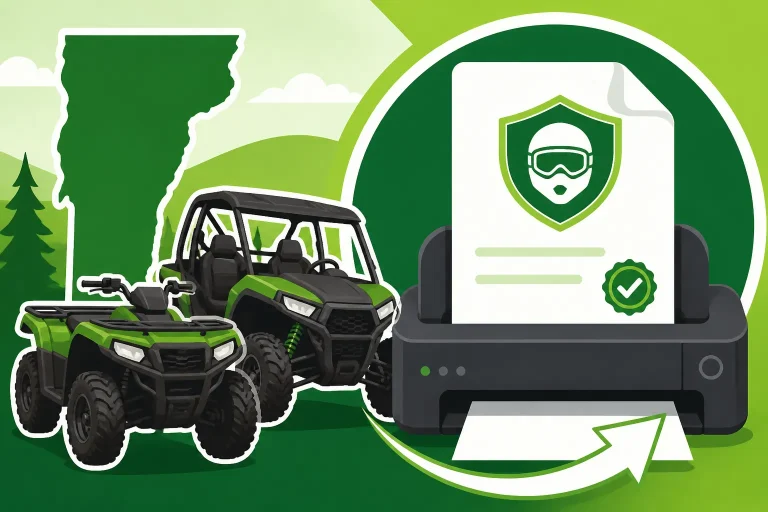
Printing your Vermont safety certificate: save a durable digital copy, print a readable paper copy, and carry proof when riding in Vermont.

Fifteen Vermont ATV safety practice questions explain the decisions young riders should understand, plus why a course certificate does not grant trail access.

Vermont’s online ATV safety course is reached through DMV’s approved-course information; confirm provider steps and keep proof of completion.