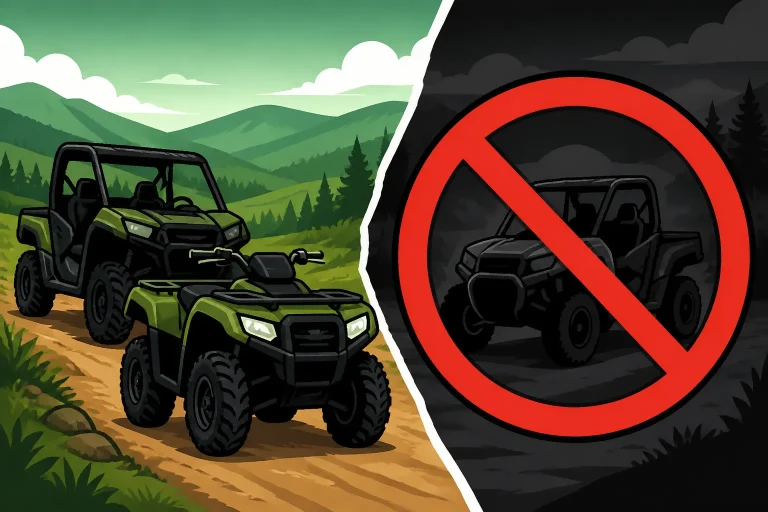
Bear Rock Adventures for Vermont Riders
Bear Rock Adventures is a New Hampshire option worth considering if you live in Vermont’s Northeast Kingdom or are planning a riding trip nearby. The main challenge is not just finding a machine: it is confirming where you can ride, what the rental includes, and how to handle the border crossing. Here’s how to assess the fit and plan a smoother day.
Why Vermont riders consider Bear Rock Adventures
Bear Rock Adventures is based in Pittsburg, New Hampshire, close enough to the northern Northeast Kingdom to be relevant when you are looking beyond Vermont for an ATV or UTV rental. The business is associated with a 100-acre property, but that fact alone does not tell you what a particular rental includes or where you will ride. Ask whether your booking covers riding on that property, a guided route, access to other trails, or some combination of those options.
That distinction matters because “rental” can describe several different experiences. One operator might rent you a machine for a set period on its own land. Another might lead a group on a guided ride. A package might combine machine time with a designated route or other services. Those options vary in supervision, route choice, pace and preparation. Get the details before you book rather than assuming that a machine rental automatically provides access to a large trail network.
Bear Rock can be a practical alternative for Vermont riders who want to try a machine without buying one, do not have a trailer, or are planning a trip around riding. It may also suit a group that wants to ride together but does not own matching machines. Whether it is the right choice depends on the current fleet, the ride format, the operator’s rules and how much time you want to spend traveling from your Vermont starting point.
Before making plans, check the business’s current availability and ask for the details of the exact date and package you are considering. Rental fleets, operating schedules, age policies, permitted routes and weather arrangements can change. A general description of an activity may not answer the questions that matter for your group: who drives, who rides as a passenger, what gear is provided, or what happens if conditions make the planned route unsuitable.
It also helps to separate three things that are easy to blur together:
- The rental: the machine and rental period.
- The ride: the location and route where the operator allows you to ride.
- The trip logistics: getting your group to Pittsburg, arriving on time and meeting any requirements.
A clear answer on all three makes it easier to compare Bear Rock with other options. For a broader look at what makes New Hampshire a nearby alternative, see [Vermont Rentals Compared to New Hampshire]. If you are still weighing whether to rent at all, Vermont ATV Rentals: Why They Are Scarce explains why looking just across the state line may be part of the search for Vermont riders.
Plan the trip from Vermont before you reserve
Pittsburg is in northern New Hampshire, so the trip can make sense for riders staying in or traveling through the Northeast Kingdom. It is less convenient if your lodging or starting point is far from the northern border, especially if the booking has a fixed arrival time. Check the full driving route from your actual lodging, not just the general distance between Vermont and New Hampshire. Add time for fuel, food, weather and any stops your group needs.
Do not assume that a rental business will provide a pickup, deliver machines to Vermont, or let you collect a machine somewhere other than its location. Ask where you must meet, when the group should arrive, how long check-in takes and what happens if you are delayed. If your group is staying at a lodge, confirm the transport plan with both the lodging provider and the rental operator. A short-sounding trip can become stressful when a scheduled orientation or departure is missed.
Vermont and New Hampshire are separate jurisdictions. Riding in one state does not mean you can simply continue onto any trail in the other. Confirm where the rental permits you to operate and whether the planned route stays in New Hampshire, uses designated connections, or requires additional permissions. Do not assume that a Vermont registration, decal or trail arrangement automatically covers a New Hampshire ride. Ask the operator what documentation is required for its specific route, and check the applicable official rules if you are bringing your own machine rather than using the rental fleet.
That distinction is especially important for visitors who are used to riding Vermont’s organized trail system. Vermont trail access depends on the route and the applicable access requirements; New Hampshire routes have their own arrangements. A rental operator may handle certain access details for its guided ride, but you should not treat that as permission to ride elsewhere before or after the booking. For Vermont’s own system, Vermont ATV Trails: The VASA System explains how trail access works, and Vermont TAD for a Visitor’s Machine is relevant if you plan to ride your own machine on Vermont trails.
Use a simple trip-planning checklist:
- Confirm the exact meeting location. Ask for the address and any specific entrance or parking instructions.
- Check the drive from your lodging. Use the actual starting point and allow a buffer rather than planning to arrive at the last minute.
- Ask about the schedule. Find out when check-in, orientation and the ride begin, and how early the group should be there.
- Confirm transport needs. Ask whether the operator supplies the machine at the meeting point or requires you to travel to its premises.
- Plan for the return. Check the expected end time, especially if you have dinner plans, a long drive or a lodging check-in.
- Recheck conditions before leaving. Ask about weather, route status and any operator updates that could affect the ride.
If you are comparing locations in northern Vermont, the articles Vermont Rentals Near Island Pond and Vermont Rentals Near Newport can help you think through where a rental fits with a Vermont-based stay. Bear Rock may be a sensible choice if its location, ride format and availability line up with your itinerary. It is not automatically the easiest choice just because it is near the border.
Decide whether to make it a ride-centered trip
For some groups, riding is the main event and the drive is a reasonable part of the day. For others, a rental is only one activity among several, and a long round trip can take up more time than expected. Be realistic about how much riding time remains after travel, check-in, orientation and return procedures. If the operator sells different ride durations, compare the actual time on the machine rather than looking only at the length of the booking window.
A longer rental period does not always mean more time on a trail. Some time may be used for paperwork, instruction, route briefing or equipment fitting. Ask what the clock covers and whether the ride begins at the scheduled start time or after the group has completed orientation. This helps prevent disappointment if your idea of a half-day outing differs from the operator’s schedule.
Choose the right rental and ride format
The first practical decision is whether you want an ATV or a UTV, also called a side-by-side. An ATV is generally operated by one rider straddling the machine. A UTV has a seated layout, commonly with a steering wheel and seat belts, and may allow passengers if the particular model and operator rules permit them. Do not choose based on appearance alone. Consider who will drive, who wants to ride as a passenger, the comfort of the group and the kind of experience you want.
A UTV can be appealing for couples, families or groups who would rather sit side by side than operate separate machines. However, passenger capacity is specific to the machine. A four-seat model is not a general promise that four people can ride in any configuration, and every passenger must have an approved seat and restraints as required by the operator. Ask for the actual machine layout and the maximum passenger count for your booking.
An ATV may suit someone who wants to operate their own machine and is comfortable handling it. It can also be a better fit when people in the group have different preferences and do not all want to share a vehicle. But a group booking needs coordination: find out whether the operator can provide enough machines, whether riders will be grouped by experience, and whether the ride pace allows the whole party to stay together.
Use this comparison as a starting point, then confirm the available models directly:
| Consideration | ATV | UTV |
|---|---|---|
| Seating | Typically operated by one rider | Seated arrangement that may carry passengers if the model allows |
| Best fit | Someone who wants to operate an individual machine | A group or pair that prefers a shared vehicle |
| Main questions | Who may operate, what experience is expected, and what controls are covered in orientation | Seat count, passenger rules, seat belts, and who may drive |
| Group planning | May require more than one machine for a group | May reduce the number of vehicles needed, depending on the fleet |
| Comfort and control | Rider must manage the machine directly | Driver operates while passengers ride in designated seats |
| Before booking | Confirm rider eligibility and any experience requirements | Confirm exact seating, driver rules and passenger arrangements |
Do not assume that every rental package offers every type of machine. Ask what is available for your date, whether you can select a particular layout, and whether the operator can guarantee the model or only a similar class. If you have a mobility concern, are traveling with a child or need a specific seat arrangement, explain that before reserving. A general statement that a machine is “family friendly” does not replace confirmation that your group can legally and comfortably use it.
The ride format is just as important as the vehicle. A guided ride usually means the operator sets the route and pace, with a guide leading the group. A self-directed rental, if offered, gives the renter more independence but may also come with limits on where the machine can go and when it must be returned. A ride on a private property may feel different from a longer route on a trail system. Ask the operator to describe the setting in plain terms: how much time is spent on the machine, what kind of terrain to expect, whether there are stops, and whether the route can be shortened or changed.
For newer riders, a guided experience may offer structure and an opportunity to ask questions before the ride begins. That does not mean it is automatically easy or suitable for everyone. Terrain, weather, visibility and group pace all affect how demanding a ride feels. Tell the operator if someone in your party has never driven an ATV or UTV, and ask whether the ride is appropriate for first-timers. You can also compare the questions in Vermont Rentals for First-Time Riders and Vermont Rental Orientation Sessions before you commit.
Match the machine to the group
A group booking works best when the person making the reservation knows who will drive and who will ride along. Make a list of adults and children, identify which adults are willing and eligible to operate a machine, and note any passenger needs. Then ask the rental business to confirm the seating plan. Do not wait until arrival to discover that a passenger cannot be accommodated in the chosen model or that the only available machine has a different layout.
For groups with mixed confidence levels, ask how the operator handles different speeds and skill levels. Some outings keep the party together at a controlled pace; others may have a minimum experience expectation. Find out whether an experienced driver can ride with a first-time passenger, whether each driver must complete the orientation, and whether a guide can adjust the route. These questions are not just about comfort; they help you decide whether the activity is a good fit for everyone in the group.
If children are part of the plan, ask about minimum ages, height or fit requirements, supervision, passenger seating and the operator’s safety rules. Do not infer that a child can ride because the machine has a passenger seat. The relevant rules may depend on the machine, the operator and the conditions of the activity. For more background on Vermont’s general rental considerations, see Vermont Rental Age and License Rules, but confirm Bear Rock’s own current requirements directly.
Check booking terms and the real cost
A rental’s advertised base cost, where one is shown, may not be the full amount you pay. The total can depend on the machine, the rental period, the number of riders, required coverage, taxes, deposits, equipment and any optional services. For a named provider, figures and terms can change, so check the current booking details with the operator rather than relying on an old post, screenshot or third-party summary.
Before paying, ask for an itemized explanation of what is included and what could be added. The goal is not to anticipate every possible charge; it is to understand the booking well enough to compare it fairly with another option. A package with a higher starting cost might include equipment or a guided route that another package treats separately. Conversely, a low advertised amount may not include everything your group needs.
Use these questions to clarify the terms:
- What machine and rental period does the booking cover?
- Is the price per machine, per rider or per group?
- What taxes, required charges or equipment costs are added?
- Is a deposit or card authorization required, and when is it released?
- Is damage coverage included, optional or not offered?
- What responsibility does the renter accept for damage, recovery or cleaning?
- Is fuel included, and how should the machine be returned?
- Are helmets or other protective items supplied?
- Does the booking include a guide or access to a specific riding area?
- What is the cancellation or weather policy?
- Can the reservation be changed if the group size or machine needs change?
Deposits and damage policies deserve special attention. A deposit, a temporary hold on a payment card and a damage charge are not the same thing. Ask what amount may be held, when the hold is released, what conditions could lead to a charge, and how damage is documented. Clarify whether the renter is responsible for recovery costs if the machine becomes stuck or cannot be ridden back. Read any waiver and rental agreement before signing, and ask for an explanation of language you do not understand.
Do not assume that your personal insurance or credit card benefit covers an off-road rental. Policies can contain exclusions, and coverage depends on the product and the specific activity. Ask the operator what protection it offers, what it does not cover and what you would be responsible for if an incident occurs. Then contact your insurer or card provider if you are relying on separate coverage. The article Vermont Rental Insurance and Deposits offers a useful checklist, while Vermont Rental Damage Policies focuses on how responsibility for damage can be handled.
Fuel is another detail that can create a needless surprise. Some operators include it; others specify how full the tank must be at return or handle fuel another way. Ask what applies to the machine you are booking. Likewise, find out what the operator considers normal mud or trail wear and whether cleaning expectations affect the return process. A ride in wet conditions may leave a machine dirty, but the operator’s policy—not your assumption—determines what happens next. See Vermont Rental Fuel Policies for additional questions to ask.
If you find a Bear Rock activity through a third-party marketplace such as Viator, compare the listing against the operator’s current information before you pay. Confirm the exact machine, date, duration, inclusions and cancellation terms with the booking provider, and ask Bear Rock about details the listing does not explain. A marketplace page can help you identify an activity, but it should not be treated as a substitute for understanding the rental agreement and ride requirements.
Requirements, safety and cross-border riding
The operator’s terms are the first place to check for driver eligibility, passenger rules and required identification. Do not assume that a regular driver’s license automatically answers every question about operating an ATV or UTV on a rental ride. Age rules can differ by machine, location and activity. Ask who is allowed to drive, what documents are required at check-in and whether every driver must be present for orientation.
If you are bringing your own machine rather than renting, the questions change. You will need to verify the registration and access requirements for the places where you intend to ride, and you should not rely on a rental operator’s included access as permission for your own vehicle. For a Vermont-based machine, Vermont Reciprocity for Out-of-State Machines and Vermont ATV Registration for Nonresidents may help clarify Vermont-side considerations for visitors, but they do not replace checking the rules where the ride takes place.
A rental orientation is an important part of the activity, not a formality to rush through. Pay attention to the controls, braking, turning, safe spacing and what to do if the machine stalls or becomes disabled. Ask how to communicate with the guide or operator, what to do if the group separates, and whether phones work along the route. If you are unsure about a control or instruction, say so before starting. It is much easier to resolve uncertainty in the staging area than on a trail.
Protective gear matters even when the operator supplies some items. Find out what is included, what you must bring and whether there are requirements for fit or condition. Wear clothing and footwear suitable for outdoor riding, and plan for changing temperatures or rain. If your group needs eye protection, gloves or weather layers, ask whether the operator provides them or expects you to arrive prepared. A helmet being available does not necessarily mean all personal gear needs are covered.
Follow the guide and stay on the authorized route. A machine that can physically leave a marked route is not thereby allowed to do so. Avoid assuming that land that appears open is available for riding; property access depends on permission and the operator’s arrangement. Do not cross into a neighboring trail or onto private land unless the operator explicitly says the route allows it. This is one reason to clarify exactly where the rental takes place and who controls access.
Weather can change the experience quickly. Rain may affect traction and visibility; cold or wet conditions can make a ride uncomfortable; storms or route conditions may lead to a delay, alteration or cancellation. Ask how the operator makes that decision and when it will contact you. If you are traveling from Vermont, understand the cancellation process before starting the drive. Do not assume that a ride will go ahead simply because the reservation is confirmed.
For groups with children or new riders, agree on a few simple rules before arriving: listen to the guide, keep the assigned distance, do not pass without permission, and stop where instructed if there is a problem. Make sure each person understands that the driver is responsible for operating only within the rules explained during orientation. Passengers should not distract the driver or interfere with controls. The operator may have specific policies that go beyond these general precautions, and those policies should guide the ride.
Build a practical day around Bear Rock
A successful rental day is mostly a matter of removing avoidable surprises. Before departure from Vermont, check the booking confirmation, identify the meeting point and make sure each person knows what to bring. Keep a copy of the operator’s contact details accessible. If your group is splitting into separate cars, share the schedule and address with everyone rather than relying on one person to relay details while driving.
Pack for an outdoor activity, not just a short trip in a vehicle. Clothing that can get dirty, sturdy footwear and layers are sensible starting points. Bring any personal items the operator says are required, but avoid carrying loose belongings that could interfere with riding. Ask whether small bags can be secured on the machine and whether food or water can be carried. If the operator restricts items, follow that rule rather than improvising storage.
A practical pre-ride checklist might include:
- Booking confirmation and any required identification
- The names of all drivers and passengers, as registered
- Payment card or other required payment method
- Appropriate clothing and footwear
- Personal protective items the operator asks you to bring
- Water and any needed personal medication
- A plan for phones, keys and other loose items
- The operator’s contact details and return-time expectations
Arrive with enough time to handle paperwork, gear and questions. If someone in the group is nervous, tell the operator before the ride starts. A good briefing should make the controls and procedures clear, but it is the rider’s responsibility to speak up when something is unclear. Do not feel pressured to keep up with a pace that feels unsafe. Ask the guide how to signal for help or request a stop.
At the end of the ride, follow the return instructions carefully. Ask where to park the machine, whether it needs to be refueled or cleaned, and whether the staff will inspect it with you. If you notice damage or a mechanical issue, report it immediately and describe what happened factually. Take note of any return procedure for equipment and keys. Clearing up these details at the location is usually easier than trying to resolve them later.
If the outing is part of a larger Vermont vacation, keep the day’s schedule flexible. Travel time, check-in and the ride itself can take longer than a simple map estimate suggests. Avoid putting a tight dinner reservation or a second timed activity immediately after the expected return. If the rental is a special part of the trip, give it enough space to be enjoyable rather than turning it into a race against the clock.
Booking as a group
One person should take responsibility for gathering the details, but every participant should know the key rules. Share the meeting time, clothing guidance, cancellation policy and payment arrangement before the trip. Confirm the final headcount early, especially if the group needs multiple machines or a particular UTV seating layout. If plans change, notify the operator promptly rather than showing up with more riders than the booking covers.
For a larger group, ask whether the operator can accommodate everyone in one time slot and whether the ride is conducted as a single group. Confirm how many machines can be reserved together, whether different vehicle types can be mixed and whether the operator uses a guide for the full group. A party may have to split into separate departures or adjust its vehicle choices. Do not assume that “group booking” means every participant rides together for the entire outing.
If people have different comfort levels, discuss that openly. A first-time driver may prefer a slower, more structured outing, while an experienced rider may want a different pace. The rental operator can explain whether it can accommodate mixed experience or whether the group should select a particular format. For more planning ideas, Vermont Rentals for a Group Trip covers the questions that help a group avoid mismatched expectations.
Is Bear Rock a good fit for your Vermont trip?
Bear Rock Adventures is worth investigating if your plans put you near Pittsburg and you want a rental experience in northern New Hampshire. Its location and connection to a 100-acre property may make it appealing, but the details that determine fit are the current booking options, permitted riding area, available vehicles and policies. Confirm those directly before building your trip around the name.
It is likely to be a stronger fit when you can travel to the meeting point without stress, the operator has a machine that suits your group, and the ride format matches what you want. It may be less suitable if you need a Vermont pickup, require a very specific machine or passenger arrangement that is unavailable, or expect to ride a Vermont trail network under the rental booking. Those are not minor details: they affect cost, timing and whether the outing works at all.
Use a short final checklist before reserving:
- Is the meeting location convenient from your Vermont lodging?
- Is the ride guided, self-directed or limited to a designated property?
- What exact machine and seating arrangement are available?
- Who may drive, and what age or license requirements apply?
- What is included in the booking, and what costs extra?
- What deposit, damage, fuel and cancellation terms apply?
- What should each person bring, and what is provided?
- What happens if weather or trail conditions change the plan?
If the answers are clear and the ride suits your group, Bear Rock may be a useful addition to a Vermont-area trip even though it is across the state line. If the answers are vague, keep comparing options before paying. The best rental is not necessarily the closest one or the one with the most appealing description; it is the one whose location, vehicle, rules and ride experience match your actual plans.
Frequently Asked Questions
Is Bear Rock Adventures in Vermont?
No. Bear Rock Adventures is based in Pittsburg, New Hampshire. Vermont riders may consider it because it is in the northern border region, but the rental location and ride permissions are in New Hampshire unless the operator confirms otherwise for a particular activity.
Does a Bear Rock rental let me ride Vermont trails?
Do not assume so. Ask the operator exactly where the rental ride takes place and what access is included. A booking in New Hampshire does not automatically provide access to Vermont trails, and Vermont trail requirements should be checked separately if you plan to ride there.
Can a group rent a UTV together?
That depends on the models available and their approved seating. Ask Bear Rock to confirm the exact seat count, who may drive, passenger requirements and whether the vehicle you want is available for your date.
What should I confirm before paying?
Confirm the meeting location, ride format, machine, eligibility rules, inclusions, deposit and damage terms, fuel policy, cancellation process and weather plan. Get answers for your specific date and group rather than relying on a general listing.
Disclaimer
This article is for general informational purposes only and does not constitute professional advice. Laws, prices and regulations vary by location and change over time. Consult a qualified professional for guidance on your specific situation.