Vermont Online Safety Course at $34.95
Vermont’s online ATV safety course can be a convenient way for younger riders to complete required safety training, but the listed $34.95 cost is only one detail to check. Before enrolling, confirm that the course is accepted in Vermont, that the rider meets its age requirements, and that the certificate will be available when it is needed.
What the Vermont online safety course is for
The online course is intended to help riders understand safe ATV operation and Vermont’s rules before they ride. It covers foundational topics such as preparing a machine, riding responsibly, and recognizing hazards. Completing it may also satisfy a safety-certificate requirement for a rider under 18, provided the course is one Vermont accepts and the rider meets the applicable requirements.
A course certificate is not the same as an ATV registration, a trail access decal, insurance, or permission to ride on a particular property. These requirements address different things:
| Requirement | What it does | What it does not do |
|---|---|---|
| Safety certificate | Shows that a rider completed accepted safety training | Register a machine or grant access to trails |
| ATV registration | Identifies a machine for registration purposes | Prove that a rider completed safety training |
| Trail access decal | Supports access to trails that require it | Replace registration or a safety certificate |
| Insurance | Provides the coverage required for applicable riding | Give permission to ride on private land |
| Landowner or route permission | Allows access where permission is needed | Replace any required training, registration, or insurance |
That distinction matters when planning a ride. A rider can complete a course and still be unable to use a particular trail because the machine is not registered, the required decal is missing, or the route is not open to ATVs. For trail access, see Vermont Requires Registration Plus a TAD and Which Trails a Visitor Decal Opens for You.
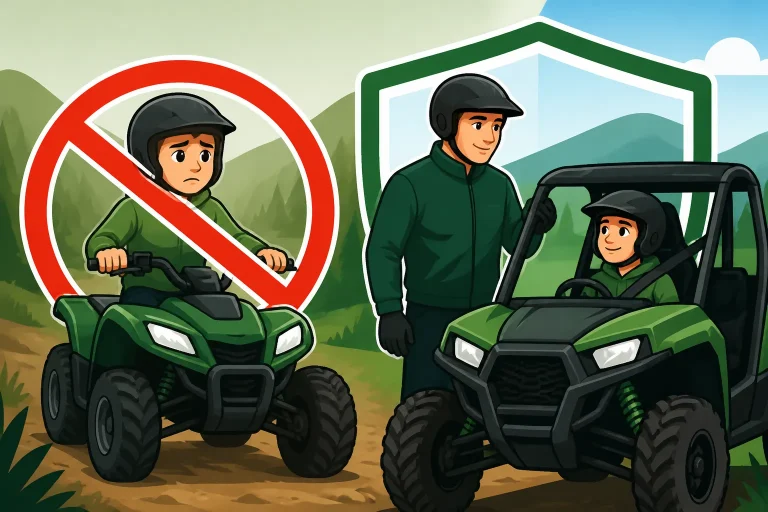
The course requirement is especially relevant to young riders. Vermont’s rules include an age-based safety-certificate requirement, but the specific circumstances and exceptions matter. Before relying on a certificate or an exception, check the current state requirements and make sure they apply to the rider, machine, and place where the ride will happen. Vermont ATV Safety Course Required Under 18 explains the age-related requirement in more detail.
What the $34.95 course cost means
The course title refers to a listed price of $34.95. Treat that amount as a starting point, not a guaranteed total or a permanent fee. Online course providers can change their charges, and the checkout page may show what is currently due. Check the provider’s current terms before paying, including whether the displayed price covers the course and certificate or whether any optional items are offered separately.
The fee is for the training service. It does not cover other costs associated with riding, such as machine registration, a trail access decal, insurance, protective equipment, or travel to a riding area. Those costs are separate and depend on the rider’s circumstances and where the machine will be used. For a broader look at the training charge, see Vermont Safety Course Cost.
A sensible way to assess the course cost is to check these details before entering payment information:
- Current total: Confirm the amount shown at checkout rather than relying only on a search result or an older reference.
- What is included: Check whether the charge includes access to the learning material, the final assessment, and the certificate.
- Extra options: Review any optional products or services carefully so you do not assume they are required.
- Refund and retake terms: Read the provider’s rules in case the rider cannot finish, needs to retake an assessment, or enrolls by mistake.
- Certificate delivery: Confirm how the certificate is provided and whether it can be printed or saved after completion.
The lowest advertised price is not necessarily the most useful comparison if the course is not accepted for Vermont’s requirement or if the certificate is difficult to retrieve later. Make acceptance, age eligibility, and certificate access your first checks. Then compare the current total and course format.
How to choose and complete an accepted online course
Before enrolling, confirm that the course is the one Vermont recognizes for the rider’s situation. Start from an official Vermont source or an approved course listing, then follow its current enrollment directions. Avoid choosing a course solely because it mentions ATV safety or appears in a general online search. A safety course designed for a different state, vehicle type, or audience may not meet Vermont’s requirements.
The steps below help reduce the risk of paying for the wrong course.
- Check the rider’s age and situation. Confirm whether the rider needs a certificate and whether any exception applies. The minimum age for the course and the age when a certificate is required are separate questions. See Vermont Safety Course Minimum Age for the course-age issue.
- Verify Vermont acceptance. Make sure the course is accepted for the certificate requirement that applies to this rider. If the listing is unclear, confirm with the appropriate Vermont authority before enrolling.
- Review the format and requirements. Check whether the course is fully online, whether an adult needs to assist, what equipment or software is required, and whether the rider can pause and return later.
- Use the rider’s correct information. Enter the name and other required details carefully. A spelling error or incorrect birth information can make it harder to match the certificate to the rider.
- Complete all required sections. Do not assume that opening the course or watching some material is enough. Follow the provider’s process through the final assessment and any required confirmation.
- Save the certificate. Download or print it, and keep a digital copy in a place the family can find later. Check that the rider’s name is correct and that the document shows completion.
The details of online enrollment can change, so use the current instructions from the accepted course provider. Where to Sign Up for Vermont’s Online Course can help with the next step, while Fifteen Questions on a Final Test is relevant if you want to understand the kind of assessment a course may use. Do not rely on practice material as a substitute for completing the actual approved course.
Before you pay
Take a moment to compare the course page with the information you have about the rider. Check the spelling of the course name, the state it serves, the age requirements, and the way it issues a certificate. If the page does not clearly explain whether the course satisfies Vermont’s requirement, pause and confirm before paying.
Also consider who should manage the account. A parent or guardian may need to help a younger rider understand instructions, track progress, and store the final document. That does not necessarily mean an adult should complete the course or assessment for the rider. Follow the provider’s rules about who must take the course and whose name belongs on the certificate.
During the course
A self-paced online course can be useful because the rider can work through the material in manageable sessions. That flexibility does not make it a good idea to rush. The training is most useful when the rider can focus, understand the material, and ask questions about anything unclear.
Keep a note of the provider’s login details and any completion instructions. If the rider uses a shared family device, make sure the course account is saved in a way that can be accessed again. Before closing the final page, confirm whether a separate step is required to finish or retrieve the certificate.
Certificate rules, age requirements, and exceptions
A certificate is evidence of completed training; it does not change the rider’s age or remove other restrictions. Vermont’s under-18 requirement is one part of the wider rules for young riders. Supervision requirements, permitted riding locations, machine suitability, and any applicable route restrictions may still matter.
The online course’s minimum enrollment age should not be confused with the age at which Vermont requires a certificate. A rider may be old enough to take the course before the certificate is required for that rider, or an exception may apply in a limited setting. Check both questions independently: whether the rider is eligible for that course and whether the rider must carry or hold a certificate for the planned ride.
Some situations may have specific exceptions, such as riding on family land or under an instructor’s supervision. Do not assume that an exception applies to every ride on private property or to every adult who is present. Read the current rule closely and confirm that the person, property, activity, and supervision meet its conditions. For related details, see Vermont Course Exception on Family Land and Vermont Supervision Rules Under 16.
A certificate also does not automatically serve as proof of permission to ride on private land. A property owner’s permission, a trail organization’s access requirements, and town or state rules remain separate. A rider who has completed training should still confirm that the intended route is open and that the machine has the necessary documents and decals.
Does the certificate expire?
Safety certificates and annual riding permissions are not the same kind of document. A training certificate may remain valid after the course is completed, while a trail access decal or other seasonal requirement may need renewal. Do not assume that an older certificate has expired simply because another riding document has, but do confirm that Vermont accepts it for the rider’s current situation. Vermont Safety Certificates That Never Expire covers the certificate’s validity question.
If the certificate is lost, first check the course account or provider instructions for retrieving it. If it cannot be found, contact the provider or follow the current Vermont process for verifying completion. Vermont Safety Certificate Lookup and Printing Your Vermont Safety Certificate are useful for those tasks.
What to carry and what to check before riding
Once the rider has completed the course, keep the certificate accessible. A printed copy can be useful if a phone battery dies, a device has no signal, or the document is difficult to open at a trailhead. A digital copy can serve as a backup, but do not rely on a single copy stored only on a device that may be left at home or damaged.
Whether a rider must carry the certificate at all times can depend on the applicable rule and circumstances. Check the current requirement rather than treating a saved certificate as either always mandatory or never necessary. For practical tips on keeping proof available, see Carrying Proof of Training and Which Safety Certificates Vermont State Police Accept.
Before the first ride, check each item separately:
- The rider has completed the accepted safety course if one is required.
- The certificate has the correct name and can be retrieved or shown.
- The machine has the required registration and identification.
- The machine has the trail access decal required for the planned trail system.
- The rider has permission to use the property or route.
- Any required insurance is in place, and proof is available as needed.
- The rider meets applicable age, supervision, equipment, and passenger rules.
That last check is important because completing an online class is not hands-on permission to operate every ATV or UTV. The rider still needs to understand the machine’s controls and limits, use appropriate protective gear, and follow manufacturer guidance. Online training can prepare a rider with knowledge, but it cannot make an unsuitable machine safe or replace careful practice in an appropriate setting.
Frequently Asked Questions
Is the Vermont online safety course listed at $34.95?
The course title reflects a listed price of $34.95. Course charges can change, so confirm the current total and what it includes on the accepted provider’s checkout page before enrolling.
Does completing the course register an ATV?
No. Safety training and machine registration are separate requirements. Completing a course does not register the machine, provide insurance, or grant trail access.
Can a younger rider take the course before it is required?
The course’s minimum age and Vermont’s certificate requirement are different questions. Check the current course eligibility rules and the state requirement for the rider’s age and circumstances before enrolling.
Does the certificate expire?
A safety certificate is different from a seasonal decal or registration document. Confirm the certificate’s current validity and keep a copy that can be retrieved when needed.
Is an online certificate enough to ride anywhere in Vermont?
No. A certificate does not establish permission to ride on every road, trail, or property. Registration, decals, insurance, landowner permission, and local access rules may also apply.
Disclaimer
This article is for general informational purposes only and does not constitute professional advice. Laws, prices and regulations vary by location and change over time. Consult a qualified professional for guidance on your specific situation.