Vermont Riding Areas That Rent Machines
A common Vermont ATV trip snag is finding a machine to rent and a legal place to ride it in the same area. Rental options inside Vermont are limited, and a rental reservation does not automatically grant access to VASA trails or town roads. This guide explains where to start looking, how nearby New Hampshire options fit in, and what to confirm before you book.
Where to Look for ATV Rentals Near Vermont Riding Areas
Vermont’s riding opportunities and rental businesses do not always line up neatly. Much of the state’s ATV trail network depends on permission to cross private land, while a rental business also needs machines, staff, insurance, and a place where guests can ride. That makes it important to ask about both the rental and the riding access—not just whether a machine is available.
Start with the Northeast Kingdom
The Northeast Kingdom, especially the Island Pond, Averill, Newport, and Derby areas, is a natural starting point for riders planning a trip. These communities are associated with ATV riding, but that does not mean every nearby trailhead has a rental counter or that every route is open to a rented machine. Availability and access can depend on the operator, the season, local club permissions, and current trail conditions.
If you are staying near Island Pond, ask lodging providers and local businesses whether they can point you toward a rental operator or guided ride. Some businesses may help guests arrange an experience, while others may simply know which nearby towns have options. Treat those recommendations as a lead to investigate, not a guarantee that a rental can be delivered to your lodging or that a trail pass is included. For area-specific planning, see [Vermont Rentals Near Island Pond](Vermont Rentals Near Island Pond).
Newport and Derby can also work as trip bases, but the same distinction applies: being close to a riding community does not necessarily mean there is a walk-in rental business nearby. Ask about the machine pickup location, where the ride begins, and whether the operator handles trail access requirements. These questions can save you from booking a place to stay and then discovering that the rental starts across the border or requires a separate transportation plan. Related location guides include [Vermont Rentals Near Newport](Vermont Rentals Near Newport) and [Vermont Rentals Near Derby](Vermont Rentals Near Derby).
Consider a Border-Area Rental in New Hampshire
For visitors who want to ride near Vermont’s Northeast Kingdom, Pittsburg, New Hampshire, is one nearby area to investigate. Businesses such as Bear Rock Adventures operate in Pittsburg, and Northeast ATV Rentals is another New Hampshire name riders may encounter while researching the region. These are not Vermont rental locations, so confirm directly where a trip begins, which routes or property the rental uses, and whether the operator serves Vermont-based guests.
A cross-border rental can still be practical, but do not assume that a machine rented in New Hampshire can simply be taken onto Vermont trails. The rental contract, registration, required trail access decal, insurance, and route permissions all matter. Ask the rental company to explain what is covered and what you must arrange yourself. For a broader look at the border-area tradeoff, read [Vermont Rentals Compared to New Hampshire](Vermont Rentals Compared to New Hampshire).
The table below gives you a starting point for comparing areas. It is not a live inventory of rental fleets; use it to decide whom to contact and what details to verify.
| Area to investigate | Why it may be useful | What to confirm before booking |
|---|---|---|
| Island Pond and the Northeast Kingdom | A familiar base for exploring the region’s ATV-riding culture | Whether a rental operator is nearby, where the ride starts, and whether trail access is included |
| Newport and Derby | Convenient towns to investigate when planning a Northeast Kingdom stay | Whether the operator is actually in the area or only serves it by arrangement |
| Averill | A lodging option to ask about when planning a remote northern Vermont trip | Whether lodging can help arrange a rental, and where the machine must be picked up |
| Pittsburg, New Hampshire | A border-area place to investigate for rental businesses and guided experiences | State-of-rental location, route permissions, insurance, and Vermont access requirements |
| Gorham, New Hampshire | Another New Hampshire location riders may encounter in rental searches | Travel distance, pickup logistics, and whether the ride is in New Hampshire or Vermont |
Ask Lodging Providers What They Actually Arrange
A lodging provider can be helpful, particularly if you are staying in a rural area with limited transportation. But “we can help with ATV riding” could mean anything from suggesting a nearby company to arranging a guided trip. It may not mean that the lodge owns machines, delivers them, or includes trail access in your stay.
Quimby Country in Averill is one name visitors may come across when researching Vermont stays and ATV guests. Before building your itinerary around a rental, ask the property what it can arrange, where you would collect the machine, and whether you need to travel to New Hampshire for the ride. A lodging package and an ATV rental are separate services unless the provider clearly confirms otherwise. The related guide [Vermont Lodging That Arranges Machines](Vermont Lodging That Arranges Machines) can help you think through those logistics.
When you call, describe your group plainly. Say how many adults and children are coming, whether anyone needs a passenger seat, and whether you have a truck or trailer. A provider may have a machine available but no suitable option for your group size, or may not be able to accommodate a young passenger. Asking early gives you time to change plans rather than trying to solve those details at check-in.
What to Confirm Before You Reserve
A rental is only one part of the plan. You also need to know where you can ride, what paperwork or access requirements apply, and what the business expects you to bring. Get the answers in writing when possible, especially if you are traveling a long distance.
Find Out Exactly Where the Ride Takes Place
Ask whether the rental is for a guided ride, an unguided route, or use on the operator’s private property. These are very different experiences. A guided ride may follow a route selected by someone familiar with local access, while a machine rented for private property may not come with permission to ride elsewhere.
Vermont’s VASA trail system relies on access across private land. A trail shown on a general map is not automatically open to every rider, and permission can change. Do not assume that a rented machine can use a nearby corridor just because it is physically close to the rental location. Ask the operator which exact route or riding area is available, whether it is open for your planned date, and what happens if a section closes.
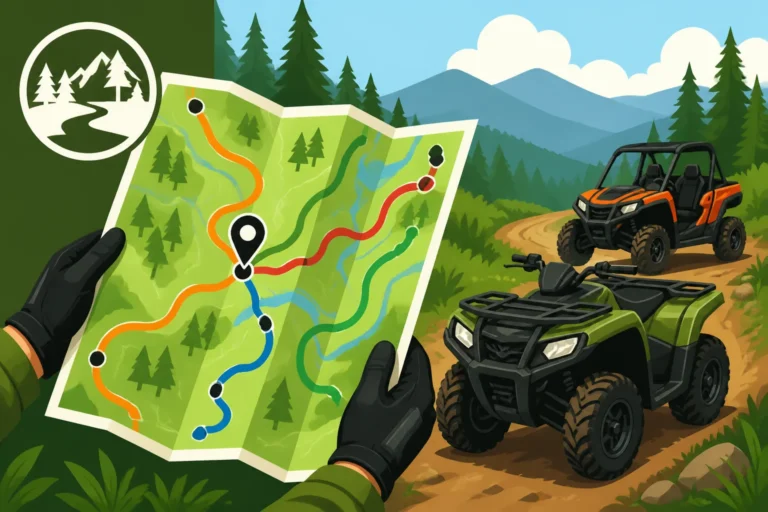
Mapping apps can help you plan, but they should not replace the operator’s instructions or official trail information. onX Offroad can be useful for reviewing route details and preparing for areas where cell service may be limited. Still, confirm that the route is currently permitted and open before setting out. A line on a screen is not proof of landowner permission.
Clarify Registration, Decals, and Insurance
Before you pay a deposit, ask who is responsible for the machine’s registration and any trail access decal required for the ride. A rental business may handle some requirements, but you should not assume that every rental includes a Vermont TAD or that a decal for one machine can be moved to another. The practical question is simple: “What documents or decals must be on this machine before we ride?” For more detail, see [Vermont Rental Machines Need a TAD](Vermont Rental Machines Need a TAD).
Ask what insurance the rental provides and what your own responsibility may be if the machine is damaged or involved in a collision. A rental waiver is not necessarily the same thing as insurance, and neither should be treated as a substitute for reading the agreement. If the machine will be used on a Vermont route or road, confirm that the rental arrangement allows that specific use.
If you are bringing your own machine across the border, the requirements may differ from those for a rental. Visitors should check how their home registration is recognized and whether a separate access decal is needed for the trail system they plan to use. The guide [Vermont Reciprocity for Out-of-State Machines](Vermont Reciprocity for Out-of-State Machines) is a useful place to start.
Check the Machine and Passenger Rules
Ask what type of machine you will receive: ATV, side-by-side, two-seat model, or a larger multi-seat vehicle. Do not book based only on a model name or a photo. Confirm the number of manufacturer-approved seats, passenger rules, and any weight limits the rental company enforces. A machine with a passenger seat may still be unsuitable for a particular child or group.
Also ask what safety gear is supplied. Find out whether helmets are included, whether eye protection is required, and whether you should bring long pants, boots, gloves, or rain gear. Vermont weather can change quickly, and a cool, wet ride feels very different from a warm afternoon on a dry road. If a rental business gives specific equipment instructions, follow those rather than relying on a generic packing list.
For young riders, ask about age restrictions, supervision, and required safety training before you reserve. The rental company may set rules that are stricter than the general rules that apply to riding. Do not assume a child can ride as a passenger simply because the machine has multiple seats.
Understand the Deposit, Damage, and Weather Terms
Rental agreements can differ substantially. Read the cancellation policy, damage rules, deposit requirements, fuel expectations, and return instructions before paying. Ask whether the company requires a credit card in the primary renter’s name and whether a temporary card hold may be placed. Do not rely on a verbal “it should be fine” if the written agreement says something different.
Clarify what happens if rain, a trail closure, or a mechanical problem interrupts your ride. A wet day may not automatically qualify for a refund, and an alternate route may not be available. Ask whether the provider reschedules, changes the ride, or applies a cancellation policy in those circumstances. This is especially important if your trip is built around a single riding day.
Planning Your Vermont Rental Ride
A little advance planning makes a big difference when rental choices are limited. The goal is to connect your lodging, pickup point, permitted riding area, and return plan before you arrive.
Use Maps as a Planning Aid, Not Permission
A mapping app such as onX Offroad can help you get oriented, save reference points, and think through distances. Download or save the information you need before entering a dead zone, and carry the rental operator’s directions as well. Trail signs, gates, and local instructions take priority over an app route.
For Vermont specifically, avoid assuming that a road or track is open to ATVs because it appears on a map. Town road access can depend on local designation, and private trail access depends on permission. The VASA system is not a blanket invitation to ride every track in a region. Check club and operator information before you travel, and respect closures even if an older map still shows a route. See [Vermont Trail Maps Still Coming](Vermont Trail Maps Still Coming) for more on why trail-map information can require extra care.
If you use onX Offroad, treat it as one layer of trip preparation rather than your sole source of access information. Save the rental shop’s phone number, pickup address, and any written route instructions offline. That way, a weak signal will not leave you guessing at a junction or trying to locate a return point from memory.
Build in Time for Pickup and Orientation
A rental ride often starts with paperwork, a machine walk-through, and a safety orientation. Plan to arrive with enough time to listen carefully, ask questions, and inspect the machine. If you are traveling with a group, have one person confirm the booking details while another checks that everyone has the required gear and identification.
During the handover, ask how to start and stop the machine, use the controls, engage four-wheel drive if applicable, and respond to a warning light or breakdown. Find out what to do if you get separated from a guide or group. Take note of any existing scratches or damage and follow the rental company’s process for documenting them before departure.
Do not rush through the route briefing. A local operator may explain where to slow down, how to handle gates, or which sections are off-limits. Those details can protect both your group and the land access that makes riding possible. For more trip-planning context, [Vermont ATV Tours and Guided Options](Vermont ATV Tours and Guided Options) covers the differences between a guided outing and riding on your own.
Respect Closures and Private Property
Vermont riding depends on cooperation among riders, landowners, clubs, and towns. Stay on the route you are authorized to use, close gates as instructed, and do not create a detour around a muddy or closed section. A tempting shortcut can cross land that is not open to riders or damage a trail that a club is trying to maintain.
If a trail is muddy, flooded, or posted closed, follow the closure. Conditions can change after rain, and a route that was usable earlier may no longer be safe or appropriate. Ask the operator what to do if you encounter a closure during the ride rather than deciding on the spot to continue along an unmarked route.
A rental company’s permission to use its machine is not permission to ride anywhere in the region. Keep that distinction in mind whether you are following a guide, using a designated property, or planning a wider route. It is one of the simplest ways to avoid an unpleasant conversation with a landowner or local official.
A Practical Booking Checklist
Before you reserve, make one call or send one message that covers the details below. If the answers are vague, ask for clarification before paying.
- Location: Where exactly do we pick up the machine, and where does the ride begin?
- Route: Is the ride guided, limited to private property, or approved for a specific trail route?
- Access: Are registration, trail decals, and other access requirements handled by the rental company?
- Machine: What model or machine type is available, and how many approved seats does it have?
- Riders: What age, license, training, passenger, or supervision rules apply?
- Gear: Which helmets and safety items are supplied, and what should we bring?
- Costs and payment: What is included in the quoted rental charge, and what deposit or card requirements apply?
- Damage and cancellation: How are damage, breakdowns, bad weather, and trail closures handled?
- Transportation: Can the machine be delivered, or do we need a truck or trailer?
- Local contact: Who should we call if we are delayed, lose cell service, or need help during the ride?
For the Northeast Kingdom, begin by asking around Island Pond, Newport, Derby, and Averill, then broaden the search to nearby New Hampshire if Vermont-based options do not fit your plans. Confirm the exact riding location and access rules before you book. That extra step helps turn “we found a rental” into a ride that is legal, practical, and enjoyable.
Disclaimer
This article is for general informational purposes only and does not constitute professional advice. Laws, prices and regulations vary by location and change over time. Consult a qualified professional for guidance on your specific situation.