Vermont Campgrounds Near a Trailhead
A Vermont camping trip can look simple on a map: book a site near a trail, unload the ATV, and head out. The frustrating part is that “near” does not always mean connected or open to riding. This guide explains how to choose a practical campground base, confirm legal trail access, and plan for towing, parking, weather, and Vermont’s changing trail conditions.
What “Near a Trailhead” Really Means in Vermont
A nearby campground may not connect directly to a trail
In Vermont, a campground can be close to a trail corridor without having a legal route between the campsite and the trail. A road, private driveway, closed section, or unapproved connection may sit between the two. Don’t assume you can ride out of the campground just because you can see a trail on a map or hear machines nearby.
Many Vermont ATV routes rely on permission to cross private property. That permission can apply to a specific marked corridor, not every road or field in the area, and access can change. Before booking, ask the campground whether guests may ride directly from the property to an open trail. Then confirm the route with the club responsible for that corridor.
It helps to think of “near a trailhead” in three different ways:
- Direct trail access: A designated, currently open route connects the campground to the trail system.
- A short legal ride away: You can reach a trail by riding an approved connection, subject to local rules.
- A short tow away: The campground is a convenient place to stay, but you’ll need to trailer the machine to a legal staging area.
That last option is often the most realistic. A campground can still be an excellent base even when it isn’t connected to a trail. The key is knowing whether you’ll ride from camp or load up each morning.
Start with the trail network, then choose your campsite
The VASA system is made up of club-maintained corridors, and the local club is an important source of information about access and closures. For a broad overview, start with [Vermont ATV Trails: The VASA System]. Then look for a campground near the region you actually want to ride rather than choosing a campsite first and hoping a suitable trail appears nearby.
Island Pond, Newport, and Derby are common Northeast Kingdom bases to investigate. They put you in a region known for ATV riding, but that does not mean every campground in those towns has direct trail access. Brighton State Park, near Island Pond, is one example of a camping location travelers may consider as a regional base; confirm the current riding connections and rules before you book. A campground near Newport or Derby may work better if your chosen riding area or group’s plans are centered farther west.
Other parts of Vermont may suit a different kind of trip. If your group is traveling from central Vermont, a campground near Barre or Montpelier may reduce the drive to your overnight stop, but it may not put you close to the Northeast Kingdom’s riding corridors. Think of your destination, trail access, and overnight location as three separate pieces to match—not as one automatic package.
Treat maps as a planning aid, not permission
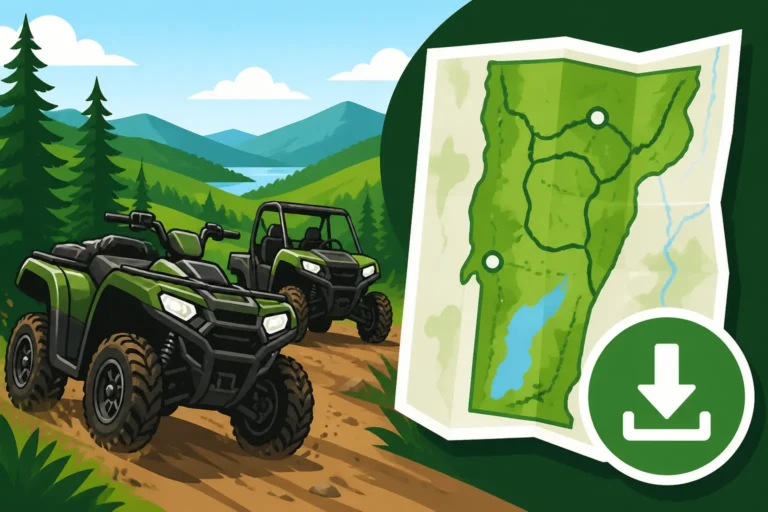
A digital map is useful for comparing campground locations, spotting roads, and estimating how far you may need to tow. Tools such as onX Offroad can help you organize route ideas and save locations for later review. But a line on a screen is not proof that a route is open, legal for ATVs, or connected to a campground.
Use maps to create questions, then confirm the answers with the local club, campground, or relevant town. Check whether the route is a marked corridor, whether the corridor is open for your planned visit, and whether access depends on a town road designation. [Vermont Landowner Permission Holds the System Together] explains why an apparently small connection can depend on a landowner’s continuing approval.
A careful map review also helps prevent a common arrival-day headache: discovering that the nearest apparent trailhead is on the other side of a road where ATVs are not allowed, or that the route you expected to use is closed. For specific corridor planning, [Reading a VASA Club Trail Map] is a useful next step.
How to Compare Vermont Campgrounds for an ATV Trip
Ask direct questions before you reserve
A general question such as “Are you near ATV trails?” can get a vague answer. Ask about the details that determine whether the stay will work for your group:
- Is there a currently open, approved ATV route from the campground to a trail corridor?
- If not, what is the closest legal staging area, and may guests park a tow vehicle and trailer there?
- Is machine parking available at the campsite or in a separate area?
- Are there rules about unloading, washing machines, noise, or operating hours?
- Can the campground identify the local ATV club or trail contact for current access information?
If you’re told there is direct access, ask where the connection begins and whether guests must follow a particular route. You don’t need a formal map from every campground, but you do want an answer more specific than “people ride around here.” The difference matters when “around here” includes private land or a road that is not open to ATV travel.
For broader planning help, [Vermont ATV Camping With Trail Access] covers the questions to consider when looking for a place to stay near riding opportunities.
Match the campground to your group and equipment
The right campsite depends on more than distance to a trail. A couple traveling with one machine may be comfortable at a smaller campground with basic facilities and a separate place to leave a trailer. A family with several machines may need more room to park, a reliable place to secure helmets and riding gear, and clear rules about children and passengers.
Before booking, be realistic about the size of your towing setup. A truck and long trailer can be difficult to maneuver into a tight site, especially if the campground has narrow lanes, steep approaches, or limited turnaround space. Ask whether the site itself can accommodate the whole vehicle combination or whether there is a designated trailer lot.
It’s also worth asking how the campground handles muddy machines. Some places may not allow washing near a site or may have no wash area at all. If you’re riding in wet conditions, bring cleanup supplies and be ready to keep mud out of shared facilities. A campground that welcomes ATV guests may still have reasonable expectations about noise, speed, and keeping common areas clean.
Compare camping styles by what they make easier
Tent sites, RV sites, cabins, and other lodging options can all work for an ATV trip, but they solve different problems. A tent site may suit a group looking for a simple base, while an RV site can make wet-weather gear management more comfortable. A cabin can be convenient for a family or a group that doesn’t want to pack camping equipment alongside riding gear.
| Camping option | What it can make easier | What to confirm before booking |
|---|---|---|
| Tent site | A flexible, simple overnight base | Space for equipment, trailer parking, and wet-gear storage |
| RV site | Keeping some gear sheltered and organized | Site dimensions, access for your tow vehicle, and parking rules |
| Cabin or bunkhouse | A more comfortable base after a long ride | Machine and trailer parking, occupancy rules, and gear storage |
| Campground near a staging area | Reaching a legal trailhead without relying on a direct connection | Whether the staging area is open, suitable for trailers, and available during your trip |
Whatever the accommodation, verify what “parking included” means. It may refer to one passenger vehicle rather than a truck, trailer, and multiple machines. A quick call can prevent arriving late and having to reorganize the whole setup in a narrow lane.
Plan the Ride Before You Tow
Confirm access, permits, and local rules
Vermont trail access is not simply a matter of having a registered machine. Riders using VASA trails generally need to meet the applicable registration and trail-access requirements. Read [Vermont Requires Registration Plus a TAD] before your trip, and confirm what applies to your machine and residency situation.
Also make sure the route from camp to the corridor is legal for an ATV. Town road access can depend on local decisions and posted routes; a road that appears useful on a navigation app may not be open to ATV travel. [Vermont Trails That Use Class 4 Roads] can help you understand why road type and local access status deserve a closer look. Do not use an ordinary car route as proof that you may ride it.
If you’re visiting from outside Vermont, check requirements before leaving home rather than relying on a last-minute stop. Have registration and trail-access documentation available, and make sure the machine you bring matches the paperwork. A little preparation is much less stressful than finding out at a gate that a required decal or document is missing.
Check conditions close to departure
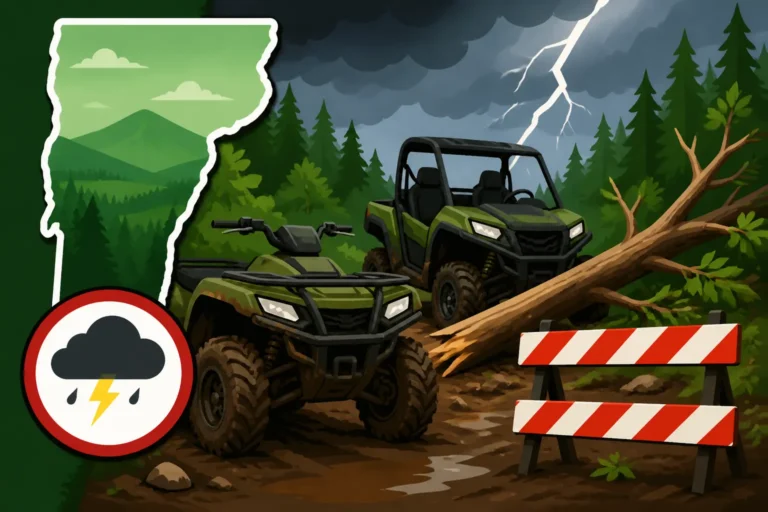
A route that was open when you booked your site may not be open when you arrive. Heavy rain, muddy sections, damaged bridges, landowner requests, and seasonal closures can affect access. Check with the club responsible for the corridor shortly before travel, especially if you’re hauling machines a long distance.
This is one place where onX Offroad can be helpful as a planning tool: save a proposed route, campsite, and staging area so you can compare them with the latest information you receive. Still, use the club’s current guidance for closures and access rather than relying on a saved map line. For a practical pre-trip checklist, see [Vermont Trail Conditions Before You Tow].
Ask about the actual trailhead as well as the trail. Is there room to turn around? Can a trailer fit? Are there restrictions on parking or signs directing riders to a different staging point? [Vermont Trailheads With Trailer Parking] is relevant if your group needs to unload at a designated location rather than ride from camp.
Build a practical daily routine
A little routine makes an ATV camping trip smoother. The night before a ride, check the route and weather, charge phones, gather permits and registration documents, and put helmets and riding gear where they’re easy to find. If the machines are trailered, agree on who handles tie-downs and who checks that the trailer lights and hitch are ready for the morning drive.
Before setting out, tell someone where you plan to ride and when you expect to return. This is especially sensible in areas where cell service can be limited. If you use onX Offroad or another mapping app, download or save the information you may need before leaving a reliable connection; don’t assume your phone will have service at a remote trailhead.
When you return, keep campground neighbors in mind. Give machines time to cool before storing them, follow the campground’s rules about noise and washing, and leave shared spaces clean. Respectful behavior helps protect the relationship between riding guests and the people who host them.
Make the Stay Work for Everyone
Ride only the corridor you’re allowed to use
Vermont’s trail system depends on careful use of approved routes. Stay on the marked corridor, obey signs and gates, and don’t create a shortcut between camp and the trail. A tempting field edge or unmarked lane can cross land where riders have no permission, even if tracks are visible.
This is particularly important when traveling between a campground and a trailhead. A local may describe a route that works for them, but that doesn’t necessarily mean every guest may use it or that it remains open. Confirm the route for your own trip, and follow the markings on the ground. Review [Vermont ATV Trail Etiquette on Private Land] before riding through corridors that cross working or private property.
If a route is muddy or damaged, don’t widen it to get around the problem. Turn back or contact the local club for guidance. Avoiding a short section is better than damaging a corridor or putting future access at risk.
Keep a backup plan
The best campground choice is one that still works if a trail connection changes. Have a second staging area or a different day’s activity in mind, and know whether you can trailer to another corridor. A flexible plan is useful when weather affects trail conditions or when your group’s skill levels don’t match the day’s route.
It can also help to separate the overnight plan from the riding plan. Choose a campground for safe, comfortable parking and a convenient location, then select riding routes based on the latest access information. If direct access is confirmed, treat it as a welcome convenience—not as the only way your entire trip can work.
Before making a reservation, write down the campground’s answers about direct access, machine parking, trailer space, and local rules. Keep the club contact and trail information with your trip notes. That small amount of organization can turn a vague “camp near trails” idea into a realistic Vermont trip with fewer surprises at the gate, the campsite, or the trailhead.
Disclaimer
This article is for general informational purposes only and does not constitute professional advice. Laws, prices and regulations vary by location and change over time. Consult a qualified professional for guidance on your specific situation.