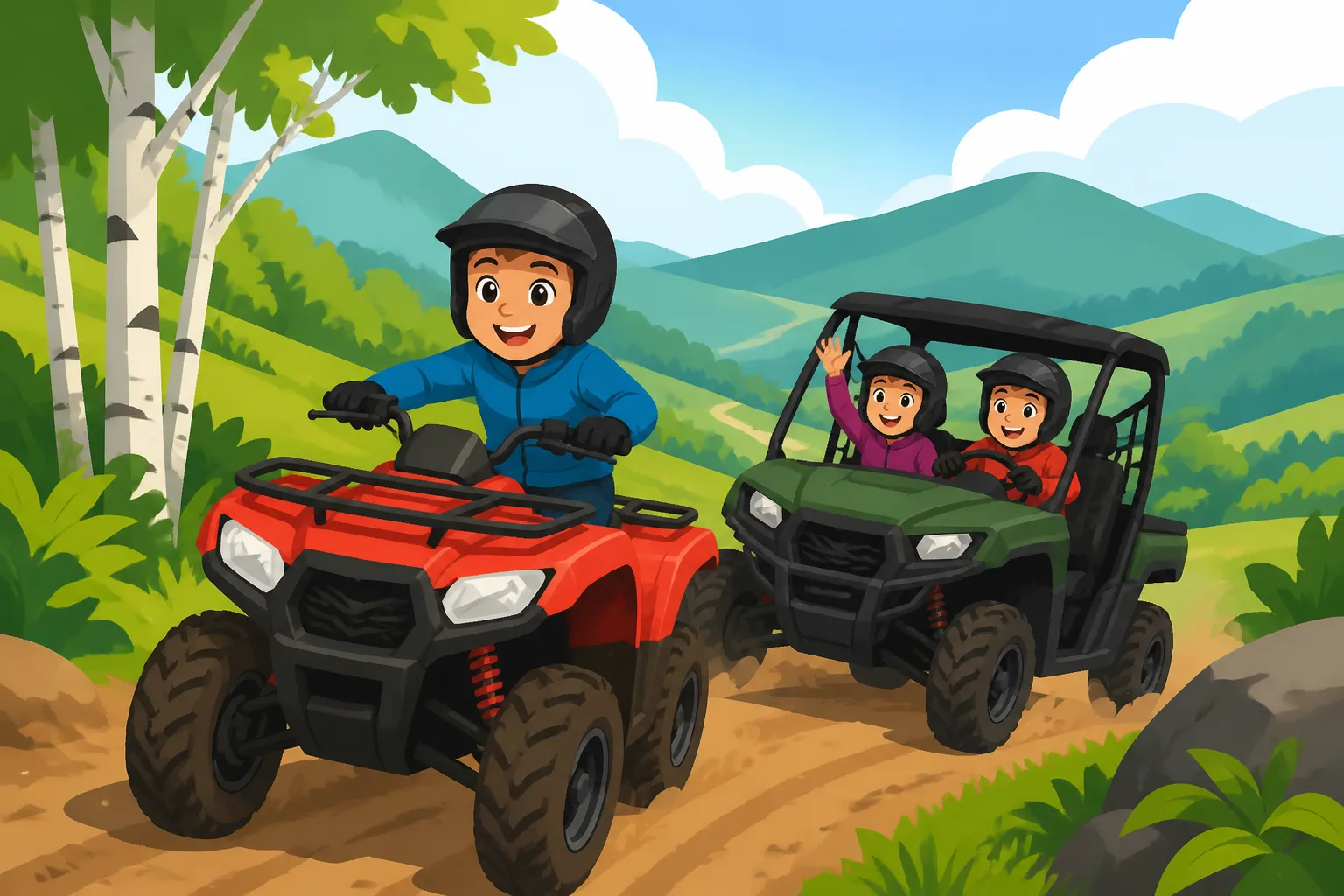
Vermont ATV Trails for Kids
Finding a Vermont ATV trail that feels manageable for a child is harder than picking a route that looks easy on a map. Terrain, temporary closures, age rules, supervision, and the machine itself all matter. This guide explains how to plan a family ride, check whether a child is ready, and avoid treating “beginner-friendly” as a guarantee that a trail will suit every young rider.
What makes a Vermont ATV trail suitable for kids
Look beyond a trail’s difficulty label
A route described as easy can still challenge a child. Vermont trails may include narrow corridors, uneven ground, rocks, roots, mud, steep pitches, or stretches where riders need to share space. A child who is comfortable riding in a flat field may feel overwhelmed when the trail narrows or the machine starts bouncing over rough ground.
Think about the whole ride, not just the trail’s rating. How long is the route? Can you turn back without pushing on through a difficult section? Are there places to stop safely? Is the child experienced enough to manage the machine, follow directions, and stay calm if the group has to wait? A short, familiar outing is often a better first ride than a long loop chosen for its scenery.
For a starting point, explore resources such as [Vermont ATV Trails for Beginners]. Use “beginner” as a prompt for further research, not as a promise that a route is appropriate for a particular child. Ask the club responsible for the corridor about recent conditions and any sections that may be difficult for young or inexperienced riders.
Choose a route you can adapt
Family rides go more smoothly when adults have a flexible plan. Set a modest goal, agree on a turnaround point, and make it clear that the group can stop early. If a child is tired, anxious, cold, or struggling to keep control, finishing the planned loop is less important than ending the ride calmly.
When comparing areas, consider how far you’ll need to travel, where you can park or stage, and whether the route gives your group a reasonable way to shorten the outing. Areas around Island Pond, Newport, Derby, and other Northeast Kingdom communities are associated with ATV riding, but proximity to a riding town does not mean every nearby road or trail is open to ATVs. Access depends on the designated corridor, landowner permission, and current trail status.
A map app such as onX Offroad can help you review a proposed route and keep track of where your group is, but it should not be treated as proof that a trail is open or authorized. Compare the map with information from the local club and official signs. If you’re unsure whether a route is suitable, choose a simpler option or wait until you can get a clear answer.
Check youth rules before choosing a ride
Confirm age, training, and supervision requirements
Vermont has rules that apply to young riders, and family permission alone does not replace them. Before heading out, confirm the current requirements for the child’s age, the type of machine, where you plan to ride, safety training, and adult supervision. These details can affect whether a child may operate a machine on a particular trail.
Vermont’s youth training and supervision requirements are especially important for children and teens. Review [Vermont ATV Safety Course Required Under 18] and [Vermont Supervision Rules Under 16] before planning the outing. If your child needs a safety certificate, allow time to complete the course and keep proof of training accessible. A child who has ridden on private property may still need to meet different requirements for a designated trail system.
Also distinguish between operating a machine and riding as a passenger. A child should only be carried if the machine is designed and equipped for passengers, the manufacturer allows it, and the child can sit securely in the intended seat. Never assume that holding on to an adult or sitting on an improvised spot is acceptable. Check the relevant rules and the machine’s manual before taking a passenger.
Match the machine to the rider
A machine that is too large, heavy, or powerful can be difficult for a young rider to control, even when the trail is relatively smooth. Consider whether the child can reach and operate the controls, maintain a stable riding position, steer without straining, and stop the machine reliably. If any of those basics are uncertain, the child is not ready to ride that machine independently.
Do not use an adult’s confidence as a substitute for the child’s ability. A parent may be comfortable handling a full-size ATV on rough ground, while a younger rider may struggle with the same machine’s weight or throttle response. Follow the manufacturer’s age and size guidance, and practice in a permitted, low-risk setting before considering a trail ride.
A quick readiness check can help you make a more grounded decision:
| What to check | Why it matters | If the answer is no |
|---|---|---|
| Can the child reach and use the controls comfortably? | Poor reach can make steering and braking harder. | Choose an appropriately sized machine or have the child ride only as a permitted passenger. |
| Can the child stop smoothly and follow instructions? | A rider needs to respond to changing trail conditions. | Practice in a suitable area before attempting a trail. |
| Is the machine designed for the child’s role? | Passenger capacity and rider suitability vary by machine. | Check the manual and choose a suitable setup. |
| Are training and supervision requirements met? | Rules depend on age and riding circumstances. | Complete the required steps before the trip. |
| Is the child comfortable continuing? | Anxiety and fatigue can affect attention and control. | Stop, turn around, or choose another day. |
Plan the route and verify access
Check maps, closures, and local club information
Vermont’s ATV trail network depends heavily on landowner permission and club stewardship. A route that appeared open during an earlier visit may have changed, and a line shown on a map does not necessarily mean a rider has permission to use it. Temporary closures, weather damage, seasonal restrictions, and landowner requests can all affect access.
Start with [Vermont ATV Trail Map Downloads] and contact the club responsible for the corridor you’re considering. Check [Vermont Trail Conditions Before You Tow] close to your trip, especially after heavy rain or during periods when trails are vulnerable to damage. An app such as onX Offroad can be useful for viewing your location and comparing route options, but verify access and closures through the club or posted trail information rather than relying on the app alone.
For a child’s first outing, review the route as a family before you leave. Point out where you expect to stop, explain what to do if the group gets separated, and agree that the child should not ride ahead or leave the marked corridor. If phone service may be limited, download or prepare the information you’ll need before entering a dead zone. Maps are helpful, but no digital tool can replace following trail signs and local directions.
Make sure your paperwork and trail access are in order
A Vermont family trail ride may require more than a machine and a helmet. Check that the machine meets applicable registration requirements and that your group has the required trail access. Review [Vermont Requires Registration Plus a TAD] and confirm how the decal should be displayed through [Vermont TAD Placement on the Machine]. Requirements can differ for Vermont-registered and visiting machines, so check the rules that apply to your situation rather than assuming a plate alone is enough.
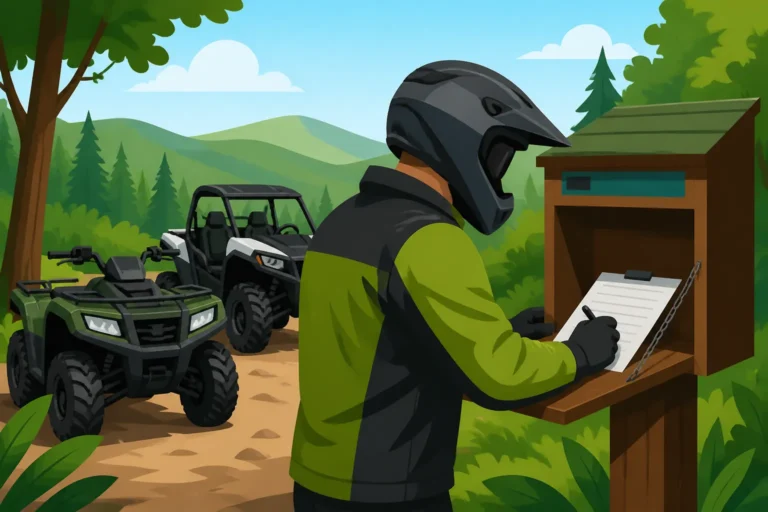
This is also a good time to prepare the child for how the trail system works. Many corridors cross private land, so riders need to stay on marked routes, respect gates and signs, and avoid disturbing nearby homes or property. The advice in [Vermont Trail Etiquette on Private Land] is especially useful for young riders, who may not yet understand why leaving the trail or stopping near a house can create problems for the club and landowner.
A map app can help adults monitor progress, but explain to children that the marked corridor and the group leader’s instructions take priority over exploring a side track. Before moving off, check that everyone understands the plan, has the correct gear, and knows where the group will regroup if someone needs a break.
Prepare for a calmer family ride
Pack for comfort and small problems
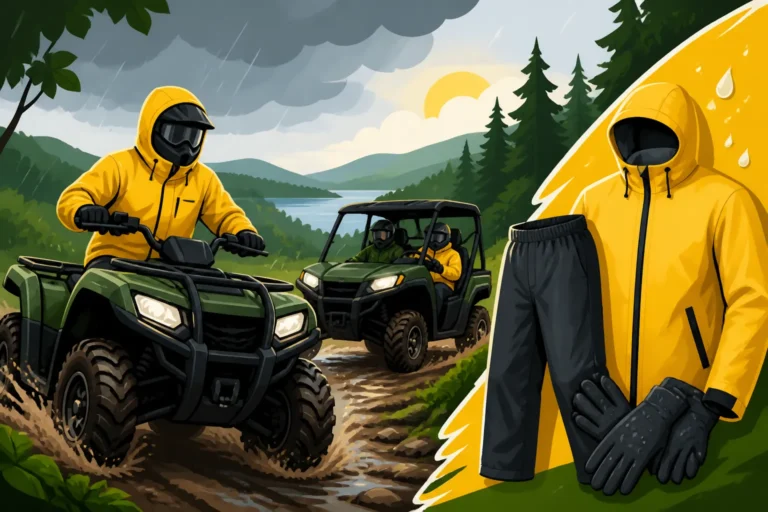
Children often need more stops than adults expect. Bring water, snacks, weather-appropriate layers, and basic first-aid supplies. Vermont conditions can change during a ride, and a cool start or passing shower can make a child uncomfortable quickly. Pack eye protection and gloves as well as properly fitting helmets and any other required safety gear.
Before starting the machine, check the basics: brakes, tires, lights where required, fuel, and the condition of the machine. Make sure helmets fit securely and that clothing cannot get caught in moving parts. If the child’s helmet shifts, blocks their vision, or is difficult to fasten properly, fix the fit before riding. Review [Vermont ATV Equipment Requirements] so your preparations account for more than just the child’s personal gear.
Set expectations in simple terms: stay behind the lead adult, leave space between machines, stop when signaled, and tell an adult immediately if something feels wrong. Young riders may be reluctant to speak up if they think they’re holding everyone back. Make it clear that asking for a break is part of riding responsibly, not a reason for embarrassment.
Keep the first outing short and flexible
For a first trail trip, plan a short ride and treat it as a chance to learn how the child responds to the real conditions. Pay attention to posture, concentration, and mood. A child may seem excited at the trailhead but become tired after repeated bumps, engine noise, or the effort of keeping up with the group. Regular check-ins help you catch that change before it becomes a safety issue.
Agree on simple signals before the ride, such as how the child should indicate that they want to stop. Choose a safe place to pull over, and do not stop where you block a narrow corridor or create a hazard for other riders. If the trail becomes muddier, rougher, or steeper than expected, turn back rather than asking a child to push through to preserve the original plan.
A successful family outing does not have to cover much ground. It may mean completing a short section, learning how the child handles the machine, and returning with enough energy to want another ride. Check [Vermont Trail Etiquette on Private Land] again before your trip if you’re introducing children to shared corridors, and use the next outing to build gradually on what went well.
Disclaimer
This article is for general informational purposes only and does not constitute professional advice. Laws, prices and regulations vary by location and change over time. Consult a qualified professional for guidance on your specific situation.