Bug Spray in Black Fly Season
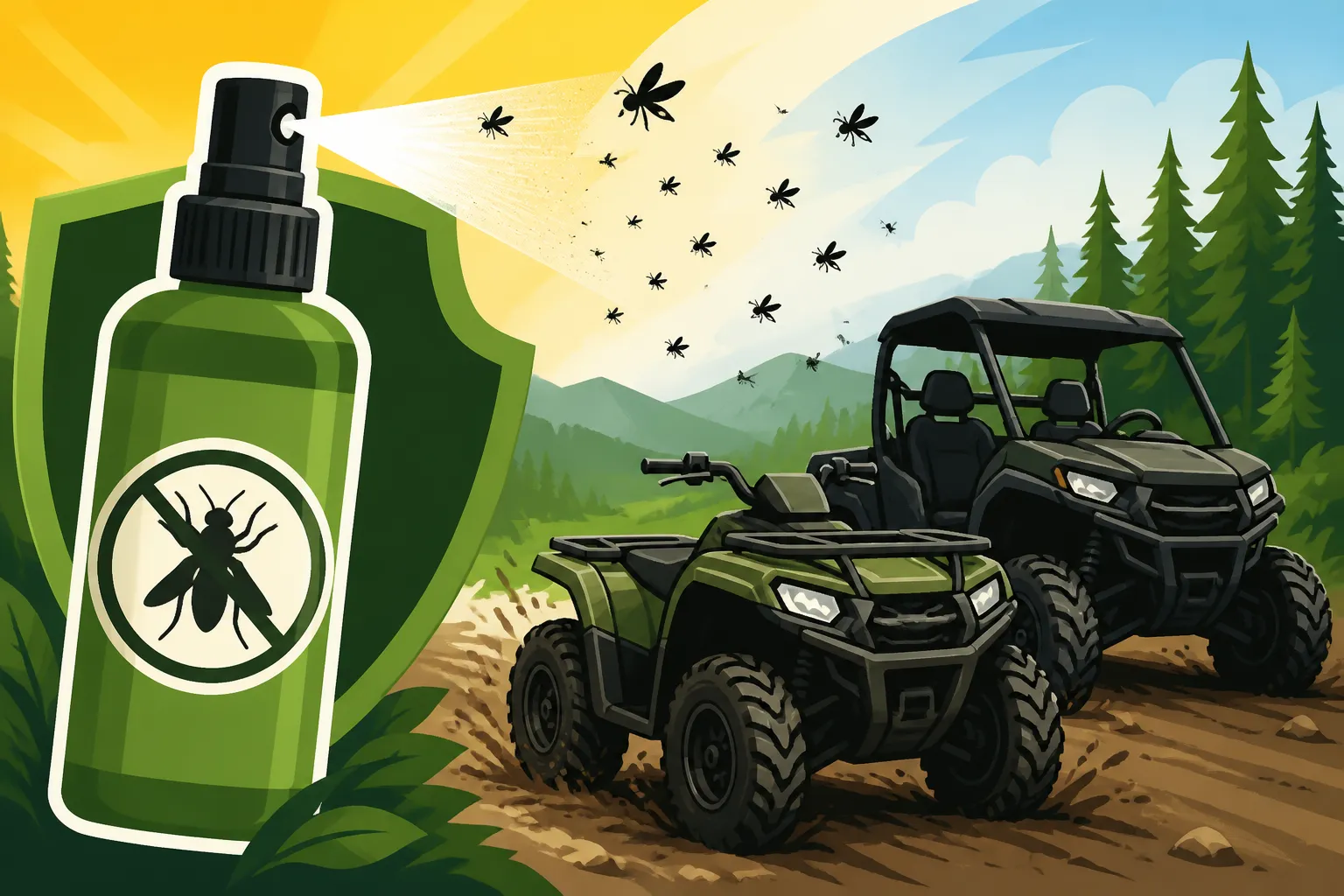
Black flies can turn a pleasant Vermont ATV ride into a nonstop battle around your ears, eyes, and collar. The right bug spray helps, but timing, clothing, and where you stop matter just as much. This guide explains how to prepare for black fly season, use repellent sensibly, and make trail days around Vermont more comfortable.
When black flies affect Vermont ATV rides
Expect the worst during the spring transition
Black flies are often most bothersome in spring and early summer, when conditions are damp and waterways are running. Their timing varies with weather, elevation, and local habitat, so one trail may feel manageable while another nearby route is swarming. A warm, sunny stretch can change what a ride feels like from one weekend to the next.
In the Northeast Kingdom, wooded corridors around Island Pond, Newport, and Derby can have very different conditions depending on recent rain, shade, and nearby streams. Low-lying, sheltered areas may feel especially buggy on a calm day. Higher or more open stretches can be more comfortable, but it is wise to bring protection even when the trailhead seems clear.
Plan around the ride rather than relying on a single seasonal rule. Check trail and weather updates before you leave, and ask a local club about recent conditions when possible. Vermont Trail Conditions Before You Tow is useful preparation, especially if your plan involves a longer ride or a remote trailhead.
Notice when and where they are most irritating
Black flies are often most noticeable when you stop, move slowly, or ride through shaded areas. A trailhead, staging area, or scenic spot beside moving water can feel worse than the trail itself. A warm helmet, an exposed neck, and uncovered wrists give flies easy places to land, which is why riders can feel under attack even after applying repellent.
Wind and direct sun may make some spots feel less buggy, but they are not dependable protection. A breezy clearing can be comfortable, then a sheltered pullout can bring the insects back. Treat breaks as part of your bug plan: choose an open, breezy place when practical, keep stops brief if flies are intense, and avoid leaving doors or windows open in a parked vehicle.
Black flies are only one seasonal nuisance. Ticks may also be active when trailside vegetation brushes against clothing, so it helps to think about both when choosing gear. See Vermont Tick Season and Riding Gear for additional planning advice.
Choose and use bug spray for a ride
Match the repellent to how you ride
For exposed skin, choose an insect repellent labeled for that use and follow the product directions. Products with ingredients such as DEET or picaridin are common options, but the right choice depends on the label, your needs, and any personal sensitivities. Do not assume that a stronger or more frequent application is automatically better; follow the listed application directions and reapply only as instructed.
Riding adds practical complications. Sweat, dust, rain, gloves, and repeated helmet adjustments can all affect how long protection feels effective. Apply repellent before gearing up so you can cover exposed areas carefully, then let it dry according to its label before putting on gloves or handling equipment. Keep it out of your eyes and mouth, and wash your hands after applying it.
| Riding situation | Useful approach | What to keep in mind |
|---|---|---|
| Exposed face, neck, or hands | Use a skin repellent labeled for those areas | Follow directions and avoid eyes and mouth |
| Long ride with few stops | Carry the product in a secure, accessible place | Reapply only as the label directs |
| Clothing and riding gear | Consider clothing treatment only when the product label allows it | Permethrin products are for clothing or gear, not skin |
| Sensitive skin or health concerns | Read the label and seek qualified advice if needed | Suitability can vary by person and product |
If you are considering a permethrin treatment, read the full label. These products are intended for clothing or gear, not direct application to skin. Treat garments only as directed, let them dry as instructed, and keep treated items away from children and pets while wet.
Apply carefully before you put on your gear
It is easy to miss the places black flies find first: the back of the neck, the edges of the ears, the wrists, and the ankles. Apply skin repellent according to its directions before putting on your helmet, gloves, boots, and riding jacket. If you use sunscreen too, follow both products’ instructions rather than improvising a mix or applying them in an order the labels do not recommend.
Avoid spraying near the machine’s controls, brake surfaces, or other equipment where residue could create a slippery or unpleasant surface. For areas near your face, put the product on your hands first if the label permits, then apply cautiously. Keep repellent away from food, water bottles, and shared gear, and store it so it cannot leak in a pack or machine compartment.
A quick check at the first stop helps you catch gaps before they become maddening. If you are sweating heavily or have been caught in rain, check the product directions to decide whether you need to reapply. Do not spray automatically every time the insects show up; the label is the guide.
Build clothing and break stops into your plan
Cover exposed skin without overheating
A lightweight long-sleeved layer, long pants, socks, gloves, and a secure helmet can reduce the amount of skin exposed to flies. Choose breathable clothing that still covers the gaps at your cuffs and collar. A loose neckline may feel comfortable at the trailhead but can become an easy target once you stop in a shaded section.
Vermont mornings can be cool even when the afternoon warms up, so flexible layers are useful for more than bug protection. A thin neck covering or a close-fitting layer under your helmet may help protect the area around your collar, as long as it does not interfere with helmet fit, visibility, or safe operation. Layers for a Cool Morning offers ideas for handling changing temperatures without overpacking.
Do a quick fit check before you leave: sleeves should stay down when you reach for the controls, gloves should cover your wrists, and pant legs should meet your boots. Avoid anything that blocks your vision, catches on the machine, or interferes with protective equipment. Bug protection is not worth compromising a safe fit.
Make stops more comfortable
A stop beside a stream may sound relaxing, but it can be a rough place to eat or adjust equipment when black flies are thick. Look for a breezier, more open area where stopping is permitted, and keep food and drinks covered. If someone in your group is especially bothered, agree on a plan for short breaks rather than waiting until the discomfort has become a distraction.
Pack a small, resealable kit with repellent, a clean cloth, spare gloves, and a lightweight face or neck covering. Store the repellent upright and away from food. If it leaks, you do not want it soaking a snack, map, or set of gloves. Add other ride-day essentials with the advice in Packing for a Full Day Out.
On a long ride, it is also helpful to set expectations before leaving. Tell the group that the best place for a break may be a clearing rather than a scenic spot near water, and check that everyone has their own suitable protection. A rider who is distracted by flies may miss a turn, a hand signal, or changing trail conditions.
Plan Vermont routes with bugs in mind
Check access and trail status before departure
Bug spray cannot make an inaccessible or closed route suitable to ride. Vermont’s ATV trail network depends on club-managed corridors and landowner permission, and conditions and access can vary by location. Check the relevant club’s latest information before towing to a trailhead, especially after heavy rain or during seasonal transitions. Vermont ATV Trails: The VASA System explains how the network works, while Vermont Trail Season Dates by Club can help you understand why one area may be open when another is not.
For rides in Essex County or the Northeast Kingdom, avoid assuming that a familiar road or path is open to ATVs simply because it appears on a map. Use posted signs and club guidance, stay on marked routes, and respect closures. Vermont Trail Etiquette on Private Land is a helpful reminder that courtesy and landowner permission are central to continued trail access.
A navigation app such as onX Offroad can help you organize a route and keep track of your plans, but do not treat an app as proof that a trail is currently open. Cross-check your intended route with official club information and signs on the ground. If you use onX Offroad, prepare your route before you lose cell service and carry a backup navigation option.
Leave room to change the plan
If the flies are unusually bad, a small adjustment can save the day. Start earlier if that suits your group and local rules, choose a more open route that is confirmed open, or shorten the ride and spend less time stopped in sheltered areas. Do not ride faster or take an unapproved shortcut to escape the bugs; staying in control and on the designated corridor matters more.
Before the trip, use onX Offroad to review your intended route, then confirm access and conditions with the responsible club. Mark a reasonable turnaround point and a backup option, particularly if you are riding somewhere unfamiliar or expect limited cell coverage. A map is most useful when it supports a plan rather than replacing local trail information.
If the weather shifts or trail conditions deteriorate, turn around or end the ride. A miserable stop is frustrating; a damaged trail or an unsafe ride can affect everyone who uses that corridor. Vermont Trails in Essex County can help with regional planning, while the local club remains the best place to confirm current access details.
Disclaimer
This article is for general informational purposes only and does not constitute professional advice. Laws, prices and regulations vary by location and change over time. Consult a qualified professional for guidance on your specific situation.