Riding Two Up on a One-Seat Machine
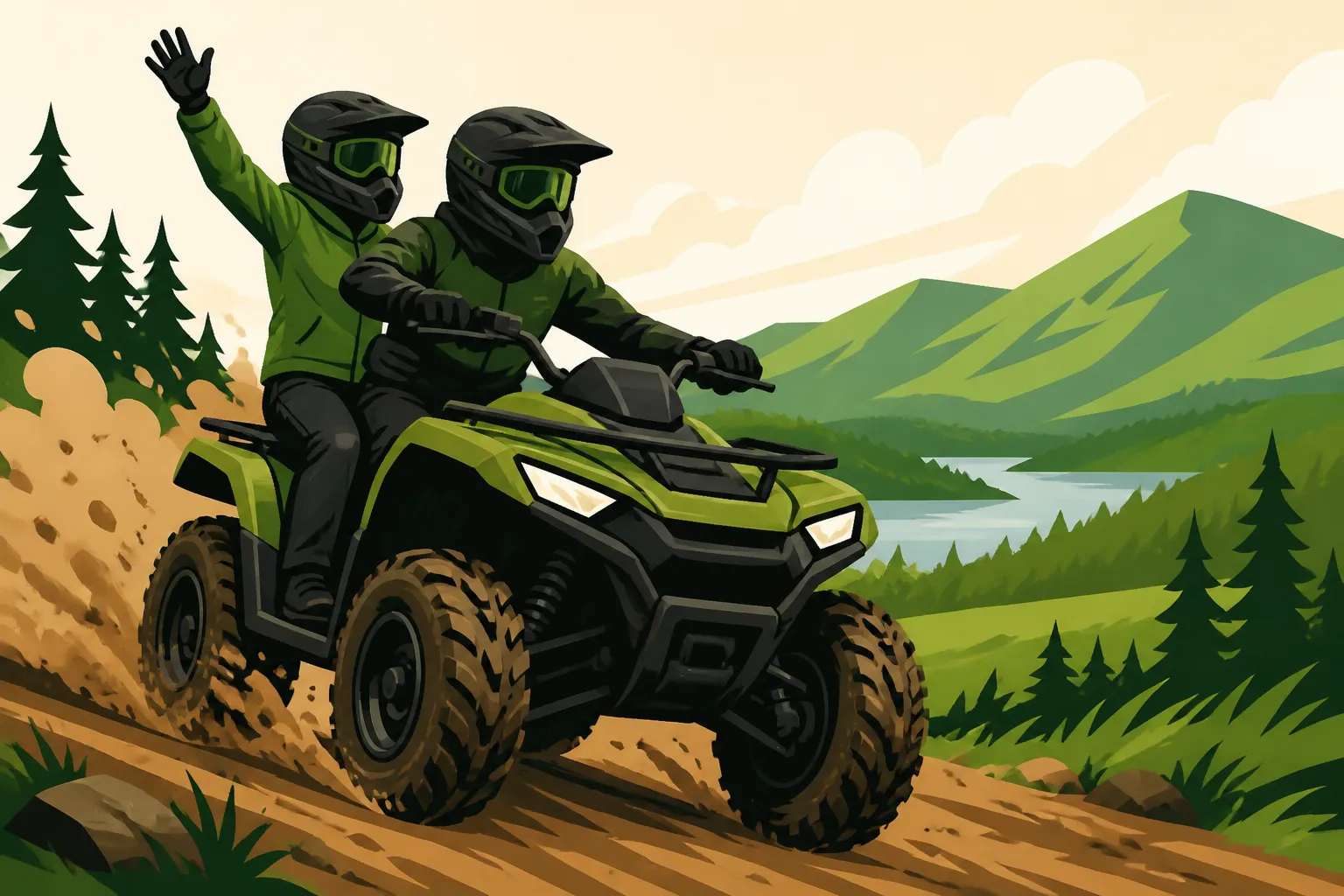
It’s a scenario many of us have faced: you’re out on the Vermont trails, enjoying the crisp air and stunning scenery, and a friend or family member expresses an interest in joining you for a ride. The thought immediately turns to your trusty ATV. Can they just hop on behind you? While the desire to share the adventure is completely understandable, putting two riders on a machine designed for one is a serious safety risk and a violation of Vermont’s regulations. This guide will walk you through why it’s never a good idea, what the law actually says, and how you can safely and legally share the trail with others in the Green Mountain State.
The Blunt Truth: Why One-Seat Machines Are Not for Two
Let's be incredibly clear: an ATV built for one person is just that – built for one person. It's not a suggestion or a recommendation; it's a fundamental aspect of its design, engineering, and safe operation. Ignoring this isn't just bending a rule; it's actively inviting danger.
Design Limitations and Danger Zones
When an ATV manufacturer designs a single-seat machine, every element—from the suspension and steering geometry to the balance points and weight distribution—is calibrated for one rider. Adding a second person fundamentally alters this delicate balance. Imagine trying to ride a bicycle with someone sitting on the rear fender; it’s wobbly, hard to steer, and nearly impossible to control, especially at speed or over rough terrain. An ATV, with its higher center of gravity and powerful engine, amplifies these issues tenfold.
The controls are positioned for a single operator, meaning a passenger often has nothing secure to hold onto besides the driver. This puts both individuals at a higher risk of being thrown off. The footpegs are typically designed for one set of feet, leaving a second person with no secure place to put their own, leading to instability and potential contact with moving parts. Furthermore, the extra weight stresses components like shocks, axles, and tires beyond their intended limits, increasing the chance of mechanical failure. When you're navigating steep inclines, sharp turns, or unexpected obstacles on a Vermont trail, these design limitations can quickly turn a fun ride into a harrowing experience.
Manufacturer Warnings and Liability
Every ATV manufacturer, without exception, explicitly warns against carrying passengers on a single-seat machine. These warnings are plastered on decals, written in owner's manuals, and are often part of safety course curricula. They exist for a reason: extensive testing has proven the dangers. Disregarding these warnings isn't just a personal choice; it carries significant legal and financial ramifications.
Should an accident occur while you're carrying a passenger on a single-seat ATV, you could face severe liability. Your insurance policy might have clauses that invalidate coverage if the machine was being operated outside its intended design or in violation of manufacturer guidelines. This means you could be personally responsible for medical bills, property damage, and legal fees, which can quickly add up to tens or even hundreds of thousands of dollars. The manufacturer has done their part by warning you; after that, the responsibility falls squarely on the operator. It’s a gamble that’s simply not worth taking, especially when the consequences can affect not just you, but also your passenger.
Vermont's Stance on ATV Passengers and Machine Design
Vermont takes ATV safety seriously, and that includes clear regulations regarding passengers. The state's laws are designed to protect riders and ensure that machines are used in a manner consistent with their safe operation. If you're looking to share the thrill of ATV riding, understanding these rules is paramount.
What the Law Says About Seats
Vermont law specifically addresses the issue of passengers on ATVs. Generally, an ATV must be designed by the manufacturer to carry more than one person if you intend to have a passenger. This means the machine must come equipped from the factory with a designated passenger seat, handholds, and footrests for that second rider. You can’t just bolt on an extra seat or a storage box and call it a passenger machine. The design must be integral to the vehicle's original manufacturing specifications. This distinction is crucial because it speaks to the engineering considerations for balance, stability, and control mentioned earlier.
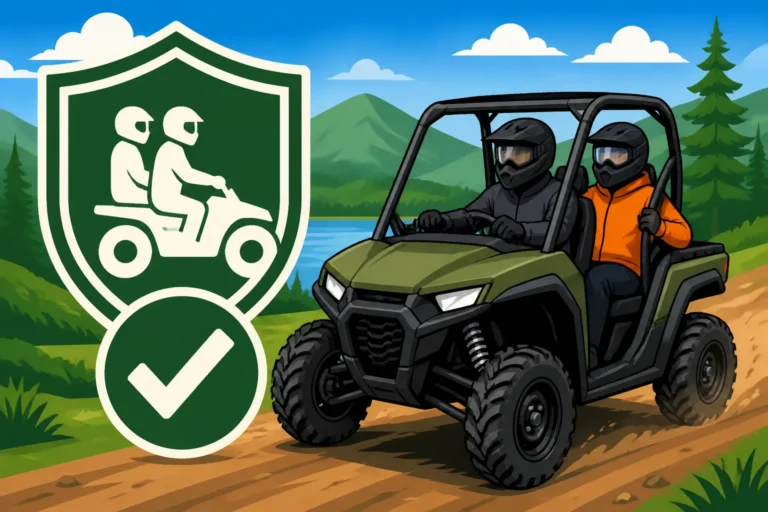
For instance, the law differentiates between traditional ATVs and side-by-sides (often referred to as UTVs or ASVs in Vermont). Side-by-sides are specifically designed with bench or bucket seating for two or more occupants, complete with roll cages and seatbelts, making them suitable for passengers. A traditional quad, however, with its saddle-style seat, is typically a single-rider vehicle unless explicitly designed and manufactured for a second person. Trying to stretch the definition or modify a machine to carry an extra person will not pass muster with a warden and will put you at significant risk. You'll find more details on how Vermont categorizes these machines in articles like [Vermont's 72-Inch, 2,500-Pound ATV Definition] and [Vermont ATV Versus ASV Classes].
Identifying a Legal Multi-Passenger Machine
So, how can you tell if your machine, or one you're considering buying, is actually designed for more than one person? It's usually quite clear.
Here are the key indicators:
- Designated Passenger Seat: A true multi-passenger ATV will have a clearly defined, often elevated or contoured, second seat behind the driver. This isn't just an extension of the main seat but a separate, engineered space. For side-by-sides, it will be distinct bucket seats or a full bench seat.
- Integrated Handholds: There will be sturdy, easily accessible handholds for the passenger, typically built into the chassis or rack system, not just a grab strap around the driver's waist.
- Separate Footrests: The machine will have dedicated, robust footrests or floorboards for the passenger, ensuring their feet are secure and away from moving parts.
- Manufacturer Stickers/Manual: Check the safety decals on the machine itself and consult the owner's manual. They will explicitly state the machine's seating capacity. If it says "one rider only," that's the final word.
- Vehicle Classification: In Vermont, side-by-sides often fall under the "ASV" (All-Terrain Vehicle, Class A) category, which has different registration costs and definitions compared to single-rider ATVs. Understanding these classifications can help you determine what kind of machine you truly have.
While companies like SuperATV offer fantastic accessories and performance upgrades for ATVs and UTVs, none of their products are designed to convert a single-rider ATV into a legal, safe multi-passenger vehicle. Their focus is on enhancing machines already built for their specific purpose. If you're looking to ride with a companion, the best and safest approach is to ensure you're on a machine that was manufactured from the ground up to accommodate multiple riders.
Here's a quick comparison of key features:
| Feature | Single-Seat ATV | Multi-Seat UTV/ASV |
|---|---|---|
| Seating | Long, saddle-style seat for one rider | Separate bucket seats or bench seat for multiple riders |
| Handholds | None specifically for a passenger | Dedicated grab handles or roll cage bars |
| Footrests | One set of footpegs for the driver | Separate footrests/floorboards for passengers |
| Steering | Handlebars | Steering wheel |
| Control Layout | Optimized for single rider | Designed for multiple occupants, often with safety nets |
| Safety Features | Helmet, protective gear (for one) | Helmets, seatbelts, roll cage, protective gear |
| Legal Status | "One rider only" in Vermont | Legally designated for multiple passengers in Vermont |
The Very Real Consequences of Breaking the Rules
You might think, "What's the harm? We'll just ride slowly and carefully." But the potential ramifications of riding two-up on a single-seat ATV in Vermont extend far beyond a momentary inconvenience. They can impact your wallet, your physical well-being, and your legal standing.
Fines, Penalties, and Warden Checks
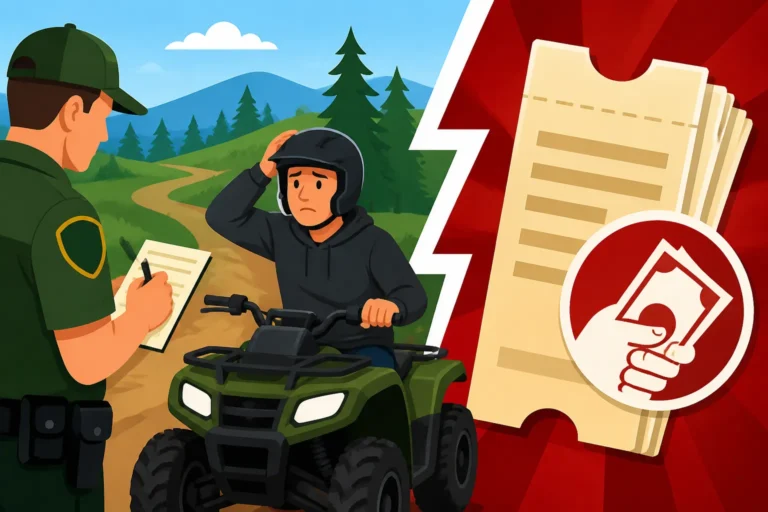
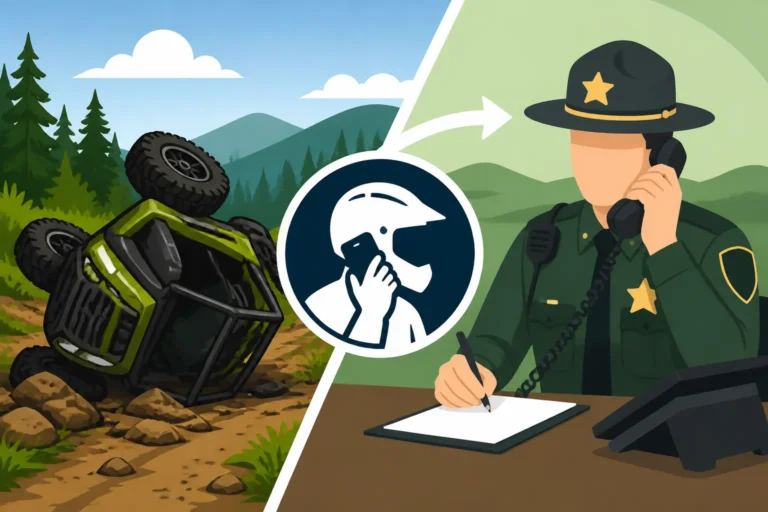
Vermont game wardens and local law enforcement are well-versed in ATV regulations. They're out on the trails to ensure everyone's safety and to protect the land. If you're caught riding with an illegal passenger on a single-seat machine, you can expect to receive a citation. These aren't just slaps on the wrist; fines can be substantial. Beyond the monetary penalty, you might also be required to dismount your passenger, potentially leaving them stranded, or even have your riding privileges revoked.
Consider a scenario: you're riding a gorgeous trail in the Northeast Kingdom, your buddy precariously perched behind you. A warden pulls you over. They're not just looking for registration; they're checking for adherence to all safety regulations, including passenger rules. You could face a fine, and your buddy might have to walk back to the trailhead while you proceed alone. This could quickly sour what was supposed to be a fun day out. For more details on what wardens look for, check out [What a Warden Can Ask to See] and [Vermont ATV Fines for Road Violations]. It's far better to be prepared and compliant than to deal with the immediate hassle and lasting financial sting of a ticket.
Insurance Nightmares and Injury Risks
This is where the consequences can become truly catastrophic. As discussed, your insurance policy is likely predicated on the assumption that you are operating your ATV safely and legally, and according to manufacturer specifications. If you have an accident while carrying an unauthorized passenger on a single-seat machine, your insurer could deny coverage entirely.
Imagine this: you hit a patch of loose gravel, the machine veers, and both you and your passenger are thrown. Your passenger sustains a broken leg, and your ATV is significantly damaged. If your insurance company finds out you were operating outside the machine's intended use and Vermont law, they might refuse to cover medical expenses for your passenger or repairs for your vehicle. Suddenly, you're looking at thousands, if not tens of thousands, of dollars out of your own pocket. [Vermont ATV Insurance Requirements] are in place to provide a safety net, but that net has holes if you disregard basic safety rules.
Beyond the financial aspect, there's the very real risk of serious injury or even fatality. Two people on a single-seat ATV significantly increase the likelihood of a rollover or loss of control. The passenger, often lacking proper handholds or footrests, is particularly vulnerable. They could be thrown into trees, rocks, or even under the machine itself. No scenic view or shared moment is worth risking a severe injury to yourself or someone you care about.
How to Safely and Legally Ride with a Companion in Vermont
The good news is that if you want to share the adventure of Vermont's stunning trails with a companion, there are safe, legal, and enjoyable ways to do it. It simply requires making the right choices before you hit the dirt.
Investing in a Proper Multi-Seat Machine
The most straightforward and safest solution is to invest in an ATV or UTV that is explicitly designed by the manufacturer to carry more than one person. This almost always means a side-by-side (UTV or ASV). These machines feature:
- Dedicated Seating: Bucket seats or a bench seat with enough space for each occupant.
- Robust Safety Cages: A roll-over protective structure (ROPS) or roll cage designed to protect occupants in the event of a rollover.
- Seatbelts: Multi-point harnesses or seatbelts for every passenger.
- Passenger Handholds: Strong, ergonomic handholds for all occupants to brace themselves.
- Optimized Handling: Suspension, steering, and braking systems engineered to safely handle the weight and dynamics of multiple passengers.
Brands like Polaris, Can-Am, and Yamaha offer a wide range of multi-seat UTVs, from sport models to utility-focused machines. When considering these machines, you can also look to outfit them with quality accessories from companies like SuperATV, which provides everything from heavy-duty axles and lift kits to windshields and roofs, enhancing the experience and durability of your multi-passenger rig. This way, you're not just complying with the law; you're providing the safest possible experience for everyone on board. If you're exploring options, remember to also factor in [Vermont Purchase and Use Tax on an ATV] or UTV.
Alternative Solutions for Group Rides
If purchasing a multi-seat UTV isn't in the cards right now, don't despair! There are still excellent ways to enjoy group rides:
- Ride Separate Machines: The most common and often most enjoyable alternative is for each rider to have their own properly registered and equipped ATV. This allows everyone to have their own control and experience the thrill individually. If you're riding with a younger or less experienced rider, ensure they meet all age and safety course requirements, such as those outlined in [Vermont ATV Rules for a 12-Year-Old] and [Vermont ATV Safety Course Required Under 18].
- Rent a Multi-Seat UTV: Several rental operations, particularly in neighboring states that cater to Vermont riders, offer multi-seat side-by-sides. This is a great way to try out a different machine or to accommodate guests without a long-term commitment. Always inquire about their specific rules, insurance, and if a [Vermont TAD for a Rented Machine] is needed. [Where to Rent an ATV in Vermont] can offer some guidance, though options are limited within the state itself.
- Coordinate with Friends: If you have friends with multi-seat UTVs, coordinate a group ride! You can still enjoy the trails together, even if you’re not all on the same type of machine.
- Explore Guided Tours: Some areas (though less common directly in Vermont) offer guided ATV or UTV tours where machines are provided, and they ensure all safety and legal passenger requirements are met. This is often a fantastic way for beginners or visitors to experience the trails safely.
Ultimately, sharing the joy of ATV riding in Vermont means sharing it responsibly. By understanding and respecting the design limitations of your machine and the state's regulations, you ensure a safe, legal, and truly enjoyable experience for everyone involved.
Disclaimer
This article is for general informational purposes only and does not constitute professional advice. Laws, prices and regulations vary by location and change over time. Consult a qualified professional for guidance on your specific situation.