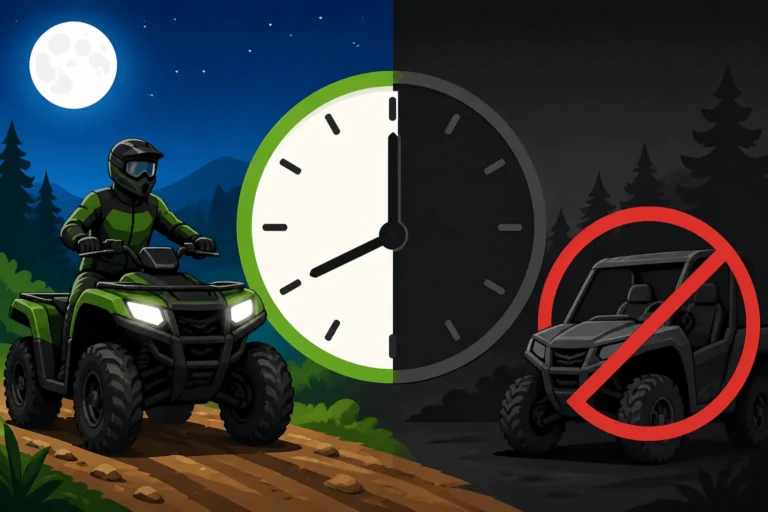
A Season That Ends October 1
It's always a bittersweet feeling when you realize the vibrant fall foliage isn't just a sign of beauty but also a countdown to the end of another fantastic ATV riding season in Vermont. Many riders, especially those who enjoy cruising town roads, face the frustration of abruptly finding their favorite routes closed on October 1st. This guide will help you understand why this date is so significant for ATV and UTV riders in Vermont, what it means for your riding plans, and how to navigate the transition as the season winds down.
Understanding Vermont's ATV Riding Season on Town Roads
For many of us who love the thrill of ATV and UTV riding, the open road—or at least the designated town roads—is a major part of the adventure. But unlike some other activities that might have a more fluid end, Vermont's town road riding season for ATVs often hits a hard stop. It’s not just a suggestion; it’s typically written into the town ordinances.
The October 1st Cut-Off: Why It Matters
That October 1st date isn't arbitrary; it's a reflection of several practical considerations unique to Vermont. By this time, the state is usually deep into its gorgeous fall foliage season. While beautiful, this also brings increased traffic, hunting seasons, and the distinct possibility of changing weather, including earlier frosts and even snow in higher elevations. Town road crews might also be shifting their focus from summer maintenance to preparing for winter, which includes road grading, ditch work, and general cleanup that isn't always compatible with ATV traffic.
The legal framework often states that towns designate roads for ATV use "annually, for a period not to exceed October 1." This means that even if a town is enthusiastic about ATV access, they generally can't extend their open season beyond this date for road use. It creates a unified end point for much of the state's municipal road system, simplifying enforcement and public understanding, even if it feels restrictive to riders eager for one last autumn blast. If you're wondering about the specifics of your machine, it's good to keep in mind [Vermont's 72-Inch, 2,500-Pound ATV Definition] for road-legal machines.
Annual Designation and What Lapses
Vermont operates on a system where individual towns, through their selectboards, must actively designate roads for ATV use each year. It's not a permanent "open all the time" situation. This annual process involves selectboard meetings, public hearings, and careful consideration of local impacts. When a town designates roads, they set the specific start and end dates for that year's season. The catch, as we discussed, is that end date can't go past October 1st.
What happens if a selectboard takes no action? If a town doesn't go through the designation process or fails to renew an existing one, those roads simply aren't open to ATVs. This annual renewal requirement means that every year, towns must decide if, when, and where ATVs can ride on their municipal roads. It's a continuous effort that clubs like VASA (Vermont ATV Sportsman's Association) often work closely with towns to facilitate. If you're a local rider, understanding [Why Vermont Road Designations Must Be Renewed Yearly] can help you advocate for your riding areas. Without that active designation, those roads remain closed, even if they were open just last year.
Variations by Town: Not All Roads are Equal
While October 1st might be the statewide latest possible end date for town road riding, it's crucial to remember that not all towns utilize the full season. Many towns might opt for a shorter season, perhaps closing earlier in September to avoid conflicts with hunting season, manage dust concerns, or address local resident complaints. Some towns might not designate any roads at all. This means your riding experience can vary dramatically from one town line to the next.
For example, [Brighton's ATV Ordinance Explained in Vermont] provides a detailed look at how one specific town manages its ATV access, including its own season dates and specific rules like curfews or speed limits. It's never safe to assume that just because you rode on town roads in one part of Vermont, the rules will be identical in the next town over. Always check the specific ordinances for the town you plan to ride in. Often, this information is available on the town's official website or by contacting the town clerk. This local variation is a core part of Vermont's approach to ATV management, balancing state guidelines with community needs.
Navigating the End of the Season
When that October 1st deadline rolls around, or whatever earlier date your local town has set, it's not just a suggestion to pack it in; it's a legal requirement. Understanding what this means for your machine and your riding plans is essential for staying compliant and ensuring your off-season is as smooth as your riding season.
What Happens When the Season Ends
Once the designated town road season for ATVs and UTVs officially closes, riding on those specific municipal roads becomes illegal. This isn't just about avoiding a fine; it's about respecting local ordinances and maintaining good relationships with the communities that allow ATV access. Continuing to ride on closed roads can lead to penalties, including fines, and can jeopardize future access for all riders. [Vermont Fines for Road Violations] can be quite a deterrent, and wardens and local police are certainly aware of when the season ends.
This closure typically applies to town roads specifically opened for ATV use. It does not necessarily apply to private land (with landowner permission, of course) or the VASA trail system. However, even VASA trails have their own seasonal considerations, often influenced by landowner agreements, mud season closures, and, yes, hunting season. So, while your town road options might vanish, dedicated VASA trails might offer extended opportunities, although you'll still need your [Vermont TAD: The Trail Access Decal Explained] for those. Always check the VASA website or local club pages for specific trail status and dates, as these can also close earlier due to conditions or landowner requests.
Preparing for Off-Season Storage
As the riding season on town roads wraps up, it's time to think about putting your machine away properly for the colder months. This isn't just about parking it in the garage; proper off-season storage can significantly extend the life of your ATV or UTV and ensure it's ready to roll without a hitch next spring.
First, a thorough cleaning is in order. Get rid of all that mud, dust, and grime that's accumulated over the season. Pay special attention to the underside, suspension components, and engine bay. Consider using a good degreaser for stubborn areas. After cleaning, it's wise to change the oil and filter, and also check all fluid levels (coolant, brake fluid). Stabilize your fuel system by adding a fuel stabilizer to a full tank of gas to prevent ethanol-related issues and fuel degradation. If you've been putting off any repairs or upgrades, now's a great time to tackle them. Maybe you've been thinking about a new lift kit or a winch from SuperATV; doing it in the off-season means you won't lose any precious riding time next year. Lift the machine off the ground if possible to take pressure off the tires and suspension, or at least overinflate the tires slightly. Disconnect the battery or use a trickle charger to keep it healthy. Covering your machine with a breathable cover will protect it from dust and moisture.
Planning for Next Season
While the end of one season can feel a bit melancholic, it's also a perfect opportunity to start dreaming and planning for the next. This down time is ideal for catching up on maintenance, considering upgrades, and staying informed about any upcoming rule changes.
One major area to keep an eye on are potential legislative changes. Vermont's ATV laws do evolve, and what was true last year might see adjustments. For instance, you might want to review [What Changed on May 13, 2025] to understand recent updates that could affect how you ride next year. Staying connected with local ATV clubs is an excellent way to keep your finger on the pulse of upcoming changes, trail openings, and local events. These clubs are the backbone of the VASA trail system and often have direct communication with towns regarding road designations. They also organize volunteer days, poker runs, and group rides, offering fantastic ways to engage with the riding community. Perhaps you're thinking about a new set of heavy-duty axles or a full skid plate kit for your machine – SuperATV has a wide selection that can give you peace of mind for tougher trails next season. Using the off-season to research and install these kinds of improvements means you'll hit the ground running when the spring thaw arrives.
Rules and Regulations Beyond Season Dates
While the end of the riding season is a big factor, it's just one piece of the puzzle when it comes to riding ATVs and UTVs responsibly in Vermont. There are other crucial rules and regulations that apply year-round whenever your machine is in operation, especially on any designated town roads.
Essential Requirements for Road Use
Even during the open season, riding on designated town roads in Vermont comes with a list of non-negotiable requirements. These are in place for the safety of riders, passengers, and other road users.
- Registration: Your ATV or UTV must be properly registered with the Vermont DMV. This is a fundamental step, and you can find more details on [Vermont ATV Registration Costs and Terms]. Without current registration, you can't legally operate on public roads or trails.
- Insurance: Liability insurance is not optional. Vermont mandates minimum coverage levels to protect against property damage and bodily injury in case of an accident. It’s critical to understand [Vermont ATV Insurance Requirements] and carry proof of insurance with you.
- Helmets: This is a big one. Vermont has a strict [Vermont ATV Helmet Law for Every Rider]. This means everyone on the machine, regardless of age, must wear an approved helmet. No exceptions, no excuses.
- Age and Supervision: There are specific rules regarding the age of riders and supervision requirements for younger operators, especially on town roads. It's vital for parents and guardians to be aware of [Vermont ATV Rules for a 12-Year-Old] and other age-related guidelines to ensure compliance.
- Equipment: Your machine needs to meet certain equipment standards, including working headlights, taillights, and mufflers. The state wants machines that are safe and not excessively loud. If you're looking to upgrade your lighting for better visibility on those twilight rides, or perhaps a quieter exhaust system, you might consider options from SuperATV to enhance your machine's compliance and performance.
The Role of Local Ordinances
Beyond the statewide laws, individual towns hold significant power in dictating the specifics of ATV use within their borders. This is where things can get truly localized and require diligent research on the rider's part. As mentioned earlier, while the state might allow designation up to October 1st, a town could decide their season ends earlier, or only permit riding on certain days of the week, or only specific hours.
Many towns, like Brighton or Newport, have developed comprehensive ordinances that go beyond just season dates. These might include:
- Speed Limits: Often, ATVs on town roads are restricted to lower speed limits than traditional vehicles, sometimes as low as 25 mph or even slower in village centers.
- Curfew Hours: It's common for towns to impose curfews, meaning no ATV riding on designated roads after a certain hour, often 9 PM or 10 PM, and before early morning. [Newport City's ATV Curfew Hours in Vermont] is a good example of this local control.
- Specific Routes: Towns may designate only certain roads or portions of roads, often requiring riders to stay strictly on the marked routes.
- Noise Restrictions: While the state has general muffler rules, some towns might enforce stricter noise limits or have zero tolerance for modified exhausts.
It's impossible to ride confidently without knowing the specific rules for the town you're in. Always make it a priority to check the local town clerk's office or website for their most current ATV ordinances before you plan your ride.
Where Else Can You Ride?
So, if town roads close on October 1st or earlier, where does that leave Vermont riders? The good news is that the end of the town road season doesn't necessarily mean the end of all riding opportunities.
- VASA Trail System: The [Vermont ATV Trails: The VASA System] offers hundreds of miles of designated trails, primarily on private land with landowner permission. These trails have their own season, which often extends further into the fall than town roads, though they are still subject to closures due to mud, landowner requests, or hunting season. A [Vermont TAD for a Registered Machine] is required for VASA trails.
- Private Land: If you own private property, you can generally ride on your own land year-round, as long as you adhere to state safety regulations (like helmet laws) and local noise ordinances.
- Landowner Permission: You can also ride on other private land if you have explicit permission from the landowner. This is crucial; never assume access. Understanding [Vermont Landowner Permission Rules] is essential to avoid trespassing.
While town roads offer convenient connections and scenic drives, the VASA trail system provides the dedicated off-road experience many ATV and UTV enthusiasts crave. It's a fantastic alternative when town road seasons wind down, offering varied terrain and longer riding opportunities, often connecting directly to quaint Vermont villages.
Here's a quick comparison of general rules for designated town roads versus the VASA trail system in Vermont:
| Feature | Designated Town Roads | VASA Trail System |
|---|---|---|
| Season Dates | Varies by town, generally closes by October 1st. | Varies by club/trail section, often extends further into fall. |
| Required Decal | Vermont DMV Registration Plate only | Vermont DMV Registration Plate and a VASA Trail Access Decal (TAD) |
| Insurance | Required (Minimum Liability) | Required (Minimum Liability) |
| Helmet Law | Required for all riders and passengers | Required for all riders and passengers |
| Speed Limits | Set by town ordinance, often 25 mph or less | Posted on trails, generally lower than town roads, varies by section |
| Curfew Hours | Common, set by town ordinance | Less common, but specific trail sections may have quiet hours/closures |
| Access Type | Public municipal roads, shared with other vehicles | Private land, logging roads, old rail beds via landowner agreements |
| Road Conditions | Maintained for vehicle traffic, may include dirt/gravel | Varied terrain, unpaved, may include challenging obstacles, mud |
| Enforcement | State Police, Sheriff, Local Law Enforcement, Game Wardens | State Police, Game Wardens, Local Law Enforcement, Trail Wardens |
Disclaimer
This article is for general informational purposes only and does not constitute professional advice. Laws, prices and regulations vary by location and change over time. Consult a qualified professional for guidance on your specific situation.