Liability Limits Written Into Law
Riding an ATV or UTV on Vermont's town roads can feel like a bureaucratic maze, especially when it comes to understanding exactly what kind of insurance coverage you need. Many riders are simply trying to enjoy the incredible beauty of our state's designated routes, but the nagging question of "Am I truly covered if something goes wrong?" often looms large. This guide is here to untangle the specific liability limits Vermont law requires for your ATV or UTV, so you can ride with confidence and peace of mind.
Understanding Vermont's Mandated ATV/UTV Insurance: What the Law Actually Says
Navigating the rules for ATV and UTV use on Vermont's roads can be a bit like trying to find your way through a dense patch of woods without a map. There's so much to consider, from local ordinances to state registration, and right at the heart of it all is insurance. It's not just a suggestion; it's a legal requirement if you plan to venture off private land onto any public road or designated trail where road crossings are involved. The state wants to ensure that if an accident happens, there's a basic level of financial protection in place for everyone involved.
For many riders, the idea of getting insurance for their off-road machine feels like another hurdle. After all, you bought it for fun, for the trails, for escaping the everyday grind! But the moment you put a tire on a town road, even just to connect trails, you're interacting with different rules and different risks. Vermont's law is quite clear about the minimum liability coverage you must carry. This isn't about protecting your machine from damage; it's about covering the costs if you accidentally injure someone or damage their property. It’s a critical piece of the puzzle that ensures accountability and helps prevent devastating financial burdens for accident victims.
The Foundation: Bodily Injury and Property Damage Minimums
Vermont law specifies exact dollar amounts for liability coverage, designed to shield others from the financial consequences of an accident you might cause. These minimums are often referred to in a split format, like 25/50/10. These numbers represent thousands of dollars and directly address two main categories: bodily injury and property damage. It's vital to understand what each component means because underinsured accidents can have long-lasting, painful repercussions far beyond the initial incident. Think about a simple fender bender with a car while crossing a road – if the car is expensive, your minimum coverage could be quickly exhausted.
The first two numbers relate to bodily injury liability. The state of Vermont mandates a minimum of [$25,000 Bodily Injury Minimum] for injury to one person in any single accident. This means if you are at fault and someone else is hurt, your insurance will pay up to $25,000 for their medical bills, lost wages, and other related expenses. However, if more than one person is injured in that same accident, the total payout for all injured parties is capped at [$50,000 Two-Person Minimum]. This can be a huge concern, especially if you're riding with a passenger or encounter multiple people on a shared route. Imagine an unfortunate scenario where you swerve to avoid a deer and hit a bicyclist, who then collides with a second cyclist. Your $50,000 limit could be spread incredibly thin across two injured individuals, potentially leaving them, and ultimately you, on the hook for significant out-of-pocket costs.
The third number in the sequence, [$10,000 Property Damage Minimum], addresses the cost of damage to someone else's property. This could be anything from a bent guardrail, a damaged mailbox, or a smashed headlight on a parked car. While $10,000 might sound like a lot for property damage, consider the cost of modern vehicle repairs. A simple bumper replacement on a newer SUV can easily eat up a significant portion of that coverage. If you were to accidentally collide with a classic car or cause damage to public infrastructure like a sign or a fence, that $10,000 could disappear in a flash.
The "Self-Insurance" Option: A Different Path for Significant Assets
While most riders opt for traditional insurance policies, Vermont law does offer an alternative for those with substantial financial assets: self-insurance. This isn't a "get out of insurance free" card; rather, it's a demonstration that you, as an individual, have sufficient financial resources to cover potential liabilities up to a specified amount. The required amount to qualify for [$115,000 Self-Insurance] is designed to prove that you can personally cover the equivalent of the minimum bodily injury and property damage limits, plus a bit more.
This option is typically pursued by individuals or businesses who have a very high net worth and prefer not to deal with traditional insurance premiums. To achieve this, you would need to file an application with the Vermont Department of Motor Vehicles and demonstrate assets that meet or exceed the statutory minimums. This often involves providing proof of cash, bonds, or other readily liquid assets. It’s a serious commitment and requires ongoing vigilance to ensure your financial standing continues to meet the state's requirements. For the vast majority of ATV and UTV enthusiasts, a standard insurance policy is a far more practical and accessible route to meeting their legal obligations. Most of us aren't sitting on that kind of readily available cash, so a policy that spreads the risk is essential.
Why These Minimums Matter: Protecting Yourself and Others on Vermont's Roads
It’s easy to think of insurance as just another expense, another hoop to jump through. But when you’re out on the trails, enjoying the crisp Vermont air and the thrill of the ride, the last thing you want to worry about is the financial fallout from an unforeseen accident. These minimum liability limits are the state's way of ensuring that everyone who shares our roads and multi-use trails has a basic safety net. Ignoring these requirements isn't just a risk; it's a violation that can lead to significant penalties if you're caught riding without the proper coverage.
Beyond the legal aspect, these limits are about real-world protection. Imagine a scenario where you're riding your ATV on a designated town connector road, following all the [Vermont ATV Road Rules by Town]. Suddenly, a situation arises – perhaps a child runs into the road, or another vehicle makes an unexpected turn. Even the most careful rider can be involved in an accident. If you cause injury to another person or damage their property, those minimum liability limits will be the first line of defense against potentially life-altering legal and financial claims. Without them, your personal assets – your savings, your home, your future earnings – could be at stake.
The Real Cost of Being Underinsured
The minimum coverage amounts specified by Vermont law are just that: minimums. In today's world, where medical costs can skyrocket and vehicle repairs often carry hefty price tags, these minimums can be exhausted incredibly quickly. Think about it: a serious injury, an ambulance ride, emergency room visits, specialist consultations, and physical therapy can easily run into tens of thousands of dollars, far exceeding the $25,000 limit for one person. If you only carry the state minimums and are involved in a severe accident, you could find yourself personally responsible for the remaining balance.
This is where the true pain point lies for many riders. While getting a basic liability policy is relatively straightforward, deciding how much coverage is enough is the real challenge. An accident can result in a lawsuit, and if your insurance doesn't cover the full extent of the damages, the injured party can pursue your personal assets. This means liens on your property, wage garnishments, and a long, drawn-out legal battle that can be emotionally and financially draining. It’s a stark reminder that while those minimums keep you legal, they don't always keep you fully protected. Many riders find that investing a little more in higher liability limits provides invaluable peace of mind.
The Impact on Your Riding Privileges and Wallet
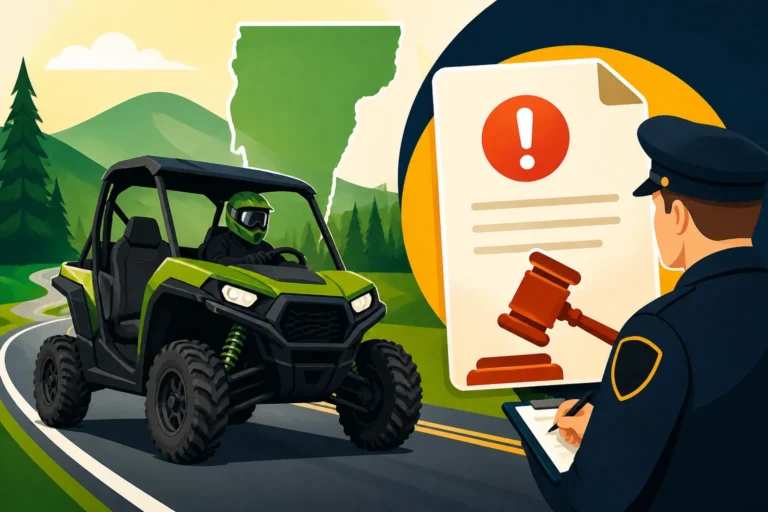
Riding an unregistered or uninsured ATV or UTV on Vermont's public roads carries serious consequences. It's not just a slap on the wrist. If you're pulled over or involved in an accident and found to be without the legally required liability insurance, you could face hefty fines, suspension of your driving privileges (even for non-road vehicles), and even impoundment of your machine. The legal system doesn't take these requirements lightly, as they are fundamental to public safety.
Beyond immediate penalties, a lack of insurance can complicate everything. If you cause an accident without insurance, you become personally liable for all damages. This could mean paying for another person's medical bills, repairing their vehicle, and covering their lost wages out of your own pocket. A single incident could result in a lifetime of financial burden. It’s a much more significant risk than the cost of a proper insurance policy. Even if you're mainly using your machine on private land, understanding that any foray onto a public way, even briefly, triggers these requirements is crucial. Before your first ride, make sure you understand [How to Register an ATV in Vermont] and the associated insurance requirements.
Finding the Right Coverage: Beyond the Bare Minimum
Meeting Vermont's legal minimums is your starting point, but for true peace of mind and comprehensive protection, it's often wise to look beyond just the bare necessities. The world of ATV and UTV insurance offers various options that can provide layers of security for your machine, yourself, and your passengers. Every rider's situation is unique, so what works for one person might not be ideal for another. Taking the time to assess your specific needs and risks is a smart move before hitting the trails.
One common consideration is the value of your machine itself. The minimum liability coverage only protects other people and their property; it does nothing to fix your own ATV or UTV if it's damaged in an accident or stolen. This is where options like collision and comprehensive coverage come into play. Collision covers damage to your machine if you hit another object or vehicle, while comprehensive covers non-collision events like theft, vandalism, fire, or even damage from natural disasters. If you've invested significantly in your machine, perhaps outfitting it with durable aftermarket parts from a brand like SuperATV, you'll want to ensure that investment is protected.
Expanding Your Protection: Collision, Comprehensive, and Uninsured Motorist
While the state focuses on liability, you're probably concerned about your own investment. Collision coverage is what steps in to repair or replace your ATV or UTV if it's damaged in a roll-over, a collision with another machine, or an impact with an obstacle. This is especially important for those who frequent rugged trails or participate in more adventurous riding. Imagine taking a tumble on a rocky ascent – collision coverage helps you get back on the trail without facing massive repair bills out of pocket.
Comprehensive coverage, on the other hand, protects against a wider range of non-collision incidents. This includes things like theft (a very real concern for valuable off-road machines), fire, vandalism, and damage from severe weather like hail or falling trees. If you store your ATV or UTV for extended periods, especially outdoors, comprehensive coverage is a valuable addition. Many riders find that combining both collision and comprehensive coverage provides the most robust protection for their own machine. It's similar to how you'd insure your car – you wouldn't just carry liability, would you?
Another often-overlooked but crucial component is uninsured/underinsured motorist (UM/UIM) coverage. Let's face it: not everyone follows the rules. If you're involved in an accident with another ATV or UTV rider who is at fault but doesn't have insurance (or doesn't have enough insurance), UM/UIM coverage can protect you. It helps cover your medical expenses and property damage, up to your policy limits, when the at-fault party can't. This can be a lifesaver, especially on shared trails or roads where you might encounter riders from out of state whose insurance laws differ. For example, [Vermont Reciprocity for Out-of-State Machines] exists for registration, but insurance can still be a tricky subject if the other party is underinsured.
Special Considerations for Your Vermont Riding Lifestyle
Your ATV or UTV isn't just a machine; it's often a key part of your Vermont lifestyle. Maybe you use it for hunting, exploring the vast [Northeast Kingdom ATV Riding in Vermont], or just getting around your rural property. When choosing insurance, consider how you use your machine. Do you regularly carry passengers? Some policies offer specific passenger liability coverage that goes above and beyond standard limits. If you've invested in specialized equipment or modifications, such as winches, upgraded tires, or even performance parts from a company like SuperATV, make sure these additions are covered under your policy. Many standard policies only cover the stock value of the machine.
Furthermore, if you frequently transport your ATV or UTV on a trailer, consider if your auto insurance policy extends coverage to your machine while in transit or if a separate endorsement is needed. Some riders even look into roadside assistance programs for their ATVs, which can be invaluable if you break down miles from civilization on a remote trail. The goal is to build an insurance portfolio that aligns with your specific riding habits and the risks you encounter. Don't be afraid to ask your insurance agent detailed questions about how coverage applies in various scenarios, especially regarding [Vermont ATV Road Rules: Towns Decide] and trail usage.
| Coverage Type | Vermont Minimum | What It Covers | Important Note |
|---|---|---|---|
| Bodily Injury (per person) | $25,000 | Medical expenses, lost wages, pain & suffering for one person you injure. | This is per person, per accident. |
| Bodily Injury (per accident) | $50,000 | Total medical expenses, lost wages, pain & suffering for all persons you injure in a single incident. | Can be quickly exhausted if multiple people are severely injured. |
| Property Damage | $10,000 | Damage to someone else's vehicle, fence, mailbox, etc., that you cause. | Modern repair costs can exceed this minimum very easily. |
| Self-Insurance Bond | $115,000 | Financial proof that you can cover the above minimums yourself. | Requires significant liquid assets; not for most riders. |
| Collision (Optional) | N/A | Damage to your ATV/UTV from a collision with another object or vehicle. | Protects your investment in your machine. |
| Comprehensive (Optional) | N/A | Damage to your ATV/UTV from theft, fire, vandalism, weather, etc. | Essential for protecting against non-accident related losses. |
| Uninsured/Underinsured Motorist (Optional) | N/A | Medical expenses and property damage you incur if hit by an uninsured or underinsured driver. | Protects you from others who don't follow the rules. |
Ultimately, taking the time to understand Vermont's liability requirements and then exploring options for enhanced coverage is an investment in your safety and financial security. It’s about ensuring that your adventures on Vermont's beautiful landscapes remain joyful, not a source of worry or potential hardship.
Disclaimer
This article is for general informational purposes only and does not constitute professional advice. Laws, prices and regulations vary by location and change over time. Consult a qualified professional for guidance on your specific situation.