Vermont Rules for Towing a Trailer
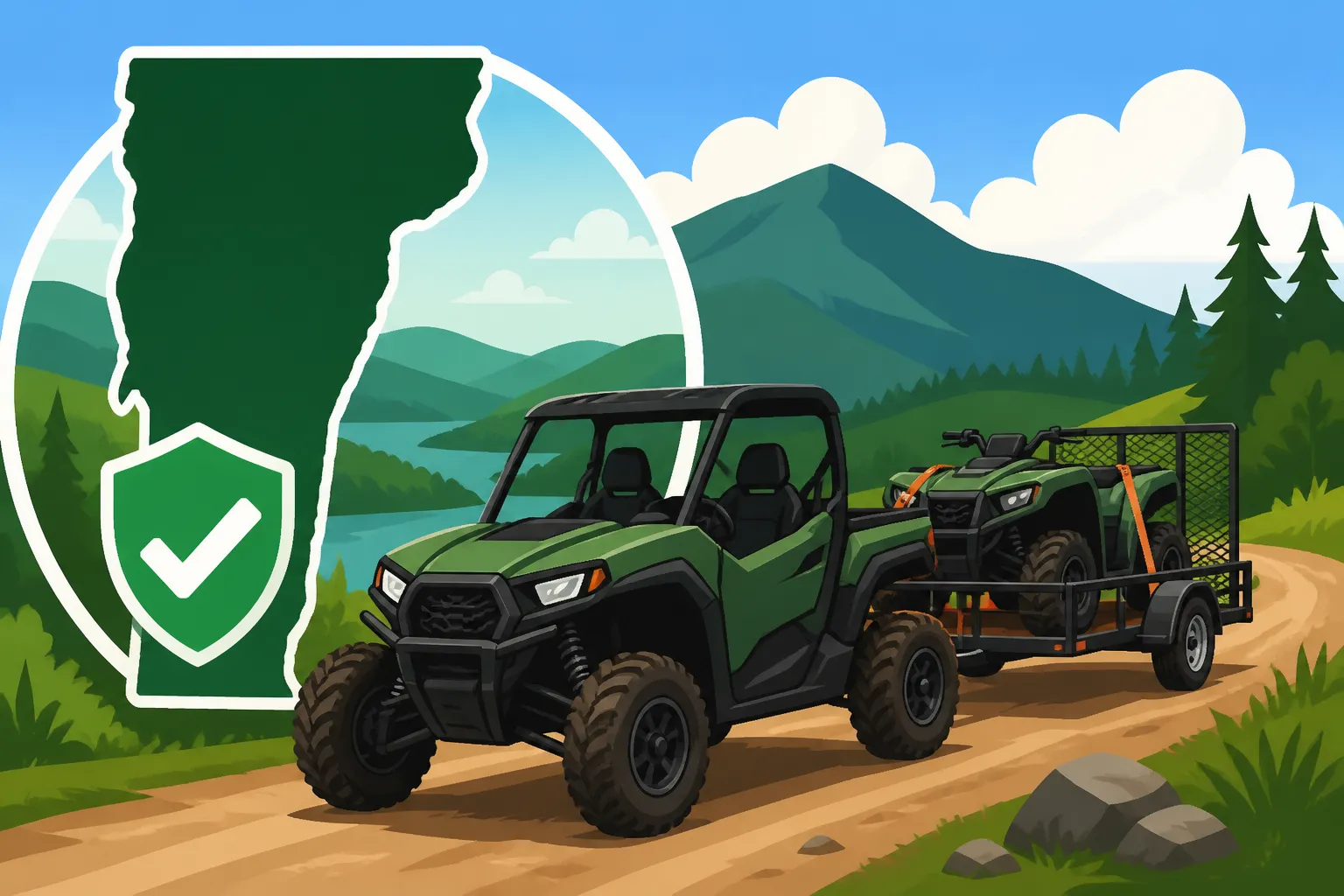
There's nothing quite like the versatility of an ATV or UTV in Vermont, especially when you need to haul more than just yourself and a passenger. From clearing brush on your property to bringing tools to a remote worksite or even pulling a small camper for an overnight adventure, the ability to tow a trailer expands what your machine can do exponentially. However, knowing exactly what you can tow, where you can tow it, and how to do it legally and safely in the Green Mountain State can feel like navigating a dense patch of forest without a map. This guide will cut through the confusion, explaining the specific rules and considerations for towing a trailer with your ATV or UTV in Vermont, so you can hook up with confidence.
Understanding Vermont's ATV and UTV Definitions for Towing
Before we dive into the nitty-gritty of towing, it’s really important to grasp what Vermont considers an "all-terrain vehicle" (ATV) or an "all-purpose recreational vehicle" (ASV, which often includes UTVs). This isn't just bureaucratic jargon; it directly impacts how your machine is registered and, by extension, where and how you can operate it, including towing. Vermont has specific definitions that dictate the physical characteristics of the machine itself, such as width and weight. You can learn more about these specifics in [Vermont's 72-Inch, 2,500-Pound ATV Definition].
For the most part, when Vermonters talk about ATVs and UTVs, they're referring to machines that fit these definitions. If your machine falls outside these parameters – perhaps it's a very wide or heavy utility vehicle – it might be categorized differently, potentially as an "off-road vehicle" or even a "motor vehicle" if it’s modified for highway use. These distinctions are absolutely critical because the rules for towing can vary significantly depending on the classification of your primary vehicle. Imagine trying to use a snowmobile to tow a large trailer on pavement; it simply isn't designed for it, and the law reflects that. The same principle applies here: the capabilities and legal definitions of your ATV or UTV directly influence your towing options.
The legal framework for off-road vehicles like ATVs and UTVs is primarily designed around recreational use and work on private land, or on designated trails and roads where specifically permitted. When you start attaching a trailer, you're adding complexity, increasing weight, and changing the dynamics of the vehicle. This means that merely having a hitch doesn't automatically grant you permission to tow anything, anywhere. Always consider your machine's manufacturer specifications for towing capacity, regardless of what the law might allow. Pushing your machine beyond its design limits can be incredibly dangerous, leading to mechanical failure, loss of control, and serious accidents. A good rule of thumb is to err on the side of caution and prioritize safety over convenience, even if you are just moving a small utility trailer across your own land.
On-Road Versus Off-Road Towing: Navigating Vermont's Rules
This is where things get a little tricky, and it's probably the biggest source of confusion for ATV and UTV owners. Vermont draws a pretty clear line between riding and towing on designated off-road trails and private land, and doing the same on public roads. The rules are fundamentally different, and misunderstanding them can lead to tickets or worse.
Off-Road and Private Land Towing
When you're operating on private property with the landowner's explicit permission, or on a Vermont Association of Snow Travelers (VASA) trail that allows ATVs, the rules for towing are generally more flexible. On your own land, or land where you have permission, you have a lot more freedom to use your ATV or UTV as a utility vehicle. This means hauling firewood, pulling small utility trailers for yard work, or moving hunting gear. The key here is "private land with permission" or "designated trail." While specific state laws might not dictate every aspect of private land towing, common sense and safety practices are paramount. You'll still want to ensure your trailer is securely attached, your load is balanced, and you're not exceeding your machine's towing capacity.
For designated trails, such as those maintained by VASA clubs, the focus is typically on recreational riding. While you might see riders with small utility trailers used for trail maintenance or event support, towing recreational trailers (like pop-up campers) on VASA trails might be restricted or require specific permits. Always check with the individual VASA club or the VASA organization itself for their specific rules regarding towing on their trails. They often have very specific guidelines to maintain trail integrity and ensure rider safety. [Vermont ATV Trails: The VASA System] has more information on how those trails operate.
Towing on Vermont's Public Roads
Now, this is where you need to pay very close attention. In Vermont, the ability to operate an ATV or UTV on public roads is not a given; it's a privilege granted by individual towns through local ordinances. Many towns have opened some of their roads to ATVs, but this is a town-by-town decision, and the rules vary wildly. You absolutely cannot assume that because a town allows ATVs on certain roads, it automatically allows them to tow trailers on those same roads. In fact, many town ordinances that permit ATV use on roads are silent on the subject of towing, or they may specifically prohibit it due to safety concerns, road wear, or traffic flow.
If you're considering towing a trailer with your ATV or UTV on a town road, you must consult the specific ordinance for that town. Don't rely on word-of-mouth or what you think is allowed. Visit the town clerk's office or check the town's official website for their ATV ordinance. Even if towing isn't explicitly prohibited, consider the practicalities: how will your trailer affect your visibility, braking distance, and maneuverability on paved or gravel roads shared with other traffic? [Vermont ATV Road Rules by Town] delves deeper into how these local rules function. Without a clear allowance in a town's ordinance, towing a trailer on a public road with your ATV or UTV is likely to be considered illegal and could result in fines for [Vermont ATV Fines for Road Violations] or other penalties.
| Aspect | Off-Road / Private Land Towing | On-Road / Public Road Towing (Town Designated) |
|---|---|---|
| Legality | Generally permitted with landowner permission or on designated trails. | Only permitted if explicitly allowed by town ordinance. |
| Primary Concern | Safety, machine capacity, trail integrity. | Safety, traffic flow, road wear, legal compliance. |
| Trailer Type | Utility, small hunting/fishing trailers, firewood haulers. | Highly restricted, typically only small utility trailers if allowed. |
| Speed Limit | Dictated by trail rules, common sense, terrain. | Strict adherence to posted road limits; often lower when towing. |
| Lighting | Often recommended, especially for visibility to others. | Legally required, including brake and turn signals, if allowed. |
| Brakes | Machine brakes, engine braking; trailer brakes for heavy loads. | Trailer brakes often required by law for heavier loads. |
| Visibility | Important for others on trail; less traffic. | Critical due to shared road use; requires mirrors. |
| Insurance | [Vermont ATV Insurance Requirements] still apply. | Same requirements, but consider higher liability with trailer. |
Essential Equipment and Safety Practices for Towing
Regardless of whether you're towing on your own property, a designated trail, or one of those rare town roads that permits it, safety should always be your number one priority. Towing changes the way your ATV or UTV handles, brakes, and accelerates, and overlooking these changes can lead to dangerous situations.
Hitches and Coupling
First and foremost, you need the right hitch. Most ATVs and UTVs come equipped with a standard receiver hitch or a ball hitch integrated into the frame. Ensure that your hitch matches the tongue on your trailer. A 2-inch ball hitch on your machine won't do you any good if your trailer has a 1 7/8-inch coupler. Always check for proper fit and secure locking mechanisms. Don't ever rely on makeshift connections. If you need to add or upgrade your hitch, or if you're looking for heavy-duty options, companies like SuperATV offer a range of robust hitches and towing accessories designed specifically for the demands of off-road vehicles. They understand that off-road towing requires durable, reliable gear that can handle rough terrain and significant loads without failing.
Beyond the hitch, safety chains are non-negotiable. These chains provide a crucial backup connection between your ATV/UTV and the trailer in case the primary coupling fails. They should be crossed under the trailer tongue to create a cradle and attached securely to the tow vehicle's frame, not just the bumper. This setup ensures that if the hitch detaches, the tongue of the trailer doesn't dig into the ground, causing it to flip, but rather remains somewhat supported as you bring the vehicle to a controlled stop.
Lights, Brakes, and Reflectors
If you are towing on any public road, even a town-designated one, your trailer must be equipped with working tail lights, brake lights, and turn signals that synchronize with your ATV or UTV. This means your machine needs to have a wiring harness capable of providing power to these lights. Many ATVs and UTVs have basic wiring, but you might need an adapter or an aftermarket wiring kit to properly connect to a trailer's electrical system. Without these lights, your trailer is virtually invisible to other motorists, especially at dusk or night, creating a huge safety hazard. Even on private land or trails, adding reflectors or battery-operated lights to your trailer can greatly improve visibility, particularly in low-light conditions or when crossing busy areas.
For heavier loads, trailer brakes become essential. Vermont law generally requires trailer brakes for trailers exceeding a certain gross weight, typically around 3,000 pounds, but it's always best practice to use them if your combined weight (trailer + load) approaches or exceeds your ATV/UTV's braking capability. Even if not legally required, having independent trailer brakes significantly improves your stopping power and control, especially on declines or in emergency braking situations. Remember, your ATV or UTV's brakes are designed for its own weight, not the added momentum of a heavy trailer.
Load Securement and Weight Distribution
Properly securing your load is vital to prevent shifting, spilling, or becoming a projectile. Use strong tie-downs, cargo nets, or straps that are appropriate for the weight and type of material you're hauling. Overloading a trailer is a recipe for disaster. Always distribute the weight evenly over the trailer's axle, aiming for about 10-15% of the total trailer weight on the tongue (the part that connects to your hitch). Too little tongue weight can cause the trailer to sway violently, leading to a loss of control. Too much tongue weight can overload your ATV/UTV's rear suspension, affecting steering and braking.
It’s also important to consider the overall weight. Consult your ATV or UTV owner's manual for its maximum towing capacity. This figure includes the weight of the trailer itself plus its cargo. Exceeding this capacity puts undue strain on your engine, transmission, brakes, and frame, and can lead to dangerous handling characteristics. Even on private land, you can damage your machine and injure yourself by towing beyond its limits. Keep in mind that a machine's towing capacity can be reduced on steep inclines, soft ground, or slippery conditions, so always factor in the terrain you'll be traversing.
Avoiding Common Pitfalls and Ensuring Compliance
Navigating the rules for towing a trailer with your ATV or UTV in Vermont can feel like a maze, and there are several common mistakes riders make that can lead to problems. Being aware of these pitfalls can save you from fines, accidents, and headaches.
Overlooking Local Ordinances
As we've discussed, this is perhaps the biggest one. Many riders assume that if they can ride their ATV on a particular town road, they can also tow a trailer on it. This is a dangerous assumption. Town ordinances are highly specific, and while some may allow ATV use, they rarely explicitly permit towing trailers, and often implicitly or explicitly prohibit it. Not checking the specific town ordinance is a sure way to find yourself pulled over by a local constable or state trooper. Don't be afraid to call the town clerk's office before you hook up that trailer and hit the pavement. It's much better to ask a quick question than to deal with a citation. This is also why having a clear understanding of [Can You Ride an ATV on the Road in Vermont?] is so crucial.
Another related issue is adhering to the conditions set forth by VASA clubs on their trails. While VASA trails generally allow for recreational ATV use, specific clubs might have rules about the size or type of trailers allowed, or may restrict them entirely during certain seasons or on particular sections of trail. Always check with the club that manages the trails you plan to use, especially if you're venturing out for a specialized activity like hauling ice fishing gear or tools for a remote camp.
Inadequate Lighting and Signaling
Even if a town ordinance does permit you to tow a trailer on a public road, neglecting proper lighting is a serious violation and a major safety risk. It's not enough to just have a red reflector on the back of your trailer. You need functional tail lights, brake lights, and turn signals that are clearly visible to other road users, both day and night. Many ATVs and UTVs don't come factory-equipped with the necessary wiring harness for a trailer, so this often requires an aftermarket installation. It's an investment in safety that's well worth it. Furthermore, ensure your ATV or UTV itself meets [Vermont ATV Equipment Requirements], as these basic safety features are essential before you even consider adding a trailer.
Visibility extends beyond just lights. Make sure your trailer isn't obscuring your ATV's registration plate. Vermont law requires your plate to be mounted on the rear, and it needs to be clearly visible. If your trailer is blocking it, you could face another fine. For more on this, check out [Vermont Plate Mounted on the Rear]. Sometimes, extending the wiring for your plate light to the back of the trailer might be a necessary step to stay legal.
Exceeding Weight and Speed Limits
Towing is not a race. Your ATV or UTV's handling characteristics change dramatically with a trailer attached, especially when loaded. Braking distances increase, acceleration is slower, and turning radius is affected. Exceeding your machine's manufacturer-recommended towing capacity is extremely dangerous and can damage your vehicle. Moreover, even on roads where ATVs are allowed, town ordinances often impose strict [Vermont ATV Speed Limits on Town Roads], and when towing, it's wise to reduce those speeds even further. Losing control of a loaded trailer at speed, particularly on a gravel road, is a terrifying experience that can lead to severe accidents.
Always be mindful of the added weight and adjust your driving style accordingly. Accelerate gently, brake earlier and more gradually, and take corners wider and slower than you normally would. When going downhill, use engine braking where possible to help control your speed and reduce strain on your brakes. If your trailer has its own braking system, ensure it's properly adjusted and functioning. Ignoring these basic principles is not only risky but can also make you liable for damages or injuries if an accident occurs.
Insurance and Registration Considerations
While your ATV or UTV will likely have its own insurance, you should always verify if your policy extends to liability when towing a trailer. Some policies might have exclusions or limitations for trailer use, especially on public roads or if the trailer itself is heavy or carries valuable cargo. Before you tow, make a quick call to your insurance provider to understand your coverage. This is especially true if you are renting a trailer or using one that belongs to someone else. For general information on what's required, see [Vermont ATV Insurance Requirements].
Finally, ensure your ATV or UTV is properly registered in Vermont. While the trailer itself might not require a separate registration if it's a small utility trailer (depending on its weight and use), the tow vehicle certainly does. Riding an unregistered machine, even on designated roads or trails, can lead to significant penalties. Make sure your registration is current and all necessary paperwork is in order. For information on getting your machine registered, consult [Vermont Registration Paperwork Checklist].
Disclaimer
This article is for general informational purposes only and does not constitute professional advice. Laws, prices and regulations vary by location and change over time. Consult a qualified professional for guidance on your specific situation.