Vermont Plate Visibility on the Road
There’s nothing quite like the freedom of exploring Vermont's incredible trail systems or making a quick run down a town road on your ATV or UTV. But nothing brings that joy to a screeching halt faster than realizing your license plate is completely caked in mud, obscured by your gear, or just plain missing. This guide is all about helping you understand Vermont’s rules for keeping your plate visible and offering practical solutions to avoid those frustrating (and costly!) run-ins with wardens or local law enforcement.
Vermont's Basic Plate Requirements for ATVs and ASVs
Let's get down to brass tacks: when you’re out on the trails or crossing a designated road in Vermont, your ATV or ASV (which includes side-by-sides and UTVs) needs to have a valid, visible registration plate. It’s not just a suggestion; it’s a legal requirement that keeps you compliant and ensures that should something happen, your machine can be identified. Ignoring this small detail can lead to fines and a real damper on your riding day.
Where the Plate Must Go
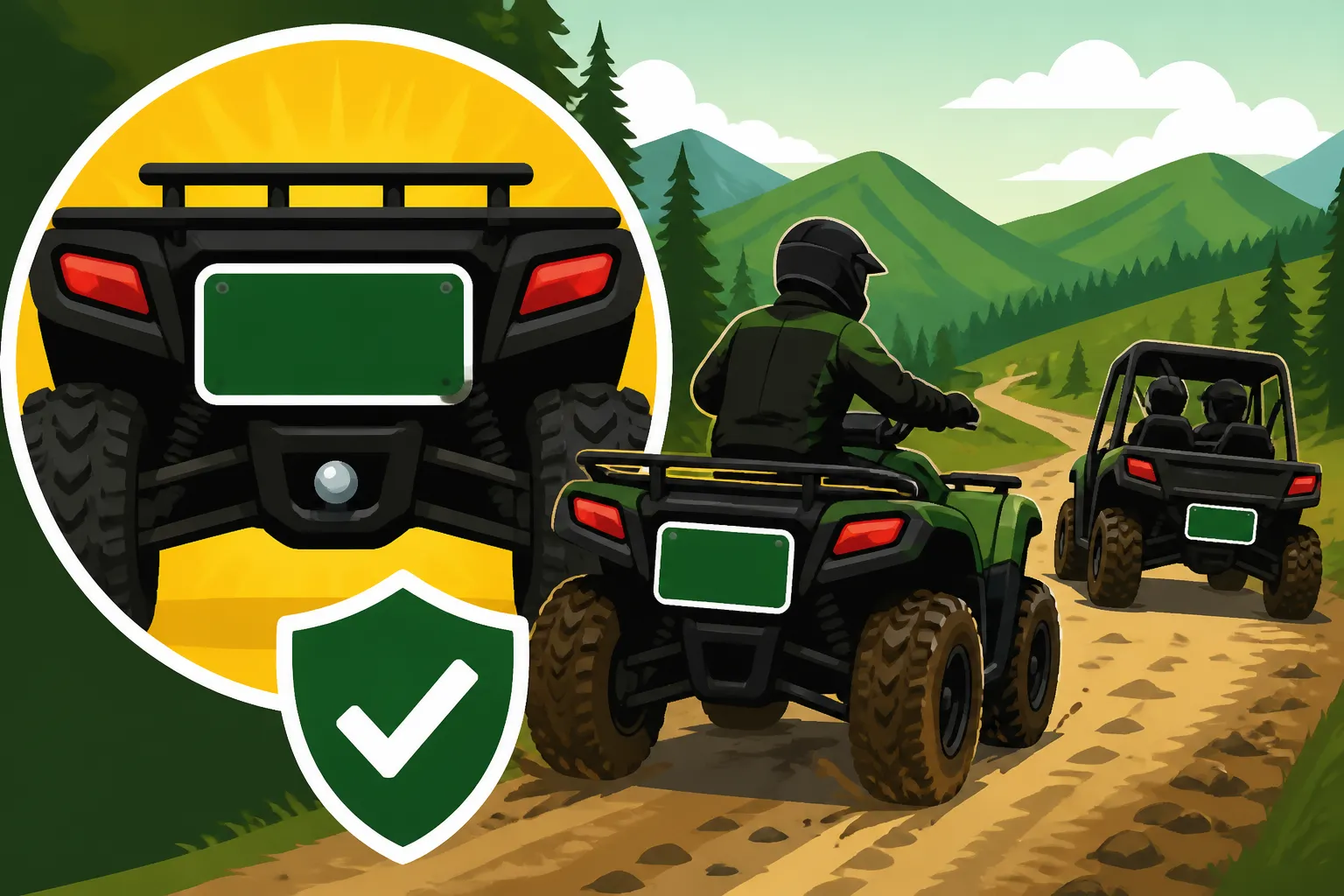
In Vermont, the law is pretty straightforward when it comes to the primary location for your ATV or ASV registration plate: it has to be mounted on the rear of the machine. Think of it like a car – the most crucial identification is always visible from behind. This allows law enforcement, wardens, and even other riders to quickly see your registration number. This rear placement is absolutely non-negotiable, especially when you're utilizing designated public roads, crossing highways, or riding on the extensive VASA trail system. It’s the standard, and deviating from it can put you in a tough spot. You’ll notice that ATVs get one type of plate, while ASVs, those wider, often multi-seat machines, get a slightly different format, but the rear-mounting rule applies to both. Understanding [Vermont ATV Plates and Where They Go] is really the first step in compliance.
Keeping it Clean and Readable
Here’s where the rubber meets the road, or rather, the mud meets the plate. It's one thing to have your plate mounted in the right spot; it's another entirely to keep it clean and readable in the varying conditions Vermont throws at us. Anyone who’s spent time on our trails knows that mud, dust, snow, and even just road grime can quickly turn a perfectly legal plate into an unidentifiable mess. The legal obligation is that your plate must be clearly visible and readable at all times. This means that if a warden or local officer can’t make out the numbers and letters from a reasonable distance, you could be facing a ticket for an obscured plate. This particular frustration is a common complaint among riders, as it feels like an uphill battle to keep things spotless when you're having fun on the trails. Unfortunately, "but it just got muddy!" isn't a valid defense if you're stopped. For more specifics, consider reading up on [Keeping a Plate Readable in Mud].
Common Challenges to Plate Visibility on Vermont Roads and Trails
Riding in Vermont is an experience unlike any other, with diverse terrain, changing seasons, and incredible scenery. But these very elements often conspire to make keeping your registration plate visible a genuine challenge. It’s not always about malice or neglect; sometimes, it’s just the nature of off-road riding in our beautiful state.
The Battle Against Mud, Snow, and Debris
Vermont weather is, shall we say, dynamic. One minute the trails are dry and dusty, the next a pop-up shower turns everything into a mud bog. Spring mud season, in particular, is notorious for instantly plastering plates (and everything else) with thick, gooey Vermont clay. Then there's the fall, when leaves and trail debris can accumulate, and winter, with snow and ice building up. A pristine plate at the start of your ride can become completely unreadable after just a few miles through certain sections. This isn't just an aesthetic issue; it's a legal one. Law enforcement and game wardens conduct [Vermont Equipment Checks by Police] regularly, and an obscured plate is an immediate red flag. It’s a constant battle, and one that requires regular attention throughout your ride.
Mounts, Angles, and Aftermarket Accessories
Modern ATVs and UTVs are incredibly customizable, and riders love to add accessories that enhance their utility or comfort. However, sometimes these very additions can unintentionally create visibility problems for your plate. Cargo boxes, spare tire carriers, winch assemblies, or even aftermarket bumpers can block the direct line of sight to your rear-mounted plate. It's a classic case of function over compliance if you're not careful.
The angle at which your plate is mounted also plays a huge role. If it's tucked too high, too low, or angled sharply upwards or downwards, it can become difficult to read, especially from a vehicle behind you or from the side of the trail. Plus, the vibrations of off-road riding can take a toll on flimsy mounts, leading to plates bending, breaking, or even falling off entirely. Companies like SuperATV offer a range of robust mounting solutions and accessories designed to stand up to tough trail conditions, often with thoughtful designs that help maintain plate visibility. Choosing a secure, well-placed mount is crucial to prevent losing your plate or having it damaged beyond recognition.
Specific Town Rules and Front Plate Confusion
While the state law mandates a rear-mounted plate, some Vermont towns have taken additional steps to ensure local enforcement and identification by requiring a front plate. This can be confusing for riders, as the state rule is one thing, but specific local ordinances add another layer of complexity. For example, towns like Brighton are known for having ordinances that ask for a front plate in addition to the mandatory rear plate when riding on designated town roads. You'll find more details on this in [Why Brighton Asks for a Front Plate Too].
It's vital to remember that if a town does have such an ordinance, it’s typically an additional requirement, not a replacement for your rear plate. Riders often assume a front plate is sufficient, but that's rarely the case. Before you head out, especially if you're venturing into a new town, it’s always a good idea to check their specific ATV ordinances. [Vermont ATV Road Rules: Towns Decide], and what’s permissible in one town might lead to a ticket in another. The best practice is to adhere to the statewide rear plate rule, and then comply with any additional local mandates for a front plate if you plan to ride within those town limits. This due diligence can save you a lot of hassle.
Practical Solutions for Ensuring Your Plate Stays Visible
The challenges of maintaining plate visibility in Vermont are real, but thankfully, there are plenty of practical solutions. A little bit of foresight and the right gear can make all the difference in keeping you compliant and enjoying your ride without worry.
Choosing the Right Plate Mount and Location
The standard thin metal brackets that come with some machines or plates can be flimsy and prone to bending or breaking. Investing in a sturdy, purpose-built plate mount is a game-changer. Look for mounts made from durable materials like thick aluminum or steel, designed specifically for the rigors of off-road use. Many aftermarket companies, including SuperATV, offer heavy-duty mounts that can withstand vibrations and impacts better than stock options.
If your existing accessories, like a large cargo box or a spare tire, are blocking your plate, consider relocating it. There are often alternative mounting points on your machine, or you can find adjustable mounts that allow you to position the plate clearly without sacrificing your storage or other accessories. Some riders opt for swing-away mounts or those that attach to an aftermarket bumper in a more visible location. When evaluating options, also think about [Mounting a Bracket That Meets the Rule] to ensure it aligns with Vermont's guidelines.
Cleaning Strategies on the Go
You can't always avoid mud, but you can be prepared to clean your plate. A small, dedicated cleaning kit can be invaluable. This might include:
- A small brush: A stiff-bristled brush, like a dish brush or a dedicated tire brush, can quickly dislodge dried mud or packed snow.
- A rag or microfiber cloth: For wiping off lighter dust or mud.
- A small spray bottle of water: A quick spritz can help loosen stubborn grime, especially if you're carrying a water bottle for hydration anyway.
Make it a habit to quickly check your plate during fuel stops, water breaks, or whenever you pause your ride. A minute spent cleaning your plate is far better than the time and money spent dealing with an obscured plate ticket. While prevention is ideal, avoiding every muddy puddle isn't always practical or fun. Be proactive about cleaning, and you'll mitigate most visibility issues.
Illumination and Reflectivity
Riding after dark or in low-light conditions (think dense forests or overcast days) adds another layer to plate visibility. Vermont law requires that your registration plate be illuminated after dark. This means having a working light that shines on your plate, making it readable. Many stock machines have this, but vibrations and trail hazards can damage wiring or bulbs.
Consider upgrading to an LED plate light. LEDs are more durable, draw less power, and provide brighter, more consistent illumination. You can find integrated LED plate lights that are self-contained units, making them easy to install and more resistant to the elements.
Beyond illumination, adding reflective elements can boost visibility. Some license plate frames or backgrounds are reflective, making your plate stand out when hit by headlights. While not explicitly required for readability during the day, this extra layer of reflectivity can make your machine more visible to others, especially if you're riding on designated roads during dusk or dawn. You might even find reflective plate frames or bolt kits from brands like SuperATV that not only secure your plate but also add to its overall visibility. Remember, [Vermont Lights Required After Dark] for good reason – safety first!
Here's a quick summary of common plate visibility challenges and their solutions:
| Factor Affecting Visibility | Common Challenge | Practical Solution |
|---|---|---|
| Mud & Debris | Plate becomes unreadable after trail riding | Carry a cleaning kit (brush, rag, water), check frequently |
| Aftermarket Accessories | Cargo racks, spare tires block the view | Relocate plate, use adjustable/swing-away mounts |
| Mounting Security | Flimsy mounts break, plate falls off | Invest in heavy-duty, purpose-built brackets (e.g., from SuperATV) |
| Mounting Angle | Plate tucked too high/low, hard to read | Adjust mount to a clear, horizontal position |
| Low Light / Night Riding | Plate invisible after dark | Ensure working plate illumination, upgrade to LED lights |
| Local Ordinances | Confusion over front plate requirements | Check town rules, comply with both front (if needed) & rear |
Ultimately, ensuring your Vermont ATV or UTV plate remains visible is a small but critical part of responsible riding. It helps you stay legal, contributes to safety, and lets you focus on the joy of the ride rather than worrying about potential fines. By understanding the rules and implementing some of these practical solutions, you can hit the trails with confidence, knowing you’re doing your part. Don't forget that [Vermont Penalties for Riding Unregistered] can be substantial, and an unreadable plate is often treated similarly to no registration at all.
Disclaimer
This article is for general informational purposes only and does not constitute professional advice. Laws, prices and regulations vary by location and change over time. Consult a qualified professional for guidance on your specific situation.