Vermont Riding in Washington County
Trying to figure out where you can actually ride your ATV or UTV in Washington County, Vermont, can feel like navigating a maze blindfolded. With rules that sometimes change from town to town, and a landscape that mixes public, private, and sometimes-open roads, it’s easy to get frustrated about where your machine is welcome. This guide is here to cut through the confusion, offering a realistic look at what it takes to ride legally and enjoyably in the heart of the Green Mountains.
The Unique Landscape of Washington County for ATV and UTV Riders
Washington County, nestled in the central part of Vermont, offers a diverse landscape ranging from bustling state capital areas to quiet, forested towns. This means that unlike some other parts of the state where vast trail networks might be more common, riding opportunities here can be a bit more fragmented and often depend heavily on local town ordinances and landowner permissions. It’s not always a simple case of "this county is open" or "this county is closed" – it's far more nuanced, and frankly, a bit of a headache if you don't know what to look for.
Understanding the Washington County Terrain and Its Challenges
The terrain in Washington County is classic Vermont: rolling hills, dense forests, winding dirt roads, and a mix of agricultural and residential areas. While this scenery is breathtaking, it also presents challenges for ATV and UTV riders. Many of the picturesque dirt roads you might assume are open are actually under strict local control regarding off-highway vehicle (OHV) access. You'll encounter everything from paved state routes to Class 3 and Class 4 town roads, each with its own set of potential rules or lack thereof. Riders often find themselves looking at a beautiful vista, only to realize the path to it is legally ambiguous for their machine. This varied landscape means that trail riding in Washington County often requires more homework and planning than in areas with established, interconnected trail systems.
Town Ordinances and the Patchwork of Access
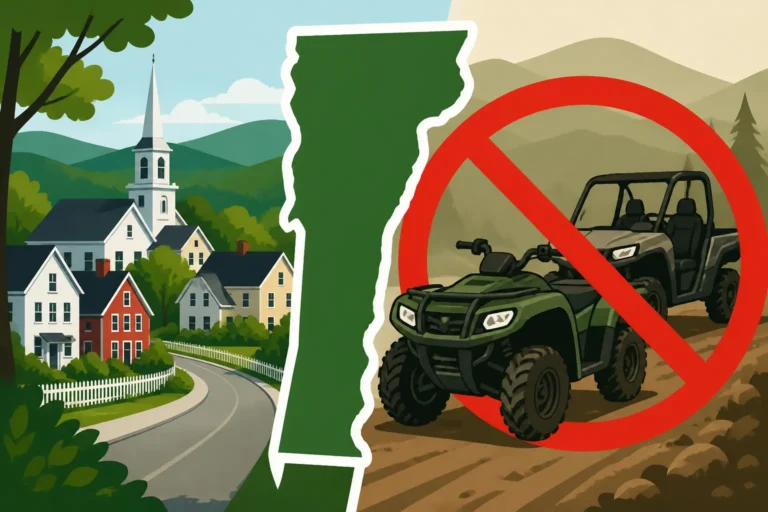
One of the biggest frustrations for riders in Washington County, and indeed much of Vermont, is the reliance on individual town selectboards to open roads to ATVs and UTVs. While some towns actively work with local clubs to designate routes, others may choose to keep their roads closed, citing concerns about noise, dust, or wear and tear. This creates a patchwork effect where you might ride through one town with open roads, only to hit a hard stop at the next town line. It's crucial to remember that [Vermont ATV Road Rules: Towns Decide], and what's permissible in Barre City might be completely different from what's allowed in Fayston or East Montpelier. This isn't just a minor inconvenience; it's a fundamental part of how OHV access operates here. Riders must diligently check local ordinances and maps, usually available through town clerks or local ATV clubs, before planning a route. The lack of a uniform county-wide policy means that simply being "in Washington County" doesn't guarantee access.
Essential Legalities for Riding in Washington County
Before you even think about hitting a trail or designated road in Washington County, you need to ensure your machine and your riding practices are fully compliant with Vermont state law. This is non-negotiable, and wardens, as well as local law enforcement, do check for proper documentation and adherence to safety rules. Ignoring these can lead to fines and a quick end to your day's adventure.
Registration, Insurance, and Safety Certificates
The first and most fundamental requirement for riding an ATV or UTV anywhere in Vermont, including Washington County, is proper registration. If you're a Vermont resident, your machine needs to be registered with the Vermont Department of Motor Vehicles. Non-residents planning to ride in Vermont also need to ensure their home state registration is recognized, or they will need to obtain a Vermont registration. You can find more details on this process in guides like [Vermont ATV Registration for Nonresidents] or [How to Register an ATV in Vermont]. This isn't just for riding on trails; it applies to any public land or designated route.
Alongside registration, [Vermont Requires ATV Liability Insurance]. This isn't just a good idea; it's the law. You need to carry proof of this insurance with you whenever you ride. The minimum coverage requirements are set by the state, typically $25,000 for bodily injury to one person, $50,000 for bodily injury to two or more people, and $10,000 for property damage.
Finally, for riders under the age of 18, a Vermont ATV Safety Course is required. This course covers essential safety practices and state laws. Even if you're over 18, taking a safety course is highly recommended. It can teach you valuable skills and make you a more responsible rider. Always carry your safety certificate if you’re under the age of eligibility.
The Importance of the Trail Access Decal (TAD) and VASA
Beyond state registration, if you plan to ride on any designated VASA (Vermont Association of Snow Travelers) trail corridors, you absolutely need a Trail Access Decal (TAD). This decal is separate from your DMV registration and essentially serves as your membership to the statewide trail system, funding its maintenance and operations. [Vermont Requires Registration Plus a TAD] for trail riding on the VASA network. Many of the trails that might connect designated town roads in Washington County are part of this private landowner-supported system.
The cost of a TAD varies depending on whether you're a resident or non-resident, and if it's for a primary or a second machine. Importantly, [Vermont TADs Expire December 31] of each year, regardless of when you purchase them. So, if you buy one in October, it still expires at the end of December. This is a common point of confusion and frustration for riders. Always display your TAD prominently on your machine as specified in the rules, as trail wardens do check for it. Membership in a local VASA club, often bundled with the TAD, is also crucial for trail development and maintenance in areas like Washington County.
Preparing Your Machine for Washington County's Diverse Rides
Washington County's mix of dirt roads, potential Class 4 trails, and sometimes rugged VASA corridors means your ATV or UTV needs to be properly set up and maintained. You'll encounter everything from smooth gravel to rocky climbs and muddy sections, sometimes all on the same ride. A well-prepared machine makes for a safer and much more enjoyable experience.
Maintenance and Essential Upgrades
Before every ride, perform a thorough check of your machine. This includes tires (checking pressure and tread depth), brakes, fluid levels, and lights. Given Vermont's variable weather and sometimes challenging terrain, keeping your machine in top shape isn't just about longevity; it's about safety.
For riders looking to tackle more challenging sections, considering upgrades can be beneficial. For example, if you anticipate rocky areas or deep ruts, investing in robust skid plates can protect vital components. Enhanced suspension systems can improve ride comfort and handling over rough terrain, while stronger axles and A-arms can prevent breakdowns on remote trails. Companies like SuperATV offer a wide range of aftermarket parts that can significantly enhance your machine's durability and performance for the specific demands of Vermont riding. Their heavy-duty components, from portals to lift kits, are designed to withstand challenging conditions, making them a popular choice for riders who want to beef up their quads or side-by-sides. Similarly, high-quality tires designed for mud or rocky conditions can make a huge difference in traction and control on Washington County's varied surfaces.
Packing Smart: What to Bring on a Washington County Ride
Even if you're planning a shorter ride, it's always wise to be prepared for the unexpected. Cell service can be spotty in the more remote parts of Washington County, so don't rely solely on your phone for navigation or emergencies.
Here’s a quick checklist of essentials to pack:
| Item | Why It's Important |
|---|---|
| First Aid Kit | For minor injuries, cuts, or scrapes. |
| Basic Tool Kit | To tighten loose bolts, fix a flat, or make minor trailside repairs. |
| Tire Repair Kit & Air Pump | Flats happen, especially on rocky or thorny trails. |
| Navigation (GPS/Map) | Paper map and compass or a reliable GPS device (not just a phone). |
| Water & Snacks | Stay hydrated and energized, especially on longer rides. |
| Rain Gear | Vermont weather can change quickly, even in summer. |
| Warm Layers | Even summer mornings can be cool; necessary for spring and fall. |
| Headlamp/Flashlight | If you get caught out after dark or need to make repairs. |
| Small Shovel/Tow Strap | For getting unstuck from mud or snow (seasonal). |
| Fire Extinguisher | A small one for emergencies. |
| Proof of Registration/Insurance/TAD | Absolutely essential, keep it in a waterproof bag. |
Remember, [Vermont ATV Helmet Law for Every Rider] means helmets are a must. Eye protection is also highly recommended. Carrying an extra fuel can is also a smart move, as gas stations can be few and far between once you get off the main routes.
Finding Your Riding Opportunities in Washington County
While Washington County might not boast a massive, interconnected trail system like some other regions, there are still ways to find legal and enjoyable riding. It often comes down to connecting with local resources and understanding the limited public access points.
Local Clubs and Designated Routes
The best way to find legal riding in Washington County is often through local ATV clubs that are part of the VASA network. These clubs work directly with landowners and town selectboards to establish and maintain designated trails and routes. They are the boots on the ground, literally grooming and signing trails, and they have the most up-to-date information on what's open and what's closed. While there might not be a dedicated "Washington County ATV Club" in the same vein as those in the Northeast Kingdom, some regional clubs may have trails that extend into the county.
You'll often find that riding opportunities involve linking together short stretches of town-approved roads with VASA trails that cross private land. [Vermont's Trails Run on Private Land], meaning landowner permission is the bedrock of the VASA system. This also means these trails can open or close on short notice based on landowner wishes or trail conditions.
When a town opens a road, it's usually done through an annual designation process by the selectboard. Look for signs indicating ATV access. Without these signs or a clear ordinance, assume the road is closed to OHVs. Some towns might also have very specific restrictions on hours of operation, noise levels, or even specific routes. For example, [Vermont Town Ordinances That Set Curfews] are quite common.
Challenges and Looking Beyond the County Borders
A common frustration for riders in Washington County is the difficulty in finding extensive, continuous riding loops within the county itself. The terrain and population density in some areas mean that linking up long rides can be tricky. This often leads riders to look towards neighboring counties for more expansive trail networks. For instance, many Vermont riders consider heading to the Northeast Kingdom, which encompasses Essex and Orleans counties, for its well-developed and interconnected VASA trail system. [Northeast Kingdom ATV Riding in Vermont] is a popular destination for those seeking longer, more continuous rides.
It’s worth noting that while some towns in Washington County might designate a few miles for ATV use, a full day's ride often requires trailering your machine to a trailhead in a different part of the state. This doesn't mean Washington County is entirely without riding, but managing expectations is key. It's more about strategic access points and possibly shorter, scenic rides rather than multi-hour wilderness expeditions solely within its borders.
The landscape of ATV riding in Washington County is still evolving, with towns constantly re-evaluating their policies. Staying informed through VASA, local clubs, and town websites is your best bet for finding current and legal places to ride.
Disclaimer
This article is for general informational purposes only and does not constitute professional advice. Laws, prices and regulations vary by location and change over time. Consult a qualified professional for guidance on your specific situation.