Correcting a Name on a Title
Let's be honest, few things are as frustrating as trying to get all your ducks in a row with vehicle paperwork, only to find a glaring error on your ATV or UTV title. Whether it's a simple typo or a full-blown name change after a big life event, needing to correct a name on your Vermont title can feel like a bureaucratic headache. But don't worry, friend, you're not alone, and this guide is here to walk you through exactly how to get that name corrected and your title squared away with the Vermont Department of Motor Vehicles (DMV).
Why You Might Need a Title Correction in Vermont
Life happens, and sometimes, those changes or simple human errors end up reflecting incorrectly on an important document like your ATV or UTV title. It's not always a dramatic story; sometimes it's just a misplaced letter or a moment of confusion. But whatever the reason, the goal is always the same: to have a title that accurately reflects legal ownership. The sooner you tackle these discrepancies, the smoother future transactions, like selling your machine, will be.
Simple Typos or Clerical Errors
Oh, the dreaded typo! It’s all too common. Maybe the dealership clerk had a busy day, or perhaps there was a transcription error when the paperwork was initially processed. You get your shiny new title in the mail, excited to hit the trails, and then you spot it: your last name is misspelled, or a middle initial is missing. These seem like small details, but they can become big problems if not addressed. The Vermont DMV is quite particular about accuracy, as they should be, because the title is your ultimate proof of ownership. If the name on your title doesn't exactly match your legal identification, you could run into trouble trying to sell the machine or even prove ownership in certain situations. It’s always best to catch these minor errors early and get them fixed promptly.
Life Changes: Marriage, Divorce, or Legal Name Alterations
Life takes us on many journeys, and sometimes those journeys involve a change of name. Perhaps you've recently tied the knot and taken on a new surname, or perhaps you've gone through a divorce and reverted to a maiden name. Or maybe, for personal reasons, you've legally changed your name entirely. These significant life events, while wonderful or challenging in their own right, necessitate updating all your legal documents, and your ATV or UTV title is no exception. The Vermont DMV will need official documentation to support these changes, such as a marriage certificate, divorce decree, or a court order for a legal name change. It’s not just about preference; it's about ensuring your title reflects your current legal identity, which is critical for all future interactions concerning your off-road machine.
Post-Purchase or Inheritance Issues
Sometimes, the name issue doesn't crop up until after the initial purchase, especially if you bought your ATV or UTV through a private sale. Maybe the seller accidentally put the wrong name on the bill of sale, or perhaps the previous title had an error that was overlooked. In other, more somber situations, you might be inheriting an ATV or UTV after a loved one has passed. This often involves navigating estate paperwork, and sometimes the name on the deceased's title needs to be updated to reflect the new legal owner. The process for [Registering an ATV You Inherited in a Will] can be intricate, and a name correction might be one of the steps involved. Whether it's a simple oversight or a complex inheritance scenario, the Vermont DMV will require clear proof of the intended ownership and the reason for the name discrepancy.
The Vermont DMV Process for Title Corrections
Okay, so you've identified the problem – now for the solution. The good news is that correcting a name on a Vermont title is a clear, if somewhat detail-oriented, process. It primarily involves submitting the right forms and documentation to the Vermont DMV. Patience and thoroughness are your best friends here. You want to make sure you get it right the first time to avoid any unnecessary delays or repeat trips to the DMV.
Gathering Your Documentation
Before you even think about filling out a form, you'll need to collect all the necessary paperwork. Think of it like assembling your trail gear before a big ride – you don't want to get halfway down the path and realize you forgot your helmet! The specific documents you'll need will depend on the reason for the correction.
For a simple typo or clerical error, you'll generally need:
- Your current, incorrect title (the original, not a copy).
- Your valid photo identification that displays the correct spelling of your name.
- Any supporting documentation you might have from the original purchase, like a bill of sale, that clearly shows the correct name was intended.
For a legal name change (due to marriage, divorce, or court order), you'll need:
- Your current, incorrect title.
- Your valid photo identification with your new legal name.
- The certified legal document proving the name change (e.g., marriage certificate, divorce decree, court order). These must be official copies, not photocopies you made yourself.
For issues related to post-purchase or inheritance:
- The original title, even if it has the incorrect name or the name of the deceased.
- A properly completed bill of sale, if applicable, showing the correct buyer's name. If you’re filling out your own bill of sale for a private sale, ensuring it's legally sound is key. Online platforms like LawDepot offer templates that can help you cover all the bases, which can be invaluable when the DMV asks for proof of ownership.
- If inheriting, you'll need documents like the death certificate, the will (if applicable), and potentially an Affidavit of Ownership if there's no will or if multiple heirs are involved. Don't forget, [Filing an Ownership Affidavit at the Vermont DMV] can be a crucial step in these scenarios.
- Your valid photo identification.
It’s always a good idea to bring extra copies of everything, just in case. When you're dealing with the DMV, more proof is almost always better than less.
Completing the Application for Corrected Title
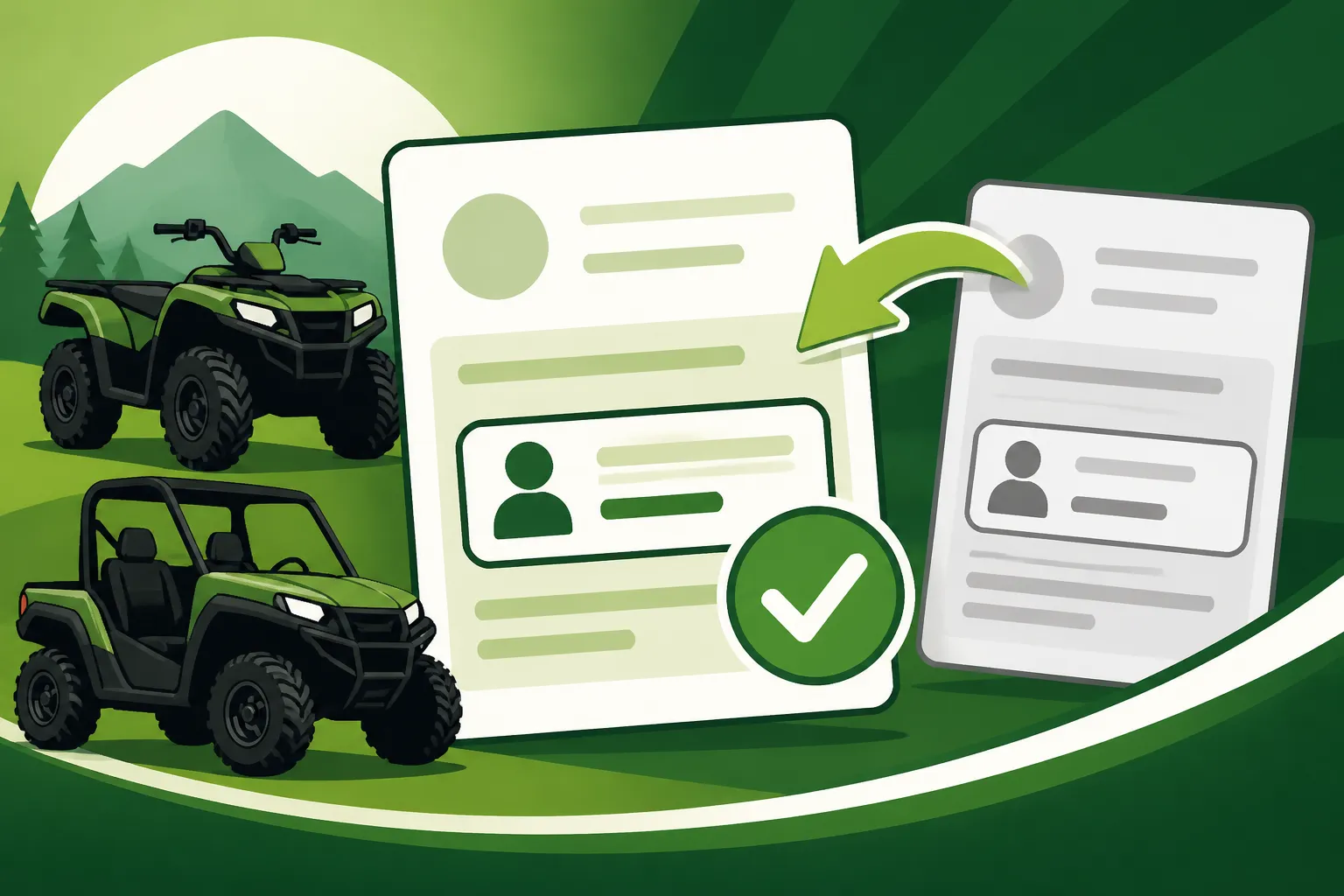
Once your documents are in order, you’ll need to complete the official Vermont DMV application. The primary form you’ll be looking for is the "Application for Certificate of Title" (often Form VD-119). Even though you already have a title, this form is used for various title transactions, including corrections.
On this form, you'll typically mark the box indicating you are applying for a "Corrected Title" or similar. You'll fill in all the details of your ATV or UTV, including the VIN, make, model, and year. Crucially, you'll enter your correct name as it should appear on the title. There will likely be a section to explain the reason for the correction, whether it's a spelling error, a legal name change, or an inheritance matter. Be clear and concise in your explanation, and reference the supporting documents you're submitting. For detailed guidance, you might want to review [Vermont Title Application Steps].
Ensuring all paperwork is meticulously filled out is crucial. Whether it's the application for a new title or an affidavit of ownership, utilizing templates from reputable sources like LawDepot can help minimize errors and streamline the process. They can help you understand what information is generally required for different legal documents.
Submitting Your Request
With all your documents gathered and forms accurately completed, it's time to submit your request to the Vermont DMV. You have a couple of options here:
- In-Person: This is often the preferred method for title corrections, especially if the situation is a bit complex or if you have questions. Visiting a Vermont DMV office allows a clerk to review your documents on the spot and tell you if anything is missing. While it might involve a wait, getting immediate feedback can save you a lot of time and frustration in the long run. Remember to bring all your [Documents to Bring to a Vermont DMV Office].
- By Mail: If you're confident you have everything in order and prefer to avoid a trip to the DMV, you can mail your application and supporting documents. Make sure to send everything via certified mail with a return receipt requested. This provides proof that you sent it and that the DMV received it. Be sure to include a check or money order for any applicable fees. You can find more information on [Registering by Mail Versus in Person].
There is typically a fee associated with applying for a corrected title, similar to the fee for a replacement title. While the exact amount can vary, be prepared to pay a nominal charge for the service. You can check the current [Vermont ATV Titles and What They Cost] on the Vermont DMV website or by calling your local office.
What Happens After You Submit Your Correction
Once you've handed over your meticulously prepared stack of documents to the Vermont DMV, a sense of relief usually washes over you. But the process isn't quite finished yet! There's a bit of waiting involved, and it's good to know what to expect. Think of it as the cool-down lap after a challenging ride – the work is mostly done, but you're not quite at the finish line.
Waiting for Your New Title
After submission, the Vermont DMV will process your request. This isn't an instantaneous process. The turnaround time can vary depending on the DMV's workload, the complexity of your correction, and whether you submitted in person or by mail. Generally, if you submitted in person, you might receive a temporary receipt, but the actual corrected title will be mailed to you. Mailing applications usually take a bit longer to process simply due to mail transit times.
Be patient! It's not uncommon for it to take a few weeks to receive your new title in the mail. If an unusually long time passes (say, beyond 4-6 weeks) and you haven't heard anything, you can try contacting the DMV for a status update. However, try to resist calling every other day; they're working through many requests!
What If There Are Still Errors?
Let's hope this doesn't happen, but occasionally, an error can persist or even a new one might appear on your freshly minted corrected title. If you receive your new title and find it's still incorrect, don't despair, but do act quickly. Gather the new (still incorrect) title and all your original supporting documentation. You'll likely need to go through a similar correction process, explaining that the previous attempt resulted in another error. Sometimes, the DMV might waive additional fees if the error was clearly on their end. This is where those extra copies of your documents, and even a log of when and where you submitted your original request, can come in handy.
Keeping Records for Future Reference
Once you finally receive your perfectly corrected Vermont ATV or UTV title, take a moment to celebrate! Then, make sure you properly safeguard this important document. I always recommend making a digital copy (a clear photo or scan) and storing it securely on your computer or cloud storage, in addition to keeping the original paper title in a safe place. This way, if the paper title ever gets lost or damaged, you have a backup for reference. This is also a good practice for any major purchase, like if you're [Selling a Registered ATV in Vermont] in the future. Having a clear, accurate title on hand will make any future transactions much smoother.
Avoiding Future Name Title Issues
While it's good to know how to fix a problem, it's even better to avoid it in the first place! A little vigilance during the purchase process can save you a world of hurt down the road. After all, the fun part of ATV ownership is riding, not endless paperwork.
Double-Checking Documents at Purchase
This is probably the single most important piece of advice: always, always double-check every single piece of paperwork before you sign it, especially the title or title application. Whether you're buying from a dealership or a private seller, take your time. Don't feel rushed. Look at the VIN to ensure it matches the machine, and scrutinize every letter of your name. Confirm your address is correct. If you're at a dealership, have the sales associate walk you through each section. If you're buying from a private seller, make sure the bill of sale accurately reflects your full, legal name. A quick review at this stage can prevent the headache of having to file for a corrected title later on. For an off-road vehicle, an accurate [Vermont Title for an Off-Road Vehicle] is crucial.
Understanding Vermont's Proof of Ownership Requirements
Vermont's DMV has specific requirements for what they consider acceptable proof of ownership. Generally, this includes a properly assigned title, a manufacturer's statement of origin (MCO) for new machines, or a bill of sale accompanied by an ownership affidavit in certain circumstances. When you're dealing with a name correction, the DMV is essentially asking you to prove that the correct name should have been on the title all along, or that the name has legally changed. Having all your ducks in a row – your ID, the incorrect title, and the legal documentation – helps solidify your claim. Make sure you understand [Proof of Ownership Vermont's DMV Will Accept] to ensure you're always prepared. This knowledge also helps if you ever need to calculate the [Vermont Purchase and Use Tax on an ATV] for a new acquisition.
| Reason for Correction | Primary Document Required (in addition to current title) | Supporting Documents (examples) |
|---|---|---|
| Simple Typo / Clerical Error | Valid Photo ID | Original Bill of Sale, previous registration |
| Marriage | Certified Marriage Certificate | Valid Photo ID with new name |
| Divorce | Certified Divorce Decree | Valid Photo ID with new name |
| Legal Name Change (Court Order) | Certified Court Order for Name Change | Valid Photo ID with new name |
| Inheritance | Death Certificate, Will (if any) | Affidavit of Ownership, probate court documents, letters of administration |
| Post-Purchase Error (Private Sale) | Valid Photo ID, Corrected Bill of Sale | Ownership Affidavit (if bill of sale is missing or incorrect) |
This article is for general informational purposes only and does not constitute professional advice. Laws, prices and regulations vary by location and change over time. Consult a qualified professional for guidance on your specific situation.